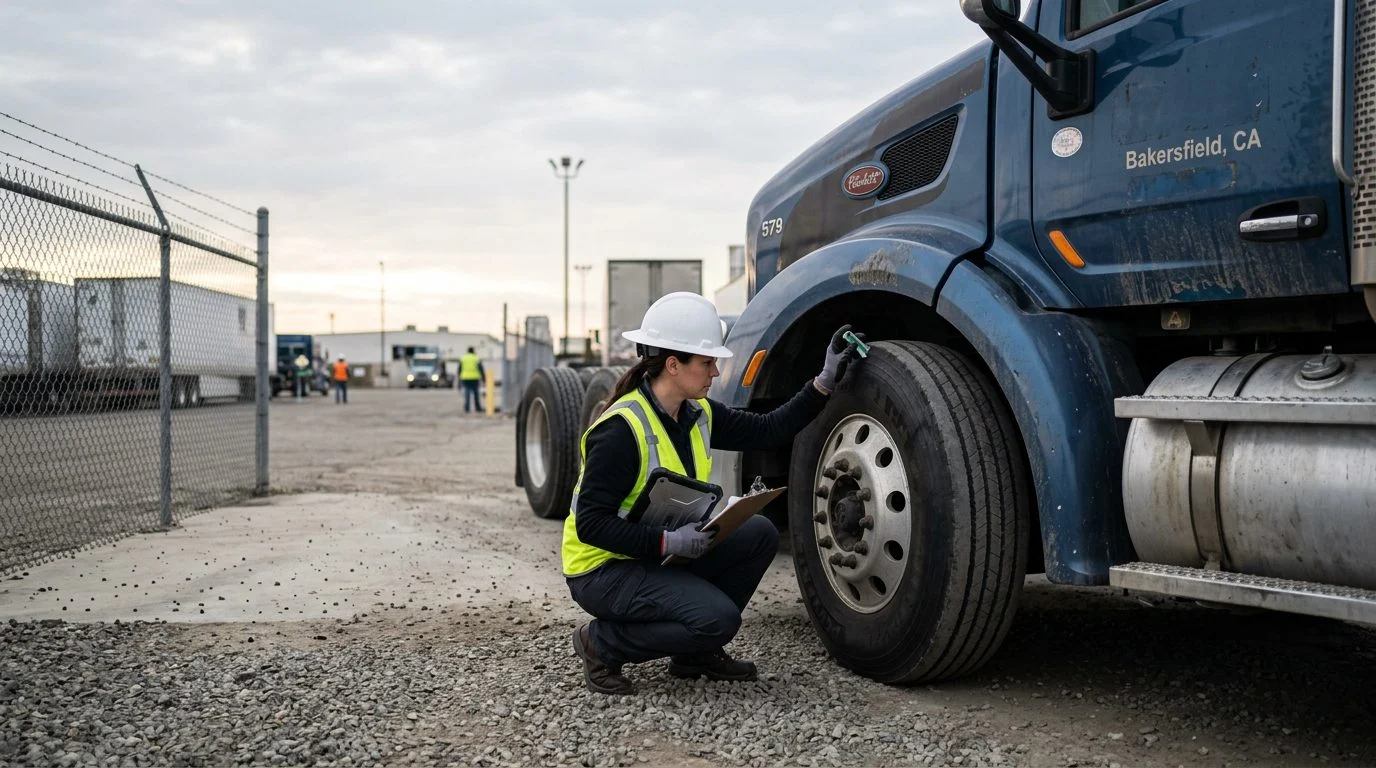
Truck Accident Lawyer · Bakersfield & Kern County
Hurt in a Truck Crash? Hold the Trucking Company Accountable
Colvin Accident Lawyers represents injured people and families after collisions with commercial trucks in Bakersfield, Kern County and surrounding communities. Your free first consultation is confidential and comes with no obligation to continue.
By Donald Norman Colvin · Published November 6, 2026
Can You Sue a Trucking Company After a Crash?
Yes, you may be able to sue a trucking company after a crash with a commercial truck or bus. The claim often turns on whether the driver’s carelessness, or the company’s own carelessness, caused your injuries.
This page covers who you can name, what you must prove, the deadlines that apply, and how insurance fits in. It is written for injured drivers, passengers, pedestrians, cyclists, and motorcyclists, and for families pursuing a wrongful death claim after a fatal crash.
Crashes with commercial trucks and buses happen on Kern County roads. These claims follow California personal injury and wrongful death law.
If a truck or bus crash left you or a family member hurt, we can review your situation and talk through your options with you at no cost. Talk it through with our team — the first consultation is free, confidential, and carries no obligation.
Who You Can Name as a Defendant
You can often name more than one party. Each one may carry a share of the fault, so the full list matters.
- The driver. A driver who was distracted, speeding, or worn out may be personally liable.
- The trucking company. California generally makes an employer responsible for an employee’s negligence on the job, even when the employer did nothing wrong itself. This rule is called respondeat superior (employer responsibility for an employee’s acts).
- The company’s own conduct. Claims can also target negligent hiring, weak driver training or supervision, poor maintenance, and dispatch demands that pushed drivers past safe limits.
- Other parties. Cargo loaders, maintenance contractors, truck owners, and parts makers may be responsible when their conduct or a defect contributed to the crash.
Under Civil Code § 1431.2, in an injury or wrongful death case based on comparative fault, each defendant is liable for non-economic damages, such as pain and suffering, only in proportion to its own share of fault. That rule shapes how many defendants you name.
What You Must Prove and the Evidence That Matters
Each accident claim depends on its own facts and circumstances. Each one needs proof, and the records a trucking company keeps often answer the hardest questions.
- Duty and breach: the driver or company failed to act with ordinary care.
- Causation: that failure caused the crash and your injuries.
- Damages: medical bills, lost income, and pain and suffering.
Start with the basics: the police report, photos of the scene and vehicles, witness contact details, and any dashcam or onboard camera footage.
Trucking records add a second layer. Each motor carrier must keep a driver qualification file for each driver. Federal hours-of-service rules limit driving time and require breaks. After certain crashes, the employer must test surviving drivers for alcohol and drugs, as set out in federal post-accident testing rules.
Send a written request to preserve these records soon after the crash. Trucking companies control most of this evidence, and it can be lost through routine record purges.
Steps to File a Lawsuit Against a Trucking Company
The process starts with your health and the facts, then moves to a claim and, if needed, a lawsuit. Each step builds on the one before it.
- Get medical care and keep every record. Treatment documents your injuries, and bills and missed-work notes support your damages.
- Record the scene. Collect photos, witness names, and the crash report while details are fresh.
- Send notice and a preservation request. Notify the trucking company and its insurer, and ask them to keep logs, maintenance files, and driver records.
- Investigate liability. Identify every party who may share fault and build the damages picture.
- Present a settlement demand. Many claims resolve here, but the claim is not final until a written agreement is signed.
- File suit if needed. If no fair resolution is reached, a complaint is filed in the proper superior court.
- Discovery. Both sides exchange records and take depositions from the driver and company representatives.
- Resolution. The case ends by settlement, mediation, or trial. Timing varies widely from case to case.
Deadlines. California generally gives two years for an action for injury to, or death of, a person caused by another’s wrongful act or neglect, under Code of Civil Procedure § 335.1. Wrongful death claims are generally covered by that same two-year rule. If a public entity such as a city or transit agency is involved, a claim must be presented within six months for death or injury under Government Code § 911.2. That period is much shorter, so early review matters.
How Insurance Works in a Trucking Lawsuit and Hit-and-Run Crashes
The trucking company’s commercial liability insurer usually handles the claim from the start. Its defense lawyers may be involved early.
Commercial vehicles must show financial responsibility. Minimum amounts may not cover every loss, so you need to identify each policy that applies.
Vehicle owners face a separate rule. Under Vehicle Code § 17151(a), the liability of an owner imposed by the chapter that section belongs to, when it does not arise through a principal-agent or master-servant relationship, is limited to $15,000 for the death of or injury to one person in any one accident. Employer liability can work differently, so the relationship matters.
When a hit-and-run truck driver is never identified, a claim under your own uninsured motorist policy is sometimes possible, but California law conditions that coverage on, among other requirements, reporting the accident to the police, sheriff, or California Highway Patrol within 24 hours and filing a sworn statement with your insurer within 30 days. Insurance Code § 11580.2 requires that bodily injury policies include this coverage unless the insurer and named insured agree in writing to change it. Cal. Ins. Code § 11580.2 requires an insurer to provide uninsured motorist coverage in each bodily injury liability policy it issues covering liability arising out of the ownership, maintenance, or use of a motor vehicle, with limits at least equal to those in subdivision (m), but the insurer and the applicant may agree to delete the coverage completely, delete it when the vehicle is driven by a person named in the agreement, or provide a lower amount that is not less than the financial responsibility requirements.
Insurers may ask for a recorded statement early. A short talk with a lawyer before you give one can protect your claim.
How a Lawyer Helps and Why Work With Colvin Accident Lawyers
A lawyer identifies the responsible parties, deals with insurers, requests trucking records, gathers medical documentation, and calculates your economic and non-economic losses. When a case needs accident reconstruction or trucking safety review, the lawyer decides what to bring in based on the facts.
Colvin Accident Lawyers is based in Bakersfield, Kern County, California. The firm handles car, truck, motorcycle, bicycle, pedestrian, bus, train, dog bite, premises liability, catastrophic injury, and wrongful death matters. Donald Norman Colvin is the responsible lawyer for this site. Our team, including assistants and office staff, handles records requests and scheduling.
Results depend on the facts of each case. No single past matter tells you what your case will bring.
The first consultation is free, confidential, and carries no obligation to continue.
Not sure what your next step is?
Talk it through with our team — the first consultation is free, confidential, and carries no obligation.
Common Questions About Suing a Trucking Company
Is it worth suing an insurance company?
Claims are usually brought against the at-fault party, and the insurer typically pays through that party’s policy. Whether a claim makes sense turns on your injuries and the crash facts.
How much will I receive from a settlement?
No amount can be predicted from general information. Compensation turns on your injuries, the evidence, and the law that applies to your case.
Can you sue a trucking company after a hit-and-run?
You may still have a claim if the trucking company is responsible. If the driver is never found, your own uninsured motorist coverage may apply.
Do I have to go to court?
Many claims settle before trial. If a fair resolution is not reached, the case may go to court.
Will suing affect my job?
Employment questions turn on the facts of your situation. We can discuss them during your consultation.
Talk With Colvin Accident Lawyers About Your Truck Crash
If a truck or bus crash left you or a family member hurt, and you’re weighing a suit against the trucking company, now is the time to talk through your specific crash. Call Colvin Accident Lawyers or contact us now to set up your free, confidential first consultation.
Colvin Accident Lawyers, Bakersfield, California — responsible for this site. Responsible lawyer: Donald Norman Colvin.
Why Injured Drivers and Families Call Colvin Accident Lawyers
Free first consultation
Your first consultation is free, confidential and comes with no obligation to continue. You can ask questions about your crash before deciding anything.
Focused on truck and trucking company cases
We take on cases involving tractor-trailers, delivery trucks and other commercial vehicles, including claims against trucking companies and the other parties involved.
Early attention to evidence
Trucking companies keep driver logs, maintenance records and electronic data. We work to identify and request these records as early as we can.
Care for you and your family
Serious truck crashes affect work, health and home life. Our team keeps you informed and helps you understand your options.
Be Careful Before You Give a Statement
Trucking companies and their insurers often contact injured people quickly. Before you give a recorded statement or sign any release, consider speaking with a lawyer about what you are being asked to do.
How Truck Accident Claims Often Work
1. Tell us what happened
Contact us for a free, confidential consultation. Share the crash details, your injuries and any paperwork you already have.
2. We review the facts
We look at the crash report, the truck and driver involved, and the medical care you have received to understand what may have caused the collision.
3. We explain your options
We discuss the possible paths for your claim in plain language, including how the case may proceed. No decision is required at the consultation.