Motorcycle Accidents | Bakersfield, Kern County
Hurt in a Motorcycle Crash? Talk With Colvin Accident Lawyers
Helmet questions, disputed fault, and serious injuries all come up in motorcycle cases. Our team represents riders and passengers in Bakersfield and the surrounding Kern County area.
By Donald Norman Colvin · Published October 21, 2026
Motorcycle crash attorneys help injured riders, passengers, and families sort out how helmet use, fault, and the other driver’s conduct affect a claim. The short answer is that California requires both the driver and any passenger to wear a helmet when riding a motorcycle, motor-driven cycle, or motorized bicycle on the highway, except for a fully enclosed three-wheeled motor vehicle that meets the stated requirements. Fault and damages rules shape the outcome, so each piece matters. This guide explains those rules in plain language. Colvin Accident Lawyers is based in Bakersfield and represents accident victims in Kern County and nearby communities, including Fresno, Visalia, Lancaster, Palmdale, Delano, and Tehachapi.
Does California Require Motorcycle Helmets?
Yes. California law requires the driver and any passenger to wear a safety helmet when riding a motorcycle, motor-driven cycle, or motorized bicycle on the highway. Cal. Veh. Code § 27803 sets this rule.
The helmet must meet the requirements set under Section 27802. It must be fastened with its straps and fit the wearer’s head securely, without excessive movement.
The statute makes it unlawful to operate a motorcycle when the driver or any passenger is not wearing a helmet. It is also unlawful to ride as a passenger without one.
The duty applies to each person on the bike. A driver who carries a passenger without a helmet breaks the law too. The section does not apply to certain fully enclosed three-wheeled vehicles that meet the statute’s conditions.
If you were hurt riding, or lost someone in a motorcycle crash, our team is ready to talk through the helmet and fault questions with you. Talk it through with our team — the first consultation is free, confidential, and carries no obligation.

How Can Helmet Use Come Up in a Motorcycle Claim?
The other side may argue that a missing helmet made the injuries worse. The key question is whether helmet non-use contributed to the injuries being claimed. It is not enough to ask only whether a helmet was worn. If the injuries include a head injury, the question becomes more specific. The Administration for Community Living describes traumatic brain injury, which a motorcycle crash can cause. Medical records and the crash facts help show how each injury happened.
Whether helmet use is raised, and how much weight it carries, depends on the facts of the crash and the injuries.
Why Does the At-Fault Driver’s Conduct Still Matter?
The other driver’s conduct stays central, even when helmet use is raised. A helmet question does not erase that driver’s negligence. Common driver errors in motorcycle crashes include failing to yield, unsafe lane changes, distracted driving, and speeding.
Speed is judged by the conditions. Cal. Veh. Code § 22350 says no one may drive faster than is reasonable or prudent for the weather, visibility, traffic, and road. Speed may never endanger people or property.
Impairment is also conduct a claim examines. Cal. Veh. Code § 23152 makes it unlawful to drive under the influence of alcohol. It is also unlawful to drive with 0.08 percent or more, by weight, of alcohol in the blood.
Fault looks at the conduct of everyone involved. A systematic review of motorcycle injuries notes that crash dynamics and passenger position can affect the injuries a person sustains. The same review says these factors can help with crash reconstruction.
How Does Fault Affect the Damages You Can Recover?
Your own fault reduces what you can collect, but it does not cancel the claim.
Here is an illustration, not a prediction. Suppose the full harm from a crash is valued at 100 units. If the rider is 30 percent at fault, the rider recovers 70 units. If the rider is 70 percent at fault, the rider still recovers 30 units, based on the rule stated in Daly.
When more than one person is at fault, the rule for non-economic damages works differently. Under Cal. Civ. Code § 1431.2, each defendant owes non-economic damages only in direct proportion to its share of fault. A separate judgment is entered against each defendant for its share.
The same crash can produce different results. Who is at fault and how each injury links to the crash both matter.
What Damages Can Be Part of a Motorcycle Accident Claim?
Under Cal. Civ. Code § 1431.2, “economic damages” means objectively verifiable monetary losses, while “non-economic damages” means subjective, non-monetary losses such as pain, suffering, and emotional distress. Cal. Civ. Code § 1431.2 defines both.
Economic damages are objectively verifiable monetary losses. They include medical expenses, loss of earnings, loss of use of property, costs of repair or replacement, and loss of employment or business opportunities. For a motorcycle claim, this can include medical bills, lost work time, and damage to the bike and gear.
Non-economic damages are subjective losses. They include pain, suffering, inconvenience, mental suffering, emotional distress, and loss of society and companionship.
The general measure of damages is set by Cal. Civ. Code § 3333. For the breach of an obligation not arising from contract, the measure of damages is the amount that compensates for all the detriment proximately caused by the wrongful conduct, whether or not it could have been anticipated.
Wrongful death claims follow their own rules. Cal. Code Civ. Proc. § 377.60 lists who may bring the claim, including a surviving spouse, domestic partner, children, and certain other family members who depended on the person who died. Cal. Code Civ. Proc. § 377.61 says damages may be awarded that are just under all the circumstances, but may not include damages recoverable under Section 377.34. The court decides how the award is shared among those entitled to it.
When Should You Contact a Motorcycle Accident Attorney?
Contact an attorney early when injuries are serious, fault is disputed, or a loved one has died. Early review helps protect evidence that can fade over time.
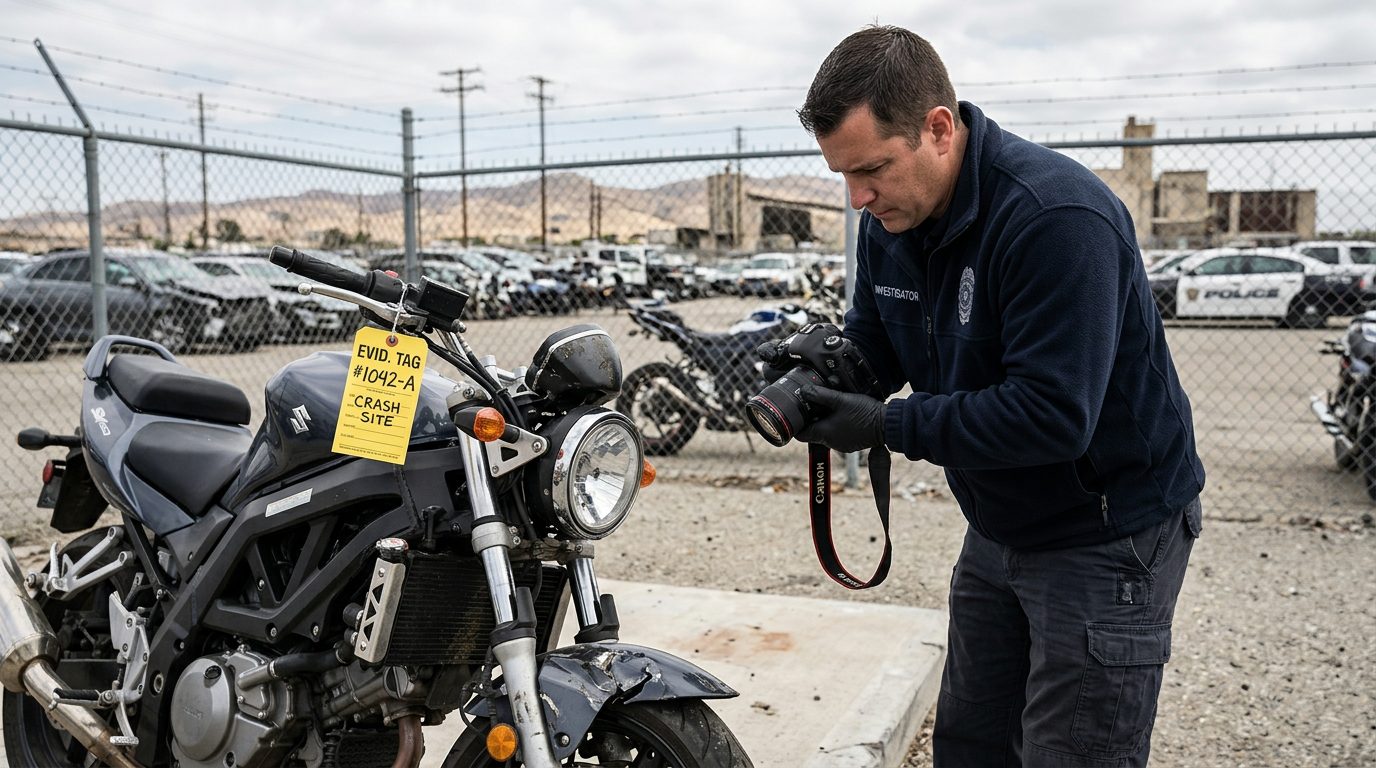
Useful evidence includes the crash report, photos of the scene and the bike, witness names, the helmet and gear, and every medical record and bill. Keep the helmet and gear, even if they are damaged. Track each doctor visit and each day of missed work.
Common mistakes include waiting to see whether symptoms fade, skipping follow-up care, and throwing away damaged gear. Symptoms that seem minor soon after a crash can change over time. Keep a written record of how you feel each day.
Serious injuries often mean long treatment and time away from work. An attorney can review those losses with you. The decision about whether to file a claim is yours.
Not sure what your next step is?
Talk it through with our team — the first consultation is free, confidential, and carries no obligation.
How Should You Deal With the Insurance Company?
Be careful about recorded statements and signed releases until you understand your injuries. The insurer may ask about helmet use and fault early, before the medical picture is clear.
Stick to facts when you speak with an adjuster. Keep copies of every medical record, bill, and letter. Write down the date and name of each call.
California law limits how insurers treat claimants. Cal. Ins. Code § 790.03 lists unfair practices in the business of insurance. Under Cal. Ins. Code § 790.03, subdivision (h) identifies, at item (14), directly advising a claimant not to obtain the services of an attorney as an unfair claims settlement practice when it is knowingly committed or performed with such frequency as to indicate a general business practice.
Colvin Accident Lawyers can handle communications with insurers for clients. That is a service. It does not determine any particular outcome.
How Much Time Do You Have to File a Claim?
For most personal injury claims in California, the general deadline is two years. Cal. Code Civ. Proc. § 335.1 sets a two-year limit for actions for injury to, or death of, an individual caused by another’s wrongful act or neglect.
Claims against a public entity follow a shorter path. Cal. Gov. Code § 911.2 requires a claim for death or for injury to person to be presented not later than six months after the cause of action accrues.
Missing a deadline can end a claim you might otherwise have brought. That is why early questions matter.
Frequently Asked Questions About Motorcycle Crash Claims
Can motorcycle crash attorneys help with a helmet dispute? Yes. An attorney can review the helmet question alongside the fault and injury facts.
Does not wearing a helmet stop my claim?
Does a passenger have to wear a helmet? Yes. A claim against a public entity must be presented as provided in Article 2 (commencing with Section 915) within the period set by Cal. Gov. Code § 911.2. The helmet rule is in Cal. Veh. Code § 27803, which requires both the driver and any passenger to wear one when riding a motorcycle, motor-driven cycle, or motorized bicycle on the highways, but does not apply to a fully enclosed three-wheeled motor vehicle that meets the stated requirements.
Does an impaired driver change the claim? Yes. Impairment is conduct a claim examines when judging negligence.
How long do I have to file? For most claims against a private party, the general limit is two years.
Talk With Colvin Accident Lawyers About Your Crash
If you were hurt while riding, or you lost someone in a motorcycle crash, questions about helmets, fault, and the other driver’s conduct can feel urgent. You don’t have to sort them out alone.
Colvin Accident Lawyers invites you to contact our office. The first consultation is free, confidential, and carries no obligation to continue.
Bring what you have, including the crash report, photos, medical records, and your questions about helmet use and fault. Reach us through the Colvin Accident Lawyers contact page.
Colvin Accident Lawyers: Responsible Lawyer and Office Disclosure
Colvin Accident Lawyers is a personal injury firm based in Bakersfield, California. Our team handles motorcycle, car, truck, bicycle, pedestrian, bus, dog bite, premises liability, catastrophic injury, and wrongful death matters.
Donald Norman Colvin is the responsible lawyer for this site.
Colvin Accident Lawyers, Bakersfield, California — responsible for this site.
How We Approach Motorcycle Cases
Clear answers on helmet questions
We explain how helmet use may bear on your claim, based on the facts of your crash and the law that applies to it.
Careful review of the crash facts
Police reports, photos, and witness information can all shape the question of fault. We look at the evidence before drawing conclusions.
Riders, passengers, and families
We represent motorcyclists, passengers, and the families of people killed in crashes.
Direct access to our team
Call or reach out online and speak with a member of our team about your situation.
Be Careful Before You Speak to an Insurer
Insurance adjusters may ask for a recorded statement soon after a crash. Talk with a lawyer before you give one, and avoid guessing about fault or injuries while you are still recovering.
Common Questions After a Motorcycle Crash
Does not wearing a helmet affect my claim?
Helmet use can come up in a motorcycle injury case. How it bears on your claim depends on the facts of your crash, and our team can review them with you during a free consultation.
Who is at fault?
Fault is often disputed after a crash. Evidence such as the police report, photos, and witness statements can matter, and we can discuss how it applies to your situation.
Can a passenger bring a claim?
Passengers are often seriously hurt in motorcycle crashes. Tell us what happened and we will explain the options that may apply to your case.
What if a rider was killed?
Families facing a motorcycle wrongful death often have many questions at once. We can talk through the legal process and what it may involve for your family.