Truck Accident Lawyer | Bakersfield, CA
Can You Sue If a Semi Truck Hits You?
Colvin Accident Lawyers explains when California truck crash victims and families may bring a claim, who may be responsible, and how a free consultation works.
By Donald Norman Colvin · Published October 25, 2026
In general, yes. You can usually sue after a semi truck hits you in California when another party’s negligence (carelessness) caused or contributed to the crash. Colvin Accident Lawyers, based in Bakersfield, wrote this plain-language guide to answer one question: can you sue if a semi truck hits you?
The Short Answer: Yes, When Another Party’s Negligence Caused the Crash
In general, you can sue when someone else’s negligence caused or contributed to a semi-truck crash. Negligence means a failure to use the care a reasonable person would use. The other party owed you a duty of care. The break caused your injury, or a family member’s death.
The crash itself doesn’t answer the question. The cause does. A semi that rear-ended stopped traffic raises different issues than one that drifted across a lane line. Sometimes fault is clear. Often it takes an investigation to show who did what.
Truck cases also tend to involve more than one party. The driver, the company that employs the driver, and others can each play a part. The sections below explain who may be named, what must be shown, the California deadlines, the kinds of damages, and the evidence that matters early.
If a semi truck left you hurt or grieving, you don't have to sort out your options alone. Our team is glad to talk through your situation with you. Talk it through with our team — the first consultation is free, confidential, and carries no obligation.
Who Can Be Named in a Semi-Truck Lawsuit
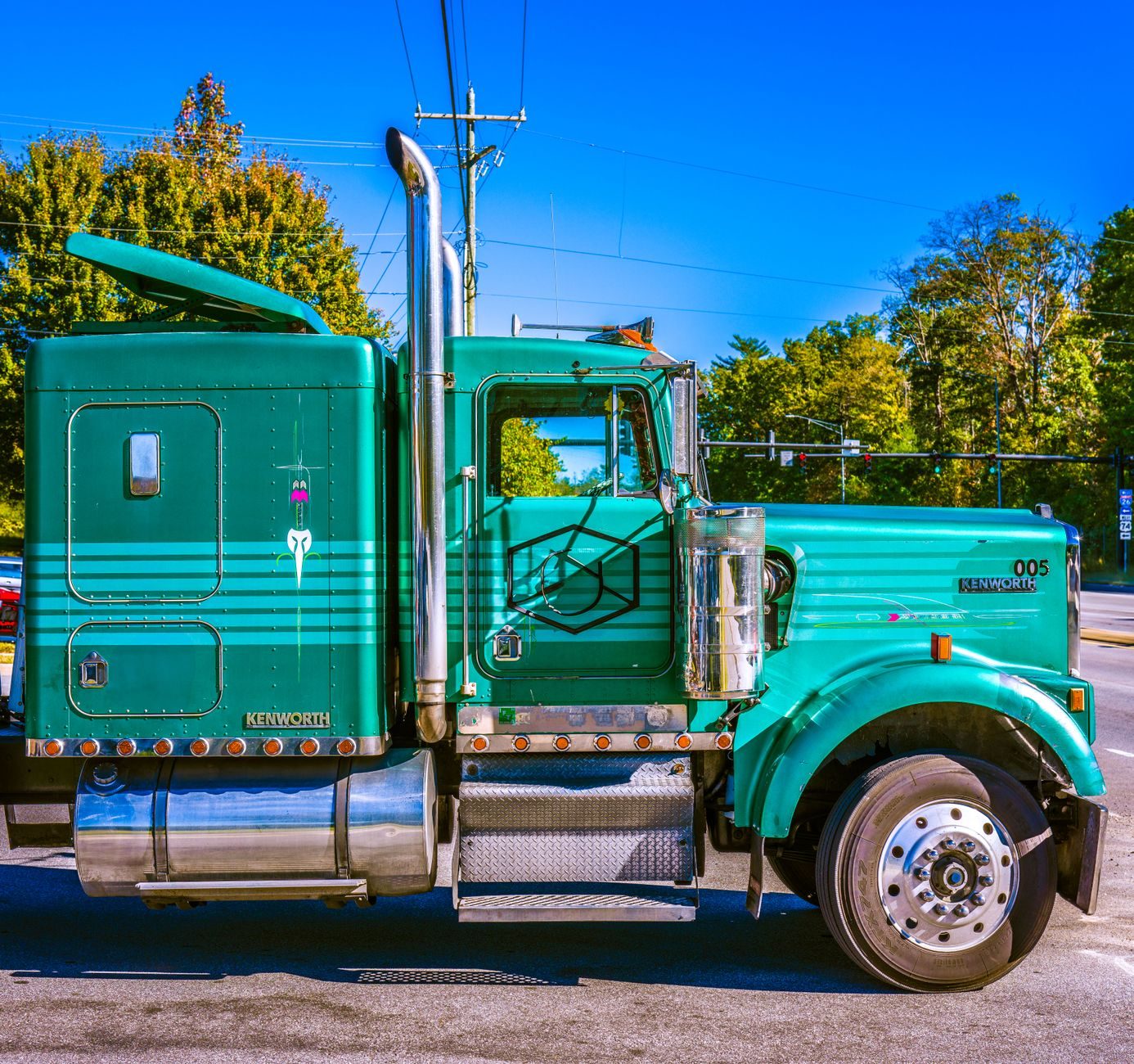
Several parties can be named, not only the driver. Each party’s role in the crash shapes the claim.
- The driver, for conduct such as speeding, distraction, impairment, or failing to yield.
- The vehicle owner or leasing company, when it is separate from the employer.
- Cargo loading companies, when an overweight or unsecured load contributed to the crash.
- Maintenance providers, when brakes, tires, or other parts were not properly repaired.
- Parts manufacturers, when a defective part contributed to the crash.
- Other drivers, whose conduct added to the collision.
- Public entities, such as government-owned trucks, which follow a separate claim process.
Employers add a legal wrinkle. Each defendant’s role is reviewed on its own facts.
What You Must Show to Hold Them Responsible
You must show that the other party was negligent and that the negligence caused your harm. Truck cases often turn on federal safety rules. 49 C.F.R. § 395.3 limits driving time. A driver may not drive without first taking 10 consecutive hours off duty. Under 49 C.F.R. § 395.1(a)(1), the rules in this part apply to all motor carriers and drivers, except as provided in paragraphs (b) through (x) of that section, and under § 395.3(a), a driver of a property-carrying commercial motor vehicle may not drive without first taking 10 consecutive hours off duty, may not drive after a period of 14 consecutive hours after coming on-duty following 10 consecutive hours off-duty, and may drive a total of 11 hours during that 14-hour period. Driving is not permitted after more than 8 hours of driving time without at least a consecutive 30-minute interruption in driving status, with some short-haul exceptions.
49 C.F.R. § 396.3 requires motor carriers to systematically inspect, repair, and maintain their vehicles. Parts must be in safe and proper operating condition at all times. A tired driver or a truck with worn brakes may show that a required rule was broken. Records of those violations can help explain what happened.
California also follows a comparative fault rule. If you share some of the blame, your compensation can be reduced.
Deadlines: How Long You Have to File
For most injury and wrongful death claims, California generally gives two years to file a lawsuit. Code Civ. Proc. § 335.1 sets a two-year limit for actions for injury to a person, or for death, caused by another’s wrongful act or neglect. The California Courts Self-Help Guide notes that exceptions and tolling (pauses on the clock) can apply.
Claims against a public entity move faster. Gov. Code § 911.2 requires a claim for death or injury to be presented not later than six months after the cause of action arises.
Wrongful death cases also turn on who may bring them. Code Civ. Proc. § 377.60 lists the decedent’s surviving spouse, domestic partner, children, and issue of deceased children, or, if the decedent left no surviving issue, the persons (including the surviving spouse or domestic partner) who would inherit the decedent’s property by intestate succession. It also lists certain persons who were dependent on the decedent, such as a putative spouse, children of the putative spouse, stepchildren, parents, or the legal guardians of the decedent if the parents are deceased. It also covers a minor who lived in the decedent’s household for the previous 180 days and depended on the decedent for at least half of the minor’s support. The decedent’s personal representative may sue on their behalf. Deadlines depend on the facts of each case, so don’t assume the general rule fits yours.
What Damages May Be Claimed After a Semi-Truck Crash
Damages are the losses a claim seeks to recover. California law measures damages for the breach of an obligation not arising from contract as the amount that compensates for all the detriment (harm) the wrongful act proximately caused, except where otherwise expressly provided by the Civil Code. Civ. Code § 3333 sets that measure for this kind of claim.
Economic damages are objectively verifiable money losses. Examples include medical bills, lost earnings, and repair or replacement costs. Non-economic damages are subjective losses, such as pain, suffering, emotional distress, and loss of companionship. Civ. Code § 1431.2 defines both terms.
Feelings such as guilt, anxiety, or fear after a crash can be part of the emotional impact a claim addresses. The value of pain and suffering depends on the injuries, treatment, and evidence in each case.
One rule shapes how non-economic losses are divided. Under Civ. Code § 1431.2, in any action for personal injury, property damage, or wrongful death based upon principles of comparative fault, each defendant’s liability for non-economic damages is several only. Each one pays its share in proportion to its percentage of fault. That is why identifying every responsible party matters.
Evidence That Matters Early
The most useful evidence is usually the evidence collected early. Start with the police or incident report, and write down the responding agency and officer names.
Photos and video matter too. Take them of the scene, vehicles, cargo, and injuries as soon as it is safe. Get names and phone numbers for witnesses while they are still nearby. Medical records tie the injuries to the crash, so keep every appointment note and bill.
Trucking records are kept for limited periods. Maintenance records, for example, must be kept for 1 year, and for 6 months after the vehicle leaves the carrier’s control. 49 C.F.R. § 396.3 sets that rule. Driver logs and electronic logging device data can also matter. A written preservation request asks the company to keep these records. Keep a journal of missed work, out-of-pocket costs, and daily limits. These notes show how the injury changed your life.
Not sure what your next step is?
Talk it through with our team — the first consultation is free, confidential, and carries no obligation.
Talking Through Your Situation With Colvin Accident Lawyers
Asking whether you can sue if a semi truck hits you is a reasonable first step. You may be recovering from injuries and trying to make sense of what comes next. If you are reading for a family member, you may be grieving and facing decisions you did not choose. Each truck crash turns on its own facts.
Can you sue the truck driver and the trucking company?
In many cases, yes.
How long do you have to sue after a semi truck crash in California?
Generally two years for injury and wrongful death claims, though exceptions can apply. A claim against a public agency has a shorter six-month step first.
Can I still sue if I was partly at fault?
Often, yes. Your compensation can be reduced by your share of fault, but that doesn’t automatically end the claim.
If you have questions about your own crash, Colvin Accident Lawyers is based in Bakersfield. You can reach out for a free, confidential first consultation with no obligation to continue: contact Colvin Accident Lawyers.
What a semi truck crash claim may involve
Who may be liable
A truck crash can involve the driver, the trucking company, and others, such as a maintenance contractor or a parts maker. Each case depends on its own facts.
Evidence that matters
Trucking companies keep logs, maintenance records, and inspection reports. Requesting and preserving evidence early can help support a claim.
Timing matters
Some claims have filing deadlines, and claims against public agencies can require earlier steps. Contacting us soon after a crash helps protect your options.
Clear answers
We explain the process in plain language so you know what to expect before you decide on any next step.
Be careful with the trucking company's insurer
Insurance representatives may contact you soon after a crash. Before giving a recorded statement or signing any release, talk with an attorney about how it could affect your claim.
Parties that may be named in a truck accident claim
The truck driver
Claims may address driving conduct such as fatigue, distraction, speeding, or failure to follow traffic laws.
The trucking company
Companies may face claims tied to their drivers' work, hiring and supervision practices, and dispatch demands.
Maintenance and cargo contractors
Improper repairs, inspections, or loading can contribute to a crash and may support a claim against the responsible party.
Parts manufacturers
A defective brake, tire, or other component may lead to claims against the company that designed or made it.