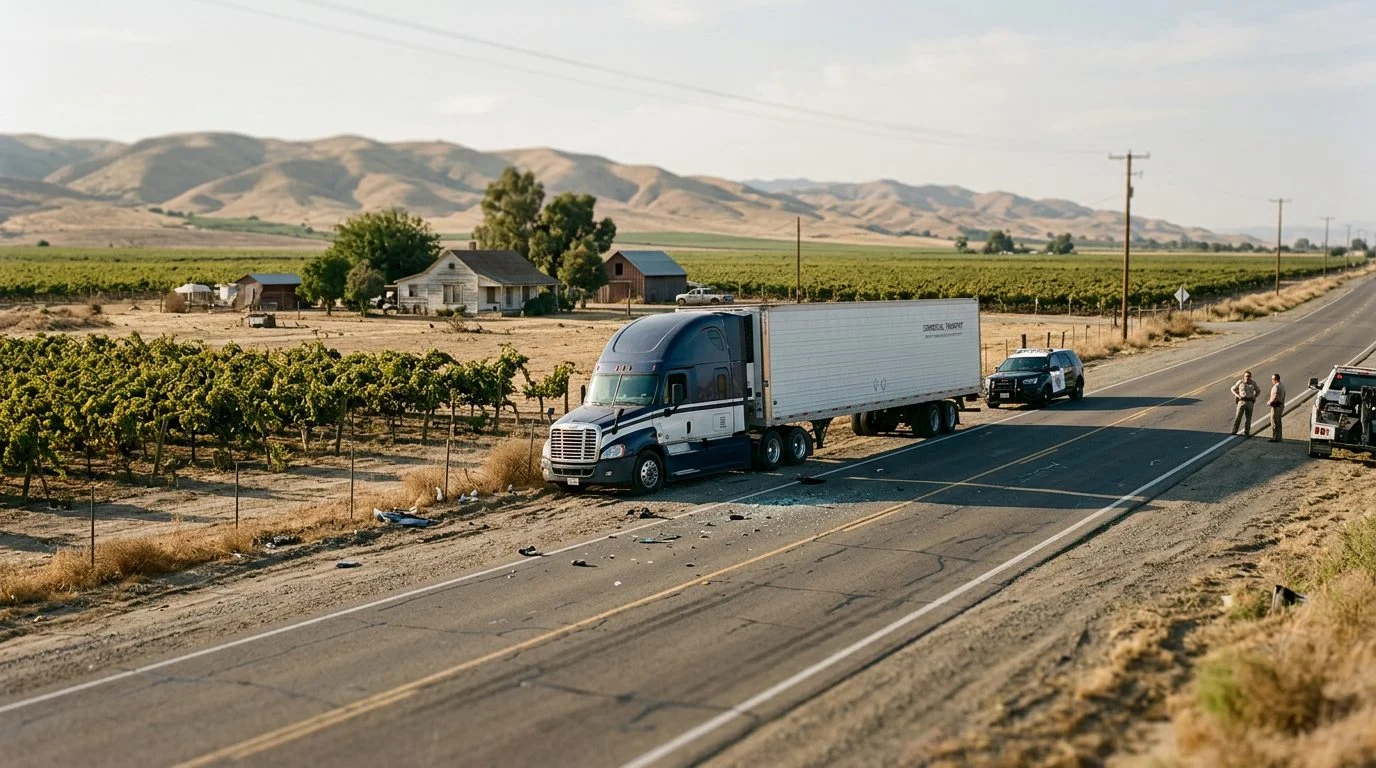
Kern County Commercial Vehicle Accidents
Hurt in a Commercial Crash in Kern County? Talk With Us First
Crashes involving trucks, buses and work vehicles bring more questions than a typical collision. Your first consultation is free, confidential, and comes with no obligation to continue.
By Donald Norman Colvin · Published November 19, 2026
If a commercial vehicle hit someone you love, you may be facing hospital bills, missed work, and questions nobody prepared you to answer. A commercial vehicle accident usually differs from an ordinary car accident in three ways. More parties may share responsibility, federal trucking rules apply, and key records can be lost quickly. Colvin Accident Lawyers is a law firm based in Bakersfield that serves Kern County families. This page explains those differences in plain language, so you know what to ask and when.
What Counts as a Commercial Vehicle Accident in Kern County?
A commercial vehicle accident involves a vehicle used for business or transport, such as a semi-truck, delivery truck, or bus. Commercial vehicles include tractor-trailers, semi-trucks, box trucks, delivery vans, and buses. What makes a vehicle commercial is how it is used. It may be hauling freight, delivering goods, or carrying passengers for a business or transport purpose.
The size difference matters on every road. A loaded big rig weighs many times what a passenger car weighs, and it needs much more distance to stop. Trucks and buses share roads with passenger cars, so one crash can involve several vehicles.
A commercial crash can also involve more than one company. The truck may belong to one business, be leased from another, and carry freight for a third. That is why the first question is often not just who was driving, but whose trip it was. Early on, a family may not know which company is involved. The name on the truck, the unit number, and the shipping paperwork can help identify the carrier.
If someone you love was hurt or killed in a commercial vehicle crash, you don't have to sort out the next steps alone. Our team can talk with you about what happened. Talk it through with our team — the first consultation is free, confidential, and carries no obligation.
Why Are Commercial Vehicle Cases Different from Ordinary Car Crashes?
They differ mainly because more parties, more rules, and more insurance layers can be involved. In an ordinary crash, the claim often involves two drivers and their insurers. A commercial crash may involve the driver, the motor carrier that employs or contracts with the driver, the vehicle owner, and sometimes a maintenance provider or a cargo party. Each one may hold records that matter.
Size also changes harm. People in passenger cars, motorcyclists, bicyclists, and pedestrians have far less protection against a vehicle that can weigh tens of thousands of pounds. Injuries in these crashes can be severe, and recovery can take a long time.
Claim handling is often more involved, too. Commercial insurance programs can have their own reporting steps, and the carrier keeps most of the operating records. Families should expect more paperwork and more questions from insurers. No lawyer can say in advance how a particular claim will end.
Who May Be Responsible After a Commercial Vehicle Crash?
Responsibility may reach the driver, the company that controls the driver, and others whose actions contributed to the crash. Who is responsible depends on the facts of the crash. California law starts with a general rule. Under Civil Code section 1714, a person can be responsible for an injury caused by a failure to use ordinary care.
A claim may examine several parties. These include the driver, the motor carrier, the vehicle owner, any company that maintained the vehicle, and any party that loaded the cargo or hired the carrier.
Investigators look closely at how the crash happened. Speed matters under Vehicle Code section 22350, which bars driving at a speed greater than is reasonable or prudent for conditions, and never at a speed that endangers others. Fatigue, distraction, impairment, and poor maintenance may also be examined. Under Evidence Code section 669, a violation of a statute, ordinance, or regulation of a public entity can create a presumption of failure to exercise due care when its conditions are met, and that presumption can be rebutted.
Which Federal and State Trucking Rules Can Matter?
Federal trucking rules set limits on driving time, vehicle upkeep, driver files, and electronic logs. Hours-of-service limits are among the most important. Under 49 C.F.R. § 395.3, a driver of a property-carrying commercial motor vehicle, such as a freight truck, generally may not drive without first taking 10 consecutive hours off duty, with exceptions in § 395.1. A driver may drive a total of 11 hours within a 14-hour period. Driving is generally not permitted after more than 8 hours of driving time without a 30-minute break, with limited exceptions for certain short-haul drivers.
Under 49 C.F.R. § 395.8, drivers must record their duty status for each 24-hour period. Under 49 C.F.R. § 395.8(e)(2), no driver or motor carrier may reengineer, reprogram, or otherwise tamper with an electronic logging device (ELD) so that the device does not accurately record and retain required data.
Vehicle upkeep is covered too. 49 C.F.R. § 396.3 requires motor carriers to systematically inspect, repair, and maintain all motor vehicles under their control. Driver files matter as well. Under 49 C.F.R. § 391.51, a motor carrier must keep a driver qualification file for each driver it employs.
An attorney reviews the records against the facts of the crash. The review shows whether a rule was broken and whether that matters to the claim.
What Evidence Can Disappear Quickly After a Commercial Crash?
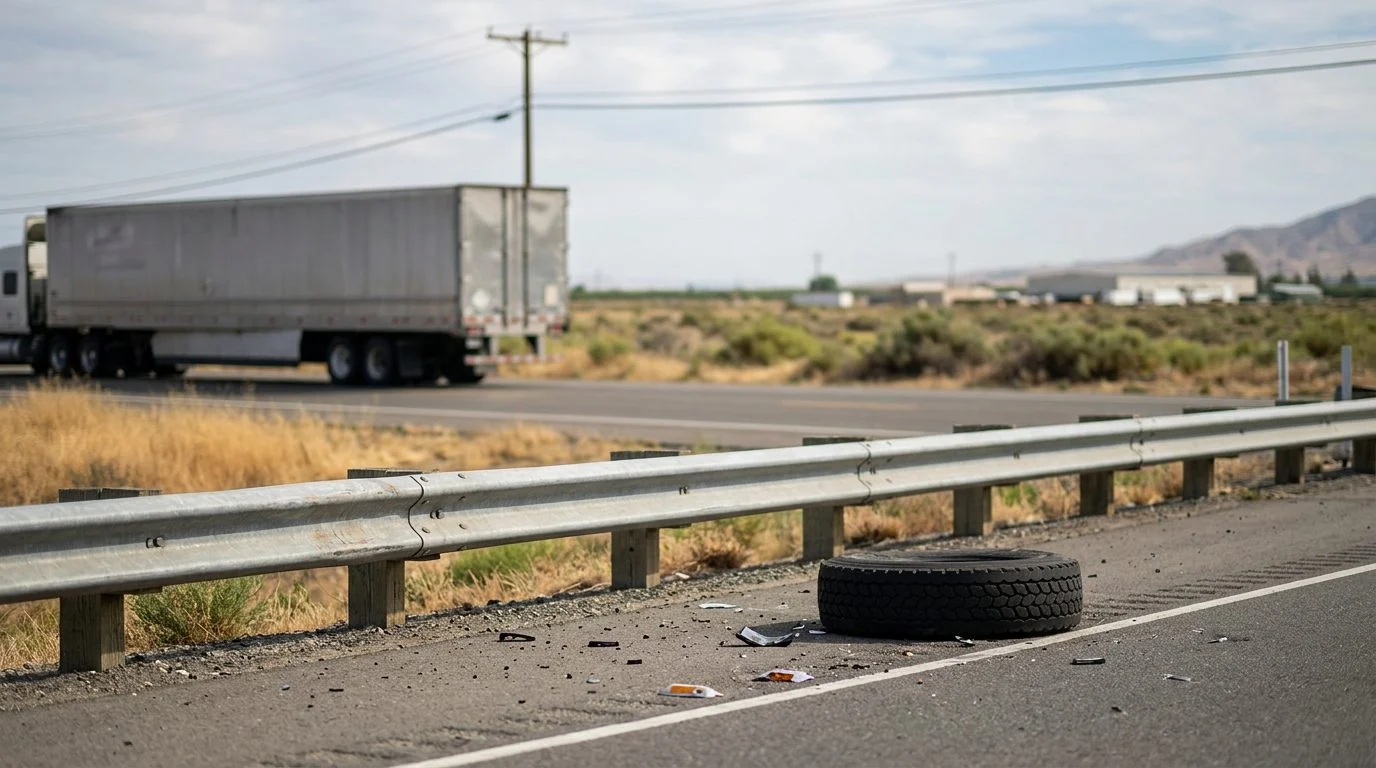
Many of the most useful records sit with the carrier, and federal retention periods decide how long they must be kept. Records that often matter include electronic logging device data, dispatch and trip records, driver qualification files, maintenance records, vehicle photos, and witness names. Families rarely hold these records themselves.
Retention periods set the clock. Under 49 C.F.R. § 379.3, after the required retention periods end, records may be destroyed at the discretion of each company’s management, but the company must still maintain records that adequately support financial and operational data required by the Secretary, and this does not excuse compliance with the lawful requirements of any other governmental body prescribing longer retention periods for any category of records. Under 49 C.F.R. § 396.3, maintenance records must be kept for one year where the vehicle is housed, and for six months after the vehicle leaves the carrier’s control.
Families can act now by keeping their own records. That includes notes on medical care, bills, pay records showing lost work time, and every letter from an insurer. Photos of the scene and the vehicles also help. Early written requests to preserve records are a common step, and a lawyer can help with that.
What Deadlines Apply After a Commercial Vehicle Crash?
For most injury and wrongful death claims, California generally allows two years from the injury to file a lawsuit. Under Code of Civil Procedure section 335.1, an action for injury to, or death of, a person caused by another’s wrongful act or neglect must be brought within two years.
Who may bring a wrongful death claim is set separately. Under Code of Civil Procedure section 377.60, a surviving spouse, domestic partner, children, and certain other listed persons may bring the claim. The decedent’s personal representative may also bring it on their behalf.
Government agencies add a shorter clock. If a city, county, or state agency may share responsibility, for example for a road defect, Government Code section 911.2 says a claim for death or personal injury must be presented not later than six months after the cause of action accrues. Six months is far shorter than two years, so timing matters from the first week.
Not sure what your next step is?
Talk it through with our team — the first consultation is free, confidential, and carries no obligation.
What Are the Serious Injury and Wrongful Death Issues in These Crashes?
Serious commercial vehicle crashes can cause catastrophic injuries or death, and both can bring long-term needs for care and income. Catastrophic injuries often need ongoing medical care, rehabilitation, and planning for future needs. Families may need to think about future treatment, help at home, lost earning ability, and changes to daily life. A full picture takes time to build. It usually relies on medical records and on the people who provide care.
Medical bills raise a separate question. The CMS Medicare secondary payer overview explains that when a person entitled to Medicare is in an accident involving liability insurance, that insurance pays first for accident-related health care services. The same overview says Medicare may make conditional payments, which must be repaid when a settlement, judgment, award, or other payment is made. Federal law takes precedence over state laws and private contracts.
When a crash causes a death, eligible family members may bring a wrongful death claim under the rules above. Families often also face funeral costs and the loss of a household’s support. Medical records, employment records, and the crash report help build a clear account of the injury and the loss.
How Does Colvin Accident Lawyers Work with Kern County Families?
Colvin Accident Lawyers works with Kern County families on commercial vehicle claims by explaining each step and tracking the deadlines that apply. The firm is based in Bakersfield and serves Kern County. It represents accident victims and families in truck, bus, car, motorcycle, bicycle, pedestrian, catastrophic injury, and wrongful death cases.
Our attorneys and support staff help families gather records, organize medical bills and wage information, and keep track of deadlines. A first step is often a conversation about the crash, the parties involved, and the records that may matter. We explain each step in plain language, so you know what is happening and why.
Donald Norman Colvin is the lawyer responsible for this site.
Talk With Colvin Accident Lawyers About Your Situation
You can talk with Colvin Accident Lawyers about the crash, the parties involved, and the records that may matter. You may be caring for an injured relative, coping with a death, or trying to understand a crash you did not choose. You don’t have to sort out the parties, the rules, and the deadlines alone.
Common Questions About Commercial Vehicle Crashes
Is a truck crash claim different from a car crash claim?
Commercial cases often involve more parties and federal trucking rules, so the records and steps can differ.
How long do families have to file?
California generally allows two years from the injury to file a lawsuit, subject to exceptions (Code Civ. Proc. § 335.1).
Is Colvin Accident Lawyers a Kern County commercial vehicle accident law firm?
Colvin Accident Lawyers is based in Bakersfield and serves Kern County families in commercial vehicle cases.
The initial consultation is free, confidential, and carries no obligation to continue (La consulta inicial es gratuita, confidencial y sin compromiso de continuar.). If a crash in Kern County has changed your family’s life, contact Colvin Accident Lawyers to talk through what happened.
How We Approach a Commercial Crash Case
Listening First
We start by hearing what happened, where it happened, and what you have been dealing with since the crash.
Organizing the Records
Commercial cases often involve police reports, photos, medical records and vehicle information. We help you keep track of what matters.
Keeping Families Informed
Our team explains each step in plain language, so you know what is happening and what comes next.
Focused on Recovery
Serious injuries and losses affect the whole household. We take the time to understand your family's needs.
Be Careful With Early Calls
Insurance representatives for trucking companies or vehicle owners may contact you quickly and ask for recorded statements. Speaking with a lawyer before you give a statement can help you understand what you are agreeing to.
Who May Be Involved in a Commercial Crash
The Driver
Commercial drivers may be subject to work schedules, logs and company policies that shape how the crash unfolded.
The Company
Trucking companies, bus operators and employers may be connected to the vehicle, the driver or the route.
The Vehicle Owner or Maintenance Provider
Repairs, inspections and equipment condition can be part of the picture in a commercial case.
Other Parties
Cargo handlers, contractors and property owners may also play a role, depending on the facts of the crash.