Wrongful Death Claims · Kern County
Understanding the Coroner's Report After a Fatal Crash
Losing someone in a crash raises hard questions, and the official paperwork can be confusing. Here is how the coroner's findings fit into the bigger picture.
By Donald Norman Colvin · Published November 15, 2026
A loved one died in a crash, and now a coroner’s report is in your hands or on its way. Yes, it matters, but it does not decide who was at fault on its own. It records how and why the person died. That makes it one important piece of a larger case.
This page explains what a coroner report covers after a fatal car accident in California, how it fits with other records, and who can bring a wrongful death claim and how long they have.
What a Coroner’s Report Is After a Fatal Crash in California
A coroner’s report is the county record of a death investigation, including a sudden, violent, or accidental death from a traffic crash. Counties run their own coroner offices, so your file may look different from another county’s.
A report usually lists the cause of death, the manner of death, and injuries found during the exam. A death certificate often follows.
Behind the report sits an investigative file. It can include autopsy findings, toxicology results, and notes about the scene. The report is one record among several created after the crash.
Knowing the difference matters. Cause of death is the medical reason a person died. Manner of death is a classification. Neither one names the person who caused the crash. Read the report with the rest of the file in mind, not alone.
Does the Coroner’s Report Matter in a Wrongful Death Claim?
Yes, it matters, because it documents how the person died and which injuries led to the death.
A wrongful death claim has to connect the crash to the death. The coroner’s findings may be relevant to that link, because they can tie the injuries to the cause of death.
The report does not decide fault. A wrongful death claim turns on proof that another person’s wrongful act or neglect caused the death. That is a question of evidence, and the answer depends on the facts of each case.
Think of the coroner’s report as one exhibit. Lawyers weigh it with the police report, medical records, and witness accounts. Each record fills in a different part of the story.
Families often expect the coroner to name who caused the crash. The coroner’s office focuses on medical facts. Questions about negligence are decided through evidence and, if needed, the courts. That is why the coroner’s findings should be read alongside everything else in the file.
What the Report Can Show: Cause of Death, Injuries, and Timing
The report can show whether the crash caused the death, and how the injuries and timing line up with the collision.
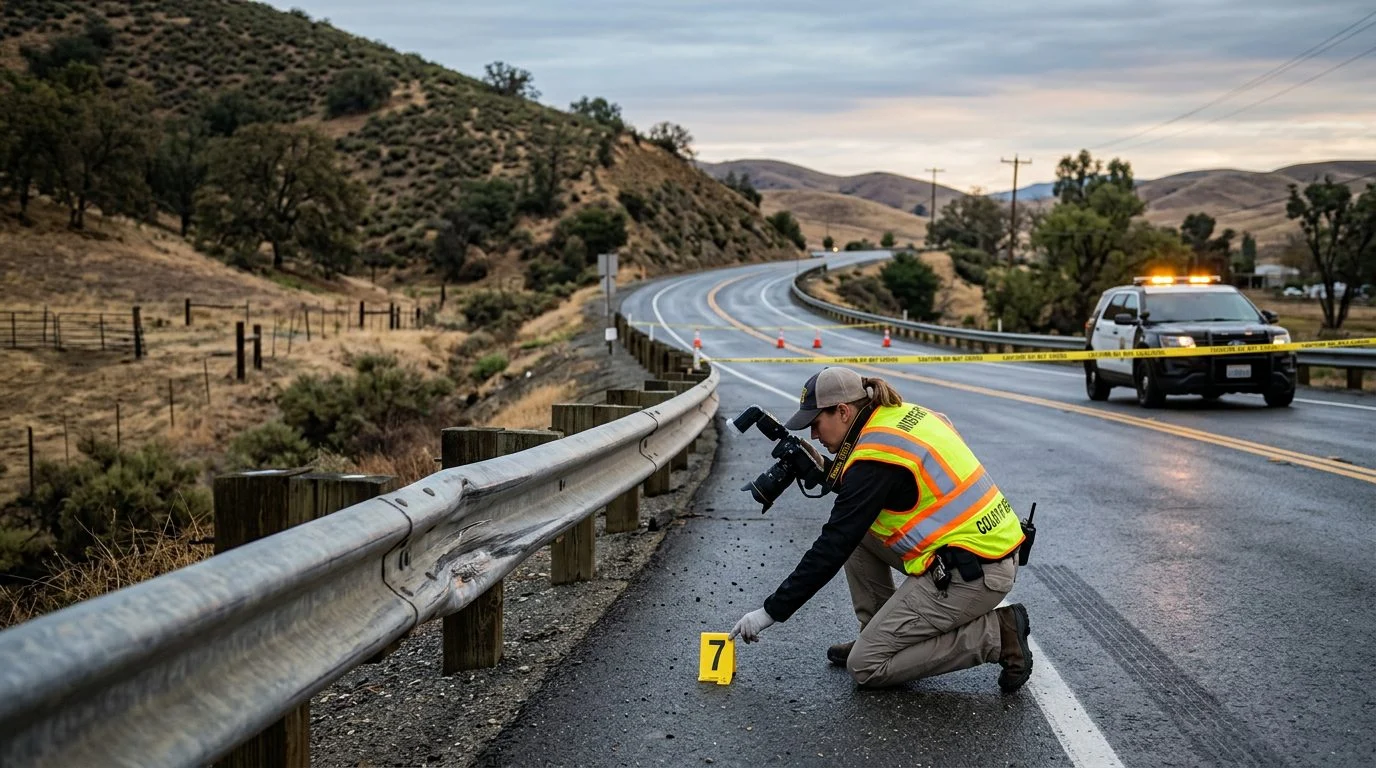
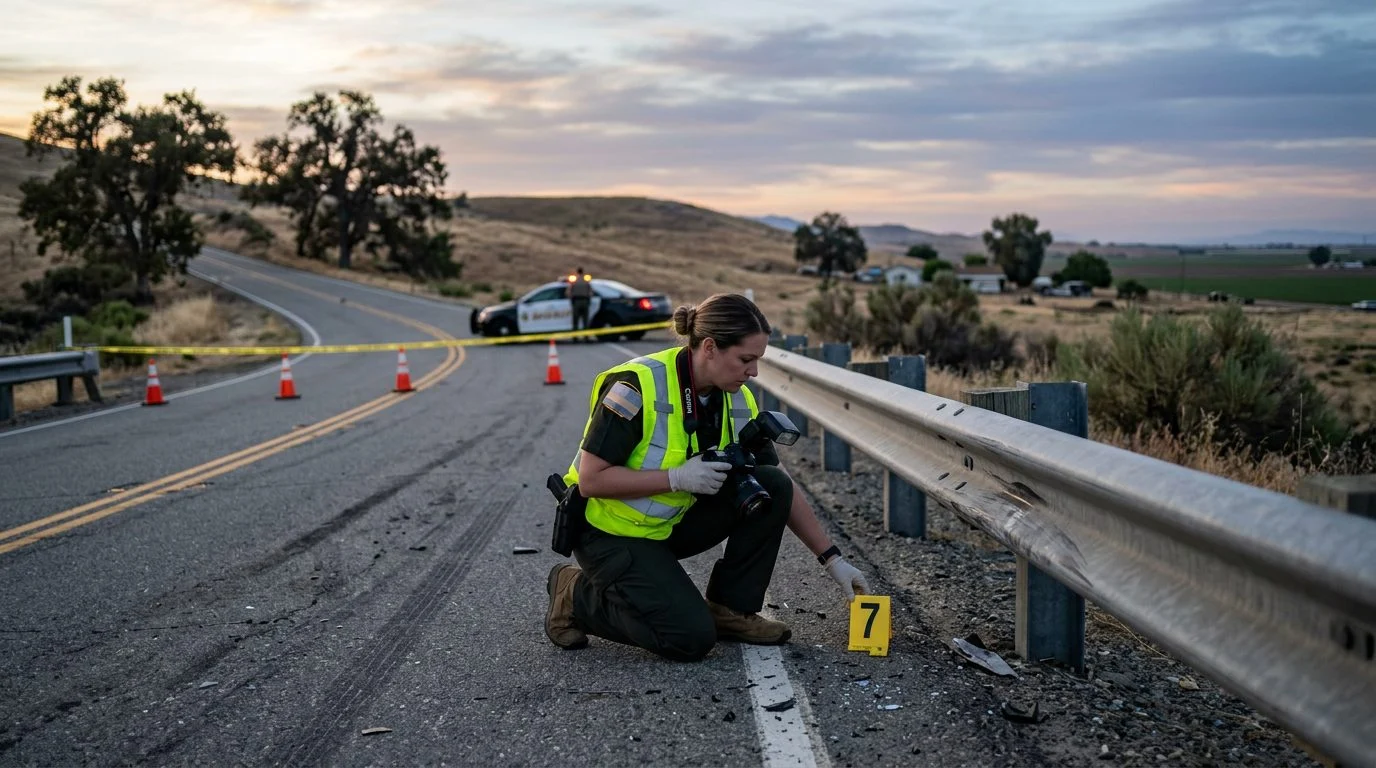
Injury findings do the most work. The coroner’s description of injuries can be compared with vehicle damage and crash reconstruction evidence. If the pattern fits the crash, that supports the link.
Timing matters too. If death came later, the time and place recorded in the report should match hospital and emergency records. A mismatch needs an explanation.
Toxicology results are lab findings about substances in the body, and they deserve a careful look. The other side may argue that the person’s conduct contributed to the crash. Read the full toxicology report, not just a summary line. A single result rarely explains how a crash happened.
How the Coroner’s Report Fits With the Police Report, Medical Records, and Witnesses
Each record answers a different question, so they are more useful when read together.
The police report documents the scene, the parties involved, and the officer’s first observations. The coroner’s report documents the medical cause and manner of death.
Medical records from the ambulance, emergency room, or hospital show when injuries were found and what treatment was given. They also help confirm the timeline.
Witness accounts add the sequence of events. Eyewitness statements, video, and photographs can support or question what the official records say. A witness may describe what happened before and after impact in ways a form does not capture.
A conflict among the records matters. If the police report and the hospital chart give different times, someone has to explain the gap. Records are compared side by side, and gaps can change how a claim is evaluated.
Start with a simple list of what each record says about time, place, injuries, and who was involved. Then mark where they agree and where they don’t.
When Official Records Contain Errors or Conflict
Official records can contain clerical or identification errors, so conflicting details should be checked against other evidence.
Start with the basics. Compare the full name, date of birth, date and time, location, vehicles involved, and how the injuries are described. One wrong name or time on a single document can cause confusion later.
Write each difference down. Note which record says what and where it came from. Then look for something that settles it, such as a second record, a witness, or a photo taken at the scene.
Inconsistencies among the coroner, police, and medical records can be raised during a claim. The goal is to verify the facts, not to assume that someone made a mistake.
Some differences are small and harmless. Others change the story of the crash. Sorting them out early keeps the file clean. Bring every copy, even the ones that seem minor, into one folder with a date on each. A simple timeline, with each record’s source beside each entry, can make the gaps easy to see.
Who Can File a Wrongful Death Claim in California and How Long They Have
Under California law, certain surviving family members and heirs can bring a wrongful death claim, and the general deadline is two years (Code Civ. Proc. § 335.1).
Under Code of Civil Procedure § 377.60, the decedent’s surviving spouse, domestic partner (a person who, at the time of the decedent’s death, was the domestic partner of the decedent in a registered domestic partnership), children, and children of a deceased child may bring the claim. If there is no surviving issue of the decedent, persons who would inherit the property under intestate succession, including a surviving spouse or domestic partner, may bring it. The decedent’s personal representative may also sue on their behalf.
Certain dependent people may also bring a claim under this statute: the putative spouse, children of the putative spouse, stepchildren, parents, or the decedent’s legal guardians if the parents are deceased, if they were dependent on the decedent. A minor who lived in the decedent’s household for the previous 180 days and depended on the decedent for half or more of their support may also qualify. A putative spouse (the surviving spouse of a void or voidable marriage whom the court finds believed in good faith that the marriage was valid) may too, if they were dependent on the decedent.
The deadline comes from Code of Civil Procedure § 335.1. It says an action for the death of an individual caused by another’s wrongful act or neglect must be brought within two years.
Government claims are shorter. If a public agency is involved, such as a city or county, Government Code § 911.2 requires that a death claim be presented within six months after it accrues. Under Government Code § 945.4, except as provided in §§ 946.4 and 946.6, no suit for money or damages may be brought against a public entity on a cause of action that requires a claim until a written claim has been presented and acted upon by the board, or deemed rejected. Section 946.6 permits a court petition for relief from § 945.4 only after an application for leave to present a late claim has been denied or deemed denied under § 911.6. That petition must be filed within six months after the denial.
Don’t wait on the coroner’s findings before acting on these dates.
Types of Damages: Wrongful Death and the Decedent’s Own Claim
A wrongful death claim seeks the family’s losses, while a survival action seeks losses the person suffered before death.
Family losses can include economic items such as medical expenses, lost earnings, and burial costs. They can also include non-economic losses such as loss of society and companionship. Civil Code § 1431.2 defines both kinds of loss.
Survival claims follow different rules. Code of Civil Procedure § 377.34 limits a survival action to losses the decedent sustained before death. Under subdivision (a), pain, suffering, and disfigurement are not included.
Subdivision (b) makes a narrow exception for certain actions filed on or after January 1, 2022, and before January 1, 2026, or granted a preference before 2022.
Fault also affects how non-economic damages are split. Under § 1431.2(a), in any action for personal injury, property damage, or wrongful death based on comparative fault, each defendant is liable for non-economic damages only in proportion to that defendant’s share of fault.
Insurance can limit what is collectible, and an early insurer offer is not the same as a court award. Keep the two claims separate in your notes so you don’t mix up whose losses are being counted.
Practical Steps Families Can Take Now With the Records
Start by gathering every record in one place, with dates and sources written down.
Keep copies of the death certificate, the police report, and every medical record you receive. Write down dates, names, and what each person said while your memory is fresh. Make a list of anyone who saw the crash, with contact details.
Be careful with recorded statements and releases. Ask what is being requested before you sign anything or speak on a recorded line.
Coroner timing varies by county. Your county’s timeline may differ.
Put the two-year deadline and any government-claim deadline on your calendar now. Don’t let the wait for paperwork push those dates aside.
Contact Colvin Accident Lawyers for a free, confidential consultation with no obligation to continue, to discuss how this claim applies to your family’s situation. If the loss involved a pregnancy, our page on fetal death wrongful death covers that situation.
Talk With Colvin Accident Lawyers About Your Family’s Crash Records
If the coroner’s report has arrived, or is still pending, you may be deciding what it means for a possible claim and how soon to act. Those are heavy questions to face while grieving.
Many families have questions the records alone can’t answer, like how the timeline fits together or which deadline applies to their loss. Bring the coroner’s report, the police report, and any hospital records you have. Bring your questions too.
Reach out through our contact page, and we can talk through the records in front of you. The initial consultation is free, confidential, and without obligation to continue. La consulta inicial es gratuita, confidencial y sin compromiso de continuar.
No one can promise a result, and we will be straightforward about what the records show.
Colvin Accident Lawyers, Bakersfield, California — responsible for this site. Donald Norman Colvin is the responsible attorney for this page.
Frequently Asked Questions
What does a coroner report show in a fatal car accident case?
A coroner report generally lists the cause of death, the manner of death, and findings from the autopsy and toxicology tests. It can also include details about injuries, which may help show how the crash affected the person who died.
How long does it take to get a coroner report after a fatal crash in California?
Timing varies by county and case, and toxicology or other testing can extend the timeline. Families can ask the county coroner’s office for the report, but access may be limited while the investigation is open.
Who can file a wrongful death lawsuit in California after a fatal car accident?
Under California law, a wrongful death claim is generally brought by a surviving spouse, domestic partner, child, or other heirs, or by a personal representative of the deceased person’s estate. Colvin Accident Lawyers offers a free, confidential first consultation with no obligation to continue.
How long do families have to file a wrongful death claim in California?
California generally requires a wrongful death lawsuit to be filed within two years of the date of death, though exceptions can apply. Because deadlines and rules depend on the facts of each case, it is important to speak with a lawyer promptly.
How the coroner's report fits into a fatal crash claim
Cause and manner of death
The report records the medical cause of death and how the death was classified, which can be an important starting point for the case.
Injury documentation
Autopsy findings and injury descriptions can help show how the crash affected the person who died.
Toxicology results
Test results are often central questions in a crash investigation, so they are reviewed closely alongside the other evidence.
Alongside other evidence
Police reports, scene evidence, witness statements, vehicle data, and medical records are typically reviewed together with the coroner's findings.
Do not assume the report answers every question
A coroner's report is one piece of evidence. It does not, by itself, establish who caused a crash or what a claim is worth. Each fatal crash depends on its own facts, and the full record should be reviewed before drawing conclusions.
Questions families often raise
Can I see the report?
Families often have questions about the report's contents and what it means. Bring those questions to a consultation so they can be reviewed with the full file.
What if the findings seem incomplete?
Reports can leave out details that matter. Medical records, the crash report, and other documentation can help fill in the picture.
Who reviews the evidence?
Colvin Accident Lawyers reviews coroner findings together with crash, medical, and witness evidence so families understand what the record shows.