Wrongful Death | Kern County and Surrounding Communities
Wrongful Death Claims Against a City or County in California
When a public agency may have played a role in a loss, families often face unfamiliar procedures and difficult questions. We help you understand the options and what comes next.
By Donald Norman Colvin · Published November 9, 2026
If a loved one died in a crash involving a city bus or a county vehicle, the deadlines work differently than many people expect. A wrongful death claim against a city or county in California generally must be presented in writing within six months, under Gov. Code § 911.2. That written claim comes before any lawsuit, so it is the first deadline to track. This article explains the claim step, what follows it, and what to do if the six months are close to ending.
A written claim against a city or county is due within six months
A written claim against a public entity for a death generally must be presented within six months after the cause of action accrues. Gov. Code § 911.2 sets that period for claims relating to a death or an injury to a person. Every case has its own dates, so the timeline should be reviewed for each matter. The claim is not the lawsuit. It is a separate step that must come first. A lawsuit against the city or county has its own deadline, covered later in this article. Missing the six-month window is serious, because the family can lose the right to sue the agency at all. That is why the first job is to identify the responsible public entity early. Colvin Accident Lawyers, based in Bakersfield, California, handles wrongful death cases that may involve public agencies. Our team can help you map out the dates.
If your loved one died in a crash involving a city, county, or public bus, you may have a claim with a short deadline, and our team can help you review it. Talk it through with our team — the first consultation is free, confidential, and carries no obligation.

Why a public entity claim works differently from a private lawsuit
A city or county is treated differently from a private driver or business. Under Gov. Code § 815, a public entity is not liable for an injury except as a statute provides. Its liability is also subject to statutory immunities and to defenses a private person could raise. A private defendant can usually be sued directly within two years under the two-year rule in Code Civ. Proc. § 335.1, for an action for assault, battery, or injury to, or for the death of, an individual caused by the wrongful act or neglect of another. A public entity is different. Gov. Code § 945.4 says that, except as provided in Sections 946.4 and 946.6, no suit for money or damages may be brought against a public entity on a cause of action for which a claim is required until a written claim has been presented and acted upon, or deemed rejected. So the two-year number does not remove the claim step. A common mistake is reading the two-year rule and assuming it governs every defendant. Another is naming the wrong agency. A city transit operator, a county road department, and a government vehicle driver can raise different questions. The entity should be identified early, before the dates start running.
The six-month claim deadline under Government Code section 911.2
The six-month rule is the one that catches families off guard. Gov. Code § 911.2 gives six months for claims relating to a cause of action for death or injury to a person. The claim must be presented as the Government Claims Act directs. That act sets the presentation rules, deadlines, and government responses for these claims. Because the period runs from accrual, write down the date of death and the six-month date as soon as possible. An insurance adjuster works for the insurance company, so it is worth reviewing each step with a lawyer before giving a detailed statement. The claim must go to the public entity itself. Keep proof of when and how the claim was delivered, such as a dated receipt or a certified-mail record. That proof helps show the claim was timely presented.
What the written claim must contain
A claim must include specific facts, not only a general complaint. Under Gov. Code § 910, it must show the claimant’s name and post office address. It must also show the address where notices should go. The claim must give the date, place, and other circumstances of the death. It needs a general description of the injury or loss, based on what is known when it is presented. If the public employee who caused the harm is known, the claim should name that person. If a bus operator or county employee was involved, describe that fact as clearly as you can. Rules about the amount of a claim can vary by case, so the details should be reviewed for each matter. If the amount claimed is less than $10,000, the claim must state the amount and how it was computed. If the amount claimed exceeds $10,000, the claim may not include a dollar amount, and it must say whether it would be a limited civil case. Write down what happened while memory is fresh, including the time, the location, and the vehicle or property involved.
After the claim: rejection, deemed rejection, and the lawsuit deadline
The public entity has a set period to act. Under Gov. Code § 912.4, the board must act within 45 days after the claim is presented. The claimant and the board can extend that time by written agreement made before the expiration of the period, or after it if an action based on the claim has not been commenced and is not yet barred by the period of limitations provided in Section 945.6. If the board fails or refuses to act in time, the claim is deemed rejected on the last day of that period. If a public entity rejects a written claim and the notice complies with Gov. Code § 913, suit must be filed within six months after the notice is personally delivered or deposited in the mail. If no notice complying with § 913 was given, suit must be filed within two years from the accrual of the cause of action (Gov. Code § 335.1). If notice was given under the statute’s notice rules, Gov. Code § 945.6 requires suit within six months after that notice is personally delivered or deposited in the mail. If notice was not given that way, the outside limit is two years from accrual under the same section. Read any rejection notice closely. The date and the method of delivery both matter. An unclear notice can raise questions about which deadline applies. Get those questions answered before the next date passes.
Late claims: Government Code section 911.4 and relief under section 946.6
A late claim is possible in limited cases, but it is not a substitute for filing on time. Under Gov. Code § 911.4, a written application for leave to present a claim may be made to the public entity within a reasonable time, not more than one year after accrual. The application must state the reason for the delay and attach the proposed claim. If that application is denied or deemed denied, Gov. Code § 946.6 allows a petition to the court within six months after the denial. Whether any exception applies depends on the facts of each case. Relief also requires that the failure to present the claim was through mistake, inadvertence, surprise, or excusable neglect, or another listed ground. Cal. Gov. Code § 946.6 reads: “(1) The failure to present the claim was through mistake, inadvertence, surprise, or excusable neglect unless the public entity establishes that it would be prejudiced in the defense of the claim if the court relieves the petitioner from the requirements of Section 945.4.” The public entity can defeat relief by showing it would be prejudiced. If relief is granted, suit must be filed within 30 days after that order. Each step has its own clock. Review these steps right away, even if the six months feel uncertain.
Not sure what your next step is?
Talk it through with our team — the first consultation is free, confidential, and carries no obligation.
Who may bring the wrongful death claim
A wrongful death claim may be asserted by certain family members or by the decedent’s personal representative on their behalf. Under Code Civ. Proc. § 377.60, the list starts with the decedent’s surviving spouse, domestic partner, children, and children of deceased children, or, if there are no surviving descendants, the persons who would inherit the decedent’s property by intestate succession. Other persons may qualify if they were dependent on the decedent. That group includes a putative spouse, stepchildren, parents, or legal guardians if the parents have died. A putative spouse is the surviving spouse of a void or voidable marriage who believed in good faith that the marriage was valid. A minor may also qualify if the minor lived in the decedent’s household for the previous 180 days and depended on the decedent for half or more of their support. Standing can be a real question in a family with a second marriage, a separate partner, or a child from another relationship. Document each person’s position early, so the family knows who may bring the claim.
What damages a wrongful death case may include
The statute sets a general standard for damages, not a fixed list. Under Code Civ. Proc. § 377.61, damages may be awarded that, under all the circumstances of the case, may be just. Those damages may not include damages recoverable under section 377.34. The court decides the respective rights of the persons entitled to an award. Against a public entity, punitive damages are not available under Gov. Code § 818, although Code Civ. Proc. § 377.34 otherwise allows, in an action by the decedent’s personal representative or successor in interest on the decedent’s own cause of action, punitive or exemplary damages the decedent would have been entitled to recover had the decedent lived. Gov. Code § 818 says a public entity is not liable for damages awarded under Civil Code section 3294 or other damages imposed to punish the defendant. Damages depend on the facts and the law at each step. Any discussion of an amount should follow the facts of the case, not a general idea of what a claim is worth.
Frequently asked questions
Does the six-month deadline apply to every wrongful death claim against a city or county?
The Government Claims Act covers claims against California public entities. The specific agency and its rules should be confirmed for each case.
Does presenting a claim mean the family must sue?
No. The claim is a required first step.
What if the six months have already passed?
Late-claim relief under Gov. Code § 911.4 may still be available if the application is made within a reasonable time, not to exceed one year after accrual. Each step has its own deadline, so act quickly.
Is the two-year deadline still relevant?
Yes. It applies to many claims against private defendants under Code Civ. Proc. § 335.1. It also appears in Gov. Code § 945.6 for some public entity cases where notice was not given under the statute.

Talk with Colvin Accident Lawyers before the claim window closes
If your loved one died in a crash involving a city bus, a county road, or another government vehicle, you may be weighing a claim with a six-month clock. Contact Colvin Accident Lawyers to review the date of death, the responsible agency, and the claim timeline for your family. Your first consultation is free, confidential, and comes with no obligation to continue.
Donald Norman Colvin, Colvin Accident Lawyers, Bakersfield, California — responsible for this site.
How Colvin Accident Lawyers Can Help Your Family
Focused on Wrongful Death Cases
Colvin Accident Lawyers focuses on wrongful death and other serious accident matters, including claims that involve public entities.
Early Review of Your Claim
We review the circumstances of the loss, the agency involved, and the records that may bear on the claim as early as possible.
Support for Surviving Family Members
We take time to listen to the family and explain, in plain language, the steps that may be required.
A Free, Confidential First Consultation
Your first consultation is free, confidential, and carries no obligation to continue.
Claims Against Public Entities Can Work Differently
A claim against a city, county, or other public agency may involve notice requirements and procedures that differ from a lawsuit against a private party. Contact us early so we can review the procedures that may apply to your situation.
What We Look at in a Wrongful Death Matter
The Circumstances of the Loss
We review how the death occurred, including road, sidewalk, property, or vehicle conditions that may be connected to the event.
The Public Agency Involved
We identify which city, county, or other public entity may be connected to the incident, since that affects how a claim is presented.
Records and Documentation
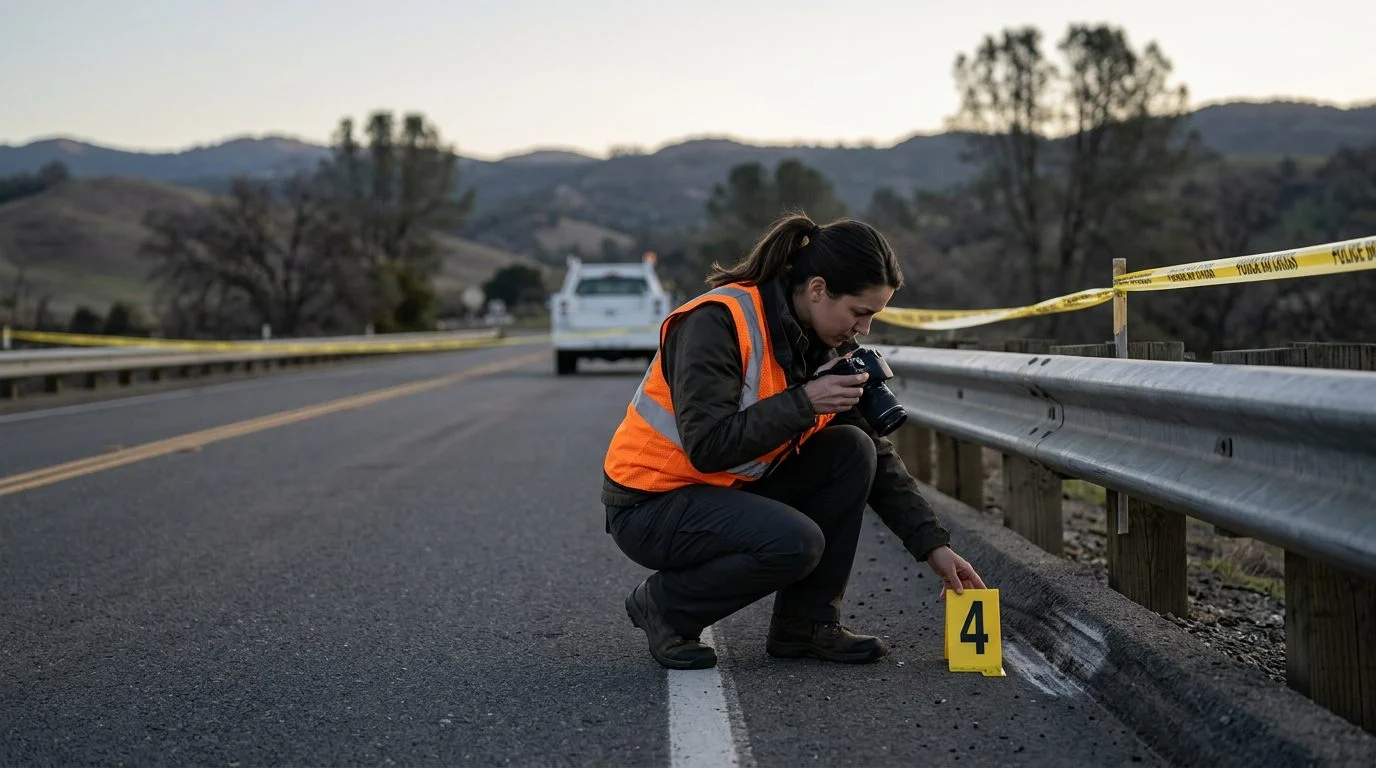
Police reports, photographs, maintenance records, and medical and employment information can all help build a clear picture of what happened.
Your Family's Questions
Losing a loved one raises personal and financial concerns. We discuss those questions openly so you can make informed decisions.