Wrongful Death | Bakersfield, CA
Losing a Loved One in a Crash? Get Clear Answers About Your Family's Claim
Grief and legal questions often arrive together. Colvin Accident Lawyers focuses on wrongful death and accident cases for families in Kern County and surrounding communities, and we take the time to explain your options in plain language.
By Donald Norman Colvin · Published November 16, 2026
A family that has lost someone in a crash often asks one hard question first: if the person who died was partly to blame, can a wrongful death claim in California still go forward? It can. A decedent’s share of fault reduces what can be recovered, but it does not, by itself, end the claim. How much it reduces depends on how fault is divided among everyone involved in the accident.
Short Answer: Yes, a Decedent’s Share of Fault Lowers the Award
Yes.
Because the claim comes from the accident itself, the same fault questions get asked about the person who died as about anyone else in the crash. Drivers, property owners, and companies may each carry a share of the fault.
Reading the rule correctly helps families avoid a common mistake. A fault percentage is one input into the case, not the end of it.
This page covers the comparative fault rule, who may bring the claim, how fault gets decided, and what a partial-fault finding does not change.
If an insurer is already blaming the person who died, you don't have to sort out the facts alone. Our team is glad to talk through your family's situation with you. Talk it through with our team — the first consultation is free, confidential, and carries no obligation.
How California’s Pure Comparative Fault Rule Works
There is no cutoff where a partly at-fault person recovers nothing.
Here is the arithmetic, with no dollar figures. If total damages are 100 units and the decedent is 20% at fault, 80 units remain recoverable. If the decedent is 70% at fault, 30 units remain. If the decedent is 0% at fault, nothing is reduced. This is an illustration of the math, not a prediction of any result.
The basic duty appears in Civil Code § 1714. Subdivision (a) makes a person responsible for injury caused by want of ordinary care. It also excepts the extent to which the injured person brought the injury on themselves through their own want of ordinary care.
Who Can Bring the Claim, and Why the Decedent’s Conduct Still Matters
Under Code of Civil Procedure § 377.60, the decedent’s surviving spouse, domestic partner, children, and issue of deceased children may assert the claim or, if there is no surviving issue of the decedent, the persons entitled to the decedent’s property by intestate succession may. A personal representative may assert it on their behalf. A personal representative may assert it on their behalf.
The statute also lists others. These include parents and stepchildren who were dependent on the decedent. It also includes a minor who lived in the decedent’s household for the previous 180 days and depended on the decedent for one-half or more of support.
The statute covers who may sue. It does not remove the accident from review. Whoever files, the questions about the crash, including the decedent’s movements and choices, remain part of the case. Section 377.61 also leaves the court to determine how an award is shared among those entitled to sue.
How Fault Gets Decided in a Wrongful Death Case
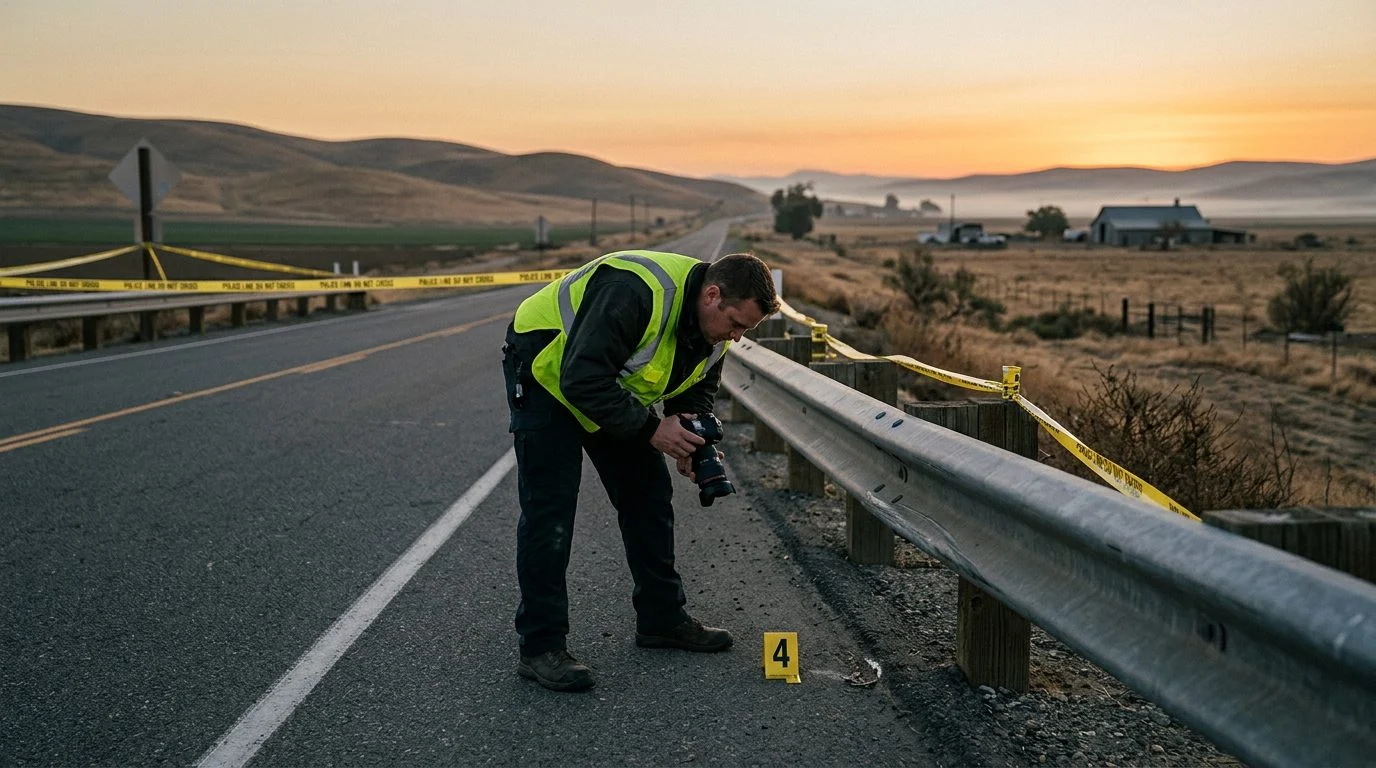
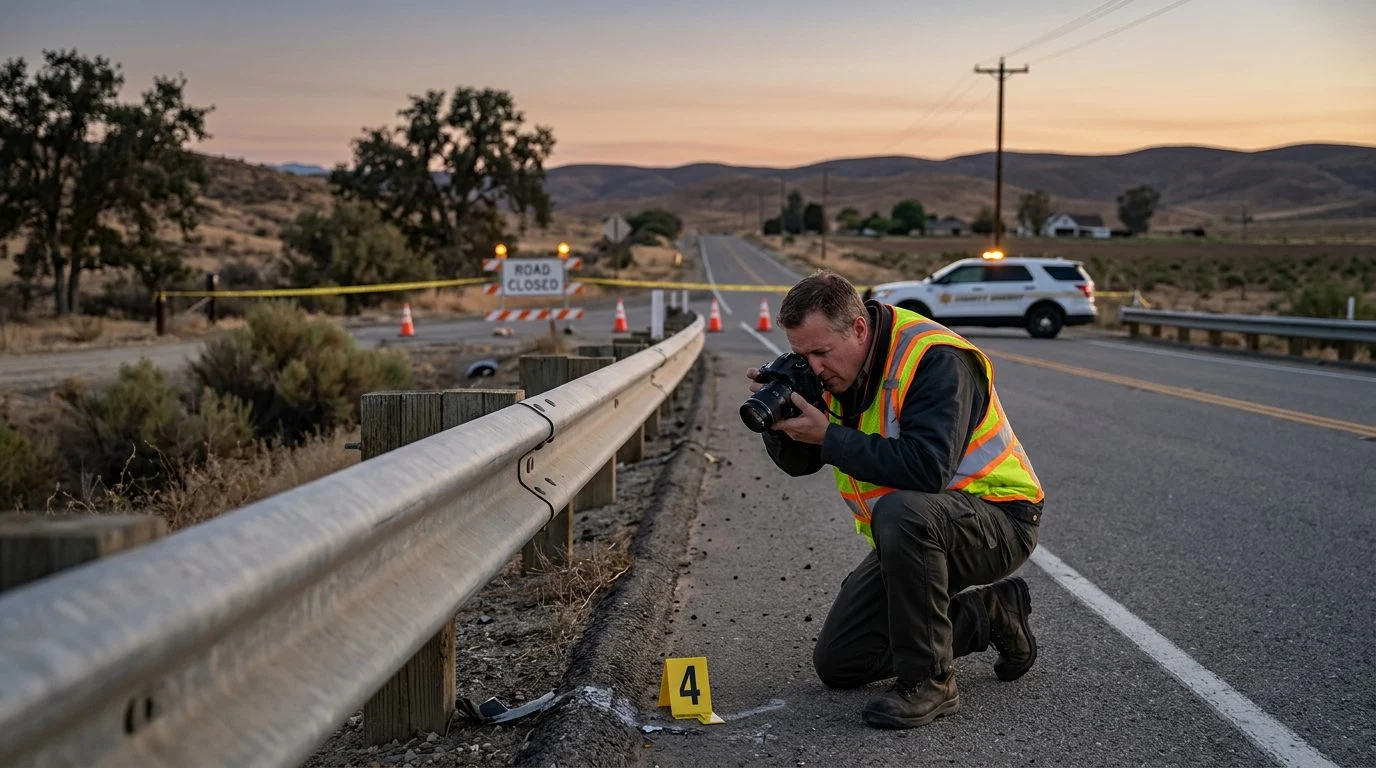
Fault is decided from evidence, and the person who died cannot tell their own story. Police reports, witness statements, photographs, vehicle or device data, medical records, and accident reconstruction analysis often fill that gap. A jury can assign the percentages at trial. Before trial, the parties may reach an agreed split.
California law can also create a presumption in traffic cases. Under Evidence Code § 669, a failure to use due care is presumed when four things are true:
- The person violated a statute, ordinance, or regulation of a public entity.
- The violation proximately caused the death or injury.
- The harm was the kind the rule was designed to prevent.
- The person harmed was within the class the rule protects.
That presumption can be rebutted. Proof that the person did what a reasonably prudent person would do while trying to follow the law can do it.
Because records can change or disappear, early preservation matters. Vehicle damage, phone data, and nearby camera footage are examples of evidence that should be secured early.
Common Fault Arguments in Pedestrian, Bicycle, Motorcycle, and Truck Crashes
Defense arguments often focus on what the decedent was doing in the moments before the crash.
Pedestrian cases often turn on where the person was walking. Under Vehicle Code § 21950, a driver must yield to a pedestrian in a marked crosswalk or an unmarked crosswalk at an intersection. That same section says a pedestrian must still use due care. A pedestrian may not suddenly step into the path of a vehicle that is an immediate hazard.
Outside a crosswalk, the rule shifts. Under Vehicle Code § 21954, a pedestrian on the roadway must yield to vehicles so near they constitute an immediate hazard. The driver still owes due care to that pedestrian.
Bicycle and motorcycle arguments often focus on lane position, speed, visibility, and compliance with traffic controls. Truck and bus cases may examine the decedent’s movements near large vehicles, such as cutting in front or stopping in a blind spot. The commercial driver’s conduct is reviewed too. Dog bite and premises cases may ask whether the decedent entered a restricted area or provoked an animal, while the owner’s or property owner’s duties are also reviewed.
These are arguments that may be raised. They are not conclusions about any particular case.
What a Partial-Fault Finding Does Not Change
A partial-fault finding lowers the amount recoverable. It does not erase the claim or the other parties’ responsibility.
California’s Civil Code § 1431.2 provides that, in any action for personal injury, property damage, or wrongful death based upon principles of comparative fault, each defendant’s liability for non-economic damages is several only and not joint, and each defendant is liable only for the amount of non-economic damages allocated to that defendant in direct proportion to that defendant’s percentage of fault. It says each defendant’s liability for non-economic damages is several only, not joint. Each defendant owes only the non-economic damages allocated to it, in direct proportion to its own percentage of fault.
The statute defines both categories. Non-economic damages are subjective, non-monetary losses. Examples include pain, suffering, emotional distress, and loss of society and companionship. Economic damages are objectively verifiable monetary losses, including medical expenses, loss of earnings, and burial costs. The several-only rule applies to the non-economic category.
Keeping those categories separate helps a family read a fault percentage correctly.
Not sure what your next step is?
Talk it through with our team — the first consultation is free, confidential, and carries no obligation.
Why an Insurer’s Early Fault Claim Deserves a Careful Look
An insurer’s early statement that the decedent was at fault is an opening position, not a court’s finding.
An adjuster may raise the decedent’s conduct before the family has seen the police report, vehicle data, or other records. That timing matters. A first offer built on incomplete facts is not the final word on fault or value.
Families can take a few practical steps. Keep copies of every letter, email, and call summary. Ask the insurer which records support its fault percentage. Don’t sign a release until you understand what the fault assignment means for the recovery.
Dividing any recovery among eligible family members is a separate question from fault. It is handled under the rules discussed above.
Talk With Colvin Accident Lawyers About Your Family’s Situation
If a family member has died and an insurer is already pointing toward them, you may be sorting out records, paperwork, and blame all at once. You don’t have to settle every question at once.
Who can bring a wrongful death claim in California?
Listed family members can, including a surviving spouse, domestic partner, or children, under Code of Civil Procedure § 377.60. A personal representative can also sue on their behalf.
Colvin Accident Lawyers is based in Bakersfield, California. Our team can talk through the accident facts and records you have, including how a fault argument may apply to your family’s situation. La consulta inicial es gratuita, confidencial y sin compromiso de continuar. You can reach us through our contact page.
Responsible lawyer: Donald Norman Colvin, Colvin Accident Lawyers, Bakersfield, California.
How Our Team Approaches Wrongful Death Cases
Compassion for grieving families
We understand that a claim is never only about paperwork. We listen first and move at a pace that respects what your family is going through.
A careful look at the facts
We review the accident report, the evidence, and the records that show what happened, so every question is answered from the facts of your case.
Plain-language explanations
Our team explains each step, including how fault questions may affect a claim, so you can make informed decisions with a clear picture of what lies ahead.
A confidential first conversation
The first consultation is free, confidential, and carries no obligation to continue.
Important: Evidence Can Change Quickly
Accident scenes, vehicles, and witness memories change over time. Speaking with a lawyer early can help your family understand what information may matter. Every case depends on its own facts, and results will differ from one case to another.
What Families Often Bring to the First Conversation
Accident details
Police or incident reports, the date and location of the crash, and any notes about the vehicles or conditions involved.
Photos and witness information
Pictures of the scene, the vehicles, and any names or contact details for people who saw what happened.
Medical and funeral records
Hospital, emergency, and coroner communications, along with the bills and records your family has received.
Insurance correspondence
Letters, claim numbers, and any statements from insurers, so we can review what has already been said.