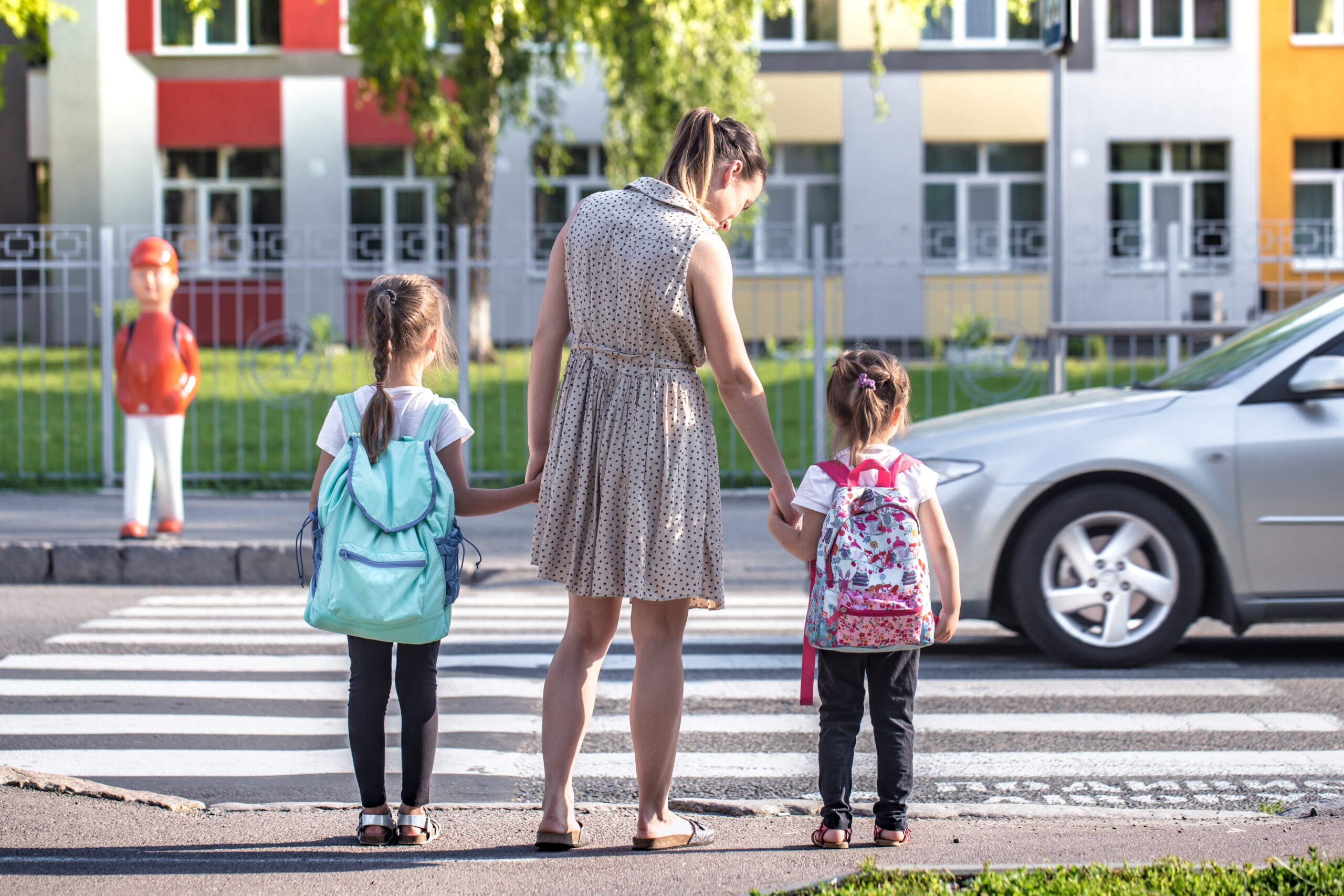
Every school day, thousands of Bakersfield children walk to class, cross busy streets, and head home in the afternoon. Most arrive safely. When a driver speeds, rolls through a crosswalk, or looks at a phone, however, the result can be heartbreaking. School crosswalk accidents often involve young children who cannot judge traffic the way adults can. This guide explains the laws that protect students, who may bear responsibility after a crash, and how families can help prevent these tragedies.
Why School Crosswalk Accidents Happen
Crashes near schools tend to share a few common causes:
- Distracted driving, especially parents checking phones during drop-off and pickup.
- Speeding through school zones.
- Failing to yield to children in marked or unmarked crosswalks.
- Illegal passing of vehicles stopped at a crosswalk.
- Rushed drop-offs, with drivers pulling in and out of traffic quickly.
- Poor visibility from parked cars, early morning glare, or winter darkness.
Children face extra risk because they are smaller, harder to see, and may dart into the street without warning. Statewide, the California Office of Traffic Safety reports that vehicles struck and killed 1,106 pedestrians in 2023.
California Laws That Protect Students
Several state laws aim to prevent school crosswalk accidents.
School zone speed limits. Under Vehicle Code section 22352, the speed limit is generally 25 mph when approaching or passing a school with a posted “SCHOOL” warning sign while children are going to or leaving school, during school hours, or during the noon recess. The sign may appear up to 500 feet from school grounds. Some local areas may set even lower limits.
Crosswalk right-of-way. Vehicle Code section 21950 requires drivers to yield to pedestrians in marked crosswalks and in unmarked crosswalks at intersections, and to use due care for pedestrians at all times.
Crossing guards. Drivers must follow the directions of school crossing guards. Stopping completely when a guard signals helps protect children as they cross.
Who May Be Responsible for School Crosswalk Accidents?
Several parties may share responsibility, depending on the facts:
- The driver who struck the child, especially if the driver was speeding, distracted, or failed to yield.
- An employer, if the driver was working at the time, such as a delivery or rideshare driver.
- A city, county, or school district, if a dangerous condition contributed, such as a missing crosswalk, broken signal, faded markings, or overgrown landscaping that blocked visibility.
- A school bus operator, if a bus driver or bus company acted negligently.
Our page on school bus accidents in Bakersfield covers bus-related crashes in more detail.
Claims Against Public Agencies
When a government entity shares responsibility, special rules apply. Under Government Code section 835, a public entity may be liable for a dangerous condition of its property if its employee created the condition or the entity had notice of it in time to fix it.
These claims carry short deadlines. Families generally must file a written claim with the responsible agency within six months. Because of this tight timeline, families should speak with an attorney quickly after any crash near a school.
Does a Child’s Behavior Affect the Claim?
Insurers sometimes argue that a child ran into the street or crossed outside the crosswalk. California follows a comparative fault system, but courts generally consider a child’s age and maturity when deciding what behavior was reasonable. Courts do not expect young children to act like adults near traffic.
Drivers, meanwhile, carry a heightened responsibility in school zones. They must watch for children, slow down, and expect the unexpected. Evidence such as traffic camera footage, witness statements from crossing guards and parents, and vehicle data can show how fast a driver was going and whether the driver yielded.
Common Injuries in School Crosswalk Accidents
Children struck by vehicles often suffer serious injuries, including:
- Head injuries and concussions.
- Broken arms, legs, and pelvises.
- Spinal injuries.
- Internal injuries.
- Cuts, scarring, and emotional trauma.
Some injuries affect a child’s development and schooling for years. Parents can learn more in our article on traumatic brain injury in children.
Safety Tips to Prevent School Crosswalk Accidents
Everyone plays a role in protecting students.
For parents:
- Walk the route with younger children and point out safe crossing spots.
- Teach children to cross only at crosswalks and to make eye contact with drivers.
- Remind older kids to put phones away while crossing.
For drivers:
- Slow down in school zones and watch for children near parked cars.
- Never pass a vehicle stopped at a crosswalk.
- Follow every signal from crossing guards.
- Avoid phone use during drop-off and pickup.
For schools and districts:
- Staff crosswalks with trained crossing guards during peak hours.
- Design drop-off zones that keep cars away from walking routes.
- Report faded markings, broken signals, and missing signs to local officials promptly.
The National Highway Traffic Safety Administration also urges drivers to follow speed limits near schools and wherever children are present.
What to Do After a School Crosswalk Accident
If your child suffers an injury, get medical care first, then gather information and report the crash. Our guide to the steps to take after your child’s crosswalk injury walks families through the process. Families should also review our article on school zone speeding accidents.
Claims against private parties generally carry a two-year deadline under Code of Civil Procedure section 335.1, and special rules may apply to children. Claims against public agencies require much faster action.
Talk With a Bakersfield Pedestrian Accident Lawyer
When a child suffers an injury, families deserve answers and support. At Colvin Accident Lawyers, we listen with compassion and fight for the accountability your family deserves. Learn more about our Bakersfield pedestrian accident lawyer services, or read what our clients say.
Call (661) 616-1177 or contact us online. We answer the phone 24/7.