Motorcycle Accidents | Bakersfield & Kern County
Your Motorcycle Accident Lawsuit, Step by Step
A motorcycle injury claim moves through distinct stages, from the crash scene to resolution. Here is what to expect at each one, and how Colvin Accident Lawyers can help you through them.
By Donald Norman Colvin · Published October 25, 2026
So how long does a lawsuit take for a motorcycle accident? Some cases settle within months. Others take years, especially if they go to trial. The answer depends on the facts of your case, including your injuries, who is at fault, and how the insurance company responds. This guide walks through each stage, from the first insurance call to the day money reaches the injured person, plus the deadlines that start the clock in California.
How Long a Motorcycle Accident Lawsuit Usually Takes
Most motorcycle accident cases move through the same stages, and many settle before any trial date. A settlement usually ends a case sooner than a trial does, because a trial needs a court date, witness schedules, and a jury.
It helps to think of the timeline in five stages:
- The claim stage: the insurance company gets involved and gathers information.
- The lawsuit stage: a complaint is filed with the court.
- Discovery: both sides collect facts and evidence.
- Resolution: the case ends in a settlement or a verdict.
- Collection: money is paid and final bills are settled.
The date a case resolves can come before the money arrives. A settlement may be agreed on, but payment, lien resolution, and closing paperwork can take more time. Plan for that gap between agreement and payment.
If you're still in treatment or waiting on an insurance adjuster, you don't have to sort out the timeline alone. We're glad to talk through what applies to your motorcycle accident. Talk it through with our team — the first consultation is free, confidential, and carries no obligation.

The Claim Stage Before a Lawsuit Is Filed
Most motorcycle crashes start as an insurance claim before any lawsuit exists. The claim begins when the rider or family notifies an insurer, and the adjuster starts gathering information.
During this stage, the adjuster may ask for a recorded statement and signed medical authorizations. Many people give a statement before they fully understand their injuries. Anything said early can be used later, so it helps to think before speaking with an insurer.
Medical treatment often runs at the same time. Injuries are easier to value once care has progressed and the medical records show the diagnosis, the treatment, and the costs. In the early weeks, the full picture usually isn’t clear yet.
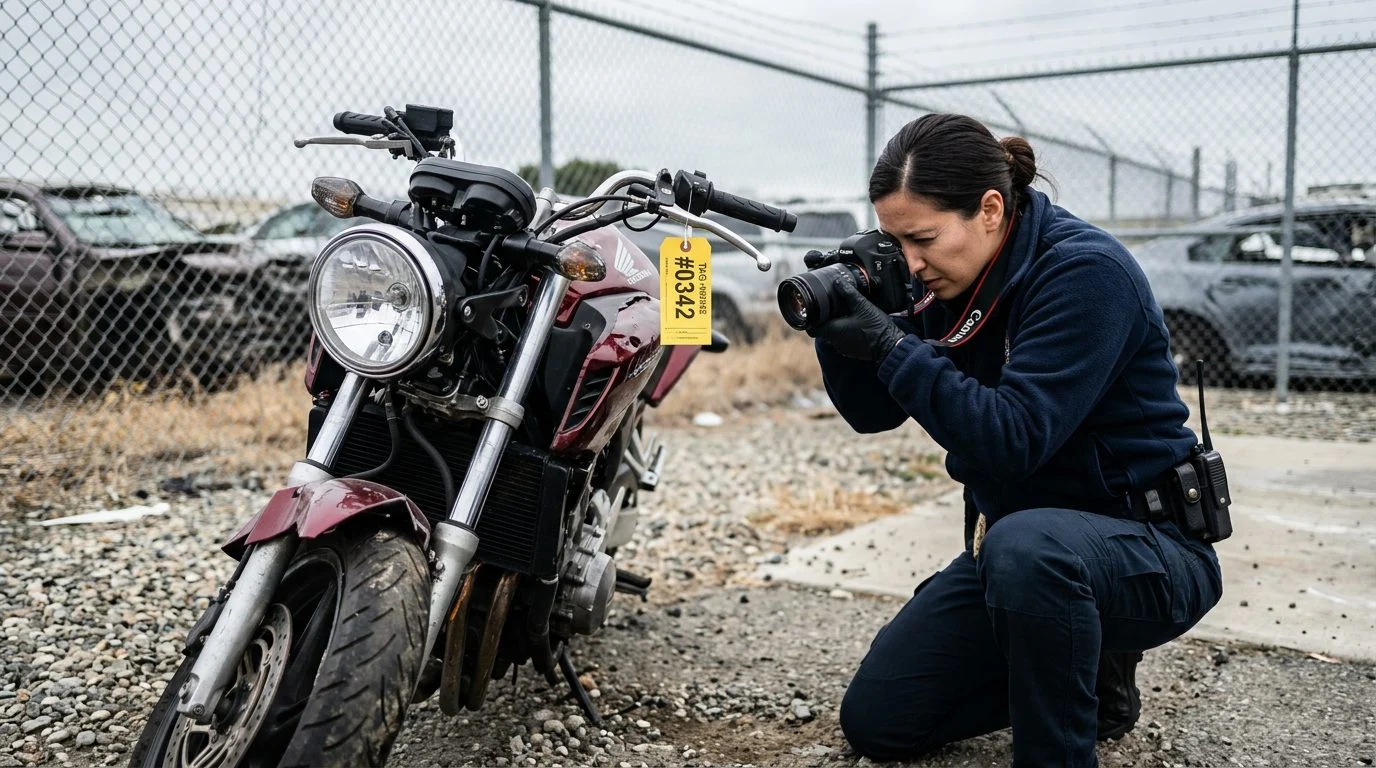
Evidence gets collected during this stage too. The police report, photos of the scene, witness names, and damage to the motorcycle all matter. Evidence can disappear quickly. Repairs, a sold bike, or a cleaned-up scene can remove proof that shows how the crash happened.
Deadlines That Start the Clock in California
For most California injury and wrongful death claims, a lawsuit must be filed within two years. Code Civ. Proc. § 335.1 sets that two-year period for injury to a person, and for death, caused by another’s wrongful act or neglect. The California Courts Self Help Guide notes that these deadlines have exceptions and tolling rules, so the date in your case may differ.
Government claims need a faster start. If a city, county, or state agency may be responsible, such as for a dangerous road condition, a written claim generally must come first. Under Gov. Code § 911.2, a claim for death or injury generally must be presented not later than six months after the cause of action accrues, meaning the date the claim arose.
After that claim is presented, a lawsuit against a public entity follows its own filing rules under Gov. Code § 945.6.
Missing a deadline can end a claim. That’s why an early review of the dates matters, especially when a government agency could be part of the case.
Filing the Lawsuit and the Discovery Phase
A lawsuit starts when a complaint is filed with the court. The defendant is formally served, has time to respond, and the case moves into discovery. Discovery is the stage where both sides collect facts.
Discovery usually includes written questions, requests for documents, collection of medical records, and depositions. A deposition is sworn testimony given outside the courtroom and recorded by a court reporter.
Investigation runs alongside discovery. Scene evidence, the motorcycle’s condition, nearby business video, and phone records can all matter. Some evidence needs to be preserved quickly. Some witnesses move or become hard to reach, and that can slow the schedule.
Court calendars add time, too. Judges set dates for motions and hearings, and cases with more parties take longer to prepare.
One common mistake is posting about the crash on social media. The other side can use posts to question injuries or fault.
Factors That Can Lengthen or Shorten a Motorcycle Accident Case
Injury severity, disputed fault, and the pace of records and insurers have the biggest effect on timing.
Injuries. A case often moves more clearly once the rider’s medical condition has leveled off. Doctors often call this point MMI. Before then, the full cost of care and future needs is hard to measure.
It does reduce the recovery in proportion to that fault. Disputes over who caused the crash can add months of investigation.
Complexity. Cases with several vehicles, a commercial truck or bus, or a claim against a public entity usually involve more parties and more records.
Records and witnesses. Hospitals, police agencies, and witnesses don’t always respond on the same schedule. One missing record or unavailable witness can slow the whole case.
Insurance company practices. A carrier that requests more information, disputes damages, or takes weeks to reply can stretch the timeline. A carrier that responds promptly can shorten it.
Court schedules. Trial dates depend on the court’s calendar. A case set for trial moves more slowly than one that resolves early.
Settlement, Trial, and Collecting the Recovery
A settlement usually ends a case sooner than a trial does. Settlement talks often start with a demand package, which is a written summary of injuries, bills, and fault evidence. The insurer responds, and back-and-forth negotiations follow.
Either side can also serve a written settlement offer under Code Civ. Proc. § 998, not less than 10 days prior to commencement of trial or arbitration. If a defendant’s offer isn’t accepted and the plaintiff doesn’t obtain a more favorable result, the plaintiff can’t recover their own costs after the offer and must pay the defendant’s costs from the time of the offer.
A trial adds jury selection, presentation of evidence, witness testimony, and a verdict. It takes longer because each step needs court time.
After a judgment or settlement, payment and closing steps begin. Medical liens, unpaid bills, and case costs may need to be resolved before the injured person receives funds.
Settlement money is also a tax question.
Not sure what your next step is?
Talk it through with our team — the first consultation is free, confidential, and carries no obligation.
Common Questions About Motorcycle Accident Cases
The questions below cover timing points that often come up in motorcycle cases.
How long do I have to file a motorcycle accident lawsuit in California?
For most injury claims, the deadline is two years under Code Civ. Proc. § 335.1. If a public entity may be responsible, a written claim for death or for injury to person or to personal property or growing crops must be presented within six months under Gov. Code § 911.2; other claims must be presented within one year.
How long does it take to recover from a motorcycle accident?
Healing time varies with the injury and the treatment. Legal timing and medical timing often run side by side, and a case may wait until treatment has leveled off.
How much can I recover for pain and suffering?
No single formula sets pain and suffering, also called non-economic damages. The amount depends on the injury, how long it lasts, and the evidence. Our car accident compensation guide covers these points in more detail.
Can family members bring a wrongful death claim after a motorcycle crash?
Under Code Civ. Proc. § 377.60, a surviving spouse, domestic partner, or children may bring the claim. Other listed relatives may also qualify: if there is no surviving issue, the persons, including the surviving spouse or domestic partner, who would be entitled to the property of the decedent by intestate succession; and, if they were dependent on the decedent, the putative spouse, stepchildren, parents, or legal guardians listed in subdivision (b), as may the decedent’s personal representative on their behalf.
How much of a settlement does the injured person keep?
Less than the headline figure, in most cases. Liens, medical bills, case costs, taxes, and attorney’s fees can all reduce the net amount, along with any written agreements.
Talk With Colvin Accident Lawyers About Your Motorcycle Accident
If you’re still in treatment, waiting on an adjuster, or trying to make sense of a loss in your family, you don’t have to work out the timeline alone. A conversation can cover the deadlines that may apply to your motorcycle accident, including the two-year rule and the six-month government claim rule described above.
Colvin Accident Lawyers offers a free initial consultation that is confidential and carries no obligation to continue. Contact Colvin Accident Lawyers to start that conversation.
For a broader look at injury claims, see our car accident lawyer guide.
Colvin Accident Lawyers, Bakersfield, California — responsible for this site.
Why Start the Conversation With Us
Focus on Motorcycle Injury Cases
We represent riders, passengers and families in motorcycle accident cases, along with the other injury matters we handle, including car, truck, bus, pedestrian and catastrophic injury claims.
Confidential First Consultation
Your first consultation is free, confidential and comes with no obligation to continue.
Guidance at Every Stage
From early evidence gathering to filing and resolution, our team keeps you informed about what comes next in your case.
Reach Us Directly
Call Colvin Accident Lawyers to speak with someone about what happened and what your options may be.
Before You Speak With an Insurer
Insurance adjusters work for the insurance company, not for you. Do not give a recorded statement, sign a release or accept a settlement offer until you have discussed your situation with a lawyer.
The Motorcycle Accident Lawsuit Timeline
The Crash and the First Days
Get medical care, report the crash to police, and keep your helmet, gear and motorcycle. Write down what you remember while it is fresh.
Investigation and Evidence
Police reports, photos, witness accounts, traffic camera footage and vehicle data help show how the crash happened and who may be responsible.
Insurance Claim and Demand
Your claim is presented to the at-fault party's insurer, and your injuries, treatment and losses are documented so the claim can be evaluated.
Filing the Lawsuit
If the claim cannot be resolved fairly, a lawsuit is filed in the proper court. Timing rules apply, so early consultation matters.
Discovery and Negotiation
Both sides exchange records, take depositions and evaluate the evidence. Many cases resolve through negotiation or mediation before trial.
Trial or Resolution
If a case does not settle, it may go to trial. Whatever the path, you will be kept informed of decisions that affect your case.