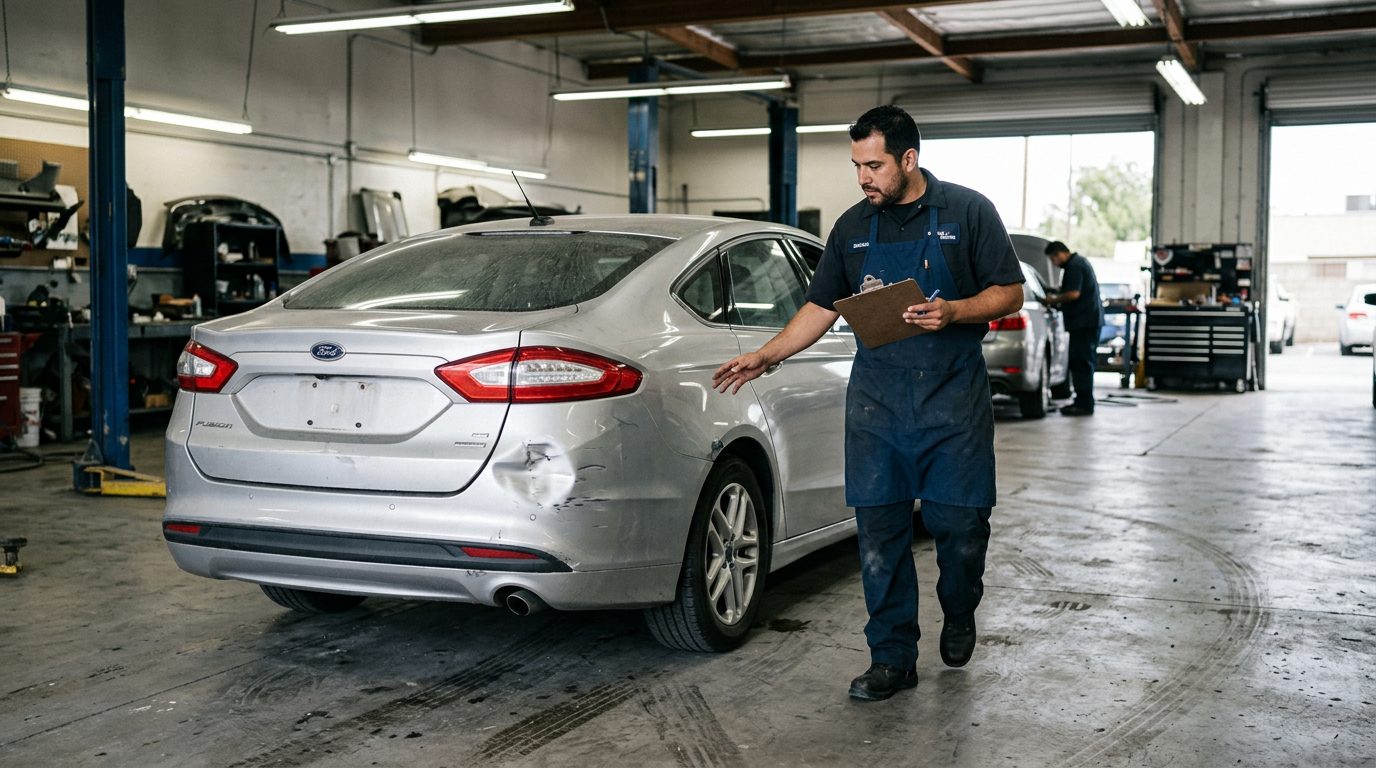
Car Accident Lawyer in Bakersfield, California
Hurt in a Car Accident in Bakersfield? Talk With Colvin Accident Lawyers First.
Get a free, confidential first consultation with no obligation to continue. We represent drivers, passengers and families injured in car accidents throughout Kern County and the surrounding area.
By Donald Norman Colvin · Published October 15, 2026
Car Accident Lawyer in Bakersfield, California
A car accident lawyer helps people hurt in a crash understand who may be responsible, which deadlines apply, and what steps protect their claim. In California, most injury lawsuits must be filed within two years (Code Civ. Proc. § 335.1). Claims against a public entity can have a much shorter deadline. Colvin Accident Lawyers is based in Bakersfield, California. Donald Norman Colvin is the attorney, and the practice represents people injured in car crashes and their families.
Not sure what your next step is?
Talk it through with our team — the first consultation is free, confidential, and carries no obligation.
What does a car accident lawyer do?
A car accident lawyer looks at how the crash happened, who was at fault, and what injuries and losses followed. The lawyer then handles communication with insurers and, when needed, files a lawsuit. At Colvin Accident Lawyers, Donald Norman Colvin is the lawyer on each matter. Our team, which includes support staff, keeps the office work moving. That work includes organizing records and tracking deadlines.
Who can be responsible after a California car crash?
Fault usually turns on whether someone failed to use ordinary care. California law makes everyone responsible for injury caused by a want of ordinary care (Civil Code § 1714). That can include a driver who runs a red light, a driver who is distracted, or a driver on the job for a company.
Vehicle owners can also face liability in some situations. The law sets limits on that liability, so the facts of each case matter.
When a public vehicle is involved, different rules apply. Those rules are covered in the deadlines section below.
What are California’s car accident filing deadlines?
Most personal injury lawsuits in California must be filed within two years of the injury (Code Civ. Proc. § 335.1). A claim against a public entity has a shorter first step. Here are the main deadlines.
- Two years for most lawsuits. Code of Civil Procedure § 335.1 generally requires an action for injury to a person caused by another’s wrongful act or neglect to be filed within two years.
- Six months for a claim against a public entity. A claim for injury to a person generally must be presented within six months of the cause of action accruing, under Government Code § 911.2.
- Suit deadline after a claim. Government Code § 945.6 sets when a suit against a public entity must be filed. That deadline depends on how written notice was given.
Many people assume the two-year clock is the only one that matters. In a crash with a government vehicle, the six-month claim step comes first. Don’t wait on the claim step.
How does California divide fault in a car accident?
California uses comparative fault. Other rules can also limit recovery. Civil Code § 3333.4 is a separate bar on non-economic damages under Civil Code § 3333.4 that applies in two situations: where the injured person was convicted of a Vehicle Code § 23152 or 23153 offense, or where the injured person was an uninsured owner or an operator who could not show financial responsibility, subject to the statute’s exception for an uninsured owner injured by a convicted impaired driver, and Civil Code § 1431.2 limits each defendant’s liability for non-economic damages to that defendant’s share of fault. Fault percentages still matter a great deal, so the crash facts need careful review.
What should you do right after a crash?
California law requires a driver to report a crash in some cases. Under Vehicle Code § 16000, a driver involved in an accident that caused over $1,000 in damage to any one person’s property, or bodily injury, or death, must report it within 10 days. The report can be made personally or through an insurance agent, broker, or legal representative.
A driver must also stop. Under Vehicle Code § 20001, a driver in an accident that injures or kills someone must immediately stop at the scene. Leaving the scene is a crime. The penalties increase when the injury is death or permanent, serious injury.
Hit-and-run crashes raise extra questions, such as how to identify the other driver and which insurance applies. Those questions depend on the facts of each crash.
Not sure what your next step is?
Talk it through with our team — the first consultation is free, confidential, and carries no obligation.
When can you not recover pain and suffering damages?
In some motor vehicle cases, California law bars recovery of non-economic losses such as pain and suffering. These are the damages that compensate for pain, inconvenience and disfigurement. Under Civil Code § 3333.4, except as provided in subdivision (c), a person shall not recover non-economic losses in an action to recover damages arising out of the operation or use of a motor vehicle if any of the following applies:
- The injured person was driving in violation of the Vehicle Code’s impaired-driving rules and was convicted of that offense.
- The injured person owned a vehicle in the accident that was not insured as state financial responsibility laws require.
- The injured person was the operator of a vehicle in the accident and cannot show financial responsibility as those laws require.
The statute also has an exception. If an uninsured owner was hurt by a motorist convicted of impaired driving, that owner is not barred from recovering non-economic losses. Insurance status and the other driver’s record often decide which rule applies. Those facts need an early look.
Why do spine and neck injuries need early medical records?
Spinal injuries often need prompt, well-documented medical care. The National Institute of Neurological Disorders and Stroke explains that the spinal cord has three layers of protective tissue, and cerebrospinal fluid surrounds it to cushion it from shock or injury.
The same source explains that cervical spinal nerves C1 to C7 send signals to the back of the head, the neck and shoulders, the arms and hands, and the diaphragm. An injury between C1 and C4 can stop breathing. Those facts show why the medical record matters. Insurers often look for gaps in treatment, so keep every appointment and follow each doctor’s plan. For more on these cases, see the catastrophic injury lawyer page.
How do truck and bus crashes differ?
Commercial truck and bus cases often involve federal rules that create records worth requesting early. The Federal Motor Carrier Safety Administration explains that drug and alcohol testing may be required for commercial driver’s license drivers after certain crashes. Those rules provide that no motor carrier shall permit or require any driver used by it to drive such a vehicle unless the driver complies with its requirements.
Whether that theory fits a given crash depends on its facts. For commercial vehicle cases, see the truck accident lawyer and bus accident lawyer pages.
How do fees and costs work?
A free first consultation is confidential and carries no obligation to continue. That is the fee arrangement for the first meeting, and it is stated plainly here.
Colvin Accident Lawyers offers a free first consultation that is confidential and comes with no obligation to continue. Your initial consultation is free, confidential, and without obligation to continue.
What mistakes weaken a car accident claim?
Several common mistakes make a claim harder to prove. Each one is avoidable.
- Waiting to see if pain fades. Delayed treatment gives the other side room to argue the injury came from something else.
- Skipping follow-up care. Missed appointments create gaps in the medical record.
- Missing the early deadlines. A claim against a city or county can be lost if the six-month step is missed.
- Posting about the crash or your activities online. Social posts can be used to challenge injury claims.
- Giving a recorded statement without a plan. Answers given early can be quoted later.
Write down the date, the location, the other driver’s details, and any witnesses as soon as you can.
Not sure what your next step is?
Talk it through with our team — the first consultation is free, confidential, and carries no obligation.
Does every car crash case turn on its own facts?
Yes. Each car accident case depends on its own facts, the injuries involved, and the insurance that applies. Results in one case do not predict results in another. The information here is general and is not a promise about any outcome.
Frequently asked questions
How long do I have to sue after a car accident in California?
Most personal injury lawsuits must be filed within two years of the injury under Code of Civil Procedure section 335.1. Claims against public entities have a six-month first step.
Can I still recover damages if I was partly at fault?
Under California’s pure comparative fault rule, a person who is partly at fault may generally still recover damages, reduced by their percentage of fault. Separately, Civil Code § 3333.4 limits non-economic damages in limited cases, including where the injured person was convicted of a Vehicle Code § 23152 or 23153 offense or was an uninsured owner, with exceptions set out in Civil Code § 3333.4, which is a different issue from partial fault.
What is the deadline if a government vehicle caused my crash?
A written claim against a public entity generally must be presented within six months of the cause of action accruing under Government Code section 911.2.
Do I have to report a car accident in California?
A driver must report within 10 days if the crash caused bodily injury, death, or over $1,000 in damage to one person’s property.
Does Colvin Accident Lawyers handle truck and bus crashes?
Yes. The practice handles truck accident and bus accident cases, as well as car crash claims.
Is the first consultation free?
Yes. The first consultation is free, confidential, and carries no obligation to continue.
If a crash left you hurt and the other driver’s insurer is already calling, you may have a claim worth reviewing. Our team can talk it through in a free, confidential first consultation with no obligation to continue.
Donald Norman Colvin, Colvin Accident Lawyers, Bakersfield, California — responsible for this site.
Why Injured Drivers Start With Colvin
Free First Consultation
Your initial consultation is free, confidential and comes with no obligation to continue. You can ask questions about your accident before you decide anything.
Focused on Injury Claims
Our practice concentrates on personal injury matters, including car, truck, motorcycle, bicycle, pedestrian and bus accident cases, so your claim is handled by a team that works in this area every day.
Rooted in Bakersfield
Our office is in Bakersfield, and we serve accident victims across Kern County and nearby communities.
Clear, Ongoing Communication
Our team keeps you informed about your case, explains each step in plain language and answers the questions that come up along the way.
Be Careful With the Insurance Company
An adjuster from the other driver's insurance company works for that insurer, not for you. Before you give a recorded statement, sign a release or accept a settlement offer, talk with us about what it could mean for your claim.
What to Do After a Car Accident
Get Medical Care
See a doctor or go to the emergency room, even if your injuries seem minor. Some injuries, such as whiplash and concussions, can take days to appear.
Document the Scene
Take photos of the vehicles, the road and your injuries, and write down the date, time and location. Collect names and contact details for everyone involved and any witnesses.
Keep Every Record
Save the police report number, medical bills, receipts for out-of-pocket costs and any time you missed from work. Good records make your claim easier to explain.
Call Colvin Accident Lawyers
Contact us for a free, confidential consultation. We can review what happened and explain the options available to you, with no obligation to continue.