Truck Accident Lawyer | Bakersfield, CA
What Shapes the Value of a Bakersfield 18-Wheeler Crash Claim
Every truck crash claim turns on its own facts. Here is what Colvin Accident Lawyers looks at, and how to protect your claim from the start.
By Donald Norman Colvin · Published October 29, 2026
How Much Do Victims of an 18-Wheeler Crash Who Survive Receive?
How much do victims of an 18-wheeler crash and survive get? The short answer is that no single figure fits every survivor. Each claim turns on its own injuries, fault, insurance and evidence. This page explains those pieces in plain terms, so you can see what shapes a claim.
If you or a loved one is recovering after an 18-wheeler crash, our team invites you to talk through the facts of that crash with us. Talk it through with our team — the first consultation is free, confidential, and carries no obligation.
Why there is no single answer to how much an 18-wheeler crash survivor gets
No single figure applies to every survivor, and the value of a claim depends on its facts. You may have seen averages from other law firms. Those numbers come from other people’s cases. They do not measure yours, and results will differ when the facts differ.
Think about what sets the value of your claim. The size and permanence of your injuries matter. So do how the crash happened, who may be responsible, what insurance applies, and how well the proof is preserved. A relative researching for someone in the hospital faces the same questions, often without the injured person’s own account.
This page covers damages, settlement amounts, fault, insurance and how claims are resolved. For a wider view, read our guide to commercial truck crash claims in Kern County.
What a settlement is, and why a headline number is not what you keep
A settlement is an agreement that ends a claim, usually paid as one lump sum. The agreed figure is the gross amount. The money you keep is often smaller, because several costs can come out of it.
Here is how the steps usually work. First, the gross amount is set. Next, your written fee agreement governs how the attorney fee is paid from any recovery, and you may still be responsible for costs advanced by the firm. Then case costs advanced for things like medical records, outside professional reviews and filing fees come out. Last, any medical or other liens that must be repaid come out of the recovery. What remains is the net amount.
Each step depends on the written agreement and the terms of the claim. So the exact split differs from case to case. Ask for a written breakdown of every deduction before you agree to any settlement.
Economic damages: medical bills, lost wages and future costs
Economic damages are losses with a measurable dollar value. California’s Civil Code § 1431.2 defines them as objectively verifiable monetary losses. That includes medical expenses and loss of earnings.
Common examples include:
- Ambulance, hospital and surgery charges
- Prescriptions, therapy and rehabilitation
- Medical equipment and help at home
- Wages lost while you are out of work
- Lower future earnings if the injury limits your job or pay
- Damage to your vehicle and personal property
Serious injuries often bring future care needs, such as more surgery, therapy or home changes. Those needs usually require support from medical records and a doctor’s opinion. Keep every bill, pay stub, employer letter and receipt. These papers document your economic losses.
Non-economic damages for survivors of serious and catastrophic injuries
Non-economic damages cover harms that have no fixed price. California’s Civil Code § 1431.2 describes them as subjective, non-monetary losses. Examples include pain, suffering, inconvenience, emotional distress and loss of companionship.
No formula on this page turns those harms into a number. The evidence decides how well they are shown.
Survivors of catastrophic injuries, such as spinal cord injuries, traumatic brain injuries, amputations and severe burns, often face effects that last for years. The severity and permanence of the injury shape how those harms are presented. Medical testimony explains the injury and its limits. Your own account describes pain and daily life. Records show what changed, like work you can no longer do or help you now need at home.
Many people find it useful to keep a simple daily journal. Write down pain levels, sleep, errands you cannot run and time with family. Journal entries show change over time, in your own words.
Fault, liability and the evidence that supports a claim
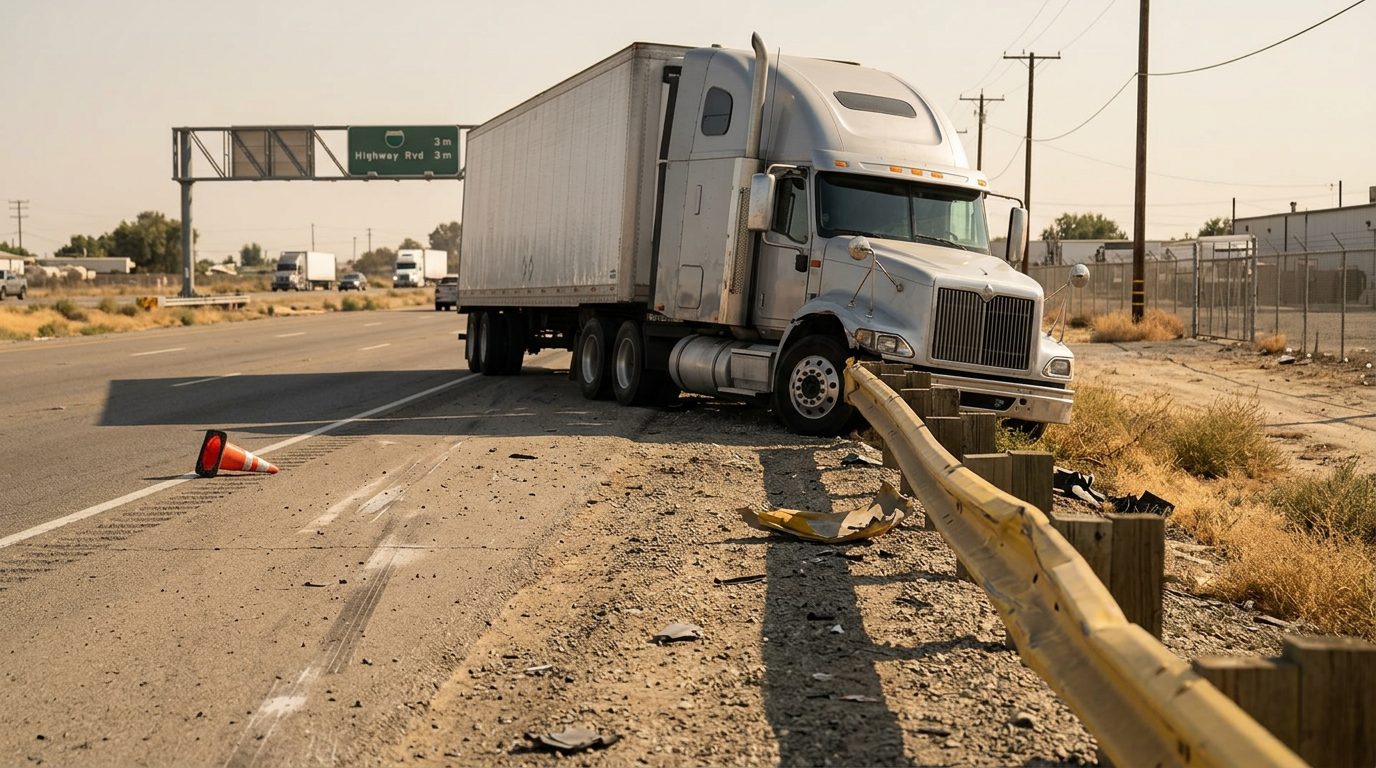
A claim generally requires proof that another party’s negligence caused the crash and your injuries. Possible responsible parties include the truck driver, the motor carrier, a company that loaded or maintained the truck, and others.
Trucking records matter. Federal rules require motor carriers to keep records of duty status, which show driving hours, for at least six months from receipt (49 CFR 395.8). Because those periods run out, early requests matter. Truck data, dashcam footage, photos and witness names can also help, so preserve them early.
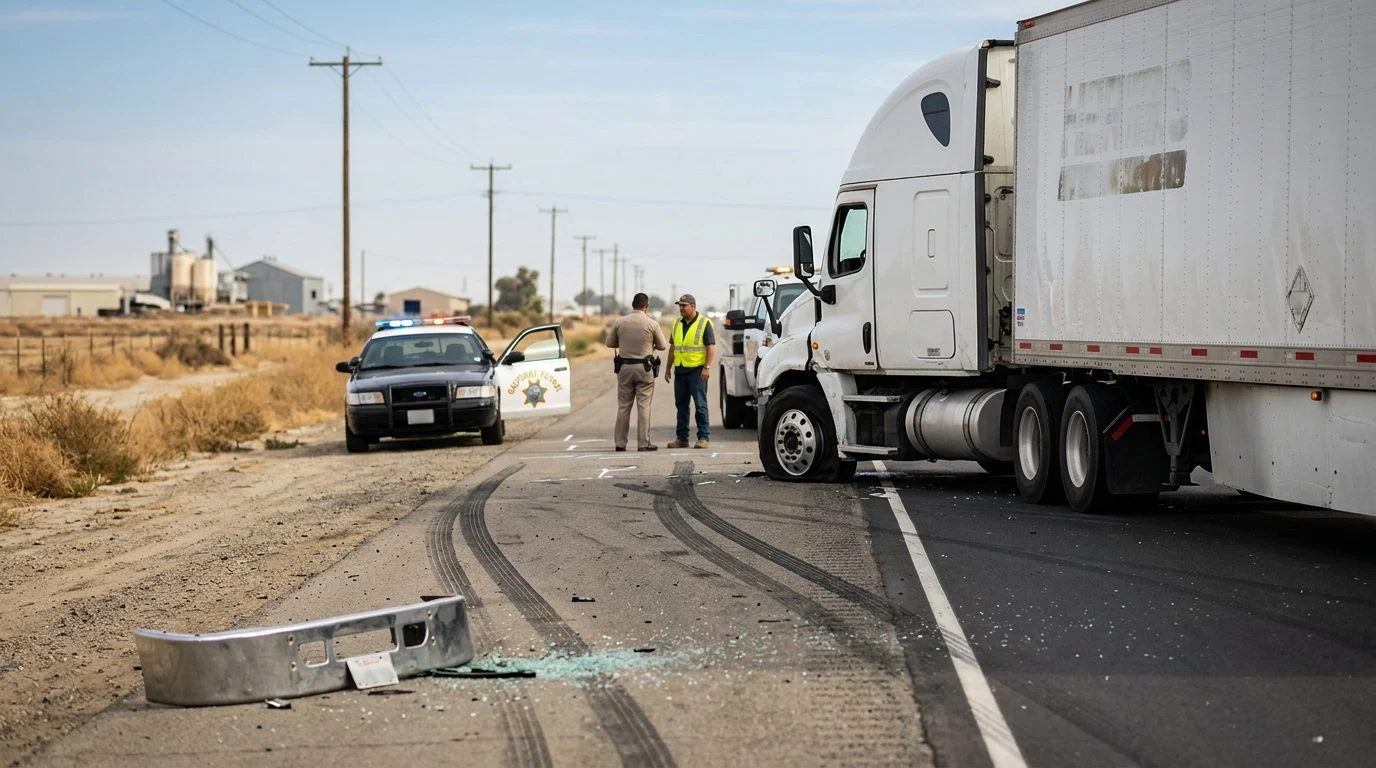
Start with the official report. The CHP collision report is a key document. Under Cal. Veh. Code § 16000, the driver of a motor vehicle involved in an accident that results in bodily injury or death, or in property damage above the threshold stated in that section, must report the accident within 10 days after the accident, either personally or through an insurance agent, broker, or legal representative, on a form approved by the department. That report is separate from reports made to police or CHP (California DMV).
Not sure what your next step is?
Talk it through with our team — the first consultation is free, confidential, and carries no obligation.
Insurance coverage and why policy limits matter
Truck crash claims are usually paid through insurance. An at-fault party’s policy has a limit, and excess coverage may sit above it. Federal rules set minimum public liability levels for motor carriers. For for-hire interstate carriage of nonhazardous property in vehicles rated 10,001 pounds or more, the minimum is $750,000 (49 CFR 387.9). That figure is a legal floor, not a measure of what any claim is worth.
Other factors can change how a claim settles. Coverage limits, several injured people sharing one policy and more than one insured party all matter.
Your own insurance may matter too. California law treats a vehicle as uninsured when its liability insurer is unable to make payment within the policy limits because of insolvency, but this solvency protection applies only to accidents occurring during a policy period in which the insured’s motor vehicle coverage is in effect, and only where the insurer becomes insolvent within one year of the accident (Cal. Ins. Code § 11580.2). Whether your uninsured or underinsured motorist coverage applies depends on the policies in place.
How claims are resolved: negotiation, deadlines and lawsuits
Most injury claims resolve through negotiation with insurers. Some end in a lawsuit, and a few reach trial. An early offer may arrive before the full effect of your injuries is known, including future care and lost earning capacity. Compare any offer with your medical records and documented losses before you respond.
Deadlines matter. California’s Code of Civil Procedure § 335.1 sets a two-year limit for an action for injury caused by another’s wrongful act or neglect. If a government entity may share responsibility, a claim must be presented sooner. Under Government Code § 911.2, a claim for injury to a person must be presented within six months of accrual.
The timing and path of a claim depend on the facts, so have the dates reviewed early. For more on reporting and filing timelines, see our reporting and filing timelines guide.
What to gather now and questions to bring to a consultation
Start collecting proof now, while records and memories are fresh. Gather the crash report number, scene photos, medical records and bills, your work schedule and pay records, witness names and any letters from insurers. Keep them in one folder, paper or digital.
Also write down how the injury changed daily life. Note what you can no longer lift, drive or do at work, and which family tasks shifted to others. That record supports the non-economic side of a claim.
When you meet with us, bring a short list of questions. Ask how costs and fees are handled, which documents are needed, what the timeline may look like and what your own insurance may cover.
Talk with Colvin Accident Lawyers about your situation
If you or someone you love is recovering after an 18-wheeler crash, bills may be piling up and paychecks may have stopped. You may be weighing whether and how to pursue a claim while you heal. You do not have to sort out those facts alone.
Reach out to Colvin Accident Lawyers to talk through the facts of your crash. The first consultation is a free, confidential first consultation with no obligation to continue. Contact Colvin Accident Lawyers.
Colvin Accident Lawyers is based in Bakersfield, California, and serves Kern County and nearby communities.
Frequently asked questions
How much do victims of an 18-wheeler crash and survive get?
No single figure applies to every survivor. Each claim turns on its own injuries, fault, insurance and evidence.
Does California reduce damages if I share some fault?
Yes.
How long do I have to file a truck crash lawsuit in California?
For most injury claims, the limit is two years under Code of Civil Procedure § 335.1. Other deadlines can apply, such as claims against a government entity.
Donald Norman Colvin, Colvin Accident Lawyers, Bakersfield, California — responsible for this site.
The main factors in a truck crash claim
The injuries and their treatment
The nature and severity of injuries, the treatment needed, and how the injuries affect work and daily life all shape the claim.
Evidence from the crash
Police reports, photos, witness statements, vehicle damage, and driver logs can all help show what happened.
Who may be responsible
A truck crash may involve the driver, the trucking company, a vehicle maintenance provider, or others. Each potential party is reviewed on its own facts.
Insurance coverage
Commercial trucking policies, policy limits, and any additional coverage can affect how a claim is evaluated and resolved.
Family and daily impact
For wrongful death and catastrophic injury cases, the effect on a family's income, care needs, and future is part of the review.
Be careful with early calls from the insurer
Adjusters for trucking companies may contact you quickly. Anything you say on a recorded statement can be used later. Talk with a lawyer before you give a statement or sign any release.
Steps that help protect your claim
Get medical care
Follow up with your doctors and keep records of every visit, test, and treatment plan.
Keep your records
Save photos, bills, pay stubs, and letters from insurers, and write down what you remember while it is fresh.
Limit social media posts
Posts about the crash, your activities, or your injuries can be used by the other side. Consider pausing posts about the case.
Ask for a case review
A review of your facts, injuries, and evidence can help you understand your options before you make decisions.