Dog Bite Lawyer | Bakersfield, CA
Comparative Fault in California Dog Bite Cases, Explained
Learn how questions about fault can come up after a bite, and what to gather before you speak with anyone about your injuries.
By Donald Norman Colvin · Published November 10, 2026
A dog bite can hurt a family member and leave you with questions you never planned to ask. If you’re wondering whether the victim’s own actions could cut a claim, the short answer comes first.
Can the victim’s own provocation of the dog or comparative fault reduce or bar recovery in a California dog bite case?
Yes, the victim’s own conduct can reduce a California dog bite recovery.
Under this rule, fault reduces what the victim can recover. It does not, by itself, end the claim. The question usually has two parts. One: can the victim’s conduct lower the award? Two: can it stop the claim entirely? Keeping these apart makes the facts easier to sort. This page covers the strict liability starting point, how fault reduces an award, how provocation and location matter, which facts to record, and what to do next.
Not sure what your next step is?
Talk it through with our team — the first consultation is free, confidential, and carries no obligation.
How does California’s strict liability dog bite rule set the starting point?
California’s strict liability rule sets the starting point. Under Cal. Civ. Code § 3342, a dog owner is liable for damages when the dog bites a person who is in a public place or lawfully on private property.
The statute applies “regardless of the former viciousness of the dog or the owner’s knowledge of such viciousness.” That means the victim does not have to prove the owner knew the dog was dangerous.
Strict liability is not the same as negligence. The victim does not have to show the owner was careless. The key questions are where the bite happened and whether the victim was there lawfully.
Victims can also plead negligence. The Judicial Council’s civil jury instructions (CACI) cover dog bite strict liability and comparative fault, so juries work from a standard framework. For a broader overview, read the dog bite lawyer guide.
How does pure comparative fault reduce a dog bite award in California?
A victim found 70 percent at fault still recovers 30 percent of damages.
Here is a hypothetical, labeled as an example only. Suppose a fact-finder sets total damages at $1,000 and finds the victim 30 percent at fault. The victim would recover $700, because the $300 share of fault is subtracted.
The measure of damages follows Cal. Civ. Code § 3333. That section asks, for the breach of an obligation not arising from contract, for the amount that compensates for all detriment proximately caused, except where otherwise expressly provided by this Code.
Does provocation of the dog change whether a California dog bite claim can succeed?
Provocation can change the fault picture. The provocation language in Cal. Civ. Code § 3342 appears in subdivision (b), which covers certain government agencies using dogs in military or police work.
Provocation can still matter through comparative fault. Under Cal. Civ. Code § 1714, a person is responsible for injury caused by want of ordinary care, “except so far as the latter has, willfully or by want of ordinary care, brought the injury upon himself or herself.” Teasing, tormenting, or striking a dog is the kind of conduct an owner may raise on that point.
Location is a threshold fact. Under § 3342(a), a person is lawfully on private property when present to perform a legal duty or on the owner’s invitation, express or implied. A person who is not lawfully on the property falls outside that text, so the strict liability rule may not apply the same way.
Whether conduct reduces recovery or defeats the claim depends on the facts. The same question can have different answers in different cases.
What evidence shows how the bite happened and who was at fault?
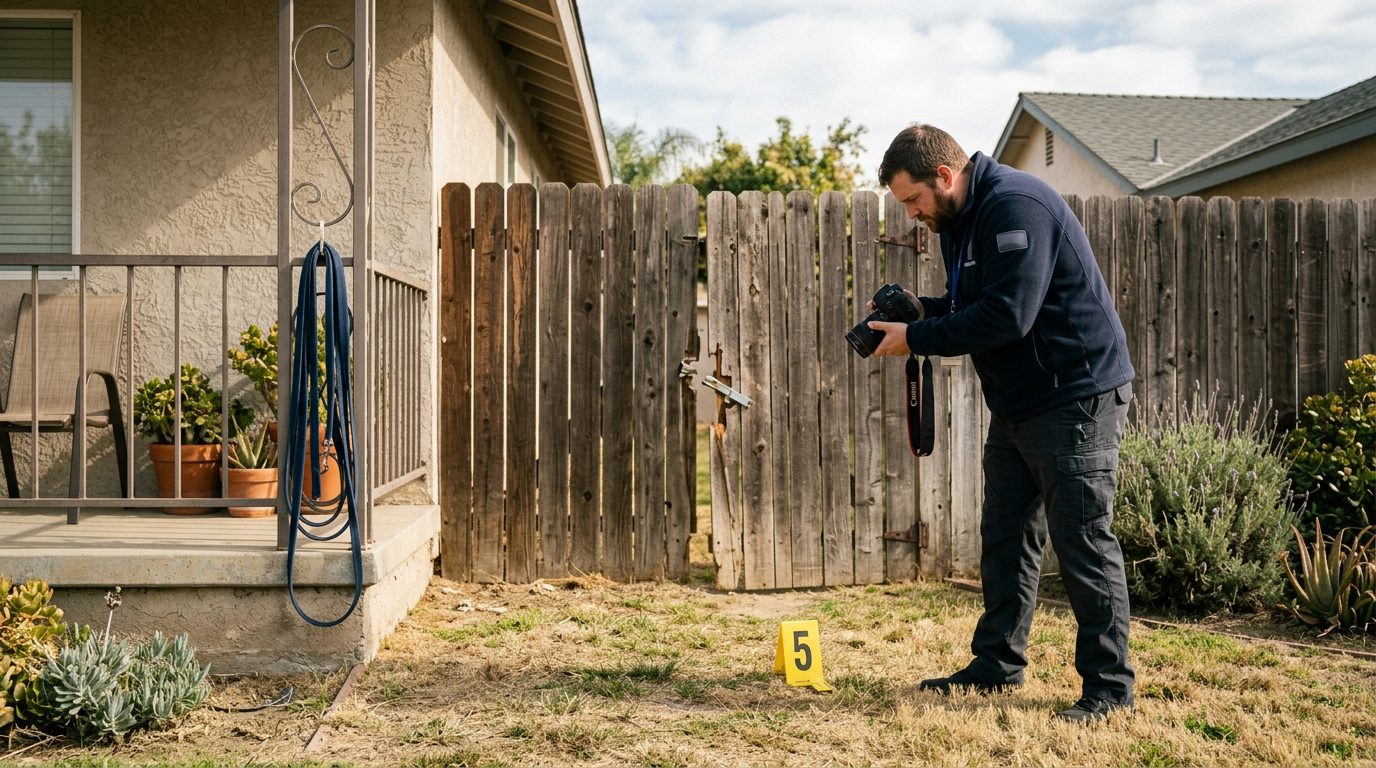
The facts that decide fault are usually the ones written down early. Write down where the bite happened, whether you had permission to be there, and what the dog was doing just before the bite. Note any signs, fences, or warnings you saw. Record the names and phone numbers of anyone who saw it.
Photos of the location help. Photos taken the same day often show the layout more clearly than memory does. The dog’s tag or license information matters, and so do medical records that show the injury and its timing. If animal control responded, its report is a record made close to the event.
A consistent timeline helps too. Write it in your own words as soon as you can, and keep it with the medical paperwork. Small differences between your account and later accounts can become a fight over fault.
For a fuller checklist, see the dog bite claim evidence guide.
What should a reader do next if they are unsure how the bite claim will be judged?
If you’re researching this for someone else, you may be handling medical visits and the owner’s questions at the same time. Keep a single folder with the facts above. Don’t guess at details you can’t confirm.
Note whether the dog’s owner has insurance, because that affects how a claim proceeds. Read more about owner insurance when there is no homeowner’s or renter’s policy.
Timing matters too. California sets a two-year limit for an action for injury caused by another’s wrongful act or neglect, under Code of Civil Procedure § 335.1. Waiting while you watch how the owner responds can cost time you need to gather facts.
If a dog bite has left you or someone you love hurt, you don’t have to sort out the fault questions alone. Contact Colvin Accident Lawyers to talk through the facts of the bite. The first consultation is free, confidential, and without obligation to continue.
Donald Norman Colvin, Colvin Accident Lawyers, Bakersfield, California — responsible for this site.
Not sure what your next step is?
Talk it through with our team — the first consultation is free, confidential, and carries no obligation.
Frequently Asked Questions
Does California use comparative fault in dog bite cases?
Civil Code section 3342 makes a dog owner liable for the damages suffered by a person bitten by the dog while in a public place or lawfully in a private place, regardless of the dog’s former viciousness or the owner’s knowledge of such viciousness. This section does not itself address how fault is divided between the owner and the injured person.
Can a dog bite victim still recover damages if they were partly at fault?
Often, yes. Under California’s comparative fault rule, a victim who is partly at fault may still recover, with the award reduced by their share of responsibility. Whether a victim was at fault depends on the specific facts of each incident.
Does provoking a dog reduce what a victim can recover?
It can. If the defense shows that the victim provoked the dog, that conduct may be used to argue the victim bears some share of fault, which can lower the recovery. Each case turns on its own facts and evidence.
Does a dog owner have to pay if the dog never bit anyone before?
Generally, yes. California’s dog bite statute, Civil Code section 3342, makes owners liable for bites that occur in a public place or while the person is lawfully on private property, even if the dog had no prior record of biting. Exceptions and defenses can apply, so the details of each situation matter.
Before You Talk to an Insurer
Insurance adjusters may contact you soon after a bite and ask for a recorded statement. Speak with a lawyer before giving one, and keep your own notes about what happened.
How We Can Help
Free, Confidential First Consultation
Your first consultation is free, confidential, and comes with no obligation to continue.
Organized Review of Your Facts
We look at the bite, the setting, medical records, and witness information to understand how fault may be argued in your case.
Serving Bakersfield and Nearby Communities
Our office is in Bakersfield, and we speak with injured people and families throughout Kern County and surrounding areas.
Support for Injured Families
Our team stays focused on the questions that matter most to you while you recover from injuries and handle daily life.
Facts That Often Matter in Fault Discussions
Where the Bite Happened
The location of the bite, and whether the dog was in a public place or on private property, can shape how a claim is evaluated.
What the Injured Person Was Doing
Questions about provocation, the dog's handling, and the injured person's conduct at the time are often raised by insurers.
Medical Records and Photos
Prompt treatment records, photographs of wounds, and notes on how the injury has affected daily life help document the claim.
Witnesses and Owner Information
Names of people who saw the incident, and details about the dog's owner and any prior incidents, can be important to gather early.