Motorcycle Accidents | Bakersfield, CA
What Can You Recover After a Motorcycle Accident in California?
Colvin Accident Lawyers explains the types of damages motorcycle accident victims may pursue in California, and why every case depends on its own facts.
Getting started with Colvin Accident Lawyers
Free
First consultation, confidential and without obligation to continue
Bakersfield
Our office is in Bakersfield, California
By Donald Norman Colvin · Published November 1, 2026
How Much Can You Sue for a Motorcycle Accident in California?
How much can you sue for a motorcycle accident? You can seek the losses the crash caused you, such as medical bills, lost pay, damaged property, and, in some cases, pain and suffering. No single dollar figure fits every crash. The value of a claim depends on the facts of each case.
This page explains each part of a claim in plain terms. California law is the same whether the crash happened in Kern County, Fresno, Visalia, Lancaster, Palmdale, Delano, or Tehachapi. For a broader overview, read our motorcycle accident lawyer guide.
If a crash has left you juggling medical bills and insurance calls, you don't have to sort out your claim alone. Our team is ready to talk. Talk it through with our team — the first consultation is free, confidential, and carries no obligation.

Why There Is No Single Number for a Motorcycle Accident Claim
A claim is measured by the losses you can prove, not by a standard figure for every crash. Many people ask how much can you sue for a motorcycle accident, and the honest answer starts with proof. Two riders can be hurt in similar ways and still have different claims. The difference often comes down to records, medical needs, who was at fault, and how much insurance is available.
Think of a claim as a list of losses, each with proof behind it. Insurers and courts look for documents and medical opinions, not guesses. California law describes which losses count. The sections below cover damages, injury severity, fault, insurance, wrongful death, and evidence and deadlines.
Economic and Non-Economic Damages
Economic damages are money losses you can document. Non-economic damages are the human costs that don’t come with a receipt. Civil Code § 1431.2 defines economic damages as “objectively verifiable monetary losses,” including medical expenses, loss of earnings, and costs of repair or replacement.
Economic losses often include past and future medical bills, rehabilitation, lost wages, and lost earning capacity if injuries limit your work. Property losses can include the motorcycle, helmet, and riding gear. Receipts, pay stubs, and provider records are the main proof for these losses.
Non-economic damages are “subjective, non-monetary” losses under the same statute. They include pain, suffering, inconvenience, emotional distress, and loss of companionship. You prove them through medical records, your own account, and the people who saw how the injury changed your daily life.
One limit matters in some vehicle cases. Civil Code § 3333.4 generally bars non-economic losses if the injured person was convicted of drunk driving while operating the vehicle, among other listed circumstances. The same section has an exception that applies only to an uninsured vehicle owner, described in paragraph (2) of subdivision (a), who was injured by a motorist convicted of that offense, Civil Code § 3333.4.
How the Severity of Your Injuries Shapes the Claim
The more serious and lasting the injury, the more a claim usually has to cover. Serious crashes can cause fractures, head and spinal injuries, and other harm that needs ongoing care or surgery. Each one adds medical costs and can change what a person can do at work and at home.
Future needs count too. If a doctor expects more treatment or finds lasting impairment, that opinion becomes part of the claim. Medical records, imaging, and treating doctors’ notes are the proof. Catastrophic injuries that limit work or daily living change the scope of the damages the claim must cover.
Helmets are part of the safety picture. The Insurance Institute for Highway Safety reports that California requires all motorcycle riders, including passengers, to wear helmets. The group also describes the higher injury risk for riders who go without one, as covered on its motorcycles research page.
Who Was at Fault and How California Comparative Negligence Works
When more than one party shares fault, Civil Code § 1431.2(a) makes each defendant’s liability for non-economic damages several only, so each defendant is liable only for the non-economic damages allocated to it in direct proportion to its percentage of fault.
Fault disputes in motorcycle crashes often involve lane changes, left turns across traffic, and following distance. Scene photos, the police report, and witness statements help show who had the duty to act. A bicyclist’s role raises its own questions, covered on our cyclist liability page.
What Insurance Coverage Can Pay
The at-fault driver’s liability policy is one source of payment, and its limit caps what that policy pays. California sets minimum liability limits for policies under Vehicle Code § 16056. Those minimums are not the amount any particular policy will pay.
If the at-fault driver has little or no coverage, your own policy may help. Insurance Code § 11580.2 requires insurers to provide uninsured motorist coverage in each bodily injury liability policy they issue, but the insurer and the named insured may, by a written agreement in the form the statute sets, delete the coverage completely or delete it when a motor vehicle is operated by a named person or persons. The statute says an uninsured motor vehicle includes an underinsured one.
Owners can face claims too. Vehicle Code § 17150 makes every owner of a motor vehicle liable for death or injury to person or property resulting from a negligent or wrongful act or omission in operating the vehicle by anyone using it with the owner’s express or implied permission. Other parties may be involved based on the facts of the crash.
Policy limits get confirmed with the insurers during the claim. Documents from each insurer show what coverage applies.
Not sure what your next step is?
Talk it through with our team — the first consultation is free, confidential, and carries no obligation.
Wrongful Death Claims After a Fatal Motorcycle Crash
When a rider dies, certain family members can bring a wrongful death claim. Code of Civil Procedure § 377.60 names who may sue, including a surviving spouse, domestic partner, and children. Dependent stepchildren and parents, and some minors who lived in the decedent’s home for the previous 180 days and depended on the decedent for one-half or more of their support, can also qualify.
Families can recover economic losses such as burial costs, which Civil Code § 1431.2 lists as economic damages. They can also seek non-economic losses, including loss of society and companionship.
The decedent’s own claim works differently. Code of Civil Procedure § 377.34 limits that claim to losses the decedent suffered before death. It does not include pain, suffering, or disfigurement, except under the narrow exceptions in subdivision (b).
Why Evidence and Deadlines Affect What You Can Recover
Good evidence supports a claim’s value, and a missed deadline can end it. California generally gives two years to sue for injury or wrongful death. Code of Civil Procedure § 335.1 sets that two-year period, and the California Courts Self-Help Guide notes that exceptions and tolling can apply.
Property damage runs on a longer clock. The California Courts property damage guide confirms that you may sue for repair or replacement costs.
Some timing rules have exceptions. Claims against a public entity follow separate claim rules.
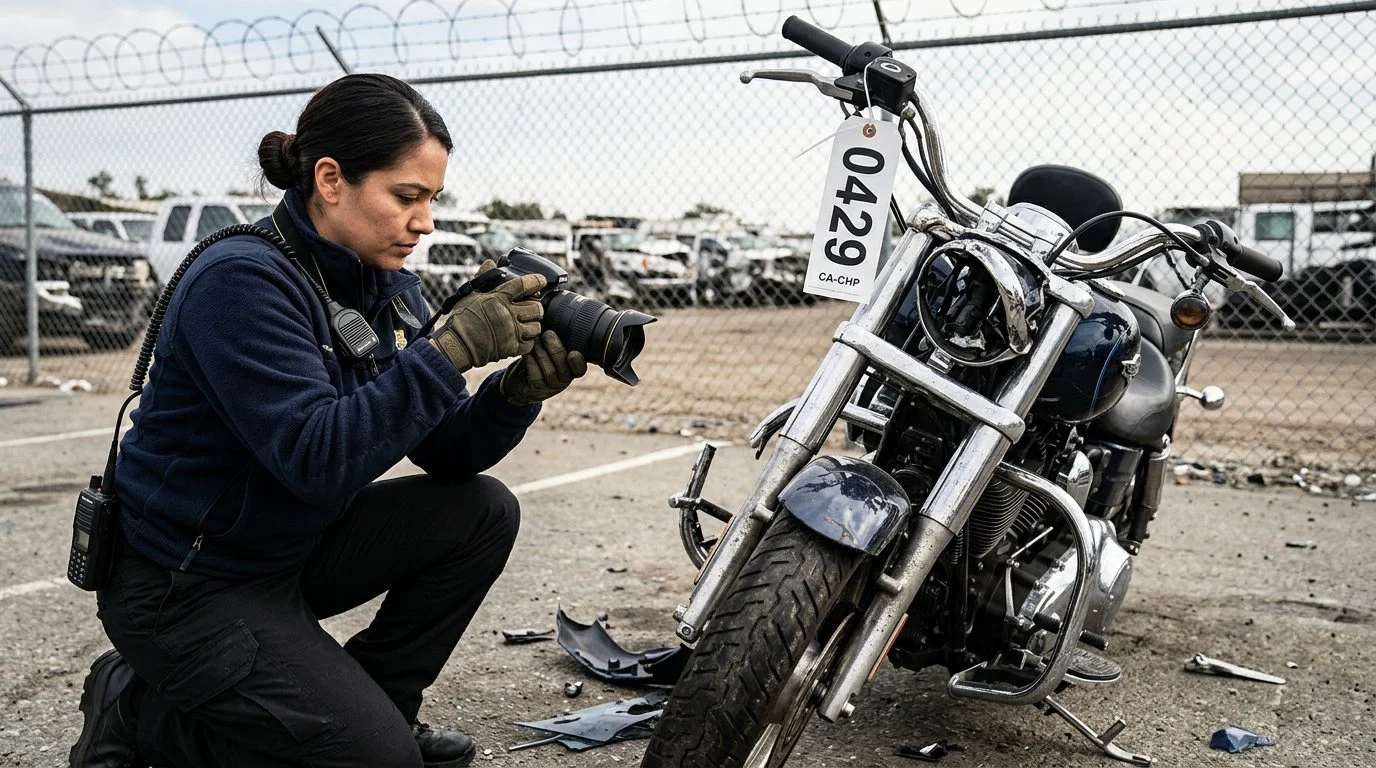
Evidence builds the value of a claim. Keep the police report, scene and bike photos, witness names, the helmet and gear you wore, repair estimates, and every medical bill. Our guide on how long a lawsuit takes covers the timeline after filing.

Talk With Colvin Accident Lawyers About Your Motorcycle Claim
The next step is knowing which losses, deadlines, and parties may apply to your crash. Several common questions come up early, and short answers follow.
Does motorcycle insurance cover personal injury?
Your own policy may include uninsured motorist coverage. The at-fault driver’s liability policy may also pay for your injuries, up to its limit.
How long do I have to sue after a motorcycle accident in California?
Under Code of Civil Procedure § 335.1, within two years: an action for assault, battery, or injury to, or for the death of, an individual caused by the wrongful act or neglect of another. Exceptions can change that timing.
How much can you sue for a motorcycle accident after a crash?
The amount depends on proven losses, fault, and available insurance, so no standard figure applies. Each claim is measured by its own documented facts.
How partial fault reduces a recovery
How shared fault may affect an accident claim depends on the facts of each case, and Colvin Accident Lawyers offers a free, confidential initial consultation with no obligation to continue to review them.
If you’re still in treatment, missing work, and fielding calls from an insurance adjuster, you’re carrying a lot at once. Colvin Accident Lawyers in Bakersfield can review your losses, your insurance, and the deadlines that may apply. Our first consultation is free, confidential, and comes with no obligation to continue. Reach out through our contact page.
Donald Norman Colvin, Colvin Accident Lawyers, Bakersfield, California — responsible for this site.
Categories of damages in a motorcycle injury claim
Medical costs
Past and future medical care related to the crash, including emergency treatment, surgery, rehabilitation, medication, and necessary equipment or home modifications.
Lost income and earning capacity
Wages missed while recovering, and reduced ability to earn in the future if injuries limit your work.
Property damage
Repair or replacement of your motorcycle, helmet, riding gear, and other personal property damaged in the crash.
Pain and suffering
The physical pain, emotional distress, and loss of everyday activities caused by your injuries. These damages are harder to measure and depend heavily on the injury and how it affects your life.
Be careful before you accept an insurance offer
The insurance adjuster who contacts you works for the insurance company, not for you. Speak with a lawyer before you give a recorded statement or accept any settlement offer, especially before your injuries are fully understood.