Motorcycle Accidents · Bakersfield, CA
How Is Fault Decided in a Motorcycle Accident in California?
Plain-language answers about helmets, lane position, and shared blame, before you decide what to do next.
By Donald Norman Colvin · Published November 19, 2026
A motorcycle crash can leave you hurt, out of work, and facing insurance calls you did not expect. In California, fault is decided by weighing what each driver did, using the evidence from the crash. Under California’s pure comparative negligence rule, an injured rider’s recovery is reduced by his or her share of fault, not barred.
This page explains how fault is decided in a motorcycle accident in California, from the legal rules to the evidence insurers review. It also covers why early decisions can shape the outcome of a claim.
The Short Answer: How Fault Is Decided After a California Motorcycle Crash
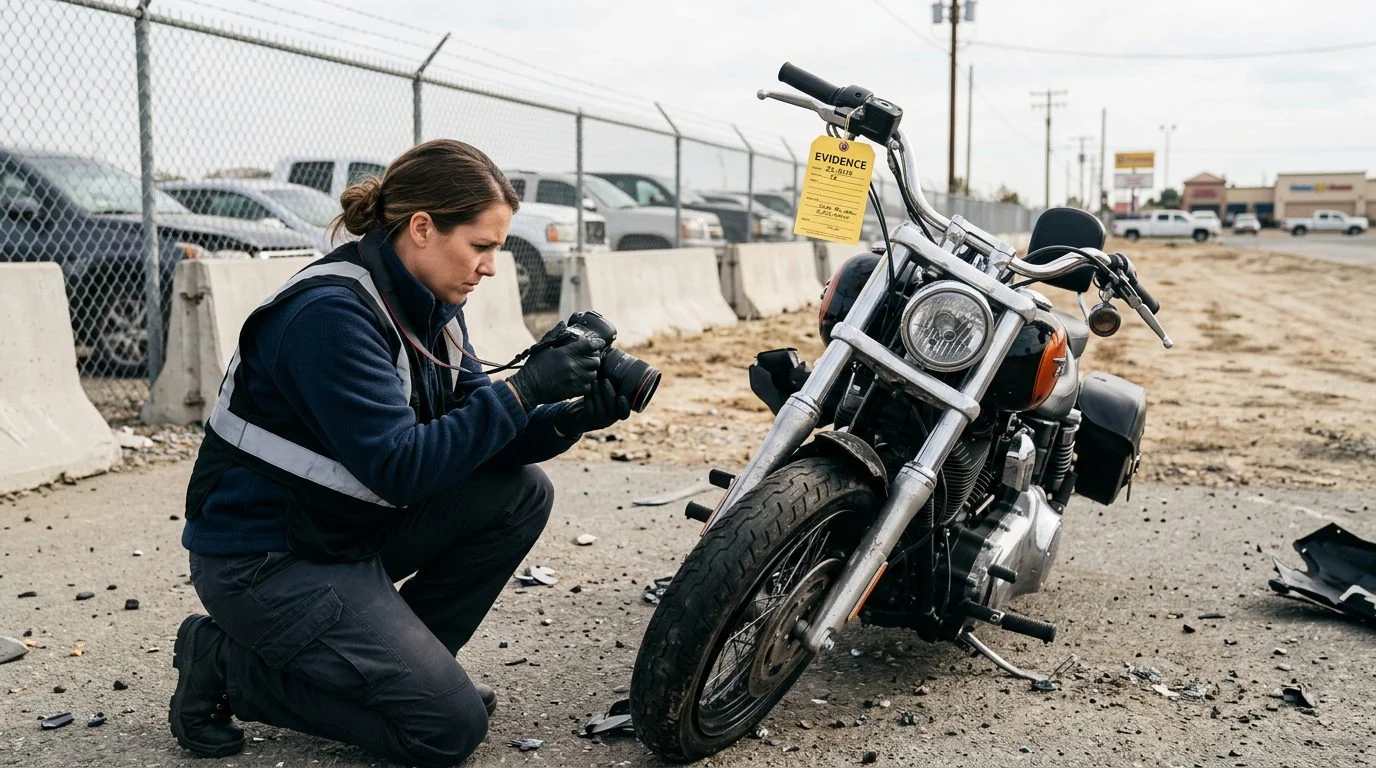
Fault is decided from evidence, not from who the other driver says caused the crash. Insurers look at the police report, driver statements, damage to the bike and vehicles, photos, witness accounts, and any video. If the claim is not resolved, a court can weigh the same material.
California’s rules focus on negligence. Civil Code section 1714 makes a person responsible for an injury caused by want of ordinary care. Cal. Civ. Code § 1714 reads: “(a) Everyone is responsible, not only for the result of his or her willful acts, but also for an injury occasioned to another by his or her want of ordinary care or skill in the management of his or her property or person, except so far as the latter has, willfully or by want of ordinary care, brought the injury upon himself or herself.” The question is whether a driver failed to use that care, and whether the rider did too.
Fault is rarely all-or-nothing. More than one driver, and sometimes the rider, can share responsibility for the same collision. That is why the percentages matter. The sections below explain the comparative fault rule, the traffic laws that often come up, and the paperwork and statements that shape the discussion. For the wider picture, see our motorcycle accident lawyer page.
If you were hurt in a motorcycle crash, or you are helping someone who was, our team can talk through the fault facts in your situation with you. Talk it through with our team — the first consultation is free, confidential, and carries no obligation.

California’s Pure Comparative Fault Rule Explained
California applies pure comparative negligence. An injured rider can still recover even when he or she was partly at fault.
The jury instruction is clear on the mechanics. California’s civil jury instruction on a plaintiff’s comparative fault tells jurors: “If [name of defendant] proves the above, [name of plaintiff]’s damages are reduced by your determination of the percentage of [name of plaintiff]’s responsibility. I will calculate the actual reduction.” I will calculate the actual reduction. The instruction says the damages are reduced, not barred.
Here is a simple illustration. Say the full loss is 100 units, and a jury finds the rider 20 percent responsible. The rider’s recovery would be 80 units. The numbers are only an illustration.
Percentages matter in negotiations because each side argues its share with evidence. The rule looks at the injured rider’s own negligence. The other driver’s share is a separate question, and it is covered in the sections below.
Who Is Usually at Fault in Motorcycle Accidents?
No single pattern decides every case, because fault depends on the facts of each crash. Still, some fact patterns come up often in motorcycle claims. A driver turns left across the path of an oncoming motorcycle. A car changes lanes into a rider’s path. A vehicle pulls out from a driveway or side street. Or a car rear-ends a motorcycle.
Traffic laws help show what each driver should have done. Under Vehicle Code section 22350, no one may drive faster than is reasonable or prudent for the weather, visibility, traffic, and road. The speed must never endanger persons or property. Vehicle Code section 21703 adds a following-distance rule. A driver may not follow another vehicle more closely than is reasonable and prudent.
Evidence Code section 669 explains why a traffic violation carries weight. If a person violated a statute, ordinance, or regulation of a public entity, and that violation proximately caused injury of the kind the law was designed to prevent to someone in the class of persons it was adopted to protect, the law presumes a failure to use due care. That presumption can be rebutted. The person can show they did what a reasonably prudent person would have done while trying to follow the law.
A rider’s own conduct can be examined as well. Speed, following distance, and lane position are common points of review. Any of them can shift the percentage assigned to each party.
Key Factors Insurers and Courts Use to Determine Fault
The police report is one key document, but it is not the final word. The officer’s diagram, recorded statements, and any citations issued all help frame the crash. Insurers compare that report with the other evidence before they decide.
Physical evidence often tells a clear story. Damage patterns, skid marks, and the final resting positions of the motorcycle and vehicles can show where each vehicle was when the crash happened.
Witnesses and video can be decisive. A nearby traffic camera, a dash camera, or business footage may show the sequence of events. Write down witness names and contact details early, while memories are fresh.
Phone records, speed evidence, and signal timing can matter where they are available. Maintenance records matter too. A claim that a part failed must be supported by inspection or documentation, not just an assertion.
Save the bike, the gear, photos, and receipts. The evidence you keep early often matters most, because it is hard to recreate later.
How Lane Splitting and Helmet Use Can Affect the Fault Discussion
Lane splitting and helmet use are two issues insurers may raise. Each one must be tied to the facts of the crash, not treated as automatic proof of fault.
Vehicle Code section 21658.1 defines lane splitting as driving a motorcycle with two wheels on the ground between rows of stopped or moving vehicles in the same lane. The definition sets the question. Did the rider’s movement in this crash match that description, and did it contribute to the collision?
Helmets are required under Vehicle Code section 27803. Cal. Veh. Code § 27803 reads: “(f) This section does not apply to a person operating, or riding as a passenger in, a fully enclosed three-wheeled motor vehicle that is not less than seven feet in length and not less than four feet in width, and has an unladen weight of 900 pounds or more, if the vehicle meets or exceeds all of the requirements of this code, the Federal Motor Vehicle Safety Standards, and the rules and regulations adopted by the United States Department of Transportation and the National Highway Traffic Safety Administration.” A driver and any passenger on a motorcycle, motor-driven cycle, or motorized bicycle must wear a safety helmet that meets the law’s requirements, but this does not apply to a fully enclosed three-wheeled motor vehicle that meets the statute’s size, weight, and equipment criteria. The Insurance Institute for Highway Safety reports that unhelmeted motorcyclists face an increased risk of injury compared with helmeted riders.
Whether helmet use bears on the injuries in a particular claim is a question for that case’s facts. Those facts include the type of injury and how it happened.
The Role of the DMV SR-1 Report in a California Motorcycle Claim
California requires certain crashes to be reported to the DMV. Under Vehicle Code section 16000, a driver involved in a collision that causes bodily injury, death, or damage to any one person’s property over $1,000 must report it within 10 days.
The report goes on a form the department approves. The driver can file it personally or through an insurance agent, broker, or legal representative. The driver must also identify, by name and current residence if available, anyone involved who complains of bodily injury. This form is commonly called the SR-1.
The SR-1 is a separate filing from the police report. It is worth comparing its facts with what you know about the crash. Small errors in dates, locations, or who was involved can carry into an insurance file. Check them early, while the details are still clear.
Not sure what your next step is?
Talk it through with our team — the first consultation is free, confidential, and carries no obligation.
How Insurance Adjusters Evaluate Fault and Why Early Statements Matter
An adjuster’s early view of fault is a working position, not a final decision. The adjuster reviews the same evidence described above. That position may change as the file grows and more facts come in.
California law limits how insurers may treat a claimant. Insurance Code section 790.03 lists misleading a claimant about the applicable statute of limitations among unfair claims settlement practices when it is done knowingly and with such frequency as to indicate a general business practice. If an insurer’s statement about deadlines seems wrong, treat it as a question to verify.
Recorded statements are one area where early words matter. Answers given before the facts are reviewed can later be used to argue a fault percentage. Before you give a recorded statement, make sure you understand what is being asked and why. It is reasonable to pause and gather your facts first.
Why Timing Matters: Injuries, Medical Improvement, and Early Settlement Offers
Fault and injuries are separate questions. An offer can arrive before the full extent of your injuries is known. Insurers sometimes make offers while treatment is still ongoing.
Medicare rules add another layer for some riders. If the insurance company has not paid within 120 days, Medicare may make a conditional payment for the care, as explained in Medicare’s coordination of benefits guidance. Medicare may make a conditional payment and later recover what the primary payer should have paid.
The CMS recovery process explains that a conditional payment must be repaid to Medicare when a settlement, judgment, award, or other payment is made. An early offer that ignores this repayment can leave a rider with less than expected.
Keep records of every medical visit, every day missed from work, and every out-of-pocket cost from the start. Those records show the full picture when the claim is evaluated.
When More Than One Party Shares Fault
When more than one party shares fault, each party’s percentage matters. Two drivers, a vehicle owner, or a commercial operator may each be part of the fault picture. The civil jury instruction on apportionment of responsibility tells jurors: “you must then decide how much responsibility each has by assigning percentages of responsibility to each person listed on the verdict form. The percentages must total 100 percent.”
Civil Code section 1431.2 governs how non-economic damages are split. Each defendant is liable only for the amount allocated to it, in direct proportion to its percentage of fault. The statute treats these losses differently from economic losses, such as medical bills and lost pay.
Wrongful death and catastrophic injury cases raise the same fault questions with higher stakes.
What Shapes the Value of a Motorcycle Claim
Value turns on each claim’s facts, so no general figure fits every motorcycle case. The injuries, the treatment, the effect on work and daily life, and the fault split all play a part. Any figure quoted online should be treated with caution.
Economic losses are defined in the statute as objectively verifiable monetary losses. Civil Code section 1431.2 lists medical expenses, loss of earnings, and costs of repair or replacement as examples.
Non-economic losses are subjective. The same statute includes pain, suffering, inconvenience, mental suffering, and emotional distress. These losses are real even though they are harder to put in a bill.
Documentation carries a claim. Medical bills, wage records, repair estimates, and a clear account of how the injury changed daily life all give the claim its shape.

Talk With Colvin Accident Lawyers About Your Motorcycle Accident
Short answers to the questions riders ask most about fault are below.
Can I still recover if I was partly at fault?
Yes. California’s pure comparative negligence rule reduces your damages by your share of fault. It does not bar recovery.
Is my helmet use a fault issue?
California law requires helmets for riders and passengers. How helmet use connects to your injuries turns on the facts of your case.
How long do I have to file a claim?
For most injury claims, California’s general deadline is two years from the injury, subject to exceptions. The California Courts Self Help Guide explains the rule and its exceptions.
If you were hurt in a motorcycle crash, or you are helping someone who was, these questions can pile up quickly. Our team at Colvin Accident Lawyers, based in Bakersfield, can help you line up the fault facts in your crash with the rules described here.
La consulta inicial es gratuita, confidencial y sin compromiso de continuar.
Contact Colvin Accident Lawyers
Colvin Accident Lawyers, Bakersfield, California — responsible for this site. Responsible lawyer: Donald Norman Colvin.
Before You Speak With an Insurer
Insurance adjusters may ask for a recorded statement soon after a crash. Talking with a lawyer first can help you understand what to say and what to leave for later. The first consultation is free, confidential, and carries no obligation to continue.
How Colvin Accident Lawyers Can Help
Confidential Conversations
Tell us what happened in your own words. Your first consultation is private and comes with no obligation to continue.
Review of the Crash Facts
We look at the police report, photos, and medical records to understand how the collision happened and who was involved.
Plain-Language Explanations
We explain how California's fault rules may apply to your situation, so you can make informed decisions.
Serving Riders Across the Region
We represent motorcyclists and families from Kern County, Fresno, Visalia, Lancaster, Palmdale, Delano, and Tehachapi.
Advocacy for Fair Compensation
We work to pursue fair compensation for medical bills, lost income, and the impact of your injuries.