Motorcycle Accidents · Bakersfield & Kern County
What Not to Do After a Motorcycle Accident in California
Some mistakes in the hours and days after a crash can make an injury claim harder to prove. Learn what to avoid, then talk with Colvin Accident Lawyers in a free, confidential first consultation with no obligation to continue.
By Donald Norman Colvin · Published October 24, 2026
The most damaging mistakes after a motorcycle crash often happen in the first few days. Leaving the scene, admitting fault, skipping medical care, and talking to an insurer too soon can all weaken a rider’s position. Knowing what not to do after a motorcycle accident helps protect both your health and your claim.
Below are the common mistakes in California, why each one matters, and the next step to take instead. Colvin Accident Lawyers is based in Bakersfield and represents motorcycle crash victims and their families.
Leaving the Scene Before Police and Medical Help Arrive
Do not leave the scene of a crash that injures someone. California law requires drivers to stop. Cal. Veh. Code § 20001 says a driver in an injury crash “shall immediately stop the vehicle at the scene” and follow the information-exchange rules.
Call 911 for any injury, even one that seems minor. A police report creates an official record of the parties, the vehicles, and the conditions at the time. Ask the officer for the report number before you leave.
If it is safe, photograph the scene before anything is moved. Capture the bike’s position, skid marks, debris, traffic signals, and the other vehicle. Take wide shots and close-ups.
Watch a second deadline too. Under Cal. Veh. Code § 16000, a driver in a crash that causes bodily injury, a death, or property damage over $1,000 to any one person must report it to the DMV within 10 days. The report can be made personally or through an insurance agent, broker, or legal representative.
Next step: Write down everyone’s names, phone numbers, and insurance details. Note the date you must file the 10-day report. Cal. Veh. Code § 16000 reads: “If none of the parties involved in an accident has reported the accident to the department under this section within one year following the date of the accident.” Cal. Veh. Code § 16000 reads: “(c) If none of the parties involved in an accident has reported the accident to the department under this section within one year following the date of the accident, the department is not required to file a report on the accident and the driver’s license suspension requirements of Section 16004 or 16070 do not apply.”

Not sure what your next step is?
Talk it through with our team — the first consultation is free, confidential, and carries no obligation.
Admitting Fault or Guessing About What Happened
Do not apologize or guess about how the crash happened. Stick to what you saw. A casual “I’m sorry” at the scene can be repeated later and used to argue that you share the blame.
That is why fault affects money, not just pride. Avoid guessing about speed, following distance, or what the other driver was doing. Those guesses can become the other side’s evidence.
Next step: Describe only what you directly saw, such as the light color, your lane, and where the car turned.
Delaying or Skipping Medical Evaluation
Do not skip a medical check because you feel able to walk away. Some crash injuries show up hours or days later. Head, neck, back, and internal injuries are common examples. Get checked the same day.
Medical records create a dated link between the crash and your injuries. A gap in treatment can be questioned later. Follow your treatment plan, and keep copies of bills, prescriptions, and appointment notes.
Cal. Veh. Code § 20001(d) defines “permanent, serious injury” only for purposes of that section, a hit-and-run provision. Under Cal. Veh. Code § 20001, “permanent, serious injury” means the loss or permanent impairment of function of a bodily member or organ. Section 20001(d) defines “permanent, serious injury” only “as used in this section.”
Helmets matter for safety too. The Insurance Institute for Highway Safety states that California requires all motorcycle riders, including passengers, to wear helmets. The Insurance Institute for Highway Safety also reports that unhelmeted riders face an increased risk of injury.
Next step: Book a same-day medical evaluation, and keep your helmet and gear.
Giving Recorded Statements or Signing Papers Too Soon
Do not give a recorded statement or sign a release before you know the full extent of your injuries. The other driver’s insurance adjuster works for the insurer, not for you. The adjuster may ask for a recorded statement early in the claim.
Questions about prior medical history or your activities can be used out of context. Answer only what you are sure of. You can say you will follow up after you have medical care.
Early settlement offers often arrive before the full cost of care and recovery is known. Do not accept one until you have reviewed the whole picture.
Under Cal. Ins. Code § 790.03, knowingly committing or performing with such frequency as to indicate a general business practice the act of directly advising a claimant not to get an attorney is an unfair claim settlement practice. Cal. Ins. Code § 790.03(h)(15) lists “misleading a claimant as to the applicable statute of limitations” among unfair and deceptive acts or practices in the business of insurance.
Next step: Ask for written requests, and do not sign any release until you understand what it waives.
Have questions about what happened?
Ask our team directly. The first conversation is free, confidential, and there is no obligation to continue.
Posting About the Crash or Your Injuries Online
Do not post about the crash, your injuries, or your activities online. Insurers can use photos, check-ins, and posts about riding or physical activity as evidence. A post that seems harmless can be taken out of context.
Limit public posts about the crash. Do not delete existing posts without first talking to a lawyer. Deleting content can create its own problems. Private messages to friends and family about the crash can also come up in a claim.
Next step: Pause posts about riding and the crash until your claim is clearer.
Repairing, Selling, or Tossing the Bike and Gear Too Soon
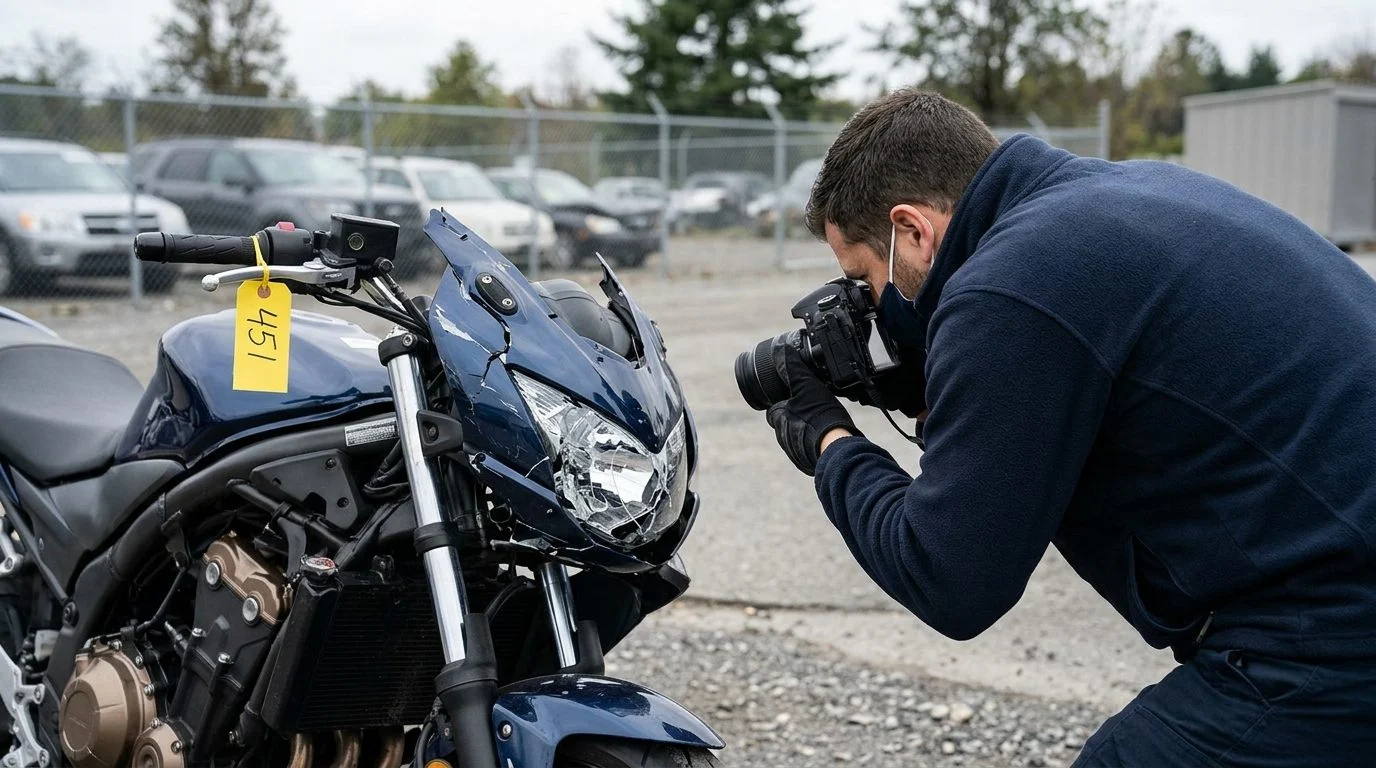
Do not repair, sell, or throw away the bike or gear until the damage is documented. The bike, helmet, jacket, boots, and gloves can show impact points and damage patterns. Those marks help show how the crash happened.
Take dated photos from several angles before any shop, insurer inspection, or salvage yard takes custody. Keep damaged parts, and ask for written repair estimates. Ask the insurer or shop to hold the bike until the evidence is recorded.
Repair and replacement costs are part of your losses. Under Cal. Civ. Code § 1431.2, economic damages include objectively verifiable losses such as medical expenses, loss of earnings, and costs of repair or replacement.
Next step: Keep every estimate, receipt, and note about where the bike is stored.
Waiting Too Long to Act on Deadlines
Do not wait on the clock. Under Cal. Code Civ. Proc. § 335.1, an action for injury caused by another’s wrongful act must be brought within two years. The same two-year period applies to a death caused by wrongful act or neglect.
Section 335.1 covers the death of an individual caused by the wrongful act or neglect of another, but it does not say who may bring the claim. Under Cal. Code Civ. Proc. § 377.60, a surviving spouse, domestic partner, children, and certain dependents may bring one, or the decedent’s personal representative may act for them.
Other clocks run on different schedules. If a public entity is involved, such as a road hazard owned by a city or county, Cal. Gov. Code § 911.2 requires a claim within six months for death or injury.
Insurance claim deadlines are separate, and medical records take time to gather. Waiting can make evidence harder to get.
Next step: Write the crash date, medical visits, and insurer deadlines on one page, and keep it with your records.

Want to know where you stand?
Tell us what happened and our team will walk you through the options available to you, at no cost.
Talking With Colvin Accident Lawyers About Your Motorcycle Crash
You can talk with Colvin Accident Lawyers before you decide anything. Many riders and families reach this point while still in pain, dealing with a damaged bike, and handling insurer calls. You don’t need to have chosen a lawyer to learn how the process works.
Colvin Accident Lawyers offers a free first consultation — confidential, with no obligation to continue. The firm is based in Bakersfield and represents motorcycle accident victims and families in Kern County, Fresno, Visalia, Lancaster, Palmdale, Delano, and Tehachapi.
Frequently Asked Questions
What should I avoid saying after a motorcycle crash?
Avoid apologizing or guessing about fault. Describe only what you directly saw.
How long do I have to file a motorcycle accident lawsuit in California?
California generally allows two years for a personal injury lawsuit, under Cal. Code Civ. Proc. § 335.1.
Do I have to give a recorded statement to the other driver’s insurer?
Be cautious. Wait until you understand your injuries before answering questions.
Does California use comparative fault?
Yes.
If the crash has left you with bills, a damaged bike, and questions you can’t answer yet, contact Colvin Accident Lawyers to talk it through.
Five things to avoid after a motorcycle crash
Don't admit fault or guess
Apologizing or guessing about what caused the crash can be used against you later. Describe only what you directly saw and experienced.
Don't give a recorded statement right away
An insurance adjuster may ask for a recorded statement early on. Speak with a lawyer before you answer questions about the crash or your injuries.
Don't sign releases or papers in a hurry
Medical authorizations, releases and settlement forms can affect your claim. Read them carefully and review them with a lawyer first.
Don't skip medical care
Some injuries, including head and spinal injuries, may not show symptoms right away. Getting evaluated promptly creates a record of your injuries.
Don't post about the crash online
Social media posts about the crash, your activities or your injuries can be taken out of context and used against your claim. Stay off social media while your case is open.
Key warning
Insurance adjusters work for the insurance company, not for you. Speak with a lawyer before giving a recorded statement or signing anything from an insurer.
What to do instead
Document the scene
If you are able, take photos of the scene, vehicles, road conditions and visible injuries, and write down names and contact details for witnesses.
Call for help
Call 911 so that police and medical responders can come to the scene and create an official record.
Get checked by a doctor
Seek medical evaluation even if you feel fine, and follow the treatment plan your doctor recommends.
Talk to a lawyer early
Contact Colvin Accident Lawyers for a free, confidential first consultation with no obligation to continue.