Motorcycle Accidents | Bakersfield, CA
Hurt in a Motorcycle Crash in Bakersfield? Get Clear Answers on Fault and Deadlines
Colvin Accident Lawyers represents injured riders and their families in Kern County and nearby communities. Start with a free, confidential first consultation, with no obligation to continue.
By Donald Norman Colvin · Published October 16, 2026
Motorcycle Accidents in Bakersfield and Kern County: Injuries, Fault, Claims, and Deadlines
A motorcycle accident claim can raise many questions, and each case depends on its own facts. The injured rider must show that another person or entity owed a duty of care, broke it, and caused real losses. Fault decides who pays, and the time to file is limited. This guide covers motorcycle accident Bakersfield cases from start to finish, in plain terms.
Motorcycle crashes differ from car crashes in one major way. A rider has little protection, so injuries tend to be serious. Many drivers also say they never saw the bike. The sections below explain the legal framework, the common injuries, and the steps that protect a claim.
If your rider or family member was hurt on a Kern County road and fault is still unclear, we can talk through the crash facts and the deadlines with you. Talk it through with our team — the first consultation is free, confidential, and carries no obligation.

What a Motorcycle Accident Claim in California Actually Is
A motorcycle accident claim is a negligence claim against whoever’s carelessness caused the crash. Under Civil Code section 1714, everyone is responsible for an injury caused by a want of ordinary care. That is the core idea behind these cases.
The defendant owed a duty of care, broke that duty, and caused the crash. A rider may suffer injuries and other losses in a crash.
The defendant may be a driver, a vehicle owner, a property owner, or a public agency. The right target depends on the facts. A crash report or news story does not, by itself, establish who was at fault. Those records are starting points, not final answers.
Civil Code section 3333 sets the measure of damages for this kind of injury. It is the amount that compensates for all the detriment proximately caused. The sections that follow explain fault, injuries, losses, insurance, and deadlines.
Motorcycle Crashes in Bakersfield and Kern County
Motorcycle crashes on Kern County roads tend to follow a few patterns. Busy corridors such as Highway 58, Highway 99, and Interstate 5 carry heavy mixed traffic. Cars, trucks, and motorcycles often share the same lanes and merge points.
Intersections are a frequent setting. A driver turning left across a rider’s path is a common example. The driver often looks for a larger vehicle and does not see the smaller bike approaching. Merging traffic and lane changes create similar risks.
Riders should know that state-by-state fatality data is published by the Insurance Institute for Highway Safety. That source helps show broader trends. It does not describe any single Bakersfield crash.
Dirt bike and off-road crashes raise different questions. A crash on private land, a trail, or a dirt field may involve a property owner or another party. The facts of where and how the crash happened matter a great deal.
Common Causes of Motorcycle Crashes and Who May Be at Fault
Most motorcycle crashes start with a driver who fails to yield or fails to see the rider. Left turns across a rider’s path are a common example. Lane changes into a rider’s space and following too closely also cause many crashes.
Distracted driving and impaired driving add more risk. A driver who is texting, drowsy, or intoxicated may not react in time. These facts often come out in the police report, witness statements, or phone records.
Road defects can also cause or worsen a crash. Potholes, loose gravel, debris, poor lighting, and missing warning signs all create hazards. The party responsible for the road may be a private owner, a city, a county, or the state. Each of those can involve different rules.
A single crash can involve more than one at-fault party. A driver may have cut the rider off, and a road hazard may have caused the rider to lose control. Each party’s share of fault must be examined separately.
How California Comparative Fault Affects Your Claim
Here is a simple example. If a jury found a rider 30% at fault and the total damages were the full amount, the rider would recover 70% of those damages. Real cases depend on the facts and the evidence in each case.
Defense lawyers and insurers often argue about rider speed, lane position, or how the bike was ridden. These arguments aim to shift fault onto the rider. The answers usually come from photos, witness accounts, vehicle data, and accident reconstruction of the crash.
Lane splitting is a common point of dispute. Whether it affected fault depends on the specific road, speed, and traffic in that crash. Riders should not assume that the issue resolves itself in their favor or against them.
Helmets, Protective Gear, and Injury Claims
Helmet use is a fact question that defense lawyers may raise in a motorcycle case. It can bear on the causes and extent of a head injury. It does not replace the question of who caused the crash.
Medical records and the way the injury happened often matter more than any single factor. Doctors document the mechanism of injury, such as a direct impact or a fall. Those notes help show how the injury connects to the crash.
Riders should not guess about helmet or gear questions. The medical and physical evidence from the scene and the hospital tells the real story. Keeping the damaged helmet and gear, when possible, helps preserve that evidence.
Not sure what your next step is?
Talk it through with our team — the first consultation is free, confidential, and carries no obligation.
Common Injuries from Motorcycle Crashes and Long-Term Effects
Motorcycle crashes often cause fractures, road rash, internal injuries, and head or spinal injuries. A rider’s body usually takes the impact directly. Injuries can range from minor to life changing.
The spinal cord is a key concern. According to NINDS spinal cord information, three layers of tissue protect the spinal cord, and cerebrospinal fluid surrounds it to cushion against shock. A crash can overwhelm that protection.
The same source notes that injury to the spinal cord between the C1 and C4 segments can stop breathing, because those nerves control the diaphragm. That is one reason a serious neck injury is an emergency. Riders with any neck or spine symptoms need prompt medical evaluation.
Some injuries show up days or weeks later. Stiffness, headaches, numbness, and dizziness can appear after the adrenaline wears off. Prompt evaluation protects health, and it creates the medical record that a claim relies on.
Catastrophic injuries include paralysis, amputation, and permanent brain injury. These cases often require lifelong care and changes to work and home life. Treating doctors and records are central to showing what the injury is and what it will require.
What Losses Can Be Included in a Motorcycle Injury Claim
A motorcycle injury claim can include economic losses and non-economic losses. Under Civil Code section 1431.2, economic damages are objectively verifiable monetary losses. These include medical expenses, loss of earnings, burial costs, and costs of repair or replacement.
The same section defines non-economic damages as subjective, non-monetary losses. These include pain, suffering, inconvenience, emotional distress, and loss of companionship. Those losses are real, even though they are harder to put a number on.
Civil Code section 3283 allows damages for harm that results after a lawsuit begins or is certain to result in the future. That is the basis for claims that include future medical care and future lost earnings.
No page can say what a particular claim is worth. Value depends on the injuries, the proof, the fault, and the law that applies. Results in other cases depend on their own facts and are not a prediction for yours.
Uninsured and Underinsured Drivers and Your Own Coverage
A rider may have coverage through their own auto policy when the at-fault driver has no insurance or not enough insurance. Uninsured motorist coverage and underinsured motorist coverage are the two main types. Riders should check their own policies.
California law limits recovery in some cases. Under Civil Code section 3333.4, a person may not recover non-economic losses in certain motor vehicle cases. That includes an injured person who owned an uninsured vehicle in the accident, or who was an operator unable to show financial responsibility.
The same statute also covers a person convicted of driving under the influence while operating the vehicle at the time of the accident. The statute includes an exception for claims by a person harmed by a motorist who was convicted of that offense. These rules are technical, so the facts matter.
Prompt reporting to your own insurer can matter under your policy’s terms. Policies often set deadlines and notice requirements. Riders should read those terms and act on them early.
Claims Against Public Agencies and Road Defect Cases
A claim against a city, a county, or the state for a dangerous road condition follows separate rules. These claims often have their own filing steps and can involve shorter timing than a claim against a private party. The steps must be taken on time.
Public entities have different procedures and immunities than private defendants. A claim that looks simple on paper can become complicated once the right government body is identified. The facts of the road condition and who controls it matter.
Preserving evidence of the road condition is especially important. Photos of the hazard, the time and place, and any repair records or warning signs can change the case. Road conditions can be repaired quickly, so early documentation matters.
Deadlines to Know: Statutes of Limitation and Government Claims
In California, a personal injury lawsuit generally must be filed within two years. That rule comes from Code of Civil Procedure section 335.1. The deadline is a legal limit, and missing it can end the lawsuit.
Narrow exceptions can change that clock. The date depends on the facts, including who was hurt and who may be responsible. Riders should not rely on a general rule and assume they have time.
Under California law, a wrongful death claim is generally subject to the two-year filing limit in Code of Civil Procedure section 335.1, which runs from the date of death, although exceptions can apply, so the family should check the date early. Property damage and other claims can also have different deadlines.
Claims against public agencies can have much shorter timing. Waiting to see how the injury develops can cost a family the right to pursue the claim. Early review of the crash facts and the deadlines is the safest approach.
If your rider or family member was hurt on a Kern County road and fault is still unclear, we can talk through the crash facts and the deadlines with you. Talk it through with our team — the first consultation is free, confidential, and carries no obligation.
Wrongful Death After a Fatal Motorcycle Crash
A family may have a wrongful death claim when a rider dies because of another person’s negligence. Under California law, certain family members or the estate may bring this claim. Which person may sue depends on the family’s facts.
The coroner’s report, the police report, and the death certificate are key early records. The coroner identifies the cause and manner of death. The police report often records the crash facts, witness names, and the vehicles involved.
Families often face funeral costs, lost financial support, and the loss of a loved one’s companionship. Burial costs fall under economic damages in Civil Code section 1431.2. Loss of companionship falls under non-economic damages in the same section.
A fatal crash is painful, and the practical steps can feel overwhelming. Families may need to collect records, speak with agencies, and make decisions while grieving. Taking one step at a time, with a clear list of deadlines, can help.
Evidence and Early Steps That Support a Motorcycle Claim
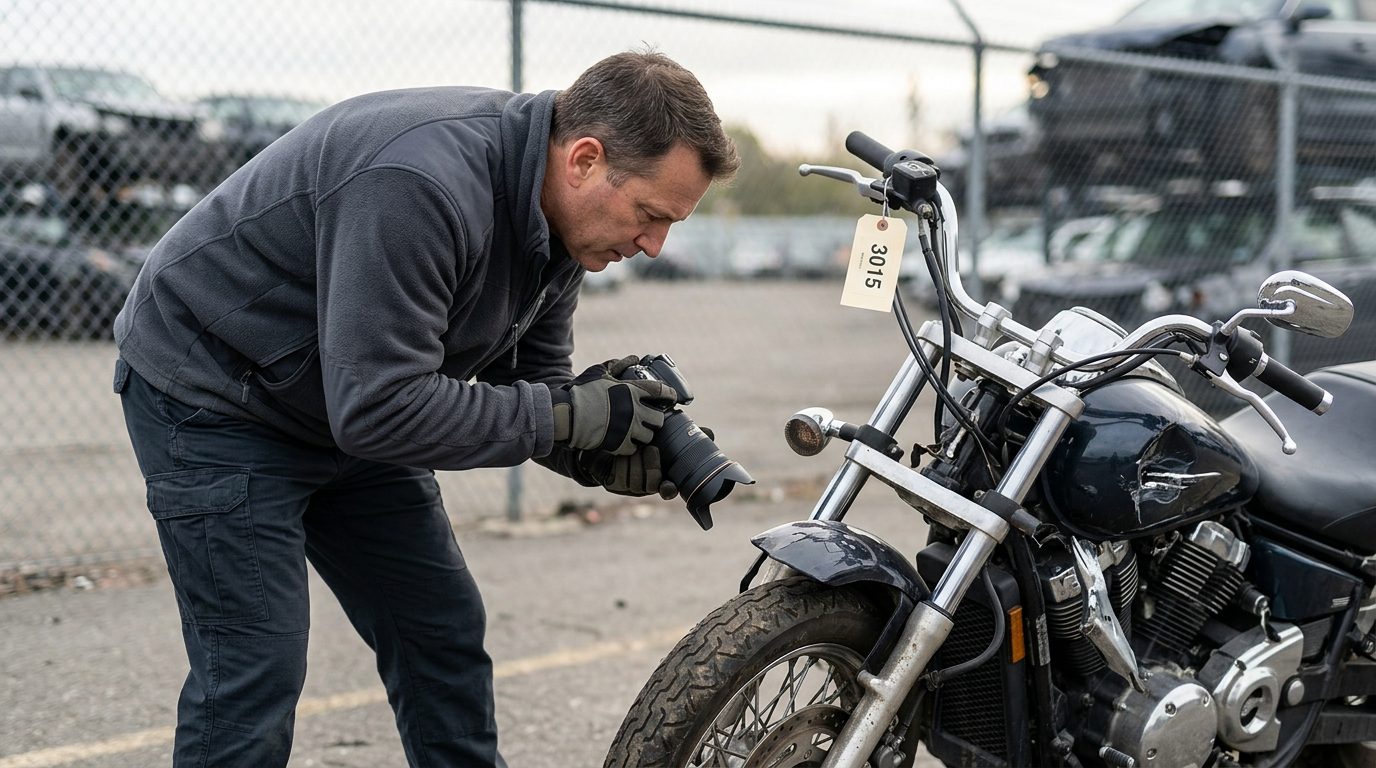
The most useful evidence is what gets collected early. Photos of the scene, the bike, and the gear are a strong start. Take them before repairs or tow-yard changes erase the damage.
Keep the contact information for any witnesses. Note the names and insurance details of every driver involved. Save the police report number, and request a copy when it is available.
Medical records and bills form the core of an injury claim. Keep every appointment note, prescription, and bill. Track missed work and lost wages, plus any travel or out-of-pocket costs.
Insurers may ask for a recorded statement early in a claim. Recorded statements can be used later, so think before you answer. It is reasonable to pause and review the facts before speaking with an adjuster about the crash.

Talk With a Bakersfield Motorcycle Accident Attorney About Your Crash
Many readers of this page have a rider or family member who was hurt, a damaged bike, a crash with unclear fault, and deadlines that may already be running. Some are still waiting on medical bills or trying to make sense of the police report.
Do I have to file a lawsuit to make a claim?
Many motorcycle claims settle without a lawsuit. A lawsuit is needed when the claim cannot be resolved otherwise. The timing rules still apply, so early review matters.
Can I still have a claim if I was partly at fault?
Does helmet use decide the case?
No single factor decides a case. Helmet use may be raised on causation or damages, and it is judged with the medical evidence.
When does the time to file start?
For a general personal injury claim, the two-year period generally runs under the Code of Civil Procedure rule. Other claims can follow other timing rules. Ask about your specific dates early.
Our initial consultation is free, confidential, and carries no obligation to continue. Donald Norman Colvin, the lawyer at Colvin Accident Lawyers, can review your crash facts and the deadlines that apply. No result can be promised, but you can contact Colvin Accident Lawyers to start that conversation.
Colvin Accident Lawyers, Bakersfield, California — responsible for this site.
Why Injured Riders Contact Colvin Accident Lawyers
Focused on Accident Victims
Our practice is dedicated to people hurt in accidents, including motorcycle riders, bicycle riders, pedestrians, and the families of those who have been killed.
Careful Review of the Facts
We look closely at how the crash happened, the injuries involved, and the records that document them before discussing your options.
Support for Families
When a loved one has been seriously hurt or killed, we work to answer questions and take the pressure off the people closest to the case.
Direct, Plain-Language Communication
Our team explains each step in terms you can follow, so you know what is happening with your case.
Do Not Wait to Get Answers
Evidence from a crash scene can change quickly, and injuries can take time to fully appear. Speaking with a lawyer early helps you understand your situation and the steps that may matter for your case.
Common Questions After a Motorcycle Accident
What Happened at the Scene
Crash details such as the roadway, traffic, weather, and witness accounts can shape how the accident is understood later. We help you think through what you remember.
Gathering Evidence
Photos, police reports, vehicle damage, and surveillance footage may be useful. Our team helps identify what should be preserved and requested.
Medical Care and Records
Motorcycle injuries are often serious. Keeping up with medical treatment and organizing your records supports a clear picture of your losses.
Dealing With Insurance Companies
Insurers may contact you quickly. Before you give a recorded statement or accept any offer, talk with a lawyer about what to say and what to avoid.