Motorcycle Accidents | Bakersfield, Kern County & Central California
"I Didn't See You." Those Words Deserve a Closer Look.
When a driver says they never saw your motorcycle, Colvin Accident Lawyers helps you examine the evidence behind the claim. Our team focuses on motorcycle accident cases across Kern County, Fresno, Visalia, Lancaster, Palmdale, Delano and Tehachapi.
By Donald Norman Colvin · Published October 30, 2026
When a driver says they did not see the motorcycle, that doesn’t end a California claim. It starts a fault question: would a careful driver in the same spot have noticed the rider in time? This page explains how that question gets answered, what evidence matters, and what riders should do now.
What “I Didn’t See You” Usually Means in a California Crash
The statement usually means the driver’s attention lapsed, and the claim turns on whether that lapse was careless. Civil Code § 1714 makes people responsible for injuries caused by a lack of ordinary care. That duty applies to people who drive.
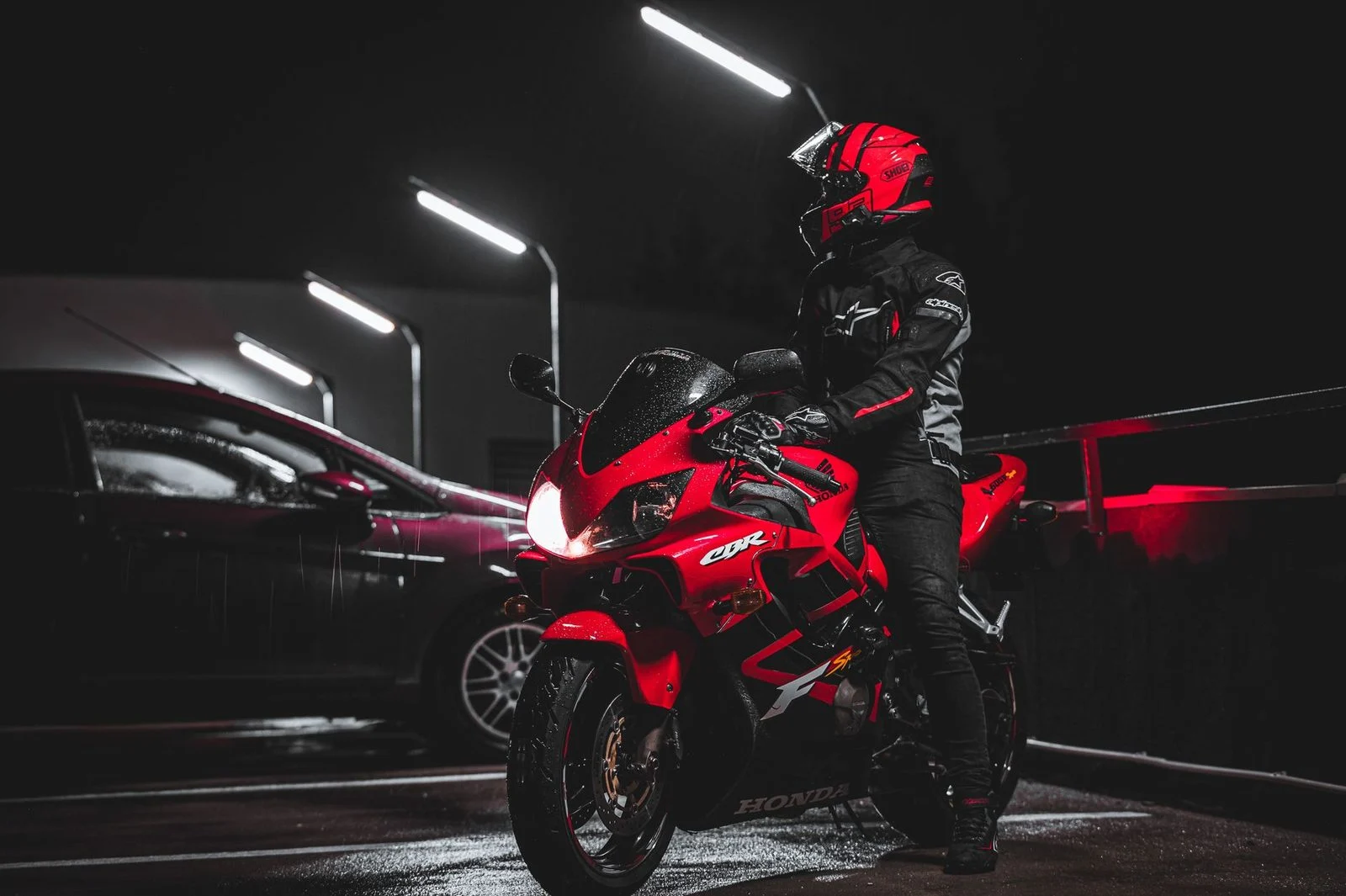
Motorcycles and similar vehicles are narrower than cars. They can be harder to judge in traffic, especially at intersections and in merging lanes. That is why an “I never saw it” claim gets examined closely, not brushed aside. The key question is what a careful driver could have seen.
If the driver told you they never saw your motorcycle, you may have a claim worth reviewing, and our team can talk it through with you. Talk it through with our team — the first consultation is free, confidential, and carries no obligation.
Why the Other Driver’s Statement Does Not Settle Fault
The driver’s words are one piece of evidence. They are weighed against the physical facts of the crash. A statement made in shock at the scene is not the final word on what happened.
Accounts often shift as people think more. A driver may say they never saw the rider, then later describe a glance at a phone or a car in the lane. Records made close to the crash are usually the easiest to check against later accounts. The police report, photos, and early insurance notes all matter.
Your own account counts too. Write down what you remember while it is fresh. Include the time, your lane, your speed, the driver’s movements, and what you saw just before impact. Stick to facts you are sure of and leave out guesses.
Evidence That Shows What the Driver Could Have Seen
Physical evidence often shows more than memory does. It shows where the vehicles were and how they moved. Look for these items:
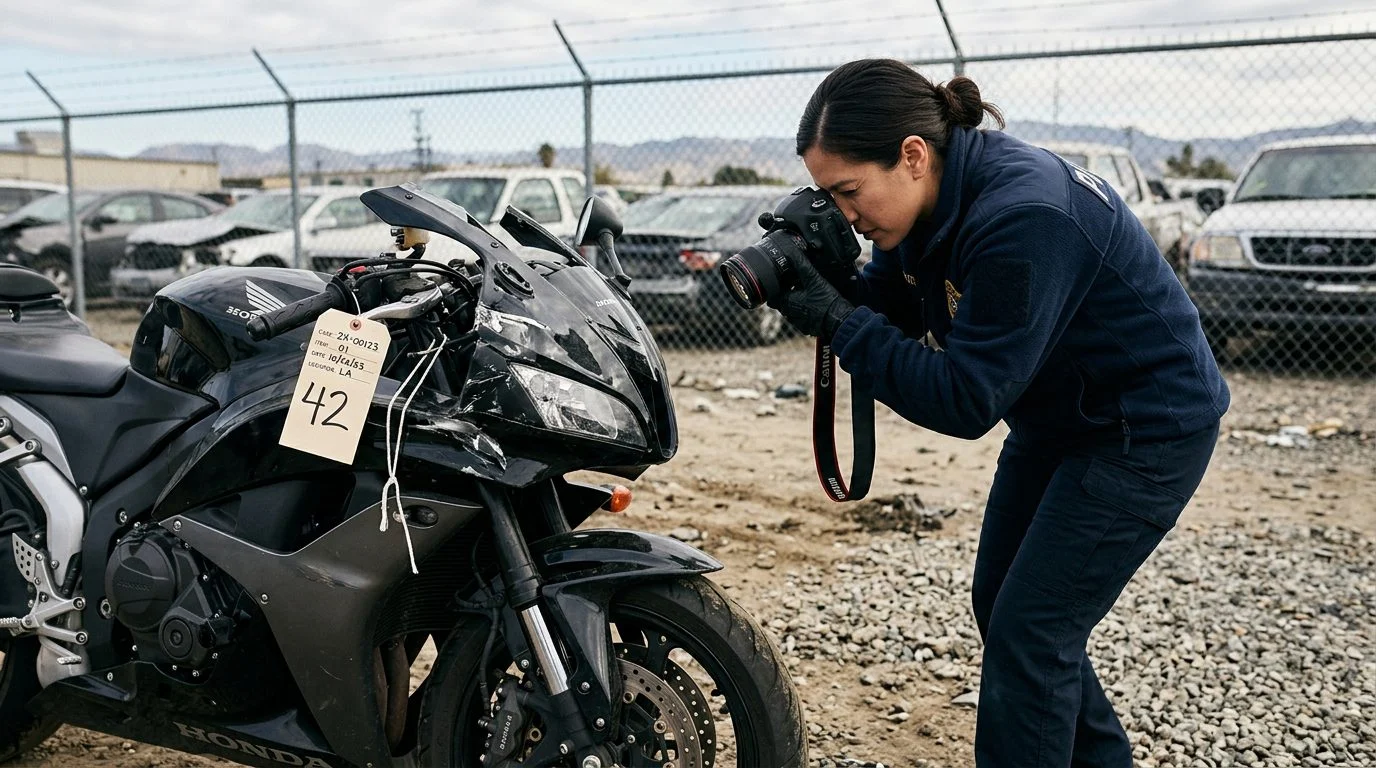
- Scene and vehicle photos, including damage that shows where the car struck the motorcycle
- Skid marks and yaw marks, and the final resting positions of both vehicles
- The traffic collision report from the police or California Highway Patrol
- Names and statements from witnesses, collected soon after the crash
- Traffic camera, business, or dashcam footage
- Time-stamped phone records that show when calls, texts, or navigation were active
- Road layout, lighting, weather, and sight lines where the crash happened
Keep your helmet, gear, and damaged motorcycle. These items show the impact and can be examined later. Be careful about social media. Posts about the crash can be read by the other side and used to challenge your account.
How California Comparative Fault Applies When the Rider Shares Blame
Damages are reduced in proportion to that person’s share of fault. A rider found 30% at fault would see the award reduced by 30%.
The other side may argue the rider was not visible or was positioned unsafely. Those points get tested with the same evidence described above. Lane position matters here.
The driver may argue that they acted with the care a reasonably prudent person would have used under the same circumstances.
When Road Conditions or Other Factors Contributed to the Crash
A crash can have more than one cause, and each cause can affect fault. A driver’s inattention and a road hazard can both play a role. Fault is judged by looking at all the facts together. A road condition that helped cause the crash may support a separate claim, so raise it early.
When more than one party shares fault, Civil Code § 1431.2 limits each defendant’s liability for non-economic damages to its own share of fault. Non-economic damages cover losses like pain, suffering, and emotional distress. Economic damages are objectively verifiable money losses, such as medical bills and lost pay.
Insurance Questions to Raise When the Other Driver Says They Did Not See You
Once fault is shown, the at-fault driver’s liability insurance is typically where injury and vehicle damage claims go. Get the driver’s insurance details at the scene. Write down what the driver says while it’s still fresh.
Be careful before giving a recorded statement to any insurer. Understand your injuries and your options first.
If the driver has no insurance, or cannot be identified, different rules can apply.
A motorcycle that can’t be repaired may be declared a total loss. How it gets valued is a separate question worth raising early.
Not sure what your next step is?
Talk it through with our team — the first consultation is free, confidential, and carries no obligation.
Deadlines to Keep in Mind
California generally gives two years from the crash to file a personal injury lawsuit. Code of Civil Procedure § 335.1 sets a two-year limit for injury caused by another person’s wrongful act or neglect. Under Cal. Code Civ. Proc. § 335.1, an action for injury to an individual caused by the wrongful act or neglect of another, including injuries from a motorcycle accident, must be brought within two years, subject to exceptions and tolling rules.
Property damage claims can run on different timelines, so don’t assume one clock covers everything. Waiting also weakens your evidence. Scenes change, footage gets overwritten, and memories fade.
Talk Through Your Crash With Colvin Accident Lawyers
If a driver told you they never saw your motorcycle, you can have the facts reviewed before you decide what to do next. Colvin Accident Lawyers is based in Bakersfield. Riders from Kern County and nearby communities are welcome to reach out. Bring what you saw, what the driver said, and where your evidence is kept.
The first consultation is free, confidential, and carries no obligation to continue. Request your free consultation to talk through the facts of your crash.
Frequently Asked Questions
How does partial fault affect a motorcyclist’s recovery in California?
How fault is assessed in a motorcycle accident claim depends on the facts of each case.
Is “I didn’t see you” enough to decide fault?
No. It is one piece of evidence, weighed against the physical facts and records of the crash.
Colvin Accident Lawyers, Bakersfield, California — responsible for this site. Responsible attorney: Donald Norman Colvin.
How Colvin Accident Lawyers Approaches a Motorcycle Claim
Reviewing the Crash Record
We look at the police report, photos, and any available records that show how the collision happened.
Questioning Easy Explanations
A statement that a driver "didn't see" a motorcycle is one piece of evidence. We examine it alongside the physical facts of the crash.
Protecting Your Account
Insurance representatives may ask for recorded statements early on. We help you understand what to say and what to hold back.
Focusing on Your Recovery
Serious injuries affect work, family and daily life. We handle the paperwork and communication so you can focus on healing.
Before You Speak to the Other Driver's Insurer
Adjusters often contact injured riders quickly. Talking with a lawyer before giving a recorded statement or signing any release can help protect your claim.
Common Reasons Drivers Say They Did Not See a Motorcycle
Blind Spots and Lane Changes
Motorcycles can sit in a car's blind spot, especially during lane changes and merges on busy roads like Highway 99 and Highway 58.
Intersections and Left Turns
Drivers turning left across traffic often focus on other vehicles. Our team looks at signal timing, sight lines and witness accounts at intersections.
Distracted or Rushed Driving
Phone use, rushing or fatigue can cause a driver to miss a motorcycle. We look for records and evidence that help explain what the driver was doing.
Dark Conditions and Weather
Dusk, night and poor weather in the Central Valley and high desert can make motorcycles harder to notice. We review lighting and road conditions at the scene.