Motorcycle Accidents | Bakersfield, California
Hurt in a Lane Splitting Crash? Get Clear Answers About Your Options
Colvin Accident Lawyers represents motorcycle riders and families in Kern County and surrounding communities. Lane splitting cases raise specific questions under California law, and we can help you understand them.
By Donald Norman Colvin · Published October 28, 2026
Fault depends on what each driver and rider did. This page explains how a lane splitting motorcycle crash claim in California is usually evaluated, and what it means for riders and for families after a fatal crash.
Is Lane Splitting Legal in California?
Veh. Code § 21658.1 defines lane splitting as riding a motorcycle with two wheels in contact with the ground between rows of stopped or moving vehicles in the same lane. The definition covers both divided and undivided roads.
Lane splitting is a separate maneuver.
Section 21658.1 defines lane splitting and lets the California Highway Patrol develop educational guidelines on it in a manner that would ensure the safety of the motorcyclist and surrounding drivers and passengers. California’s basic speed law says no one may drive a vehicle upon a highway faster than is reasonable or prudent for the traffic, weather, visibility, and road, and in no event at a speed that endangers the safety of persons or property. That rule applies to riders as well as drivers. For a wider overview, see our guide to motorcycle crash claims in Kern County.
If a driver's move led to your crash while you were lane splitting, or you're asking these questions after losing a family member, our team is glad to go over the facts with you. Talk it through with our team — the first consultation is free, confidential, and carries no obligation.

Does Lane Splitting Automatically Block a Motorcycle Claim?
The real question is whether someone failed to use ordinary care, and whether that failure caused the crash.
California law makes a person responsible for an injury caused by a want of ordinary care, except so far as the injured person brought the injury on themselves, willfully or by a want of ordinary care, as set out in Civ. Code § 1714. That duty applies to drivers and riders alike.
Crashes between a rider and a car often turn on the driver’s moves. motorcycle crash research shows how these collisions tend to happen. A driver who turns across a rider’s path, changes lanes without checking, or opens a door into the lane can be at fault even when the rider was splitting lanes. Our page on how a car’s left turn can shift fault walks through that scenario.
A rider can also carry some share of fault. Riding too fast for the traffic, moving into a car’s space, or failing to slow for a sudden stop can all be argued. Those are the points that matter, not the lane splitting itself.
How California Comparative Fault Affects a Rider’s Recovery
Here is the math in plain terms. A rider found 70% at fault still recovers 30% of the damages. A smaller share of fault means a smaller reduction. A larger share means a bigger one.
For non-economic damages, such as pain, suffering, and emotional distress, Civ. Code § 1431.2 makes each defendant liable only for its own percentage of fault. That rule matters when more than one party shares blame.
How fault percentages get set depends on the facts of each crash. The same road and the same kind of maneuver can produce very different fault findings.
What Insurers and Defendants Will Argue About Lane Splitting
Common arguments focus on four points: speed, lane position, lane changes, and room to stop.
- Speed: whether the rider was going faster than the traffic around them, measured against the basic speed law.
- Lane position: how close the rider was to a car’s mirror or door.
- Cut-ins: whether the car moved into the rider’s lane, or the rider moved into the car’s path.
- Stopping room: whether the rider had space to slow once traffic changed.
A claim that the rider “came out of nowhere” gets tested against the scene. Skid marks, vehicle damage, and witness accounts can support that claim or weaken it. The police report and any citation matter, but they are not the final word on fault.
Evidence That Helps a Lane-Splitting Claim
The strongest evidence shows where each vehicle was and how the crash unfolded. Gather it early, because scenes change and footage can be overwritten.
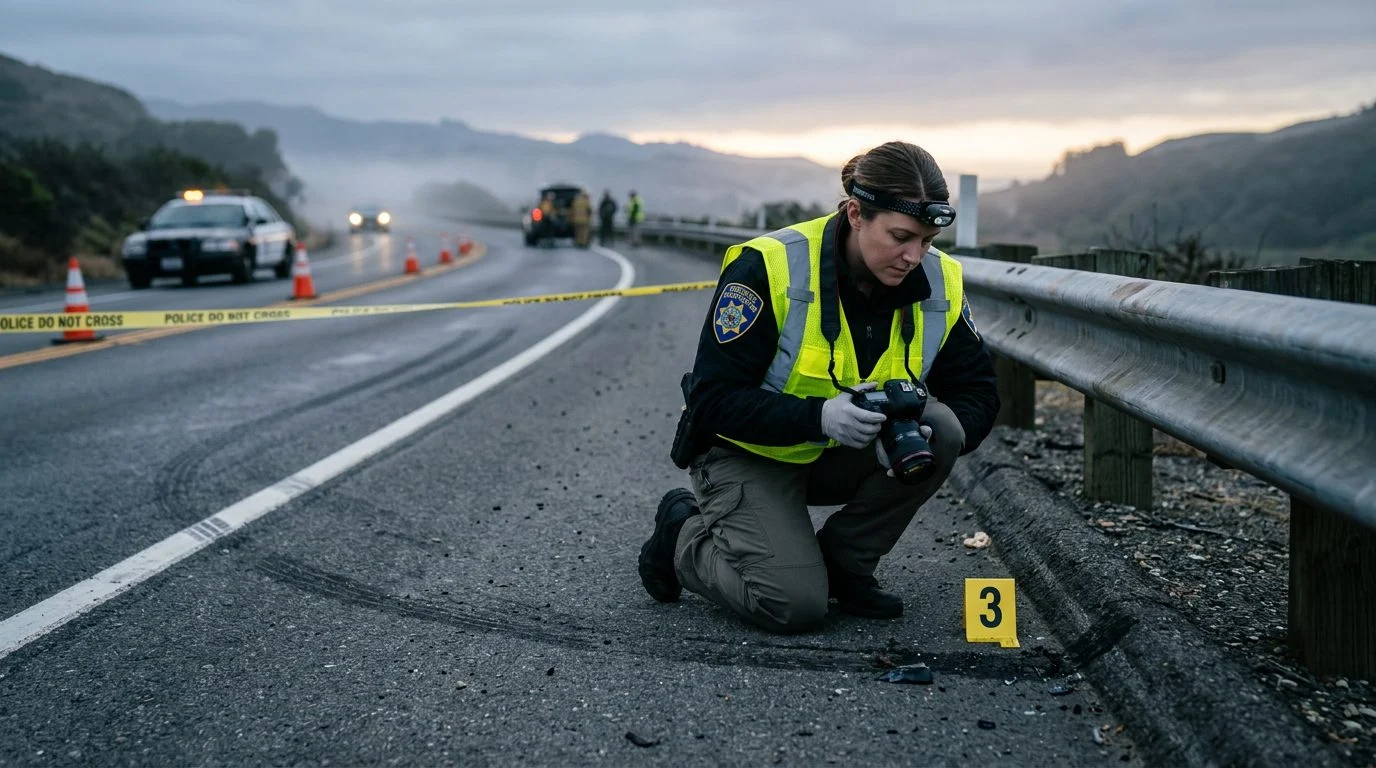
- Scene photos and measurements: lane widths, final rest positions, and debris.
- Vehicle damage: the damage pattern on the car and the motorcycle can show direction of travel and point of impact.
- Witnesses and footage: statements from other drivers, dash cam video, or traffic camera footage, if any exists.
- The police report: it records the officer’s observations and any citations.
- Medical records: they document injuries and tie them to the crash. Road rash that needed skin grafts is one example, and road rash treatment records show how that documentation fits into a claim.
Compensation Available in a Motorcycle Lane-Splitting Claim
A rider may seek economic damages for measurable losses and non-economic damages for pain and suffering.
Under Civ. Code § 1431.2, economic damages are objectively verifiable monetary losses. Examples include medical expenses, loss of earnings, and costs of repair or replacement, such as the motorcycle. Non-economic damages cover pain, suffering, emotional distress, and loss of companionship.
If the at-fault driver had no insurance, the options change. Our guide on recovery when the driver is uninsured explains that situation.
Timing matters too. Code Civ. Proc. § 335.1 requires an action for injury, or for death caused by another’s wrongful act or neglect, to be brought within two years. Mark that two-year date early so it doesn’t sneak up on you.
Not sure what your next step is?
Talk it through with our team — the first consultation is free, confidential, and carries no obligation.
Talk With Colvin Accident Lawyers About Your Crash
If you were lane splitting when a car hit you, you don’t have to work out fault on your own. The same is true if you’re a family member asking these questions after a fatal crash.
For a death caused by a crash, Code Civ. Proc. § 377.60 lists who may bring a wrongful-death claim. The list includes the surviving spouse, domestic partner, and children. The decedent’s personal representative may act on their behalf.
Colvin Accident Lawyers offers a free first consultation that is confidential and carries no obligation to continue.
Frequently asked questions
What does “lane splitting” mean under California law?
For the purposes of Veh. Code § 21658.1, “lane splitting” means driving a motorcycle, as defined in Section 400, that has two wheels in contact with the ground, between rows of stopped or moving vehicles in the same lane, including on both divided and undivided streets, roads, or highways. The section also provides that the Department of the California Highway Patrol may develop educational guidelines relating to lane splitting in a manner that would ensure the safety of the motorcyclist and the drivers and passengers of the surrounding vehicles.
Does lane splitting end a motorcycle claim?
Veh. Code § 21658.1 does not address that question; it only defines “lane splitting” and provides for CHP educational guidelines.
How long do I have to file?
Under Code Civ. Proc. § 335.1, an action for assault, battery, or injury to, or for the death of, an individual caused by the wrongful act or neglect of another must be brought within two years.
If a driver’s move led to your crash while you were lane splitting, or you’re asking these questions after losing a family member, our team is glad to go over the facts with you. Reach out through our contact page.
Colvin Accident Lawyers, Bakersfield, California — responsible for this site. Responsible lawyer: Donald Norman Colvin.
How Colvin Accident Lawyers Can Help
A Free, Confidential First Consultation
Tell us what happened. Your first consultation is free, confidential, and comes with no obligation to continue.
Focused on Motorcycle Accident Cases
Our work includes motorcycle accident claims arising from lane splitting, including the statutory and factual questions these crashes often involve.
Based in Bakersfield
We are located in Bakersfield and represent injured riders and their families in Kern County and nearby communities.
Support for Injured Riders and Families
Serious injuries and wrongful death can affect your whole family. Our team takes time to explain each step in plain language.
Before You Talk to an Insurance Adjuster
Insurance companies may contact you soon after a crash. Before giving a recorded statement or signing any document, consider speaking with a lawyer about what you are being asked to say.
What Lane Splitting Claims Often Involve
Evidence From the Scene
Photos, vehicle damage, traffic conditions, witness information, and any video can help document how the crash happened. We can discuss which records may matter in your situation.
Documenting Your Injuries
Medical records, treatment notes, and records of lost work and out-of-pocket costs help show the nature and extent of your injuries and losses.
Other Vehicles and Responsible Parties
Crashes may involve passenger cars, trucks, buses, or other drivers. We can review who was involved and what insurance may apply to your claim.