Motorcycle Accidents | Bakersfield and the Central Valley
Motorcycle Crash Claims in the Central Valley: Know Where You Stand
A plain-language guide from Colvin Accident Lawyers in Bakersfield for riders, passengers, and families dealing with a motorcycle crash in Kern County and throughout the Central Valley.
By Donald Norman Colvin · Published October 15, 2026
A motorcycle crash claim is a civil case that asks the responsible party to pay for the harm a crash caused. Riders, passengers, and family members often have questions after a crash.
Motorcycle crash claims Central Valley families bring follow the same state rules as other injury cases. Motorcycles still raise their own questions about fault, evidence, and insurance.
This guide explains those rules in plain language. It covers who can bring a claim, how fault is divided, which deadlines apply, and what a first meeting with a lawyer involves. It is general information, not advice about your specific case. Every crash turns on its own facts.
What a Motorcycle Crash Claim Is and Who Can Bring One
A motorcycle crash claim is a civil request for money to cover losses from a crash that someone else’s carelessness caused.
California law lets a person who suffers harm from another’s unlawful act recover money as damages (Cal. Civ. Code § 3281).
Several people can bring a claim. A passenger can too, if another driver’s negligence caused the passenger’s injuries. After a fatal crash, families often have questions about their rights and options.
Claims often start with the other driver’s insurer. The claim itself, though, is a legal matter with its own rules and deadlines. If injuries are severe, the catastrophic injury lawyer page covers that situation in more depth. For general motorcycle claims, see the motorcycle accident lawyer page.
If you're a rider or family member wondering whether a Central Valley crash gives you a claim, we're glad to talk it through with you. Talk it through with our team — the first consultation is free, confidential, and carries no obligation.
How Fault Is Decided in California Motorcycle Crashes
Fault is decided by asking whether someone failed to use ordinary care and that failure caused the crash. California law makes people responsible for injuries caused by a lack of ordinary care, except to the extent the injured person caused the harm (Cal. Civ. Code § 1714).
The Judicial Council civil jury instructions describe how these questions are framed in negligence cases.
Several crash patterns often become fault questions. These include a car turning left across a rider’s path, a lane change into a rider’s space, following too closely, failing to yield at an intersection, and driver distraction. Motorcycle crash claims Central Valley insurers review can turn on any of these. The police report and witness statements carry weight.
Who Is Usually at Fault in Motorcycle Accidents, and Can You Sue Someone for Crashing Your Motorcycle?
No general rule says riders or drivers are usually at fault. Fault depends on the facts, evidence, and traffic records of each crash.
In most cases, a rider can bring a claim against a driver whose negligence caused the crash. That claim still has to prove negligence and cause. Insurance coverage matters too, and it’s covered below.
Some crashes involve a vehicle owner who was not the driver. Whether that owner may be responsible depends on the facts and on California law. The owner’s role should be checked early.
Evidence that shapes fault often includes the crash report, photos of the scene and vehicles, damage patterns, witness names, and any dash camera video. Crashes involving a car are also covered on the car accident lawyer page.
Write down what you remember soon after the crash. Details fade quickly, and early notes help when the story is pieced together later.
Who Else Can Be Liable: Trucks, Buses, Government Vehicles, and Road Conditions
More than one party can be responsible for a motorcycle crash. That can include a company, a public agency, or a property owner.
If a commercial driver was working when the crash happened, the company that employs the driver may face claims too. Federal transportation law can make a carrier liable for damages caused by a violation of that law. For these cases, see the truck accident lawyer and bus accident lawyer pages.
Claims against public agencies have a short first deadline, which is covered in the deadlines section.
Potholes, debris, and unmarked construction can involve a public agency or a private owner who controls the property. The premises liability lawyer page covers hazards on private property.
Motorcycle Crashes on Central Valley and Kern County Roads
Motorcycle crashes in Kern County and the Central Valley happen on highways, city streets, and rural roads. Where the crash happened shapes the claim.
Highway 99 runs north and south through Bakersfield, Delano, Visalia, and Fresno. It carries commuter and truck traffic. Highway 58 links Bakersfield with Tehachapi. Highway 14 runs through the Antelope Valley, including Lancaster and Palmdale.
Tehachapi sits in mountain terrain, where grades and weather can change road conditions. Riders on rural roads can face different hazards than riders on city streets.
Where a claim is filed depends on where the crash happened and where the parties are located. This guide does not cover local court rules in detail. A lawyer can look at the location of your crash and explain what applies.
Colvin Accident Lawyers is based in Bakersfield. The practice works with riders and families across Kern County and the wider Central Valley, including Fresno, Visalia, Lancaster, Palmdale, Delano, and Tehachapi.
Protective Gear, Helmets, and Crash Evidence
Helmets and gear don’t decide fault on their own. They can, however, become evidence in your claim.
Insurers and defense lawyers may ask whether a rider wore a helmet, jacket, boots, or gloves. They may also ask how that gear affected the injuries. Those questions can shape how damages are argued, so the answers should be backed by records.
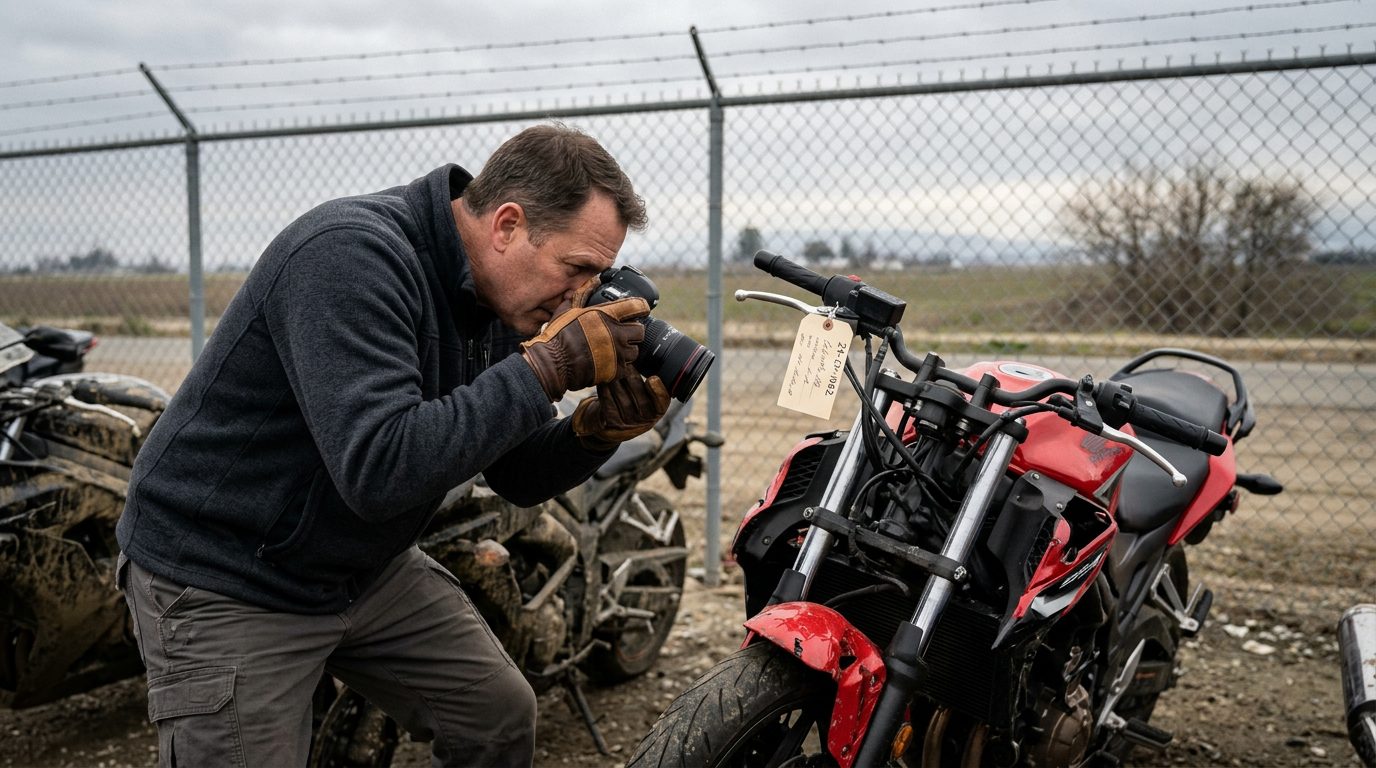
Keep the damaged helmet, jacket, boots, and other gear. Don’t repair, clean, or throw them away until you have photographed them. Those items can show where and how the impact landed on the body.
Keep a list of all repairs and replacements too. That includes the motorcycle itself and any tools, saddlebags, or accessories damaged in the crash.
Not sure what your next step is?
Talk it through with our team — the first consultation is free, confidential, and carries no obligation.
Injuries and Damages Recoverable in a Motorcycle Crash Claim
A motorcycle claim can seek money for economic losses you can document. It can also seek money for non-economic losses, such as pain and emotional distress.
California law measures damages as the amount that compensates for all the detriment proximately caused by the wrong (Cal. Civ. Code § 3333). Economic damages are objectively verifiable monetary losses. These include medical expenses, loss of earnings, and costs of repair or replacement (Cal. Civ. Code § 1431.2).
Non-economic damages are subjective losses. They include pain, suffering, inconvenience, mental suffering, and emotional distress (Cal. Civ. Code § 1431.2).
Common motorcycle injuries include road rash and skin grafts, fractures, traumatic brain injury, and spinal injuries. The NINDS spinal cord injury page explains that the spinal cord is protected by three layers of tissue and fluid that cushions it. Severe injuries like these need careful documentation.
Insurance Issues: Uninsured Drivers, Coverage Limits, and Med-Pay
Insurance often shapes how a motorcycle claim gets paid. Each policy’s terms control what it covers.
If the at-fault driver has no insurance, your own uninsured or underinsured motorist coverage may apply. Whether it does depends on your policy. Read its terms carefully.
Medical payments coverage, if your policy includes it, can pay certain bills under its own terms. That coverage works separately from fault.
California limits non-economic damages in some motor vehicle cases. For example, a person convicted of driving under the influence at the time of the crash may not recover non-economic losses. A person whose vehicle was not insured as state law requires may also be barred, and the statute has exceptions (Cal. Civ. Code § 3333.4).
Policy limits do not set the full value of a claim. Insurers may call early and ask for a recorded statement. You don’t have to give one without first understanding what it covers.
Time Limits: Government Claim Deadlines and Filing Periods
Claims against public agencies generally must be presented in writing within six months of the injury under Gov. Code § 911.2, and exceptions such as late-claim relief under Gov. Code § 911.4 may apply.
Missing that step can cost you the claim against the agency.
Deadlines for wrongful death claims belong to the family. They can differ from the rider’s own timing. Families should check their timing early.
Start a timeline the day of the crash. Note the date, the agency involved if any, and when any notice was sent.
When a Motorcycle Crash Is Fatal: Wrongful Death and Funeral Costs
When a rider dies in a crash, certain surviving family members may bring a wrongful death claim. The claim covers losses the family suffered.
Wrongful death claims look at losses such as financial support the rider would have provided, loss of companionship, and funeral and burial costs. Burial costs count as economic damages under California law (Cal. Civ. Code § 1431.2).
Who may sue, and how any recovery is shared, depends on state rules. A lawyer should review those rules for your family’s situation. The wrongful death lawyer page covers this area in more detail.
Families often face grief and paperwork at the same time. Keeping receipts for funeral costs and the rider’s pay records helps with the claim.

What Happens at a Free First Consultation and How Fees Work
The first consultation is free, confidential, and carries no obligation to continue. It is a meeting to review your crash and explain your options.
Bring what you have. That includes the crash report, medical records and bills, photos, insurance cards and claim numbers, and the names of any witnesses. You don’t need everything in order to start.
During the meeting, the lawyer reviews the facts, looks at who may be responsible, and explains the deadlines that may apply. You then decide whether to move forward.
Can a passenger on a motorcycle file a claim?
A passenger hurt by another driver’s negligence can usually bring a claim, subject to the facts and the same deadlines.
What if the rider was partly at fault in California?
A partly at-fault rider can still recover, with damages reduced by that rider’s share.
Who is usually at fault in a motorcycle accident?
No general rule decides this. Fault depends on the facts and evidence of each crash.
Motorcycle accident claim filing deadlines
Do motorcycle crash claims Central Valley riders file differ from other claims?
The core California rules are the same. Local venue, public roads, and the location of the crash can change the steps.
If you’re a rider or a family member wondering whether a Central Valley crash gives you a claim, we’re glad to talk it through with you. You can contact Colvin Accident Lawyers to start.
Donald Norman Colvin, Colvin Accident Lawyers, Bakersfield, California — responsible for this site.
Why Talk With Colvin Accident Lawyers
Free First Consultation
Your first consultation is free, confidential, and carries no obligation to continue.
Confidential Discussion
Share the details of your crash in a private conversation about your options.
Based in Bakersfield
Colvin Accident Lawyers is located in Bakersfield, serving riders and families in Kern County and the surrounding Central Valley.
Easy to Reach
Call the office or send a message to start the conversation at your convenience.
Preserve Evidence Early
Photos of the scene, your damaged helmet and gear, your motorcycle, and your medical records can all help document what happened. Keep copies of everything, and bring them to your consultation.
What to Gather After a Motorcycle Crash
Scene Photos and Details
Pictures of the roadway, vehicles, traffic signals, and skid marks, along with the date, time, and location, help create a clear record.
Medical Records
Keep every emergency room report, follow-up visit note, and bill. They show the nature and treatment of your injuries.
Damaged Gear and Property
Retain your helmet, jacket, boots, and motorcycle. Physical items can help show how the crash occurred.
Witness and Report Information
Write down witness contact information and the police report number, and keep any insurance correspondence you receive.