Premises Liability Lawyer · Bakersfield, CA
Hurt in a Slip and Fall? We Can Help You Understand Your Options
Colvin Accident Lawyers represents people injured on someone else's property, including slip, trip and fall accidents, in Bakersfield and Kern County. Your first consultation is free and confidential, with no obligation to continue.
By Donald Norman Colvin · Published November 2, 2026
Premises Liability Lawyer Lancaster: Slip and Fall Claims Under California Law
If you were hurt in a slip or fall on property you don’t own, California law may hold the property owner responsible. A premises liability lawyer can review how the fall happened, who controlled the area, and which deadlines may apply. This page explains those rules in plain words so you know what to ask next.
Colvin Accident Lawyers, based in Bakersfield, represents people in premises liability cases. The firm is based in Bakersfield, California. Some rules below link to their official sources.
If a fall on a store floor, apartment stairway, or Lancaster parking lot left you hurt, you may have a claim, and our team can talk it through with you now. Talk it through with our team — the first consultation is free, confidential, and carries no obligation.

What California Law Requires of Property Owners in Lancaster
California law generally requires people to use ordinary care so they don’t injure others. That duty reaches property owners. Under California Civil Code § 1714, people can be responsible for injuries caused by a lack of ordinary care in managing their property or person.
In a premises case, a central question is often what the owner or person in control knew, or should have known, about a hazard. The owner, a landlord, a business operator, a property manager, or a contractor may each have responsibilities. Which of them controlled the area where you fell matters.
Why you were on the property can also matter. The facts of your visit often shape how a claim is viewed. A shopper, a tenant’s guest, and a delivery worker may each present different facts.
The Judicial Council of California publishes civil jury instructions (CACI).
Where Slip and Fall Injuries Happen in Lancaster
Slip and fall incidents can happen in many places, including stores, apartment buildings, parking lots, sidewalks, and parks. Many of these hazards are easy to miss, especially when they are small. Common hazards include:
- Freshly mopped or wet floors with no warning sign
- Cracked sidewalks and uneven pavement
- Potholes and broken asphalt in parking lots
- Loose stair treads and missing handrails
- Poor lighting on walkways and parking lots at night
Wind is another local factor. That debris can hide a crack, a step, or a wet patch. Watch for it on windy days.
A common mistake is leaving the spot before anyone records the hazard. The area may be cleaned or repaired soon after a fall. If a fall is never reported, the business may have no record of it.
Why a Fall Can Cause Serious Injury
A fall can cause broken bones, head injuries, back and spinal injuries, and soft tissue damage. Some symptoms may not appear until days after the fall. A problem that seems minor at first may still matter.
A prompt medical visit does two things. It protects your health. It also creates a record of your injuries and treatment after the fall. Medical records help show what was hurt, how, and when treatment began.
Pain that starts small can grow. Stiffness, dizziness, and headaches after a fall deserve a medical check, even if you feel you can walk it off. Write down new symptoms as they appear, such as numbness or trouble sleeping. Keep every appointment and follow the care plan your doctor gives.
Claims Against Public Property in Lancaster: The Six-Month Deadline
If the fall happened on city, county, or other public property, a written claim generally must be presented within six months. Under California Government Code § 911.2, a claim for injury to a person or for death is due not later than six months after the cause of action accrues.
Check who owns the property before you assume a private owner is responsible. Under California Government Code § 830, public property means property owned or controlled by the public entity, but not easements, encroachments, or other property on the entity’s land that the entity does not own or control. Sidewalks, parks, and public buildings can fall into this group.
Public property claims also use a different test. Under California Government Code § 835, a public entity can be liable for a dangerous condition of its property if the plaintiff establishes that the property was in a dangerous condition at the time of the injury, that the injury was proximately caused by it, that the risk was reasonably foreseeable, and that either an employee’s negligent act created the condition or the entity had actual or constructive notice of it in time to protect against it. One key test is whether the entity had actual or constructive notice of the condition in time to act.
Constructive notice has its own test. Under California Government Code § 835.2, the condition must have existed long enough, and been obvious enough, that the entity should have found it with due care.
A suit against a public entity generally cannot start until the claim is acted on or deemed rejected, under California Government Code § 945.4. For most other injury claims, California Code of Civil Procedure § 335.1 sets a two-year filing period. That period also covers wrongful death claims. Because the six-month clock is short, waiting can cost you time.
How Fault Is Divided Under California’s Comparative Fault Rule
Under California’s comparative fault rules, damages may be reduced in proportion to that person’s share of fault.
Here is a simple example. Say the total harm is valued on a 100-point scale, and you carry 20 percent of the fault. In a hypothetical case, a share of fault assigned to the injured person would reduce the recovery; results depend on the facts of each case and will differ based on different facts.
The property owner may argue you were distracted, ignored a posted warning, or walked into an unsafe area. Those arguments depend on the facts of each case.
Non-economic damages, such as pain and emotional distress, are handled differently. Under California Civil Code § 1431.2, each defendant is liable for those damages only in proportion to its own percentage of fault. Economic damages are objectively verifiable losses, such as medical bills and lost earnings.
Not sure what your next step is?
Talk it through with our team — the first consultation is free, confidential, and carries no obligation.
Steps to Take After a Fall on Someone Else’s Property
Report the fall, document the spot, get medical care, and speak with a lawyer before giving any statement. Each step builds a clear record of what happened.
- Report it. Tell the owner, manager, or business. Ask for an incident report and keep a copy of any form you receive.
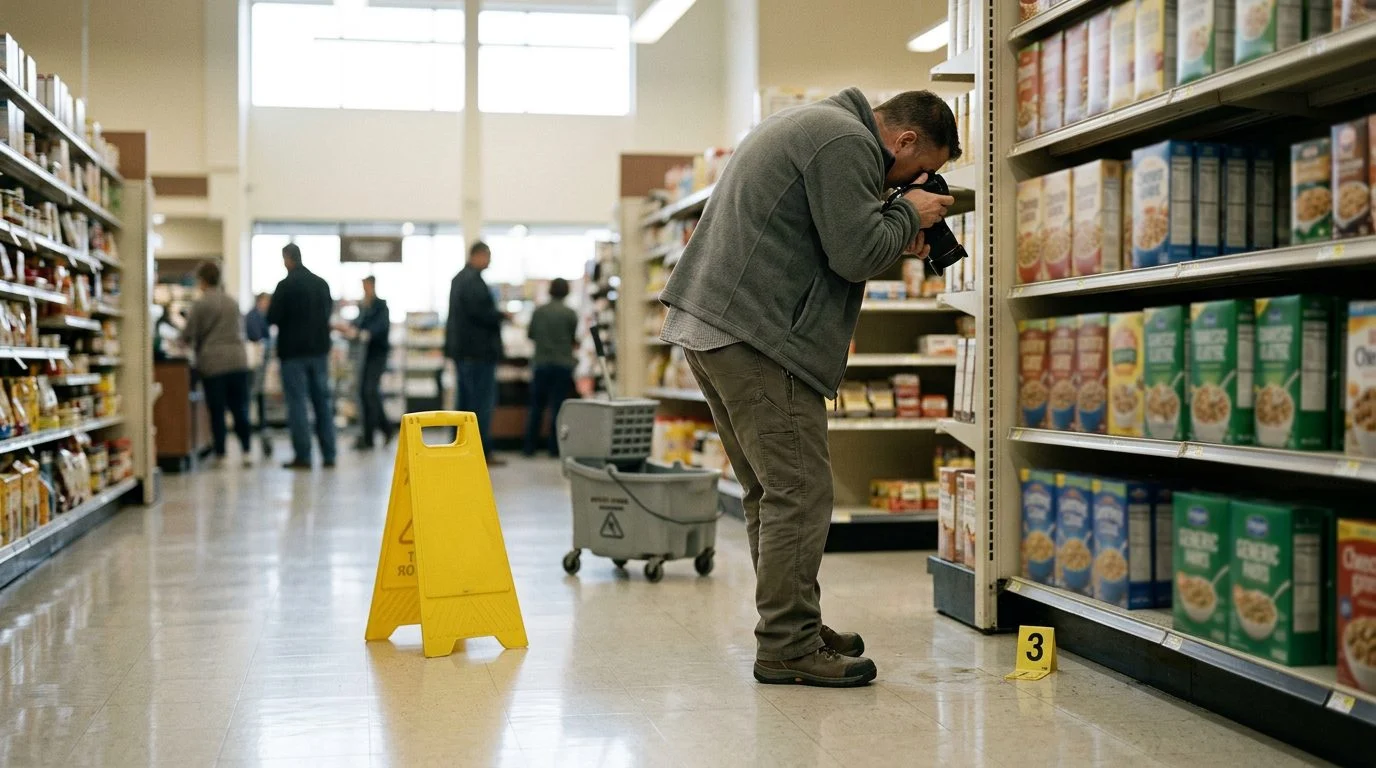
- Photograph the scene. Capture the hazard, the lighting, your footwear, and any warning sign or missing sign.
- Collect witnesses. Get names and contact details from anyone who saw the fall.
- Keep your items. Save the shoes, clothing, and receipts from the visit.
- See a doctor. Follow the care plan and keep a log of symptoms, appointments, and missed work.
- Talk with our team first. Speak with us before giving a recorded statement or signing papers from the owner’s insurer.

Free Consultation With Colvin Accident Lawyers in Lancaster
Colvin Accident Lawyers offers a free, confidential first consultation with no obligation to continue. That consultation is one way to talk with Colvin Accident Lawyers about a premises liability claim. The firm is based in Bakersfield, California, and represents people in premises liability and slip and fall cases. It also represents families in wrongful death matters. Donald Norman Colvin is the responsible lawyer for this page.
California law sets out who may bring a wrongful death claim. The decedent’s personal representative may also bring the claim on their behalf.
During a consultation, you can describe what happened, where it happened, and what records exist. You decide what comes next. For a broader look at these claims, read our premises liability lawyer Bakersfield guide.
Common Questions
How long do I have to file a slip and fall lawsuit in California?
For most injury claims, California generally allows two years under Code of Civil Procedure § 335.1. Claims against public entities start with a six-month claim deadline.
What if I fell on city or county property?
A written government claim generally must be presented within six months under Government Code § 911.2. Waiting can cost you time.
Can I still recover if I was partly at fault?
Generally yes.
If you slipped on a store floor, tripped on an apartment stairway, or fell in a Lancaster parking lot and are still hurting, you do not have to face the deadlines alone. Use our contact form to start the conversation today.
Colvin Accident Lawyers, Bakersfield, California — responsible for this site. Donald Norman Colvin, California-licensed attorney.
How Colvin Accident Lawyers Approaches Premises Liability Claims
Focused Practice Area
Colvin Accident Lawyers focuses on personal injury cases, including slip, trip and fall claims on commercial and private property.
Confidential Conversations
Your first consultation is free, confidential and comes with no obligation to continue. Share your questions without pressure.
Plain-Language Guidance
We explain the process in clear terms so you know what to expect at each stage of your claim.
Compassionate Support
An injury can disrupt your work, your family and your daily life. We take the time to listen to your situation.
Support for Families
When a fall on someone else's property leads to a death, we also represent families in wrongful death cases.
Keep Track of What Happened
Photos of the hazard, the names of any witnesses and copies of incident reports can be harder to gather as time passes. Contact us to talk through what you can do now.
What to Do After a Slip and Fall
Get Medical Care
Seek medical attention right away, even if your injuries seem minor at first. A medical record also documents what happened.
Report the Fall
Ask the property owner, manager or store to file an incident report. Keep a copy of any report you receive.
Document the Scene
If you are able, take photos of the spot where you fell, including any wet floor, uneven surface, debris or missing warning signs.
Keep Your Records
Save medical bills, receipts, time-off records and notes about your pain and daily limits. Then contact us to review your situation.