Truck Accidents | Bakersfield, CA
Hit by a Truck and the Driver Ran Off? Here Is What to Know
Hit-and-run crashes involving commercial trucks raise questions that many injury victims never expected. Here is how those cases are approached in California.
By Donald Norman Colvin · Published November 19, 2026
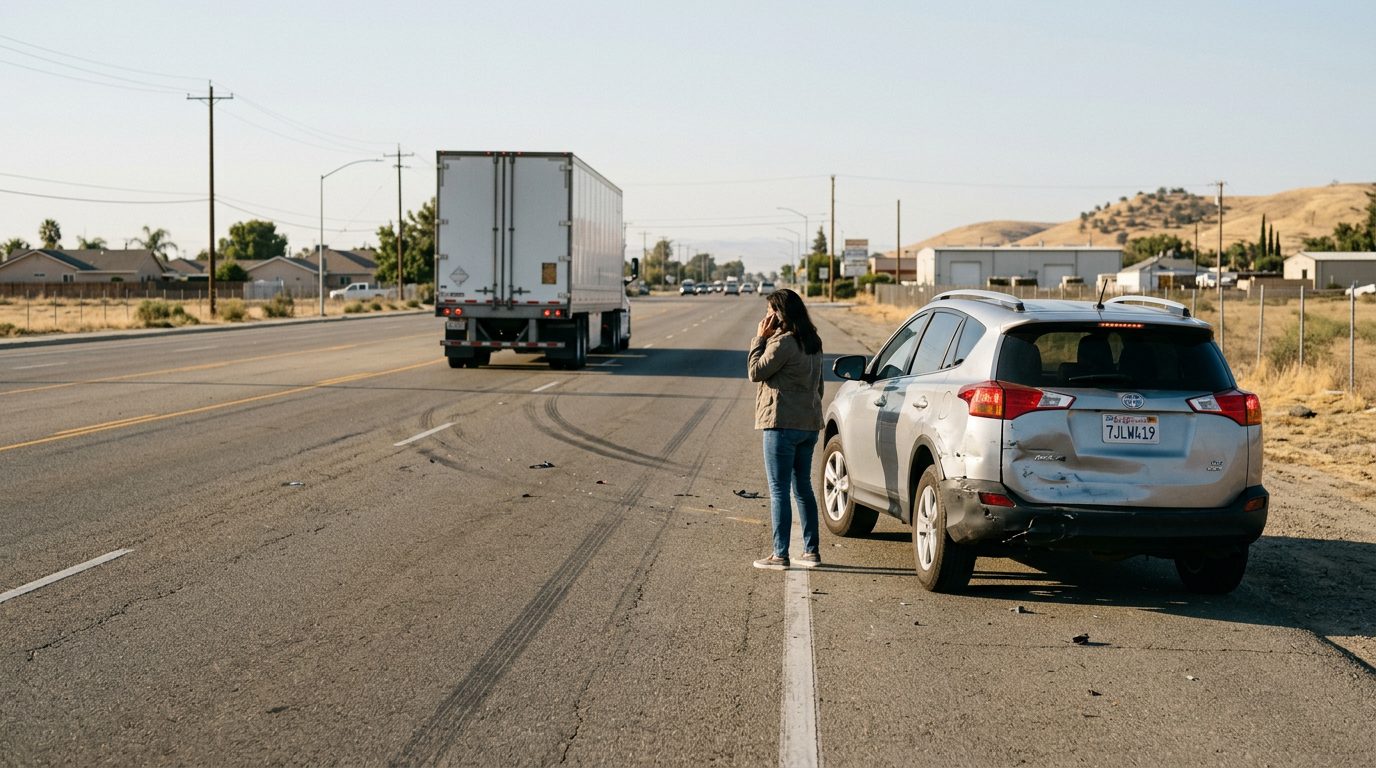
A collision with a large truck that drives away can leave you injured and unsure of what to do next. A hit-and-run often brings medical bills, missed work and hard questions about the law.
Short Answer: Can a Trucking Company Be Sued After a Hit and Run?
Many people assume the company pays automatically. The first hurdle is finding out who was driving and who owned or operated the rig. California law requires a driver in a crash that causes injury to stop at the scene and meet reporting duties (Vehicle Code § 20001). Leaving the scene of any injury crash can be punished by jail or prison, a fine of $1,000 to $10,000, or both; if the crash causes death or permanent, serious injury, the penalty can include two, three or four years in state prison or 90 days to one year in county jail, a fine, or both. That criminal rule is separate from your civil claim for money damages. Still, missing details from the crash can affect both.
If the truck driver fled and you're not sure what comes next, you don't have to work through it alone. Our team can talk with you about your crash. Talk it through with our team — the first consultation is free, confidential, and carries no obligation.
When Can a Trucking Company Be Held Responsible for Its Driver?
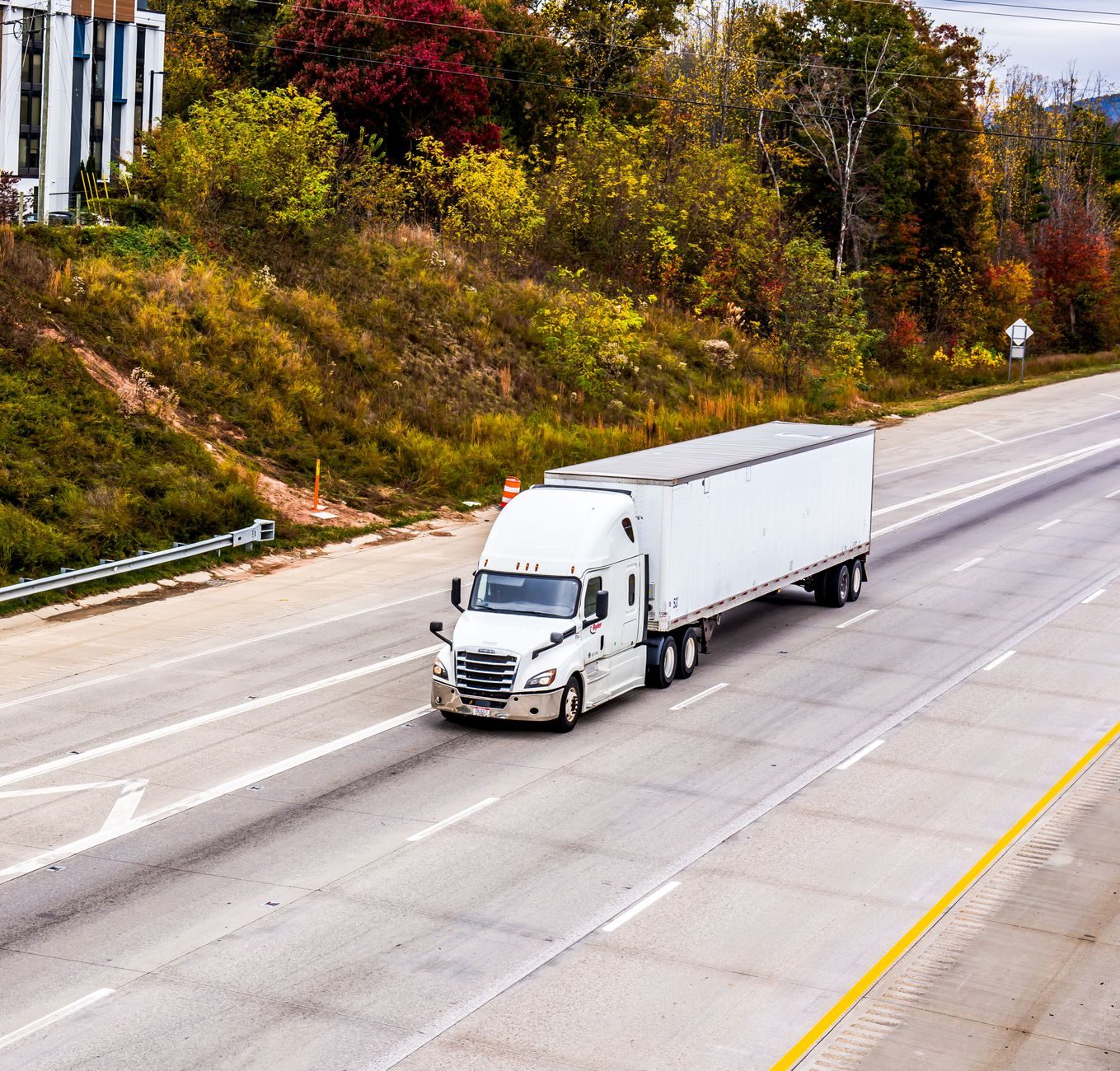
A trucking company can answer for a driver’s careless driving when the driver was working for it at the time. A driver running a personal errand is different from one hauling a company load.
Labels matter too. Some trucks are operated by one company, owned by another, and leased to a third. A lease, a contractor agreement or a broker arrangement can change who is answerable. Check the paperwork and the truck’s markings before you assume who is responsible.
California law generally makes people responsible for injuries caused by a failure to use ordinary care (Civil Code § 1714). A company’s own conduct can also be at issue.
How Does a Hit and Run Change a Trucking Claim?
A hit-and-run makes a claim harder to start because you need an identifiable defendant. Without a driver, a truck or a company name, there’s no clear party to name. That gap is the biggest change from an ordinary crash.
When no truck is ever identified, the case is often called a “phantom vehicle” case. Proof then leans on witnesses, physical evidence at the scene and any video that captured the crash. How strong those pieces are varies from case to case. No one can predict how a particular case will end.
If investigators identify the driver or the truck later, the facts change. New information can change which parties are available and how the claim is built. Save every new police, insurance or company letter you receive, even if it seems minor.
What Evidence Links a Truck and Its Company to the Crash?
The evidence that matters most shows which truck it was and which company stood behind it. Start with the police report, witness names, and any dashcam, traffic camera or nearby business video. Paint transfer and debris on the road can also help link a vehicle to the scene.
Look closely at the truck itself. Federal rules require every self-propelled commercial motor vehicle subject to this subchapter to display identifying information, and that marking can point to the carrier behind the truck (49 C.F.R. § 390.21T). Photos of the truck, the scene and your injuries, taken soon after the crash, help create a clear record.
Company records matter too. Records of duty status must be kept for at least six months from the date of receipt (49 C.F.R. § 395.8). Because these windows are limited, send written requests to preserve evidence early.
Does California Make a Truck’s Owner Liable for the Driver?
Yes, in a limited way. California makes an owner liable when someone with permission drives negligently. The law says every owner is liable for death or injury from a negligent or wrongful act in operating the vehicle by a person using it with the owner’s express or implied permission (Vehicle Code § 17150).
That owner rule, Vehicle Code § 17150, makes every owner of a motor vehicle liable and responsible for death or injury to person or property resulting from a negligent or wrongful act or omission in the operation of the motor vehicle by any person using it with the owner’s permission, express or implied. Owner liability under this chapter is limited to $15,000 for one injured person in one accident. Owner liability under this chapter, not arising through a principal-agent or master-servant relationship, is limited to $30,000 for more than one person and $5,000 for damage to others’ property (Vehicle Code § 17151). Those limits make owner liability a separate, capped theory. It is not the full measure of what a company could owe.
The same statute says an owner isn’t liable under that chapter for damages meant to punish the driver. It adds that this does not protect an owner from liability for its own wrongful conduct. Owner liability is a different question from whether the company employed the driver, so check both.
Can Your Own Insurance Help When the Truck Cannot Be Identified?
Your own uninsured motorist coverage may be a main source of recovery when the at-fault truck can’t be found. Whether it pays in your case depends on your policy terms and the facts of the crash, so read those terms closely.
California requires bodily injury liability policies for motor vehicles to include uninsured motorist coverage. The named insured can agree in writing to delete that coverage or lower it, but not below the financial responsibility requirements (Insurance Code § 11580.2). The same statute treats an insured vehicle as uninsured when its liability insurer is insolvent and cannot pay, but only for accidents during a policy period in which the insured’s coverage is in effect and where the liability insurer of the tortfeasor becomes insolvent within one year of the accident.
Insurance policies set their own claim steps. Ask your insurer early what it needs from you. Keep copies of every notice and form. Write down the police report number, any claim number and the name of each adjuster who calls you.
Not sure what your next step is?
Talk it through with our team — the first consultation is free, confidential, and carries no obligation.
How Long Do You Have to Sue a Trucking Company in California?
For claims under uninsured motorist coverage in a policy issued under Cal. Ins. Code § 11580.2, no cause of action accrues unless one of the listed actions is taken within two years from the date of the accident. Code of Civil Procedure § 335.1 covers actions for injury to a person, or death, caused by another’s wrongful act or neglect (Code of Civil Procedure § 335.1). Under California Code of Civil Procedure § 335.1, an action for injury to, or for the death of, an individual caused by the wrongful act or neglect of another must be brought within two years, and this period applies to many truck accident claims.
Exceptions exist, so don’t assume your deadline is safe. A missed deadline can end a claim even when the facts are strong. Claims after a death can follow their own timing, so ask early.
Settling and suing each involve trade-offs. Timing, access to company records and whether the company or insurer disputes responsibility all matter. Even after a judgment, payment may require collection steps. Don’t expect the money to arrive on the day a ruling comes.
Why Is a Hit-and-Run Claim Hard to Prove?
A hit-and-run is hard to prove because the truck, the driver and the conduct are often unclear. Victims often lack a clear view of the truck. Few witnesses may be present, and their accounts of color or markings can differ.
Investigation usually moves through the police report, a search for video, requests for company records and a rebuild of how the crash happened. Speed matters. Video gets overwritten, and records have set retention periods. Delay, lost vehicles and missing photos make proof harder.
Your own fault can reduce recovery, but it doesn’t end a claim. Under California’s comparative fault rules, if the injured person is found partly responsible for an accident, the damages awarded are reduced by that person’s percentage of responsibility, as determined by the trier of fact. (CACI No. 406)
Each crash’s facts decide which claims apply. No one can predict how a particular claim will end.
Can I sue a trucking company if the driver ran away?
A claim may be possible when the driver or the truck can be tied to that company. The crash facts decide whether that link exists.
How long do I have to file?
For most injury claims in California, the deadline is generally two years from the injury.
Does my own insurance help?
Your uninsured motorist coverage may help, and your policy’s terms control how it applies.
Talk With Colvin Accident Lawyers About Your Hit-and-Run Crash
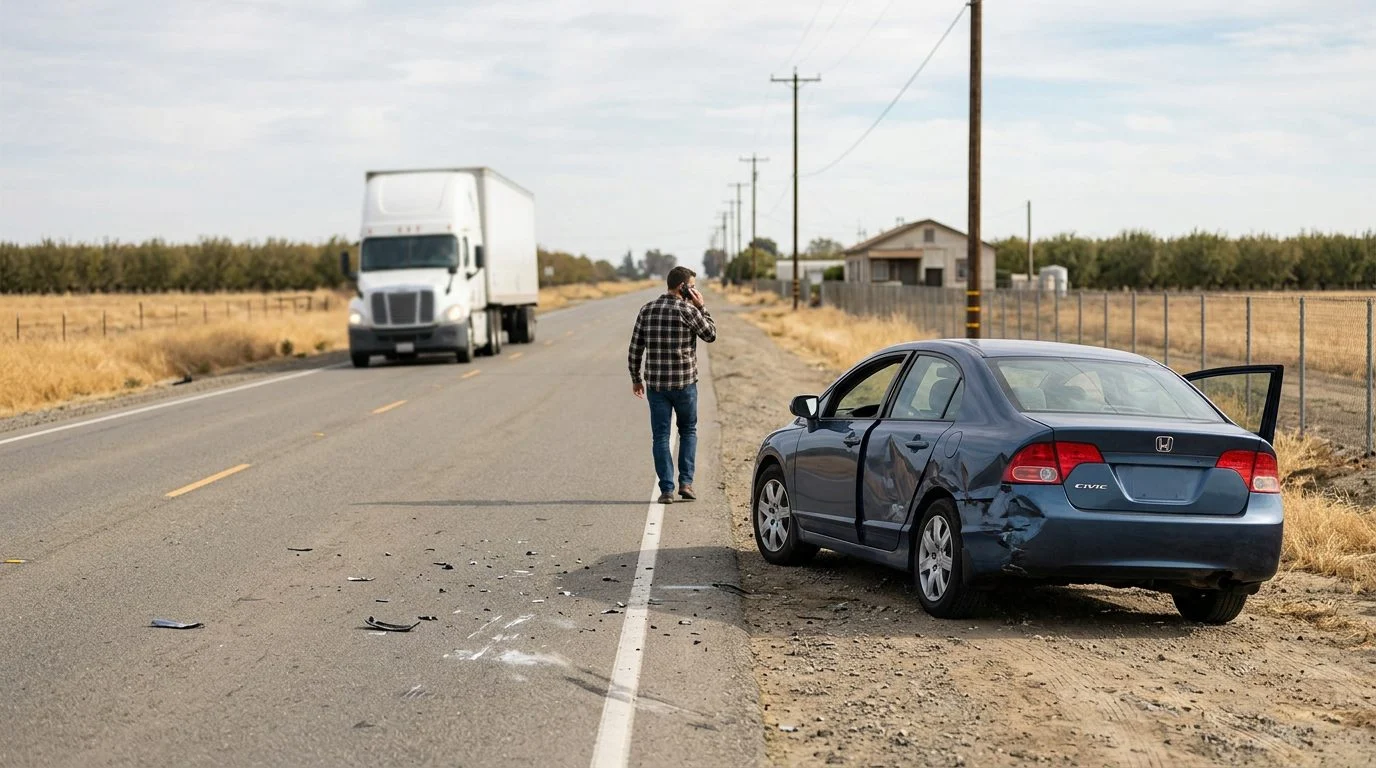
If you’re still working out who can be held responsible, you don’t have to sort it out alone. You may be hurt, grieving someone, or reading this for a family member. If the driver fled or the company’s name is unknown, the crash details and any police report number are the place to start. Our team at Colvin Accident Lawyers, based in Bakersfield, represents accident victims and families in truck, car and other crash cases. Talking through your facts can show which records and deadlines may matter in your situation.
La consulta inicial es gratuita, confidencial y sin compromiso de continuar.
To start that conversation, reach out through our contact page. Our truck accident lawyer page covers more about claims involving commercial trucks.
Responsible lawyer: Donald Norman Colvin, Colvin Accident Lawyers, Bakersfield, California.
Protect Your Evidence Early
Hit-and-run crashes often leave less evidence behind. Write down what you remember while it is fresh, and keep photos, medical records, repair estimates, and any paperwork you receive.
Why These Cases Can Be Complicated
Identifying the Driver
When the driver leaves the scene, the first task is working out who was behind the wheel and what happened before the crash.
Linking the Truck to a Company
A claim against a trucking company depends on the facts showing a connection between the truck or its driver and that company.
Gathering the Evidence
Dash camera footage, nearby surveillance video, witness statements, and vehicle damage can all help show what took place.
Dealing With Insurance
Your own auto insurance policy may come into play, and the insurers involved will each have their own questions and deadlines to manage.
How Colvin Accident Lawyers Can Help
A Free, Confidential First Consultation
The initial consultation is free, confidential, and carries no obligation to continue.
Rooted in Bakersfield
Our firm is based in Bakersfield and reviews injury cases for families across Kern County and nearby communities.
Careful Case Review
We look at the crash facts, the available evidence, and the questions about who may be responsible before advising you on next steps.
Support for Injured Families
Our team works with accident victims and the families of those who have been lost, helping them understand their options.