Accident Claims · Bakersfield & Kern County
How Much Is the Average Accident Settlement in California?
No single average fits California accident claims. Here is what shapes the value of a claim and how Colvin Accident Lawyers can review yours.
By Donald Norman Colvin · Published October 25, 2026
There is no reliable single average for an accident settlement in California. The honest answer to “How much is the average accident settlement in California?” is that no one number fits. Claims range from a small property-damage crash to a death case, and each turns on its own facts. This page explains what builds a settlement value, so you can check an insurer’s offer against the same factors.
Why an average accident settlement number is hard to pin down
A single average can’t describe these claims, because the cases are too different. One “average” would have to cover minor property-damage crashes, sprains, broken bones, brain injuries, and deaths. Those claims have very different facts and very different values.
Many settlements are private. Confidentiality terms can keep the amounts out of public view. That makes it hard to check any published figure against a claim like yours.
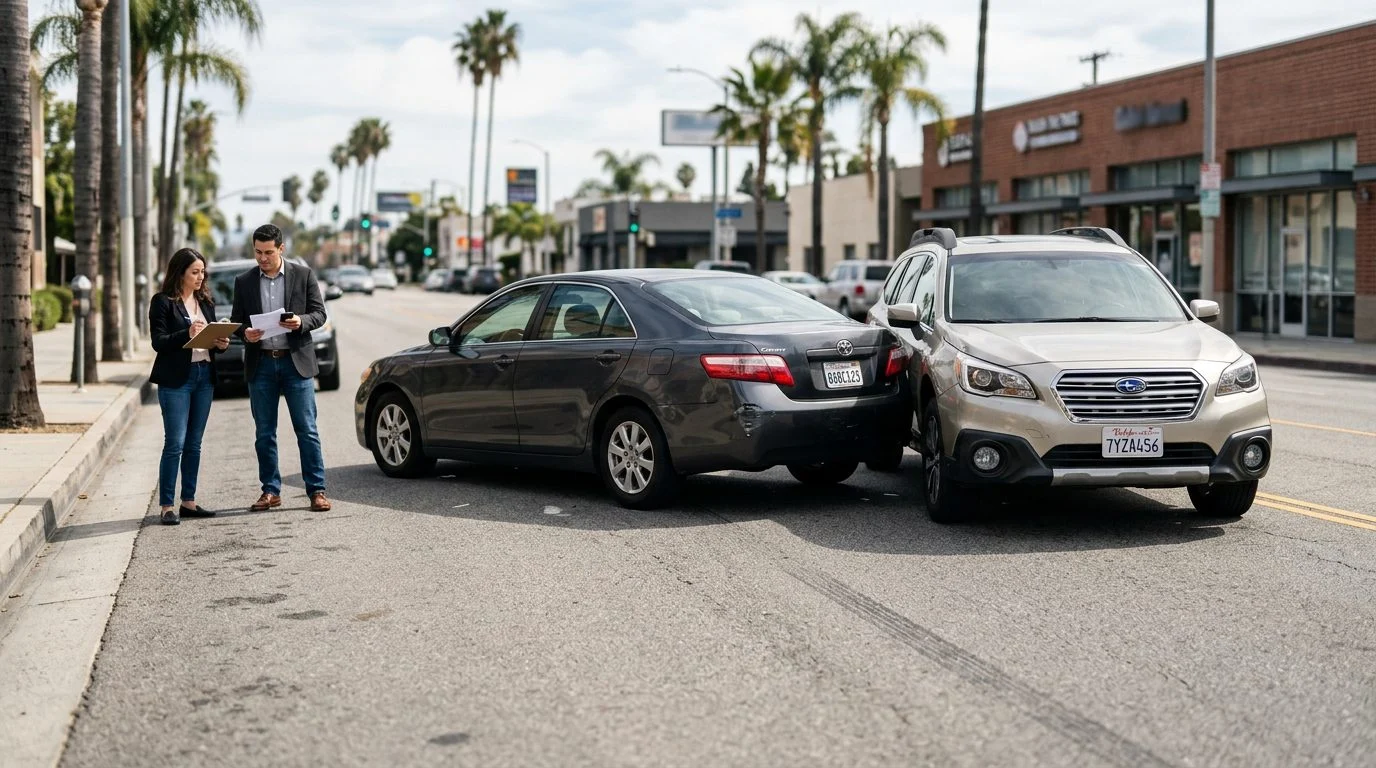
A better question is what moves the number up or down. Who was at fault, what injuries are documented, which bills and lost wages can be proven, and what property was damaged all matter. If a commercial truck was involved, the truck accident claims hub covers those cases in more detail.
If an insurer's offer has you unsure whether it covers what you've lost, you don't have to sort it out alone; we can talk through the details with you. Talk it through with our team — the first consultation is free, confidential, and carries no obligation.

What a California accident settlement is made of
A settlement usually pays for two kinds of loss: economic damages and non-economic damages. Under Civil Code § 1431.2, economic damages are objectively verifiable monetary losses. They include medical expenses, loss of earnings, burial costs, and costs to repair or replace property.
Non-economic damages are subjective, non-monetary losses. These are harder to measure, and they are often the most disputed part of a claim.
Wrongful death claims use the same categories, but only certain people may bring them. Under Code of Civil Procedure § 377.60, the following may bring the claim, or the decedent’s personal representative on their behalf: a surviving spouse, domestic partner, children, and issue of deceased children. If there is no surviving issue, the persons entitled to the decedent’s property by intestate succession may bring it. Certain dependents may bring it whether or not they qualify otherwise: a putative spouse, children of the putative spouse, stepchildren, parents, or legal guardians if the parents are deceased. So may a minor who lived in the decedent’s household for the previous 180 days and depended on the decedent for at least half of their support.
Insurers usually frame offers around these categories. Ask which categories the offer covers and which it leaves out. Police reports, photos, witness statements, and medical records help prove each one.
How California’s comparative fault rule can reduce a recovery
Here’s how it works.
Insurers often dispute fault percentages, because each point changes the payout. Expect questions about lane position, speed, signal timing, and what the other driver could have done. Photos, the police report, and witness statements help answer them.
A defendant may also argue that a seat belt not worn added to the injuries. That argument can reduce damages for harm the belt would have prevented.
How medical bills and insurance payments affect the total
Medical bills are a major part of economic damages, but the amount billed and the amount paid can differ. Health insurance, Medi-Cal, Medicare, and medical liens can each affect what gets paid.
Medicare is a common issue. Medicare may make conditional payments for accident-related care when another party may be responsible. See CMS’s recovery process.
Non-economic limits can also apply in motor vehicle cases. Under Civil Code § 3333.4, and except as provided in subdivision (c), a person shall not recover non-economic losses to compensate for pain, suffering, inconvenience, physical impairment, disfigurement, and other nonpecuniary damages if any of the following applies: the injured person was operating a vehicle in violation of Vehicle Code Section 23152 or 23153 and was convicted of that offense; the injured person was the owner of a vehicle involved in the accident that was not insured as required by California’s financial responsibility laws; or the injured person was the operator of a vehicle involved in the accident and cannot establish financial responsibility as required by those laws. The statute names those conditions, so check the facts against each one.
Keep bills, explanation-of-benefits statements, and payment records in one place from the start. For how these bills are usually handled, see who pays medical bills after a car accident.
Why truck and commercial vehicle claims can differ
Commercial truck claims often involve more parties, more insurers, and more records. The driver, the motor carrier, a trailer or cargo party, or a maintenance contractor may each bear some responsibility. Each may have its own insurer.
Federal rules set minimum insurance levels for many commercial carriers. Under 49 C.F.R. § 387.9, the minimum public liability level for for-hire carriage of nonhazardous property in interstate or foreign commerce, at 10,001 pounds or more, is $750,000. That is a legal floor on coverage. It is not a measure of what any claim is worth.
Trucks also create evidence. Electronic logging device data, maintenance records, driver qualification files, and dispatch communications may show what happened before the crash. These records can take longer to obtain than a standard car crash file.
Motorcycle, bicycle, pedestrian, and bus crashes involving large vehicles raise similar questions. For one of those situations, see semi-truck and motorcyclist or cyclist claims. To compare truck and car claims, see truck claims versus car claims in California.
Do treatment and injections change a settlement?
Treatment adds value when records show it was medically needed and tied to the crash. A treatment plan does not add value just by existing. Insurers check whether the care matches the injury.
Injections and other procedures are judged by the doctor’s records. Those records should show the diagnosis, why the procedure was done, what happened afterward, and any follow-up plan. A procedure with a clear medical reason and a written record is easier to support.
Insurers commonly raise gaps in treatment, delayed care, and changes in how symptoms are described. Describe your symptoms accurately, and keep the appointments your doctor recommends.
Injury type matters too. The California Highway Patrol’s injury definitions describe categories such as spinal injuries, burns, fractures, and crush injuries. Catastrophic injury claims often need future care projected, usually with qualified medical and life-care professionals.
Not sure what your next step is?
Talk it through with our team — the first consultation is free, confidential, and carries no obligation.
Deadlines and timing that shape a claim
For most injury and wrongful death claims, California generally allows two years. Code of Civil Procedure § 335.1 sets a two-year period for actions for injury to, or death of, an individual caused by another’s wrongful act or neglect.
Property damage can follow a different clock. Property damage claims are not covered by that two-year rule, which applies to an action for assault, battery, or injury to, or for the death of, an individual caused by the wrongful act or neglect of another.
Deadlines keep running while you treat, negotiate, or wait for records. California’s insurance rules list misleading a claimant about the statute of limitations as an unfair practice when it is knowingly committed with such frequency as to indicate a general business practice. Each deadline depends on the facts of your claim, so confirm early which one applies.
How to test whether a settlement offer reflects your losses
An offer reflects your losses only when it covers each category you can document. Start with a written list and check each item:
- Medical bills paid and still owed
- Future care your doctor recommends
- Wages missed and future earnings lost
- Vehicle or property repair or replacement
- Pain, emotional distress, and loss of enjoyment
Early offers can arrive before treatment ends. At that point, future care and long-term effects may not be known. An offer made before you know the full cost may not cover it.
Insurers may argue fault or minimize injuries to lower the number. Compare the offer against the crash facts and the medical records. If the insurer blames you for part of the crash, ask for the basis in writing.
Read any release carefully before you sign. It may close off claims you haven’t finished valuing.
Talking through your situation with Colvin Accident Lawyers
If you’re reading this for an injured family member or someone who died, you may be handling bills, missed work, and calls from an insurer all at once. The decision in front of you is whether an offer fits what you’ve documented, and what to do before you answer.
How much is the average accident settlement in California?
No single average fits California accident claims. Injuries, fault, and damages differ too much from case to case.
Does partial fault end my claim?
No. California reduces your recovery by your share of fault, but partial fault does not bar the claim.
How long do I have to file?
For most injury and death claims, California generally allows two years under Code of Civil Procedure § 335.1. Your situation depends on the facts, so confirm the deadline early.
What is the difference between economic and non-economic damages?
Economic damages are bills and wages you can document. Non-economic damages cover pain, suffering, and emotional distress.
If an offer has you unsure whether it covers your losses, talking it through can help you see what is still open. Colvin Accident Lawyers offers a free first consultation, which is confidential and carries no obligation to continue. Contact Colvin Accident Lawyers to start that conversation.
Colvin Accident Lawyers, Bakersfield, California — responsible for this site. Responsible lawyer: Donald Norman Colvin.
What Can Shape the Value of a Claim
Nature and severity of injuries
Injuries that require longer treatment, surgery, or ongoing care are often described differently in a claim than minor injuries that heal quickly.
Medical treatment and costs
Records of diagnosis, treatment, and the expenses connected to care are part of how the damages in a claim are documented.
Lost income and work limits
Time away from work, reduced earning ability, and changes to a career can all be part of a claim's damages.
Facts of the incident
The type of accident, the evidence available, and the facts surrounding what happened all bear on how a claim is evaluated.
A Published Average Is Not Your Case
Figures that appear online describe other cases with other facts. Your claim depends on your injuries, your records, and the circumstances of your accident. Results in past cases do not predict the outcome of yours.
How Colvin Accident Lawyers Can Help
Free first consultation
Your first consultation is free, confidential, and carries no obligation to continue.
Review of your facts
We look at the accident, your injuries, and your records so you understand the issues in your own claim.
Serving Central and Southern California
Our Bakersfield office serves clients in Kern County, Fresno, Visalia, Lancaster, Palmdale, Delano, and Tehachapi.
Focused on accident victims and families
We represent people hurt in car, truck, motorcycle, bicycle, pedestrian, bus, and dog bite incidents, as well as premises liability, catastrophic injury, and wrongful death matters.