Wrongful Death | Bakersfield, Kern County
An Insurance Adjuster Called. You Do Not Have to Respond Alone.
After a family member dies in a crash, calls from an insurance company can feel urgent. Colvin Accident Lawyers helps families in Kern County, Fresno, Visalia, Lancaster, Palmdale, Delano and Tehachapi understand their options. Donald Norman Colvin is responsible for this site.
By Donald Norman Colvin · Published October 26, 2026
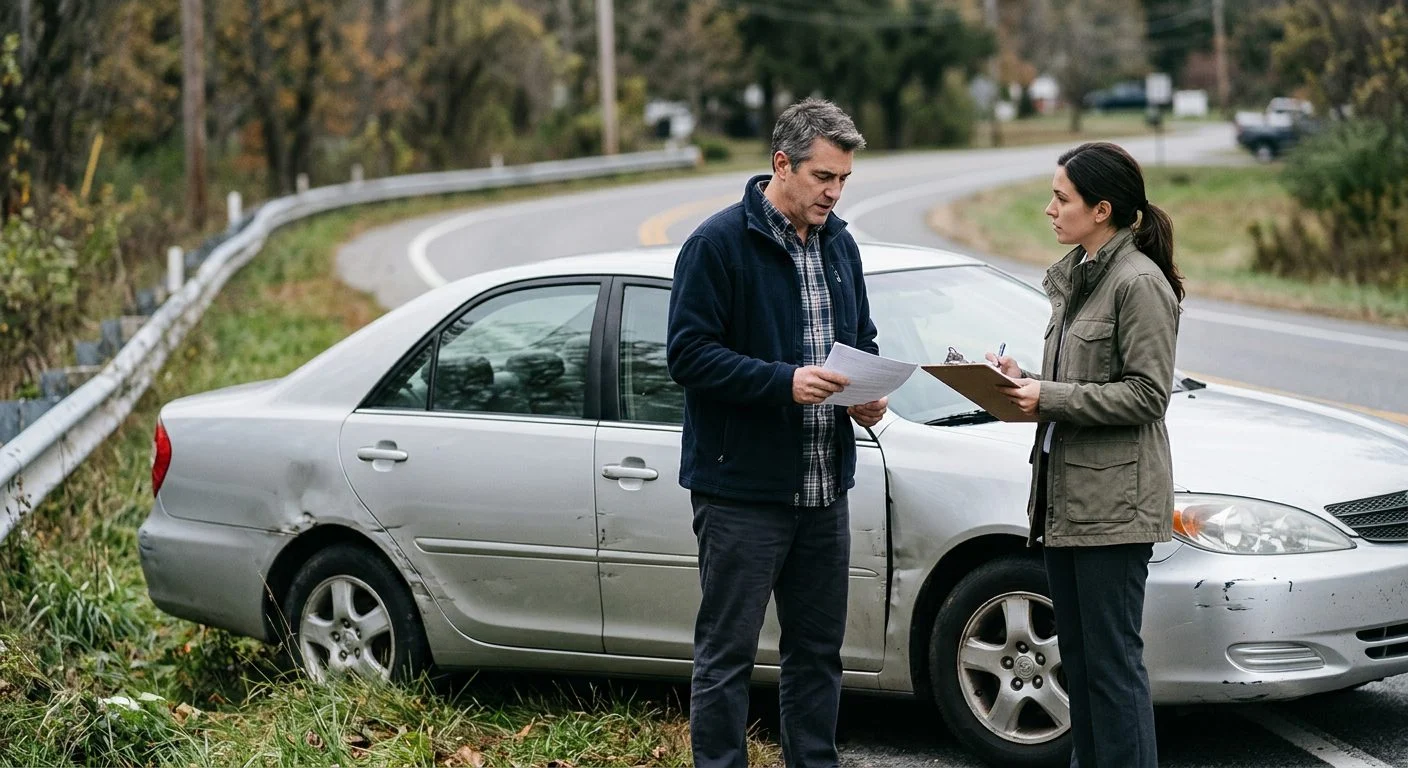
An insurance adjuster called after family member died in crash? You do not have to decide anything on that call. Your family does not have to give a recorded statement or accept an offer yet. You can ask for questions in writing and take time to respond.
The Short Answer: You Do Not Have to Decide Anything on That Call
Before your family gives a recorded statement or accepts a settlement offer, review any statement or cooperation conditions in your family’s own auto insurance policy, and contact Colvin Accident Lawyers to discuss your options. That is the most important point to remember.
Grief makes these calls hard. An adjuster may sound kind and patient, and may ask for a quick account of what happened. You can respond differently. Ask the adjuster to send the questions in writing. That gives you time to read them, talk with relatives, and check what you actually remember.
You can also say you are not ready to talk. You don’t need to give a reason. Ask when the adjuster can call back, and write that date down. “I need to review this first” is a complete and honest answer when it is true.
The rest of this page explains who is likely calling, why early words matter, what to avoid saying, what changes when the at-fault driver has died, and simple record steps you can start today.
If the calls after a fatal crash have your family unsure how to respond, you don't have to work through it alone, and our team is ready to talk it over with you. Talk it through with our team — the first consultation is free, confidential, and carries no obligation.
Why Is the Insurance Company Calling Me After a Fatal Crash?
The call usually comes from the liability insurer of the driver believed to be at fault. That adjuster works for the other driver’s insurance company. The adjuster’s job is to evaluate the claim against its own policyholder.
Your family’s own auto insurer may also call. Your policy may include coverage that applies after a crash. The California Department of Insurance auto guide explains that liability coverage does not cover injuries to the insured or household members, while medical payments coverage can be bought for them. Your policy wording controls what applies to your family.
An adjuster is not your family’s advisor, even when the call feels friendly. Write down the adjuster’s name, company, phone number, and claim number on the first call. Note the date and time too. Then ask for the claim number in writing.
How an Early Statement Can Affect a Later Wrongful Death Claim
Statements made in the first days can be recorded, summarized, and compared with the rest of the file later. Even casual remarks can matter.
A short answer given before you know the full facts can be read as a conclusion. It might be read as a view on fault, speed, timing, or the condition of the person who died. A remark like “I think he was going fast” can become a point the insurer later argues, even if your family was only guessing.
Shock and grief also blur details. Times, lane positions, and the order of events can be hard to recall in the first weeks. Taking time before giving a detailed account is a normal, reasonable step.
You do not need to explain your legal position to protect it. A calm “we’re gathering information” is enough. Keep in mind that California generally requires an injury or death action to be brought within two years, under Code Civ. Proc. § 335.1.
What Should You Not Say to a Claims Adjuster?
Do not guess about who was at fault, even if your family has a strong opinion. Say what you saw directly, or say you don’t know.
Do not describe the person’s health, medications, alcohol use, or daily activities before the crash until you have reviewed the question in writing. These questions can seem routine. The answers can be used to argue that something other than the other driver caused the crash.
Do not agree to a quick sum, sign a release, or accept a check described as final. A release can end your right to pursue more money. Read every document slowly before you sign anything.
Do not post about the crash, the driver, or the claim on social media while the claim is open. A photo or comment can be pulled into the file.
“I’m not sure” is an accurate and complete answer when it is true.
What Happens If the Driver at Fault Died in the Crash?
A claim may still be possible when the at-fault driver dies. The path depends on the facts of the crash and the policies involved. That process can involve the driver’s estate, the driver’s liability policy, and your family’s own policy.
Your family may hear from more than one insurer. Each may ask different questions and may have different coverage positions. Keep a separate log entry for each company.
Your own policy may include uninsured or underinsured motorist coverage. Under Ins. Code § 11580.2, an uninsured motor vehicle also includes an insured motor vehicle where the liability insurer is unable to make payment on its insured’s legal liability within the policy limits because of insolvency, but this solvency protection applies only to accidents occurring during a policy period in which the insured’s motor vehicle coverage is in effect, and only where the tortfeasor’s liability insurer becomes insolvent within one year of the accident. Ask your policy questions in writing, too.
Do not assume the claim is closed because the calls have slowed. Treat every insurer’s position as something to review, not as a final answer.
Why an Early Offer May Not Reflect the Full Loss
An early offer is often made before the full medical, funeral, and financial picture is known. That means it may not reflect the whole loss.
A wrongful death claim can involve costs such as funeral and burial expenses, loss of financial support, and loss of companionship. Some of these costs take time to measure. The early number may not include them.
Who may bring the claim is set by statute. Under Code Civ. Proc. § 377.60, a surviving spouse, domestic partner, children, and certain other persons may assert the cause of action, or the personal representative may do so on their behalf.
California’s insurance rules also matter. The Insurance Code lists as an unfair claims settlement practice, when knowingly committed with such frequency as to indicate a general business practice, not attempting in good faith to effectuate prompt, fair, and equitable settlements of claims in which liability has become reasonably clear. It also lists, when knowingly committed with such frequency as to indicate a general business practice, misleading a claimant as to the applicable statute of limitations.
Ask the adjuster to explain in writing what an offer covers and what it leaves out. Take time to review any offer before you respond.
Not sure what your next step is?
Talk it through with our team — the first consultation is free, confidential, and carries no obligation.
Practical Steps to Take This Week
Keep a simple call log. For each call, write the date, time, caller’s name, company, and what was discussed.
Save every letter, email, and voicemail about the claim. Keep the crash report number and any photos your family has. Under Veh. Code § 16000, a driver involved in a crash that causes bodily injury or death must report it within 10 days, on a department form. The DMV records request page describes how accident and related records can be requested.
Ask each insurer for the claim number and the adjuster’s direct contact information in writing. Written contact information makes follow-up much easier.
Set one family rule. No one gives a recorded statement until the request has been reviewed in writing. Choose one relative to handle insurer calls, so the messages stay consistent.
If the Calls Have Left You Unsure What Comes Next
If your family has lost someone in a crash and an insurer has called, you may be deciding how to respond while still grieving. You may not have all the facts yet. That is a hard place to be.
Colvin Accident Lawyers can talk through the call with you. We can also help you think through the written questions your family may want to send and the steps for a wrongful death claim in California. Contact Colvin Accident Lawyers to start. Colvin offers a free first consultation — confidential, with no obligation to continue.
Frequently Asked Questions
Do I have to give a recorded statement to an insurance adjuster?
Not at this stage. You can ask for written questions and time to respond.
What if the adjuster says I must answer today?
You can say you need time. Ask for the request in writing and note the date.
How long do I have to file a wrongful death claim in California?
California generally requires a death or injury action to be brought within two years (Code Civ. Proc. § 335.1). Keep that deadline in mind while you talk with insurers.
Colvin Accident Lawyers, Bakersfield, California — responsible for this site. Responsible lawyer: Donald Norman Colvin.
How We Help Families After a Fatal Crash
Answers to Your Questions
We explain what the adjuster is asking for and what it may mean for your family's claim.
A Steady Voice for Your Family
We can handle communication with the insurance company so you can focus on your loved one and your family.
Organized Records
We help gather crash reports, medical and funeral records, and other documents that support a wrongful death case.
Respect for Your Loss
Our team understands that a claim is part of grieving a family member, and we treat every family with care.
Before You Respond to the Adjuster
Insurance adjusters work for the insurance company. Ask for any request in writing, note the date and time of each call, and take time to think before giving a recorded statement or signing any paperwork.
Questions Families Often Ask
Do I have to talk to the adjuster right away?
There is usually time to respond thoughtfully. Ask for written questions and a reasonable amount of time to reply.
What if the adjuster offers a quick payment?
Do not accept or sign anything until you understand what it covers. A lawyer can review the offer with you.
What should I gather?
Keep the crash report, insurance letters, medical and funeral bills, and any notes about calls from the insurer.
What does a first meeting involve?
Your first consultation is free, confidential and comes with no obligation to continue. We listen to your family's story and explain possible next steps.
Speak With Colvin Accident Lawyers in Bakersfield Before You Respond to the Insurance Company
Related practice areas
- Wrongful Death Attorney in Bakersfield: How a Fatal Accident Claim Is Handled in Kern County
- Wrongful Death Lawyer in Kern County
- Wrongful Death Lawyer in Fresno
- Wrongful Death Lawyer in Visalia