Wrongful Death in California: Understanding the Timeline
Losing a loved one is devastating. Here is how a wrongful death claim typically moves forward, what affects its timing, and how Colvin Accident Lawyers can help families in Bakersfield and surrounding communities.
By Donald Norman Colvin · Published October 26, 2026
Wrongful death cases in California do not follow one fixed timeline. Most move through a filing deadline, an investigation, settlement talks, and, if needed, a lawsuit. Some of those deadlines are short, so knowing them early matters. This guide explains each stage. Colvin Accident Lawyers is a personal injury firm based in Bakersfield, California, and handles wrongful death cases.
How long do wrongful death cases in California usually take, from filing to settlement or trial?
There is no single answer. A typical case moves through a filing deadline, an investigation, negotiations, and possibly a lawsuit that follows the court’s calendar. The pace depends on how quickly records arrive, how the insurer or defendant responds, and whether the case ends up in court.
The stages often overlap. A family may open talks with an insurer while investigators still gather records. Negotiation can also continue after a lawsuit is filed. Each stage takes a different amount of time, so one number rarely fits every case.
Records are often the first bottleneck. Police reports, medical files, and death records come from different offices, and each request takes time. Starting those requests early keeps the case moving. Many people search for a wrongful death cases California timeline and expect a single figure. A better question is which deadlines apply to your facts. For the broader overview, see our wrongful death lawyer page.
If you are working out the dates after a death in your family, you do not have to do it alone, and our team can review your timeline with you. Talk it through with our team — the first consultation is free, confidential, and carries no obligation.
How much time is there to file a wrongful death lawsuit in California?
In most cases, California gives two years to file a wrongful death lawsuit. The law sets that limit for actions for death caused by another person’s wrongful act or neglect, under Code of Civil Procedure § 335.1.
Two years is a filing deadline (Code Civ. Proc. § 335.1). It is not a target for how long the case should take. A case may settle months before that date, or it may not reach court until later. What matters is that any lawsuit is filed in time. If the deadline passes, the right to sue may end.
A practical first step is to write down every key date in one place. That includes the date of the crash, the date of death, and any date tied to a claim against a government agency. Ask which date starts each clock. Dates on paper are easier to check than dates recalled from memory during a stressful time.
Can I sue someone after 10 years?
Usually not. Cal. Code Civ. Proc. § 335.1 provides: “Within two years: An action for assault, battery, or injury to, or for the death of, an individual caused by the wrongful act or neglect of another.”
The rule has exceptions. Under Code of Civil Procedure § 352, if the person entitled to sue was a minor, or lacked legal capacity to make decisions, at the time the cause of action accrued, that time is not counted toward the deadline. That pause does not apply to claims against a public entity or public employee that require a government claim. Whether any exception fits depends on the facts.
Families often wait while they handle funeral plans, estate paperwork, and grief. Those tasks are hard, and they take real time. The filing clock keeps running while they happen. If you are unsure whether an older date still matters, start by confirming the date of death. Then check whether a government agency or medical care was involved.
Can you sue for medical negligence after 3 years in California?
Generally, an action for injury or death against a health care provider based on professional negligence must be filed within three years after the injury. A one-year limit runs from the date the plaintiff discovers, or through the use of reasonable diligence should have discovered, the injury, and whichever period ends first controls. That rule comes from Code of Civil Procedure § 340.5.
The statute allows a longer period only in limited cases. It names proof of fraud, intentional concealment, and a foreign body left in the patient with no medical purpose. Under Cal. Code Civ. Proc. § 340.5, in an action for injury or death against a health care provider based upon alleged professional negligence, the time to commence the action is three years after the date of injury or one year after the plaintiff discovers, or through reasonable diligence should have discovered, the injury, whichever occurs first. In no event may the time for commencement of legal action exceed three years unless tolled upon proof of fraud, intentional concealment, or the presence of a foreign body, which has no therapeutic or diagnostic purpose or effect, in the person of the injured person. For actions by a minor under the full age of six years, the action must be commenced within three years or prior to the child’s eighth birthday, whichever provides a longer period. Outside those cases, the three-year limit is the outer boundary.
When a death follows medical care, the medical negligence clock may apply to the related claim. It is measured differently from the two-year wrongful death rule. Both the date of injury and the date of discovery can affect the deadline. Families often do not learn about a possible error until records arrive, so the discovery date can be hard to pin down. Requesting records early helps protect that timeline.
Does a wrongful death claim against a government agency have a shorter timeline?
Yes. Government Code § 911.2 Government Code § 911.2 sets a six-month limit for presenting claims tied to a cause of action for death, measured from the accrual of that cause of action.
Claims against a government agency follow a different sequence: a written claim generally must be presented first, within the time set by Government Code § 911.2.
If the claim was not presented on time, Government Code § 911.4 allows a written application for leave to present it. The application must state the reason for the delay. It must be made within a reasonable time, not to exceed one year after the claim accrued. The tolling rule in Code of Civil Procedure § 352 does not apply to these claims.
Government claims can arise from road defects, public transit, and government-owned property. If a public bus was involved, see our bus accident lawyer page for more on those claims.
What happens between the first steps and a settlement?
Most cases move through records, a claim to the insurer or defendant, and negotiation. For many cases that settle without a lawsuit, the investigation and back-and-forth talks take the longest.
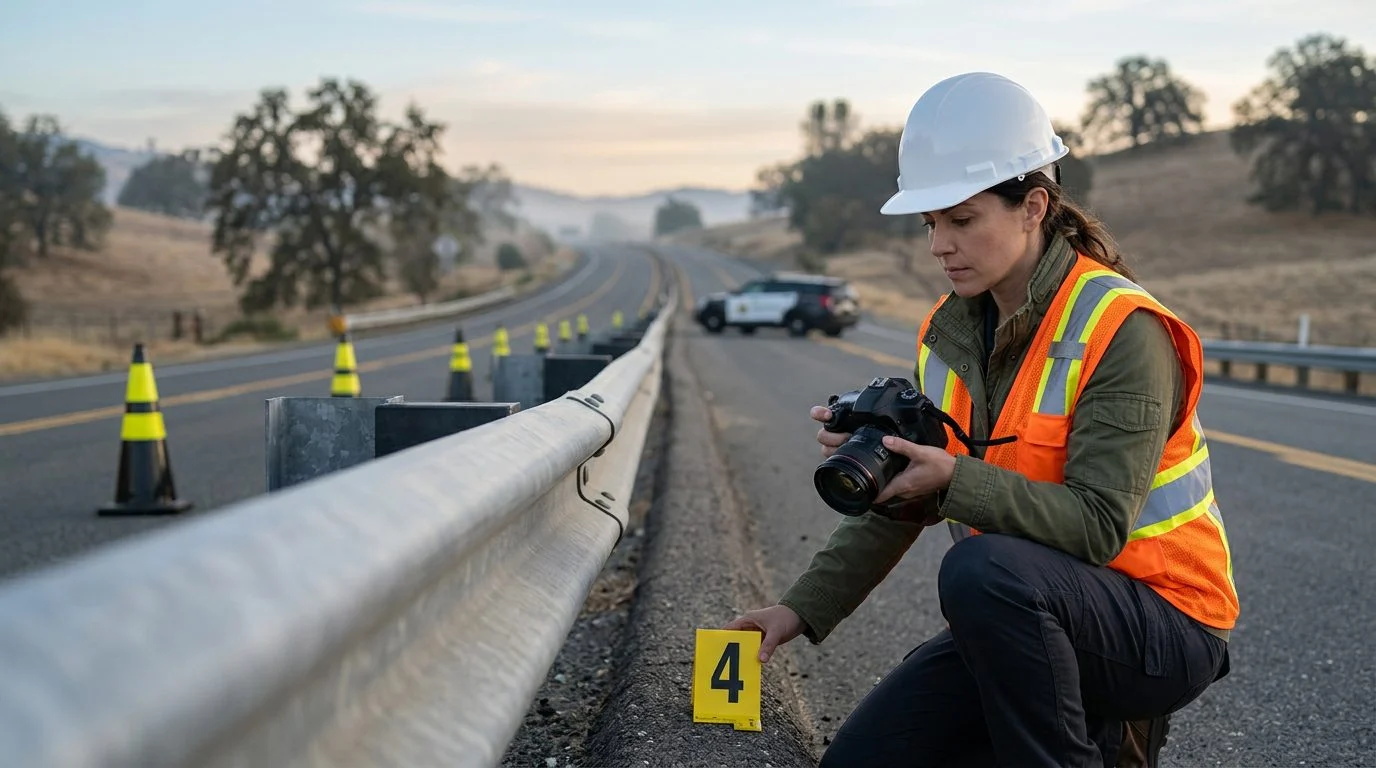
Early work includes the crash report, medical and death records, witness names, and proof of the decedent’s income and role in the household. The Los Angeles County Medical Examiner describes how sudden or violent deaths are investigated. It also explains that a death certificate is issued after examination.
Knowing who may bring the claim also matters. Under Code of Civil Procedure § 377.60, the decedent’s surviving spouse, domestic partner, children, and issue of deceased children may assert the cause of action or, if there is no surviving issue, the persons who would be entitled to the decedent’s property by intestate succession. Certain dependent relatives may too, as may the personal representative on their behalf. Confirming these people early may help reduce some delays later.
Mediation or a settlement conference may happen before trial.
Not sure what your next step is?
Talk it through with our team — the first consultation is free, confidential, and carries no obligation.
How long does a wrongful death case take to reach trial?
Trial timing depends on the court’s calendar, how complex the evidence is, and the motions the parties file. Cases that go to trial usually take longer than cases resolved through talks. Discovery and pretrial steps must come first.
Discovery is the exchange of documents and sworn testimony. Witnesses may be needed to explain cause of death or lost income. Each step adds time, and each one can prompt another round of requests.
A trial date can move. Courts reset dates for scheduling reasons, and a new motion can push a schedule back. A case can also settle at any stage before a verdict. Families often ask whether going to trial is faster. It is not always. Pretrial steps and court dates can take many months on their own.
What damages are available for wrongful death in California?
Damages are the remedy a court may award for the losses in a case.
California also allows a survival claim for losses the decedent suffered before death. Under Code of Civil Procedure § 377.34, those damages are limited to losses the decedent sustained before death. They generally do not include pain, suffering, or disfigurement, though the statute lists narrow exceptions.
Documenting these losses takes time. Wage records, household records, and medical bills come from different sources. Starting early helps families preserve the evidence before the case moves forward.

What should I do next if the deadline is approaching?
If a deadline may be close, the next step is a review of the dates in your situation. You may be reading this after a sudden death, while planning a funeral and handling family needs. You may be making decisions for someone else.
Some readers are facing a specific question. Was a government vehicle, road, or transit system involved? Was medical care part of the story? Those answers change which clocks apply, and they can change quickly.
If you are trying to understand the dates after a loss in your family, you do not have to work them out alone. Colvin Accident Lawyers can review the timeline for your situation with you. The first consultation is free, confidential, and carries no obligation to continue. You can reach the firm through our contact page.
Quick answers
How long do I have to file a wrongful death lawsuit in California?
In most cases, the deadline is two years under Code of Civil Procedure § 335.1.
Does a government agency change the deadline?
Yes.
How does the fault of the person who died affect a wrongful death claim?
Whether fault affects a family’s recovery depends on the facts of each case.
Donald Norman Colvin, Colvin Accident Lawyers, Bakersfield, California — responsible for this site.
Key Stages in a Wrongful Death Matter
Early Investigation
Evidence such as crash reports, medical records, and witness information can be harder to gather as time passes. Early review helps preserve what matters.
Identifying Responsible Parties
A wrongful death claim may involve a driver, a company, a property owner, or a public entity. Each possibility is reviewed based on the facts.
Documenting the Losses
Medical bills, funeral costs, lost income, and the family's loss of companionship and support are documented carefully as the case develops.
Filing and Negotiation
Many matters are resolved before trial, while others require litigation. The approach depends on the facts, the evidence, and the family's goals.
What Families Should Keep in Mind
Timing Depends on the Facts
The timeline for a wrongful death claim turns on the circumstances of each case, so the sooner it is reviewed, the more options can be considered.
Keep Records Safe
Accident reports, medical records, bills, photos, and correspondence can all be important. Keeping them together makes review easier.
Government Involvement Adds Steps
When a public entity may be involved, special procedures can apply. These steps are reviewed as part of the case.
Support for Your Family
Our team understands that families are grieving while they handle legal questions, and we aim to explain each step clearly.
Do Not Wait to Ask Questions
Every wrongful death timeline depends on the facts of the case. The sooner your situation is reviewed, the more time there is to protect important evidence and options.