Getting a CHP Collision Report After a Fatal Crash
By Donald Norman Colvin · Published November 24, 2026
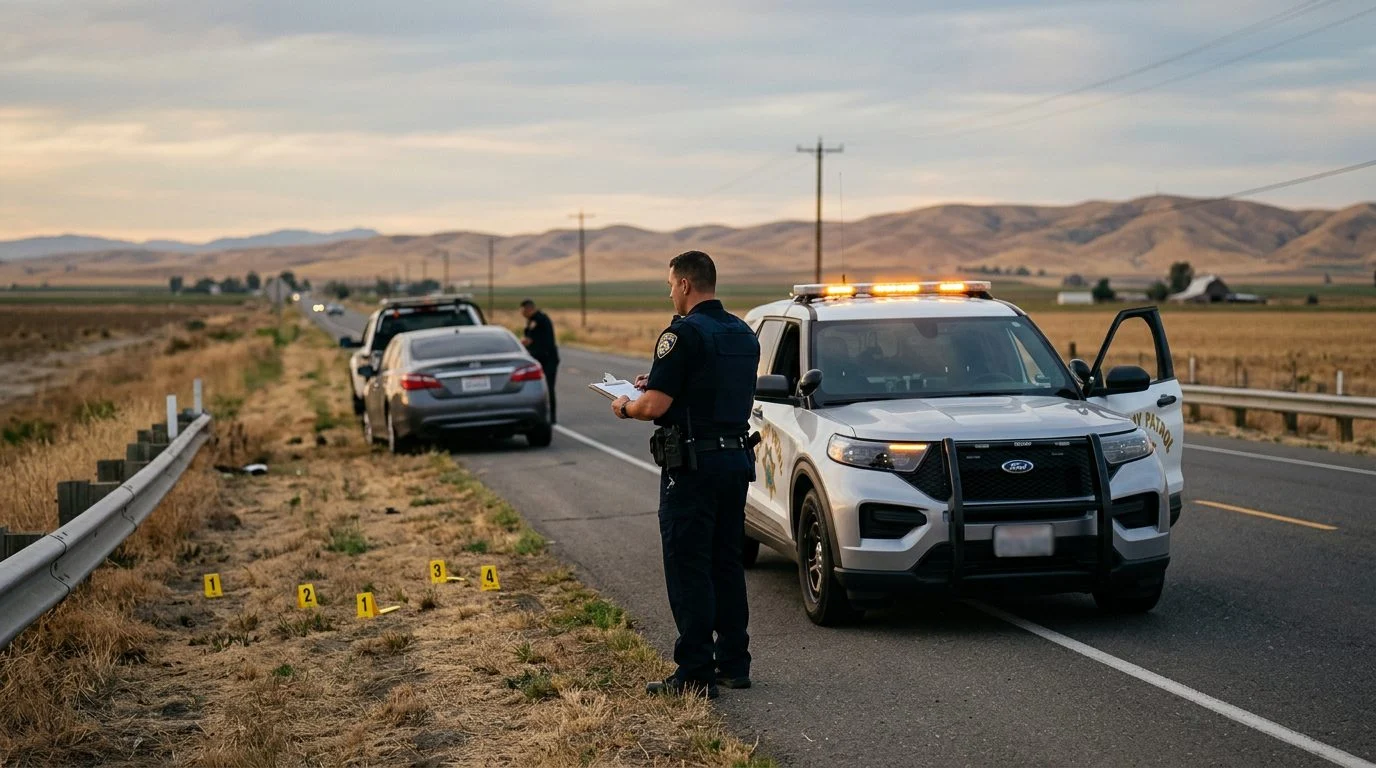
If someone you love died in a fatal crash in California, you may need the CHP collision report while you’re still planning a funeral. To get it, ask the California Highway Patrol office that investigated the crash for a copy. Give that office as much identifying detail as you can.
Requests can take time after a fatal crash, so start early. Keep a record of every call and letter, and learn which legal deadlines may also be running.
What Is the CHP Collision Report After a Fatal Crash?
The CHP collision report is the official written record the California Highway Patrol prepares when it investigates a crash. It usually lists the date, time, and location, the vehicles and people involved, and the officer’s observations. A crash report is a written record prepared by the investigating agency.
Not every crash goes to the CHP. If the agency that receives the report is not responsible for the investigation, it must forward the report right away to the agency that is.
The report documents the investigation. It does not settle who was at fault, and the officer’s conclusions are not the final word on responsibility. For background on how these claims are generally structured in California, read our wrongful death overview.
If you’re requesting this report while grieving a loved one, our team can talk through what comes next with you whenever you’re ready. Talk it through with our team — the first consultation is free, confidential, and carries no obligation.
Who Can Ask for the Report and What Proof Should You Bring?
Family members can ask for the report, but the CHP sets its own steps for checking who is asking. If you act for the estate, bring a paper showing you have authority to act for it.
Getting the report and having the right to bring a legal claim are separate questions. California law sets out who may bring a wrongful-death claim. Under Code of Civil Procedure § 377.60, that includes the surviving spouse, domestic partner, and children of the person who died, along with others the statute names. A personal representative may also bring the claim on their behalf.
Some families ask a close relative or friend to request the report for them. If that happens, the person asking should bring the same proof. A signed note from the family member can also help show who is making the request.
Keep your answers about your relationship clear and short. Give the office your current mailing address and a phone number, so it can reach you about the request. Write down the name of each staff member you speak with.
What Should You Gather Before You Request the Report?
Gather the date, the place, and the names of everyone involved before you call or write. A vague request makes the file harder to find. These details help the office match your request to the right crash:
- The date and your best estimate of the time.
- The exact place, including the highway or route, the nearest city or county, and any mile marker or intersection you know.
- The names of everyone involved, including every driver, passenger, pedestrian, or bicyclist you know about.
- Any CHP incident number, card, or paper the officer gave you at the scene.
- Papers from the hospital or the coroner’s office that describe the crash.
Keep these papers together in one folder. Start a simple log as well. Record each call, letter, or online request with the date, the name of the person you spoke with, and any confirmation number. The log shows what you asked and when, which helps if a request stalls.
How Do You Request the Report Step by Step?
Ask the CHP office that handled the crash which request methods it accepts, then send the details you gathered. Follow these steps in order:
- Confirm which agency handled the crash. If the crash happened inside a city, ask whether the CHP or the city police wrote the report.
- Ask the office which request methods it accepts. Options may include in person, by mail, or online. Its current instructions decide which one applies to you.
- Send the identifying details, your contact information, and the proof of your connection to the person who died.
- Ask about any fee before you pay. The CHP sets the amount and the accepted payment methods, and both can change.
- If the report does not arrive, call the office that handled the crash. Ask what information is missing from your request.
Write your name, phone number, and the crash date at the top of every page you send. Keep copies of everything, including mail receipts and online confirmation pages. Be patient with the first reply before you follow up.
How Long Does the Report Take, and What If It Has Errors?
Plan to wait, since a fatal-crash investigation can take longer to finish than a routine one. Ask the CHP whether a supplemental report exists for the crash. A report can be updated or added to as the investigation continues.
If the report has a mistake, such as a wrong name, time, location, or vehicle detail, put each error in writing. Name the report, the part with the error, and the correct fact. Send the note to the office that wrote the report, and keep a copy for yourself.
Keep the original report unchanged in your file. Your written corrections go beside it, not in place of it. Note the date you sent each one.
Remember what the report is. It records what the officer saw and concluded at the scene and afterward. Other evidence, such as photos and witness accounts, can add to or change the picture for a judge or jury.
What Deadlines Run Alongside the Report?
Three clocks can run at once: the driver’s reporting duty, the DMV report, and the time limit for a lawsuit. Each one follows its own rule.
Under Vehicle Code § 20008, a driver, other than of a common carrier vehicle, in a crash that causes injury or death must make a written report within 24 hours.
Under Vehicle Code § 16000(a), a driver involved in an accident on a street or highway (or a reportable off-highway accident) that caused bodily injury, death, or damage to any one person’s property over $1,000 must report it within 10 days after the accident, either personally or through an insurance agent, broker, or legal representative, on a form approved by the department, to the department’s office in Sacramento, subject to the government-vehicle exception in subdivision (b) described below. Cal. Veh. Code § 16000 also provides that no report is required under subdivision (a) if the motor vehicle involved was owned or leased by, or under the direction of, the United States, this state, another state, or a local agency, and that if no party involved has reported the accident to the department within one year after it occurred, the department is not required to file a report on the accident and the license suspension requirements of Section 16004 or 16070 do not apply.
For a family’s claim, Code of Civil Procedure § 335.1 sets a two-year limit for an action over a death caused by another person’s wrongful act or neglect. If a public entity such as a county or the state may be responsible, the clock is shorter. Under Government Code § 911.2, a claim for a death must be presented within six months after the cause of action accrues.
Start dates and exceptions turn on the facts. Start tracking these dates now, while the crash details are still fresh.
Not sure what your next step is?
Talk it through with our team — the first consultation is free, confidential, and carries no obligation.
Frequently Asked Questions About the CHP Collision Report
Are collision reports public records in California?
Who asks and what they can show both matter. The CHP sets its own verification steps, so ask the office that handled the crash how it processes family requests.
How do I report a traffic accident in California?
Under Vehicle Code § 20008, a driver of a vehicle other than a common carrier vehicle must make a written report within 24 hours after a crash involving injury or death, while the owner or driver of a common carrier vehicle must make a like report to the California Highway Patrol on or before the 10th day of the month following the accident. If none of the parties has reported the accident to the department within one year following the date of the accident, the department is not required to file a report on it, and the driver’s license suspension requirements of Section 16004 or 16070 do not apply.
Is it ever too late to file an auto claim in California?
Yes, it can be. Time limits such as the two-year period for a death lawsuit and the six-month claim period against a public entity can run out.
Can the CHP report be used if the driver was not charged?
The report records what the officer found. Whether anyone is charged is a separate question, so a report can still describe the crash.
How Does the Report Fit Into a Wrongful Death Claim?
The report is one record among several, and no single document can show who is responsible or what a claim is worth. Evidence in these matters can include medical records, death certificate or coroner information, photographs, witness information, and vehicle data where it exists.
Each record answers a different question. Medical records show the injuries, death certificate and coroner information show the cause and date of death, and the report shows how the crash happened.
Keep a written list of every record you have and where it came from. A list helps anyone reviewing the file see what is still missing. For the full claim process, see our wrongful death overview.
Talk With Colvin Accident Lawyers About Your Family’s Situation
If you’re requesting this report while grieving someone you loved, you don’t have to work through the next steps alone.
Colvin Accident Lawyers is a personal injury firm based in Bakersfield, California. Our team can talk with you about the crash, the report, and the dates that may apply to your family. Contact Colvin Accident Lawyers when you’re ready to talk it through.
The first consultation is free, confidential, and carries no obligation to continue.
Colvin Accident Lawyers, Bakersfield, California — responsible for this site. Responsible lawyer: Donald Norman Colvin.
How Colvin Accident Lawyers Can Help
Help with the paperwork
We can explain what the collision report is, what it contains, and how the request process generally works, so you know what to expect.
Clear, direct answers
We will tell you plainly what we know, what we do not yet know, and what the next steps look like for your family.
Attention to your family
We understand that a fatal crash is a painful time. We take the time to listen and to answer your questions at your pace.
Based in Bakersfield
Our office is in Bakersfield, and we represent families across Kern County and nearby communities.
Keep Every Document
A collision report is one piece of the picture. Keep copies of everything you receive about the crash, including letters, notices, and insurance paperwork, and bring them to your consultation.

Questions Families Ask Us
Are collision reports public records?
The CHP sets its own verification steps, so we can help you understand how the process applies to your situation.
Who can help with the request?
Grief makes forms and deadlines harder to manage. Our team can review the crash details with you and explain the next steps in plain language.
What if the report is not ready?
Reports can take time to finalize, and the reasons for a delay vary. Tell us where things stand, and we will talk through what to do next.