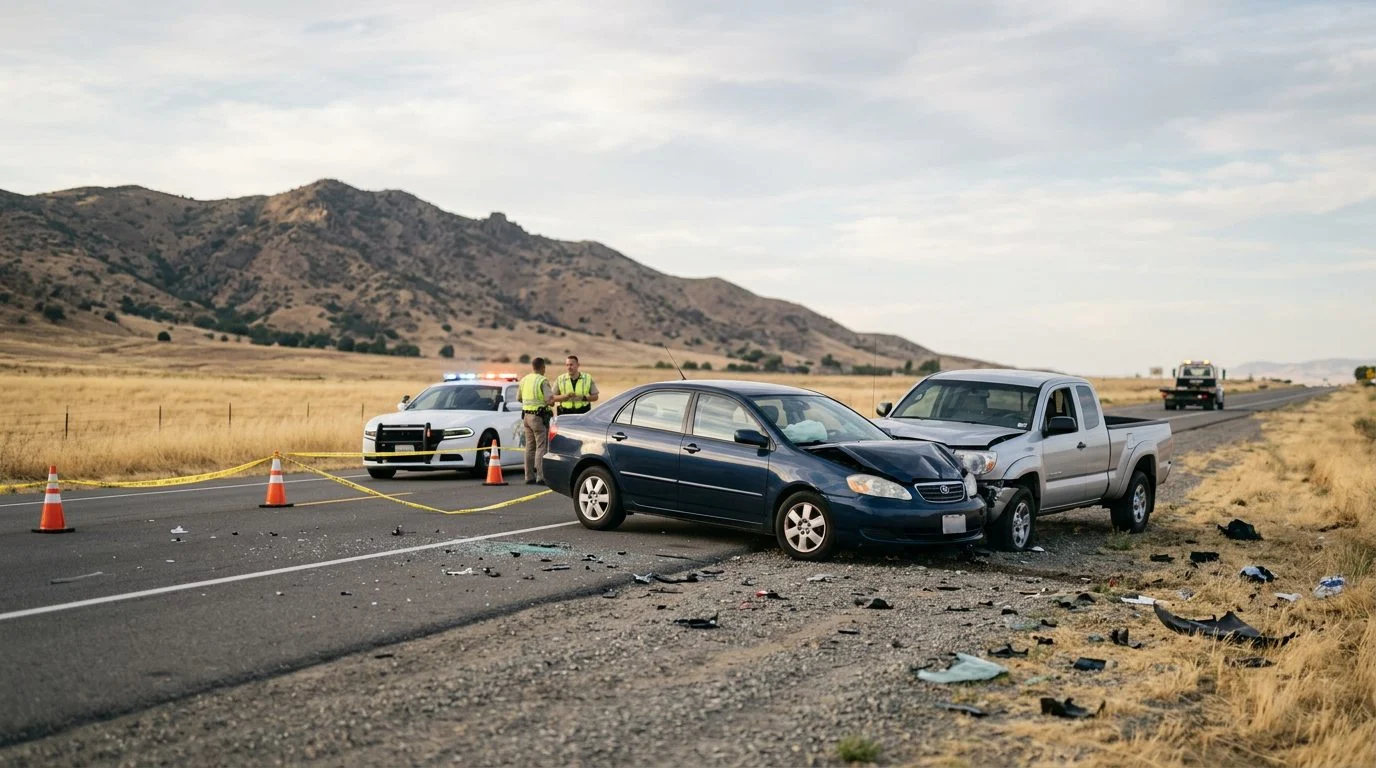
Fatal Crash Claims | Bakersfield, Kern County
Multiple Insurance Policies in a California Fatal Crash
Several insurance policies may be connected to one crash. Learn which ones families often ask about and why a careful review matters.
By Donald Norman Colvin · Published November 10, 2026
A fatal crash raises hard questions fast, and insurance is often one of them. Can multiple insurance policies play a role in a fatal crash claim in California?
Can More Than One Insurance Policy Pay a Fatal Crash Claim in California?
Yes, in some fatal crashes, more than one policy can be part of the claim. Whether the limits of more than one policy can apply depends on the facts of the crash and the insurance law that applies to it. A wrongful death claim belongs to the family members the law names. Insurance decides who pays and how much each policy can cover.
Several policies may come into play. These include the at-fault driver’s policy, the vehicle owner’s policy, a company or employer policy, umbrella coverage, and the family’s own uninsured or underinsured motorist coverage. Which of them apply depends on the facts of each crash.
Many families assume only the driver’s policy matters. That assumption can miss a policy that applies. Each policy has its own limits and claim process, so no single policy tells the whole story. A careful review starts with the crash report, the names of everyone involved, and a copy of each policy.
If your family lost someone in a crash and you are unsure which driver, owner, employer, or insurer may be involved, we can talk through your facts with you. Talk it through with our team — the first consultation is free, confidential, and carries no obligation.
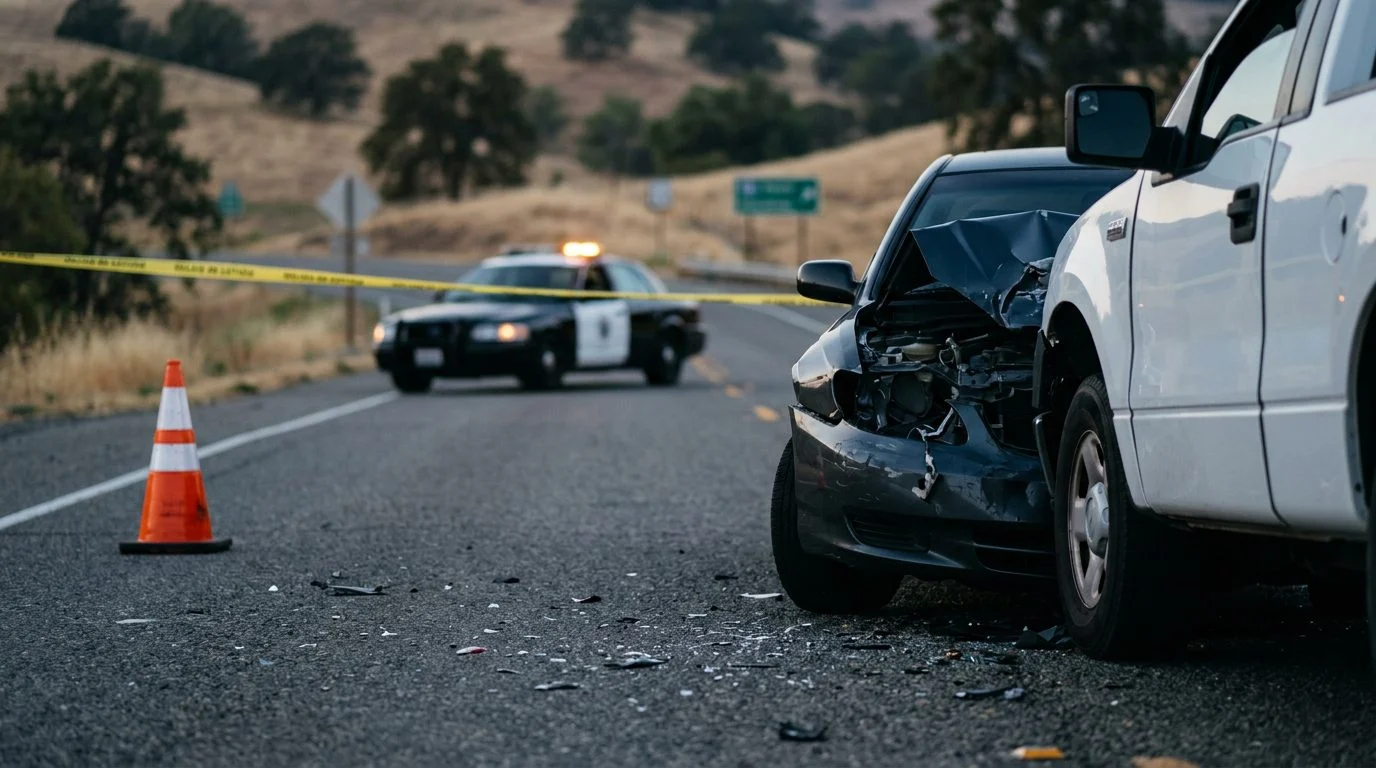
Who Can Be a Defendant in a Multi-Vehicle or Commercial Fatal Crash?
The at-fault driver is usually the first defendant. Other drivers, vehicle owners, and companies can be named when their conduct contributed to the death.
In a multi-vehicle pile-up, several drivers may share fault. One driver may have followed too closely, while another drove too fast for conditions. Each driver’s share can change who pays and how much.
Investigators build the picture from several sources. The crash report, witness statements, photos, damage patterns, and vehicle data show what each driver did before impact.
Other crashes involve other defendants. A driver who strikes a pedestrian or bicyclist may be the defendant. A dog bite death may involve the dog’s owner. A death caused by an unsafe property condition may involve the property owner.
Name every responsible party early. A missed defendant can mean a missed policy.
When Can the Vehicle Owner or an Employer Be Liable After a Fatal Crash?
A vehicle owner can be liable when someone else drives the car with permission. An employer can be liable when a worker causes a crash while doing the job.
Under Vehicle Code § 17150, every owner is liable for death or injury to person or property resulting from a negligent or wrongful act or omission in operating the vehicle. That applies to anyone using the car with the owner’s express or implied permission, including a family member or friend.
California caps this owner liability. Vehicle Code § 17151 limits it to $15,000 for one person’s death or injury in one accident, $30,000 for more than one person in one accident, and $5,000 for damage to others’ property in one accident. The cap applies to owner liability that does not come through an employer.
Employers follow a different path. Under Civil Code § 2338, a principal is responsible to third persons for its agent’s negligence and wrongful acts committed in and as part of the agency’s business. Cal. Civ. Code § 2338 reads: “Unless required by or under the authority of law to employ that particular agent, a principal is responsible to third persons for the negligence of his agent in the transaction of the business of the agency, including wrongful acts committed by such agent in and as a part of the transaction of such business, and for his willful omission to fulfill the obligations of the principal.” A delivery driver on a route or a worker in a company truck can bring that company’s policy into the claim.
Commercial vehicles, including trucks and buses, often carry company coverage apart from the driver’s personal policy. Identifying the owner and employer early helps the family see every policy that may pay.
How Policy Limits Shape What a Single Insurance Policy Can Pay
A policy limit is the most one policy will pay for covered claims. It is not the same as the full value of a death claim.
Each policy sets its own limits, so limits can differ between drivers and companies. Several defendants can mean several separate limits, and each policy pays up to its own amount.
California also sets minimum limits. For a policy issued or renewed on or after January 1, 2025, Vehicle Code § 16056 requires at least $30,000 for one person and $60,000 for two or more persons in one accident.
Those minimums are a floor. They do not measure what a fatal claim is worth. Policies can carry more, so the declarations page for each policy shows the actual limits. A lawyer compares those limits with the losses the family can document.
Stacking, Umbrella Coverage, and Multiple Carriers
Policies from different insurers may each respond to one crash. Whether coverage from several vehicles or several policies may be aggregated turns on the language of each policy and on California law.
An umbrella or excess policy adds liability protection above the limits of a primary policy. Families often don’t know one exists, so it’s worth asking about.
Stacking means pooling coverage from more than one policy or vehicle to pay one claim. Whether stacking is available depends on the policy language and the California law that applies to the facts of each case. Insurers do not always agree on whether it applies, so the family should expect questions about each policy’s terms.
Documents show what coverage exists. Declarations pages list the limits and the insured people or vehicles. Policy records and insurer letters show what each carrier has accepted or disputed. A lawyer can request these records during the claim.
Uninsured and Underinsured Motorist Coverage in a Fatal Crash
Uninsured and underinsured motorist coverage can pay a family’s claim when the at-fault driver has no insurance or too little.
Insurance Code § 11580.2 requires bodily injury liability policies to include uninsured motorist coverage, with exceptions the statute allows. That coverage protects the insured and the insured’s heirs or legal representatives. It covers sums they are legally entitled to recover for bodily injury or death from the owner or operator of an uninsured motor vehicle not owned or operated by the insured or a resident of the same household, within the limits established by law.
The statute also says an uninsured motor vehicle includes an underinsured one. That matters when the at-fault driver’s limits cannot cover the losses.
The coverage may sit on a policy the decedent or a family member held. Ask for each declarations page.
A coverage claim can run alongside the claim against the at-fault driver’s insurer. The two may have separate requirements and timing, so the family should not assume one deadline covers both.
Not sure what your next step is?
Talk it through with our team — the first consultation is free, confidential, and carries no obligation.
Shared Fault Among Several Defendants in a Multi-Vehicle Crash
California divides fault by percentage (Daly v. General Motors). Each party’s share can change how much each policy may pay.
For non-economic losses, each defendant pays only its own share. Civil Code § 1431.2 makes that liability several, not joint, and limits it to each defendant’s percentage of fault. Non-economic losses include pain, suffering, and loss of companionship (CACI civil jury instructions).
Economic losses are different. They are objectively verifiable money losses, such as medical bills and lost earnings.
In a pile-up, investigators often rebuild the order of impacts. That sequence shows how each vehicle contributed to the fatal injury. Insurers for different parties may dispute fault, so the record must support each claim.
Who May Bring a Wrongful Death Claim and How Long the Family Has to File
The general deadline is two years (Code Civ. Proc. § 335.1).
Under Code of Civil Procedure § 377.60, the decedent’s spouse, domestic partner, and children may assert the claim. A personal representative may also sue on their behalf. Eligibility turns on the family’s facts.
The two-year rule comes from Code of Civil Procedure § 335.1, which covers an action for the death of a person caused by another’s wrongful act or neglect. Each defendant’s claim should be tracked on its own timeline.
Claims against a public entity have a much shorter window. Government Code § 911.2 requires a death claim against a California public entity to be presented within six months after the claim accrues.
Coverage claims can have timing rules of their own. Keep the crash evidence, the crash report, and a list of every party and insurer.
Talking With Insurance Companies After a Fatal Crash
Insurers for each involved party may contact the family soon after a death. What the family says can shape the claim.
Statements to an insurer can be used to evaluate fault and coverage. Before giving a recorded statement or signing a release, a family should understand what the release covers. A signed release can end the claim.
Insurers must also avoid misleading claimants. Insurance Code § 790.03 lists, among unfair claims settlement practices, knowingly misleading a claimant about the applicable statute of limitations when it is committed with such frequency as to indicate a general business practice.
Good records help any claim. Keep medical bills, funeral receipts, pay records, and proof of the support the decedent gave the family. Write down the name, date, and content of every insurer call.
Talk With Colvin Accident Lawyers About Your Family’s Crash
Colvin Accident Lawyers is a personal injury firm based in Bakersfield, California. The firm handles wrongful death, car, truck, motorcycle, bicycle, pedestrian, bus, dog bite, premises liability, and catastrophic injury cases. Our firm’s office is in Bakersfield, and our team represents accident victims and families from Kern County, Fresno, Visalia, Lancaster, Palmdale, Delano, and Tehachapi.
Donald Norman Colvin is the lawyer responsible for this page. The first consultation is free, confidential, and carries no obligation to continue.
Can more than one insurance policy pay a fatal crash claim in California?
Yes, in some cases. Each policy pays up to its own limits, and the policy wording controls how they fit together.
Who can bring a wrongful death claim in California?
How long does a family have to file?
For most California wrongful death claims, the general deadline is two years (Code Civ. Proc. § 335.1).
If your family lost someone in a crash and you are unsure which driver, owner, employer, or insurer may be involved, our team can talk through your facts with you. Reach out through our contact page.
Donald Norman Colvin, Colvin Accident Lawyers, Bakersfield, California — responsible for this site.
How Colvin Accident Lawyers can help
Free first consultation
Your first consultation is free, confidential, and carries no obligation to continue.
Review of the policies
We look at the insurance paperwork connected to the crash so you understand what may apply.
Support for grieving families
We focus on wrongful death cases and keep communication clear while your family makes difficult decisions.
Serving the Central Valley and beyond
We represent families in Kern County, Fresno, Visalia, Lancaster, Palmdale, Delano, and Tehachapi.
Before you sign anything
Insurance companies may contact your family soon after a fatal crash and may ask for statements or a signed release. Speak with a lawyer before you agree to anything about the policies involved.
Policies families often ask about
Auto liability policies
Liability coverage on the vehicles involved in the crash may be relevant to a wrongful death claim.
Uninsured and underinsured motorist coverage
Coverage of this kind may come into play when the at-fault driver has little or no insurance.
Umbrella and excess policies
Additional layers of coverage may sit above a primary policy. Whether they apply depends on the policy language.
Commercial and employer policies
Vehicles used for work, and the businesses that own them, may carry policies that need to be reviewed.