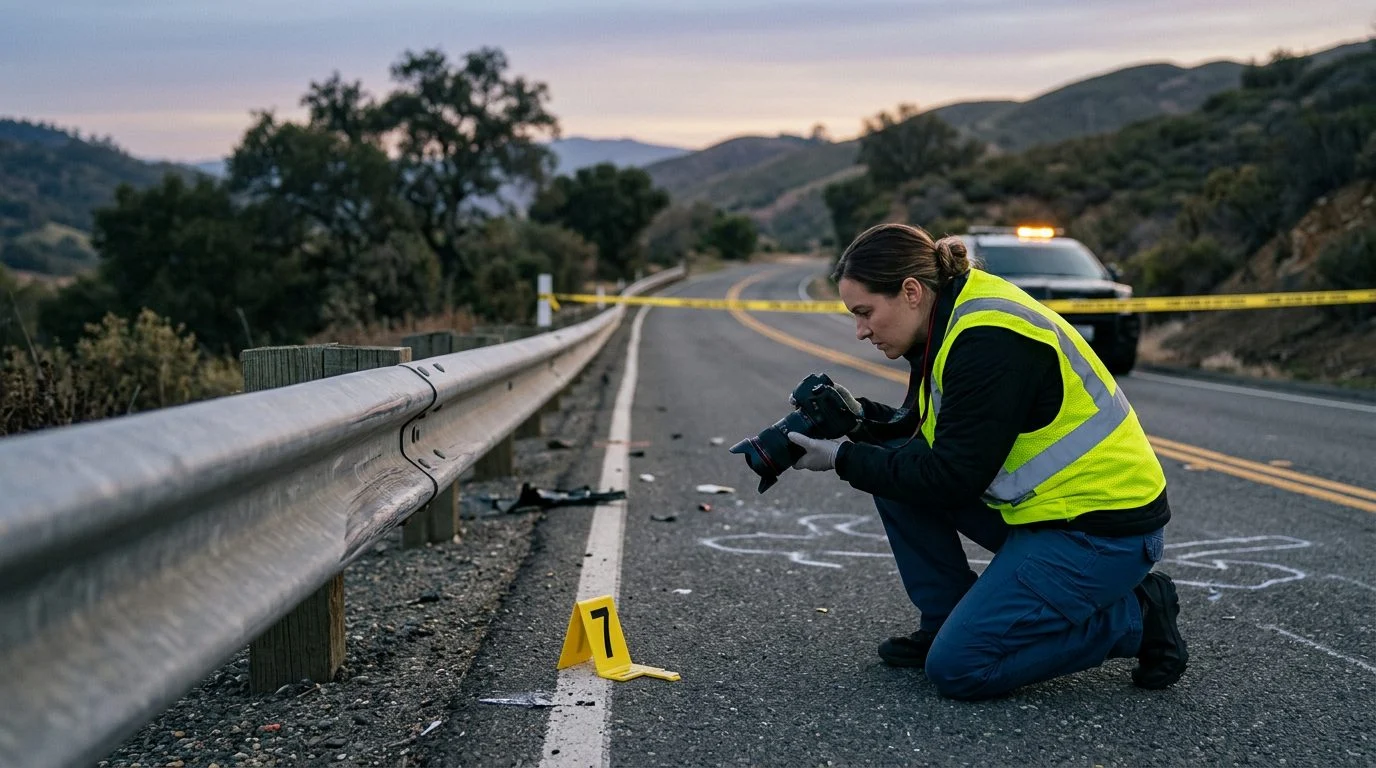
Wrongful Death | Bakersfield, CA
Partly at fault in a fatal crash? Your family still deserves answers.
Colvin Accident Lawyers helps families across Kern County and nearby communities understand wrongful death claims in California, including crashes where fault is disputed. Free first consultation: confidential, with no obligation to continue.
By Donald Norman Colvin · Published November 7, 2026
What It Means When Your Family Member Was Partly at Fault
If a family member was partly at fault in a fatal crash, the family may still have a claim in California. Partial fault does not automatically end a wrongful death case here. Fault is measured by percentage, and the family’s recovery is reduced by that share.
Many families face this question at the worst possible time. A relative has died. Funeral plans are underway. An insurance adjuster calls, and someone says the person who died may have caused the crash.
This page explains the rules and the common arguments in plain terms. It does not predict how any specific case will turn out. Results turn on the facts of each crash and the evidence behind them.
For the wider process, our wrongful death page explains who may bring a claim and how a case moves forward. This page focuses on one question: what happens when fault is shared.
If a relative died and someone now says they shared the blame, you do not have to face those questions alone. We are glad to talk through what it means for your family. Talk it through with our team — the first consultation is free, confidential, and carries no obligation.
How California’s Pure Comparative Fault Rule Works
Under this rule, fault is split by percentage among everyone whose conduct contributed to a crash.
Damages are reduced in proportion to a party’s share of fault.
Here is a simple example. Imagine a jury finds the driver who died was 70% at fault, and the other driver was 30% at fault. If total damages were set at a hypothetical figure, the family would recover 30% of that amount. This example is for illustration only. It is not a prediction about any real case.
Judges and lawyers in civil trials rely on the Judicial Council’s civil jury instructions (CACI). Those instructions cover negligence, comparative fault, and damages.
How the Decedent’s Share of Fault Affects a Wrongful Death Claim
California’s wrongful death statute sets out who may bring the claim. Under Code of Civil Procedure § 377.60, a surviving spouse, registered domestic partner, and children may sue, or, if there are no surviving children or other issue, the people who would inherit the decedent’s property by intestate succession, such as parents, may sue. Issue of deceased children may also sue.
The statute also allows others who depended on the decedent to bring the claim. These include a putative spouse, stepchildren, parents, and legal guardians if the parents have died. Each family’s standing depends on its own relationship to the person who died.
Fault works the same way in these cases. Under the pure comparative fault rule, the percentage of fault assigned to the person who died generally reduces the total recovery.
What if the family member was the driver, rider, or walker? The question is not whether they made any mistake. That share is argued from the evidence in the specific crash.
Multiple At-Fault Parties and Non-Economic Damages Under Proposition 51
When more than one defendant shares fault, each one is liable for non-economic damages only in direct proportion to its own share. Each defendant gets a separate judgment for that amount.
Non-economic damages are subjective, non-monetary losses. Economic damages are objectively verifiable monetary losses. They include medical expenses, loss of earnings, and burial costs.
Under Civil Code § 1431.2, in any action for personal injury, property damage, or wrongful death based upon principles of comparative fault, the liability of each defendant for non-economic damages, meaning subjective, non-monetary losses such as pain, suffering, inconvenience, mental suffering, and emotional distress, is several only and not joint. That difference matters when a crash involves more than one party. A second driver, a vehicle owner, a company, or a property owner may each carry part of the fault.
Identifying every party whose conduct contributed to the crash helps show how fault is divided. Each party’s share becomes part of the case. Missing a party can leave part of the picture out.
How Insurers Try to Shift Blame After a Fatal Crash
Insurers may ask who was at fault soon after a crash. Family members can receive calls within days of a death, while they are still making arrangements. Those calls often come at a hard time.
An insurer may ask for a recorded statement. It may also argue that the person who died caused or added to the crash. Those arguments can shape how fault is later measured.
Words said in shock can be quoted back later. A grieving relative who says “I think he just swerved” may find that remark used in a fault argument. Before describing the crash, write down what you saw and what you learned from others.
Insurers may also request medical records and history. The scope of that request matters. A broad request can reach records that have nothing to do with the crash. Ask what is being requested and why before you agree to anything.
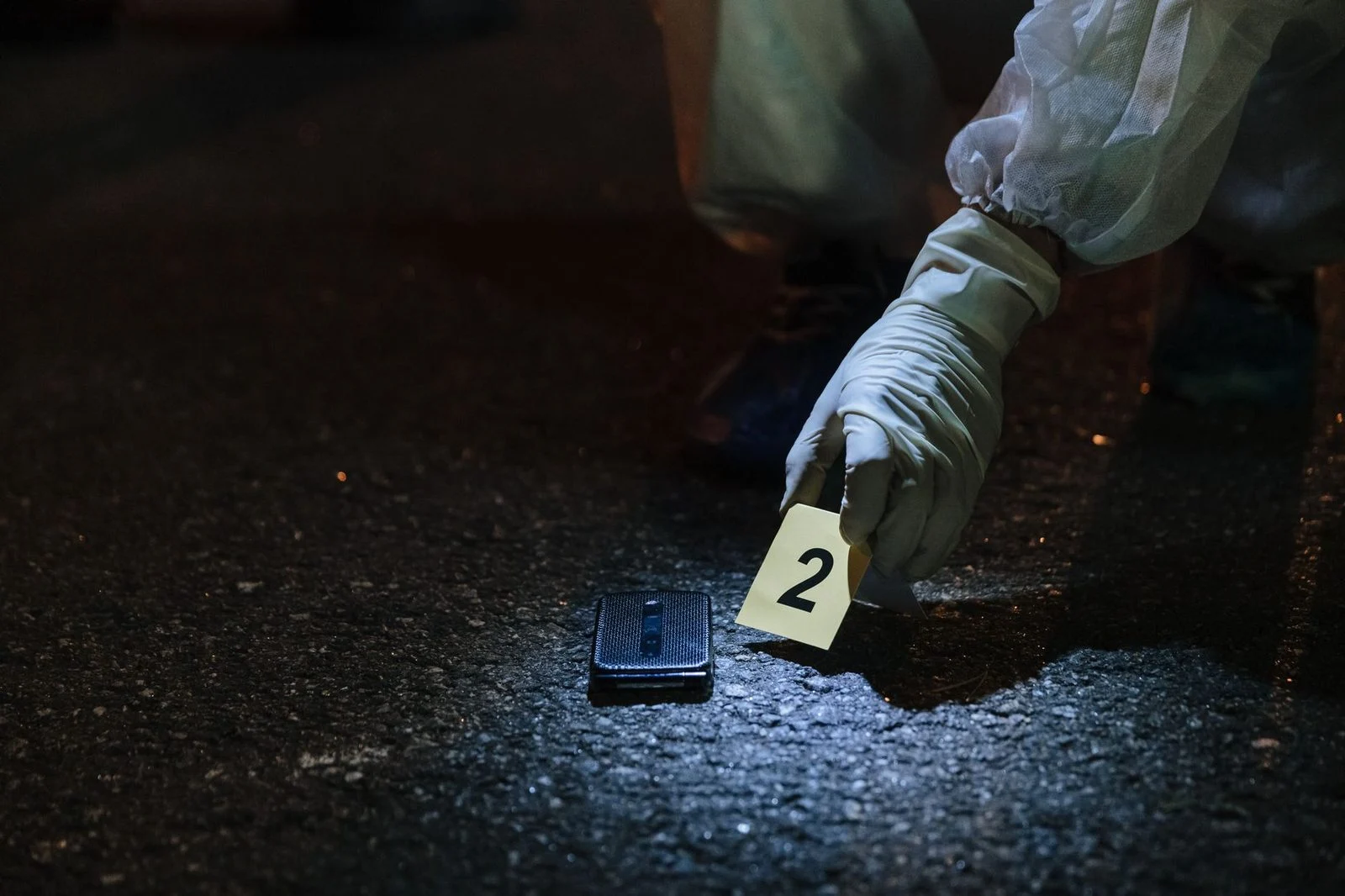
Evidence Used to Prove or Dispute Fault in a Fatal Crash
Fault is usually proven with evidence. Common sources include the traffic collision report, photographs and measurements of the scene, witness statements, and vehicle damage. Traffic signal records, roadway records, and video from nearby cameras can also matter.
The California Highway Patrol explains how to request a copy of a CHP-investigated collision report. The CHP collision report request page lists the steps. Requesting the report early helps you see what the officer recorded.
Violating a traffic law can create a presumption of negligence. Under Evidence Code § 669, the failure of a person to exercise due care is presumed if the person violated a statute, ordinance, or regulation of a public entity, the violation proximately caused death or injury to person or property, the death or injury resulted from an occurrence of the nature the statute, ordinance, or regulation was designed to prevent, and the injured person was one of the class of persons for whose protection it was adopted. A statute was violated, the violation caused death or injury, the harm was the kind the law aimed to prevent, and the injured person was in the protected group. The presumption can be rebutted if the person did what a reasonable person would have done.
Coroner’s reports, autopsy findings, and toxicology results may bear on the decedent’s conduct. Their meaning is often debated, so they need careful review. Early documentation also matters. Skid marks fade, and video can be overwritten, so writing down the scene early can help.
Not sure what your next step is?
Talk it through with our team — the first consultation is free, confidential, and carries no obligation.
Which Losses Can Be Affected by a Fault Percentage
Recovery in a wrongful death case can include economic losses. These include burial costs and lost earnings the family would have received. Non-economic losses can include loss of society and companionship for eligible family members.
Under Code of Civil Procedure § 377.30, a cause of action that survives the death passes to the decedent’s successor in interest, subject to Chapter 1 (commencing with Section 7000) of Part 1 of Division 7 of the Probate Code. The action may be commenced by the personal representative or, if there is none, by the successor in interest. This is sometimes called a survival claim.
A fault percentage can affect any recovery under these claims. That is why the shared-fault question matters across the whole case, not only one category of loss.
The categories are separate. Each one needs its own proof, based on the facts of the family’s loss. Funeral bills, pay records, and family records each tell part of the story.
Deadlines That Can Affect Whether a Claim Can Be Brought
For most private defendants, the general period is two years. Code of Civil Procedure § 335.1 sets a two-year period for an action for the death of an individual caused by another’s wrongful act or neglect.
Claims against a public entity work differently. Government Code § 911.2 says a claim for death must be presented not later than six months after the cause of action accrues. Other claims against a public entity generally have a one-year limit.
A city bus, a county road, or a public transit vehicle can create this trap. Families often focus on the two-year rule and miss the shorter government claim deadline. Under Government Code § 945.4, except as provided in Sections 946.4 and 946.6, no suit for money or damages can be brought against a public entity on a cause of action for which a claim is required until a written claim has been presented and acted upon by the board, or deemed rejected.
Which timing applies depends on the facts of the crash and who may be responsible. Write down the date of the crash and the date of death. Keep every letter from an agency or insurer.
How to Think About Next Steps After a Crash That Shared Fault
Partial fault of the person who died does not end a claim. Fault reduces recovery by percentage. Under Cal. Civ. Code § 1431.2, each defendant is liable only for the non-economic damages allocated to that defendant in direct proportion to that defendant’s percentage of fault (link). Insurers often raise fault early, and evidence and deadlines matter.
No outcome can be promised in any case. The result turns on the evidence, the parties involved, and how fault is proven.
What if my family member was partly at fault in a fatal crash California?
Yes, a family may still have a claim. California’s pure comparative fault rule lowers recovery by the percentage of fault, but it does not bar recovery entirely.
What are the fault laws in California for car accidents?
Who can file a wrongful death claim in California?
Under Code of Civil Procedure § 377.60, a surviving spouse, registered domestic partner, and children may sue, or, if there are no surviving children or other issue, the people who would inherit the decedent’s property by intestate succession, such as parents, may sue. Other dependent family members may also qualify.
How long do I have to file a wrongful death lawsuit in California?
For most private defendants, the general period is two years.
Talk Through Your Family’s Situation With Colvin Accident Lawyers
Your family is grieving, and now someone says the person who died may share the blame. The crash report, the insurer’s questions, and the funeral costs may all need attention at once. If you want to talk through what this means for your family, contact Colvin Accident Lawyers. We offer a free, confidential first consultation with no obligation to continue.
Donald Norman Colvin, Colvin Accident Lawyers, Bakersfield, California — responsible for this site.
How Colvin Accident Lawyers approaches these cases
Clear answers
We explain how fault questions are evaluated, what the next steps look like, and what your family can expect, in plain language.
A confidential first conversation
Your first consultation is free, confidential, and carries no obligation to continue.
Rooted in Kern County
Our office is in Bakersfield, and we work with families throughout Kern County, Fresno, Visalia, Lancaster, Palmdale, Delano, and Tehachapi.
Support for the whole family
Losing someone in a crash affects everyone close to them. We take time to understand your family's situation.
Before you speak with an insurance company
Insurers may ask for recorded statements soon after a fatal crash and may raise questions about fault. Talk with a lawyer before giving a statement or signing anything.
Common questions families ask
Can we still pursue a claim if our loved one was partly at fault?
Fault is decided on the facts of each crash. Every situation needs a careful review of the evidence before anyone can say what it means for your family.
What evidence matters most?
Police reports, witness information, photos, vehicle data, and medical records can all bear on how a crash happened. Preserving evidence early helps.
How do we talk to the other side?
Let a lawyer handle communication with insurers and other parties, so your family can focus on grieving and on making decisions that are right for you.
What does the first meeting look like?
Your free first consultation is confidential and carries no obligation to continue. We listen to what happened and answer your questions.
Talk with Colvin Accident Lawyers about your family's situation. Your first consultation is free, confidential, and carries no obligation to continue.
Related practice areas
- Wrongful Death Lawyer
- What to Say to an Insurance Adjuster After a Family Member Dies
- Dog Attack Death Lawyer California: How Claims Work