Wrongful Death | Kern County
After a Fatal Crash, Paperwork Can Feel Overwhelming. We Can Help.
Here is a practical guide to the records that usually matter most, what each one shows, and how a lawyer can help your family organize them.
By Donald Norman Colvin · Published November 17, 2026
A sudden death in a crash leaves a family facing paperwork they never expected, often while planning a funeral. If you’re asking what records are needed after a fatal crash in Kern County, you’re not alone. The core set is the collision report, the death certificate, medical and EMS records, evidence from the scene, and insurance papers. Some of these can be lost or overwritten if no one asks early. Here is what each record is, who holds it, and why timing matters.
Why records matter in the first weeks after a fatal crash in Kern County
Several agencies and businesses each hold a different piece of what happened, so start by knowing who holds what.
Police hold the crash report. The coroner holds death investigation files. Hospitals hold medical and ambulance records. Insurers hold claim notes. Vehicle owners and tow yards hold the car itself. Each keeps its records under its own rules and timeline.
Early requests matter most for records that can be overwritten, moved, or repaired away. A video clip recorded last week may already be gone. A damaged car may be repaired or sold.
Most families face this list while handling funeral plans and household bills. You don’t need every record in week one. You do need a short list of what to request first, and who to ask.
If you're gathering records after losing someone in a Kern County crash, our team can help you sort out what to request first. Contact us to talk through your family's situation. Talk it through with our team — the first consultation is free, confidential, and carries no obligation.
Start with the collision report: which agency, how to request it, what it shows
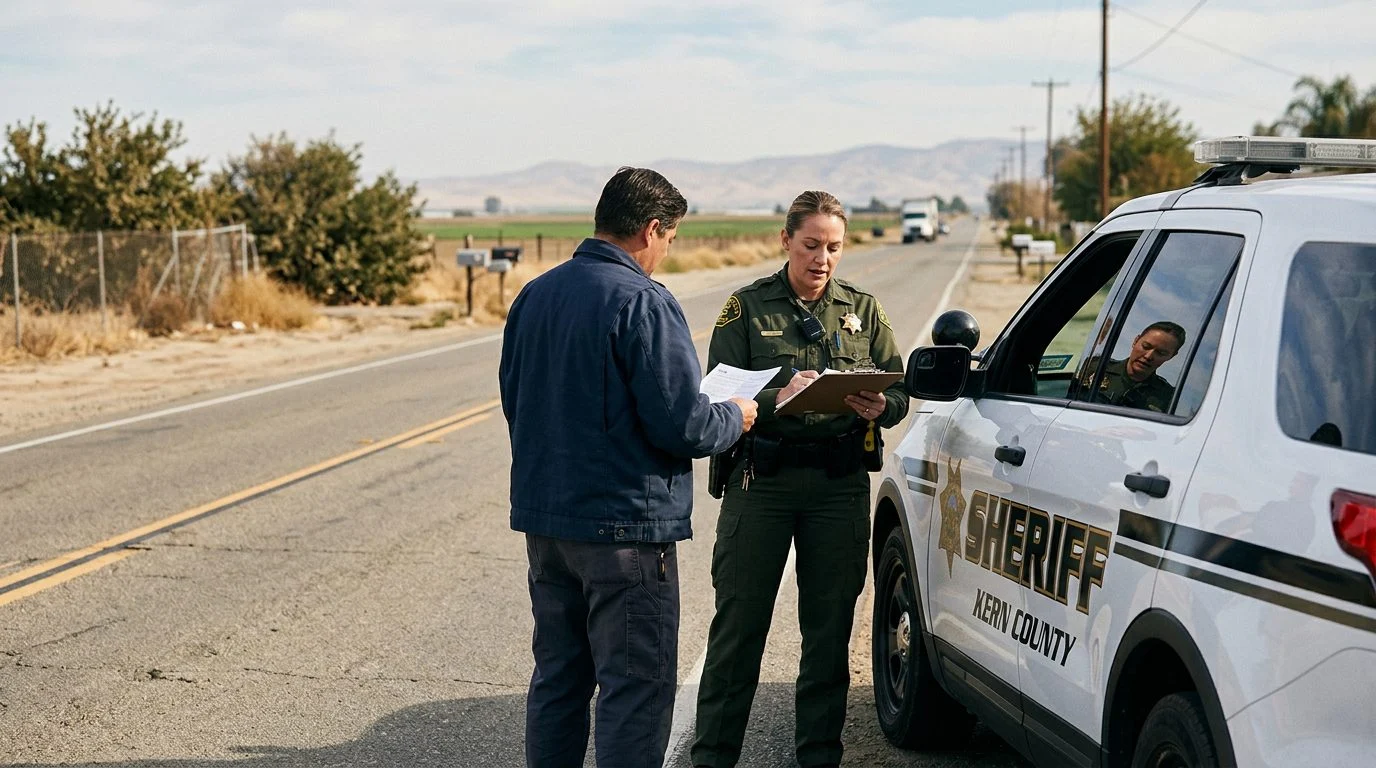
The agency that investigated the crash holds the main collision report, and that agency depends on where the crash happened.
Often that is the California Highway Patrol. Inside a city, the local police department may have handled it. Ask the responding agency for the report or case number first.
California Vehicle Code section 20008 sets the reporting rules for drivers. When a crash results in injury or death, the driver must file a written report within 24 hours. That written report goes to the California Highway Patrol or, if the accident occurred within a city, to either the California Highway Patrol or the police department of that city. A common carrier vehicle, such as a bus, follows a different deadline: the 10th day of the month after the crash. Vehicle Code § 20008 sets out both rules.
Expect the agency to ask for proof of your connection to the person who died. Bring the case number, the crash date, and your own ID. Wait times and fees vary by agency, so ask about current procedures when you call.
The report usually includes the officer’s narrative, a diagram, the names of drivers and witnesses, and vehicle details. For pedestrian and bicycle crashes, the diagram and witness sections often matter most.
Records also shape questions of fault. In California, an injured person’s own share of blame reduces damages. It does not bar recovery. Judicial Council of California Civil Jury Instructions (2026 ed.): “If [name of defendant] proves the above, [name of plaintiff]’s damages are reduced by your determination of the percentage of [name of plaintiff]’s responsibility. I will calculate the actual reduction.”
Hit-and-run fatal crashes: case number, investigation status, and witness details
When the driver left the scene, the case number and the investigator’s contact become the family’s main path to information.
California requires a driver to stop at the scene of a crash that injures or kills someone. A driver who leaves a crash that causes death or permanent, serious injury can face two, three, or four years in state prison, 90 days to one year in county jail, a fine of $1,000 to $10,000, or both imprisonment and a fine, though the court, in the interests of justice and for reasons stated in the record, may reduce or eliminate the minimum jail time and, after considering the driver’s ability to pay, may reduce the minimum fine. Vehicle Code § 20001 sets out these rules.
Gather what you can. Write down the case number, the investigator’s name and phone number, any vehicle descriptions or partial plate numbers police received, and the names of witnesses who spoke with officers.
Ask whether any leads are still open. No one can give a fixed date for how long police will investigate. The investigating unit can tell you the current status.
Keep a written log of every call. Note the date, the time, the person you spoke with, and what they said. Details blur over weeks, and a log lets you check them later.
Death certificate and coroner records
Most institutions will ask for a certified death certificate, so order several at the start.
A certified copy carries an official seal. Insurers, banks, and courts commonly ask for one. Before you order, ask the county office that issues death records which type it provides and how long it currently takes.
Use the same spelling of the name and the exact date of death on every request. That keeps the files matched.
When a coroner investigates a crash death, autopsy and toxicology findings may be kept in a separate file. Ask the coroner’s office how to request that file and whether the results are ready.
Toxicology results matter in impaired driving cases and in speeding or reckless driving cases. They can show facts about the driver’s condition or the crash that the family needs to know.
Keep a copy of each order, each receipt, and each office’s contact details in one folder.
Medical, EMS, and pre-death bills
Ambulance, emergency, and hospital records show the care your loved one received before death, and they often hold the first bills.
Ask for EMS run reports, emergency department records, admission and discharge summaries, and any treatment before the death. Hospitals usually ask for proof that you have legal authority to request them, such as a court appointment or a document naming you as personal representative.
Keep every bill and receipt the person paid, including ambulance charges. Those papers show what was paid and by whom. That matters when the family sorts out the accounts.
If the person had Medicare, different rules apply. Medicare secondary payer rules explain that Medicare may make a conditional payment. That payment must be repaid when a settlement, judgment, award, or other payment is made.
A Medicare beneficiary who brings a claim against an at-fault party’s liability insurance can ask Colvin Accident Lawyers, during a free and confidential consultation, whether Medicare’s conditional payment rules could affect that claim. Medicare case reporting rules explain that this is done through the MSP Recovery Portal or by contacting the Benefits Coordination & Recovery Center.
Scene, vehicle, and video evidence that can disappear
The vehicle, its data, and nearby video are often the records most at risk of being lost.
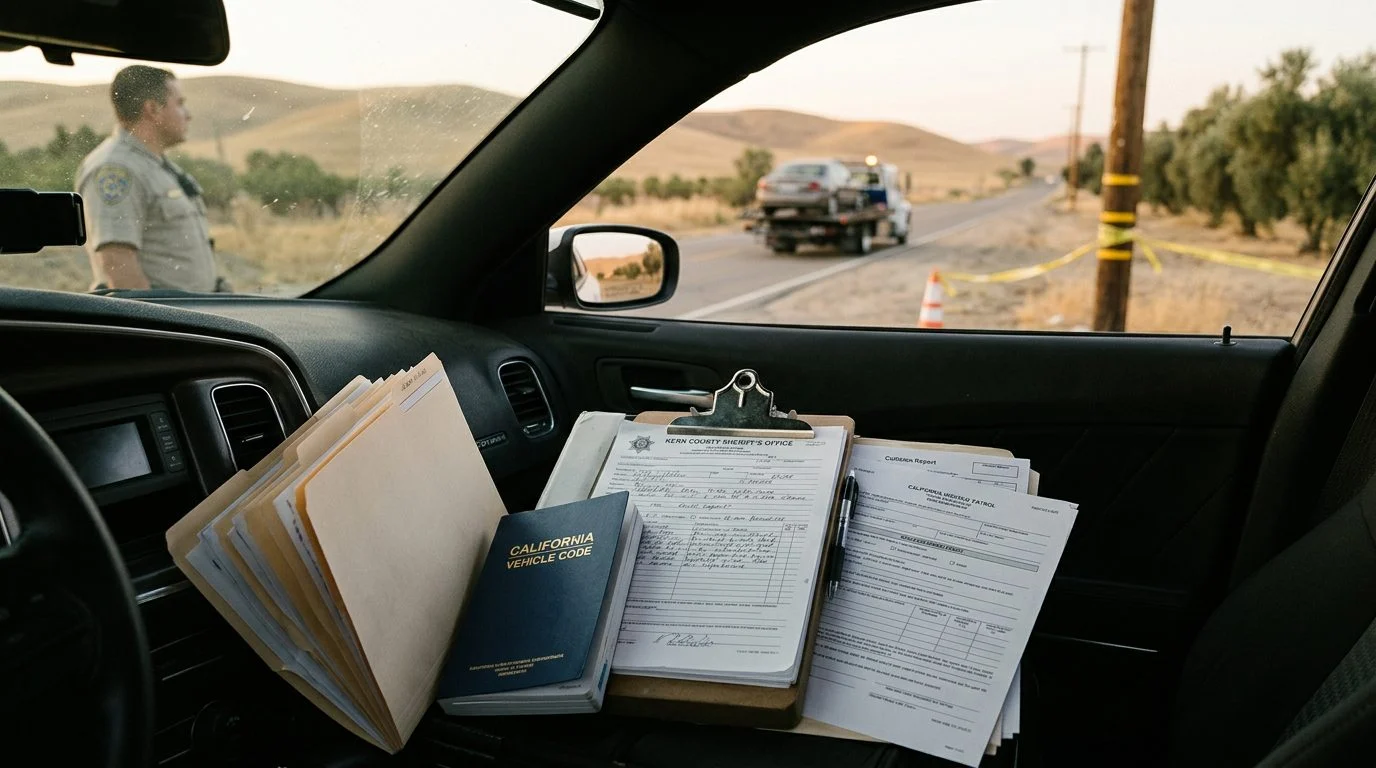
Ask for or save these items soon: the vehicle and its damage, dashcam footage, video from nearby businesses or traffic cameras, 911 recordings, and phone or vehicle data from the crash.
Video is often recorded over on a schedule. A vehicle may be repaired, sold, or scrapped. Each of these steps can end access to evidence.
A written preservation request asks the vehicle owner, insurers, and nearby businesses to keep what they have. Send it in a way that leaves a record, and keep a copy with the date.
Save scene photos and videos in their original form, with the date and the name of the person who took them. Don’t crop or edit them before you save the original.
Ask where the vehicle went and who has custody of it. Tow yards and salvage lots may move cars. Write down the address and a contact name.
Not sure what your next step is?
Talk it through with our team — the first consultation is free, confidential, and carries no obligation.
Commercial trucks, buses, and insurance policy records
When a commercial truck or bus is involved, the carrier holds records that go well beyond the police report.
A motor carrier must keep a driver qualification file for each driver it employs. A motor carrier has to retain each driver’s qualification file for as long as it employs that driver and for three years afterward, although paragraph (d) lets the carrier take out some documents, such as the annual driving-record inquiry, the note on its review and the medical examiner’s certificate, three years after the date they were executed.
Hours-of-service logs rule covers these logs, which can show driving hours before a crash.
49 C.F.R. § 379.3 says records may be destroyed after the required periods, at the company’s discretion. Send a preservation request early, before those periods end.
For the insurance side, gather the at-fault driver’s policy details, the vehicle owner’s coverage, every claim number, and every letter from an insurer. Keep them together in one place.
For the financial side, gather the person’s pay stubs, tax returns, and benefit statements. These papers help show income and benefits.
Time limits, and how long records take to arrive
California generally gives two years from the date of death to file a wrongful death case. Code of Civil Procedure § 335.1 sets this two-year limit. The deadline can change depending on the facts, so ask about your timeline early.
Not every family member can bring the claim. Code of Civil Procedure § 377.60 lists who may sue, including a surviving spouse or domestic partner, children, and certain dependent family members. A personal representative may also bring the claim on their behalf.
Relationship papers, such as marriage, domestic partnership, or birth records, help show who qualifies. Start gathering them now.
Some records take longer than families expect. Police reports and certified death certificates may take time to arrive. Start those requests in the first few weeks.
Keep a simple tracking list. Note the record, the agency, the date you asked, the person you asked, and the date you expect it.
Talk with Colvin Accident Lawyers about your family’s records
If you’re gathering these records for someone who died, you don’t have to sort out the legal side alone.
You may be waiting on a collision report, a coroner’s file, or a hit-and-run case number while making funeral and household decisions. That is a heavy load in a hard season.
Colvin Accident Lawyers is based in Bakersfield and serves accident victims and families in Kern County. The firm can talk with you about which records to request first and when.
La consulta inicial es gratuita, confidencial y sin compromiso de continuar.
To reach the firm, use the contact page.
Our wrongful death lawyer page explains who may file and the two-year timeline.
What records are needed after a fatal crash in Kern County?
The collision report, the death certificate, medical and EMS records, scene and vehicle evidence, and insurance papers are the core records. If a truck or bus was involved, the carrier’s driver and duty-status files matter too.
How long do I have to file a wrongful death claim in California?
California allows two years to bring an action for assault, battery, or injury to, or for the death of, an individual caused by the wrongful act or neglect of another (Code Civ. Proc. § 335.1). The deadline can change depending on the facts of your case.
When must a driver report a crash?
Under California Vehicle Code § 20008, the driver of a vehicle (other than a common carrier vehicle) involved in a crash that injures or kills anyone must file a written report within 24 hours with the California Highway Patrol or, if the crash happened within a city, with either the CHP or that city’s police department. The owner or driver of a common carrier vehicle instead reports in writing to the CHP on or before the 10th day of the month following the crash.
Donald Norman Colvin is the responsible lawyer for this site.
Colvin Accident Lawyers, Bakersfield, California — responsible for this site.
Core Records to Gather
Collision Report
The official report from the investigating agency, which documents the scene, the parties involved and the officers' observations.
Death Certificate
The official record of the death, which is often needed to document the loss in a wrongful death matter.
Medical and EMS Records
Emergency response, hospital and treatment records that describe the injuries and the care provided.
Scene and Vehicle Evidence
Photographs, video, witness information and details about the vehicles, which can help show how the crash happened.
Insurance Papers
Policy information, claim letters and any communications from insurers, kept together in one place.
Commercial Carrier Records
When a truck or bus was involved, driver logs, duty-status files and maintenance records can be important to the investigation.
How Our Team Can Help Your Family
Organizing the File
We help you sort, label and track the records so nothing important is lost along the way.
Explaining What Each Record Shows
We walk you through what the reports and medical files mean and how they fit together.
Supporting Your Family
Our team stays in touch with you throughout the process so you can focus on your loved ones.
A Free, Confidential First Consultation
The first consultation is free, confidential and carries no obligation to continue.
Keep Originals and Note Dates
Store originals of every document you receive, including bills, letters from insurers and photographs, and write down the date each one arrived. Consider speaking with a lawyer before you sign any release or give a recorded statement to an insurance company.