Wrongful Death & Survival Claims | Bakersfield, CA
Hospital Bills Paid Before a Fatal Crash: What Families Should Know
When a loved one pays medical bills after a crash and later dies, the family often has many questions about who can pursue those costs. Here is how the process generally works in California.
By Donald Norman Colvin · Published November 17, 2026
If your loved one was hurt in a crash and died before the hospital bills were settled, you may be asking whether those bills can still be recovered. In many cases, California law lets the estate seek reimbursement for medical bills the person paid or still owed before death.
Colvin Accident Lawyers handles car, truck, motorcycle, bicycle, pedestrian, bus, and wrongful death cases from Bakersfield. This page explains how these claims work, which bills count, who else may have a right to be paid, and what to do now.
Short answer: can the hospital bills be recovered?
Often, yes. The estate can usually seek those bills through a survival claim, which carries forward losses the person had before death. California’s survival rules let a personal representative bring that claim or, if there is none, a successor in interest.
Medical bills from the crash fit that description, whether the person paid them or still owed them at death. Cal. Code Civ. Proc. § 377.34 sets out this rule.
California also uses pure comparative negligence. If the person shared fault for the crash, that fault does not bar recovery. Our team can discuss how any reduction might apply to the facts of your case.
Whether a particular bill can be recovered depends on the facts. Those facts include who caused the crash, what the bills were for, what was actually paid, and who has the right to bring the claim.
If you're sorting through a loved one's hospital bills after a crash, you don't have to face the claim alone, and our team can talk it through with you. Talk it through with our team — the first consultation is free, confidential, and carries no obligation.
Wrongful death claim vs. survival action: why the difference matters
Hospital bills usually belong in the survival action, not the wrongful death claim. The two claims involve different people, different losses, and different rules.
A wrongful death claim lets certain family members sue for their own losses. Under Cal. Code Civ. Proc. § 377.60, the surviving spouse, domestic partner, children, and certain others may bring it. The decedent’s personal representative may also bring it on their behalf.
When a personal representative or successor in interest pursues the decedent’s own cause of action, Section 377.34 restricts the recoverable damages to losses the decedent sustained or incurred before death. Those damages can include penalties or punitive or exemplary damages the decedent would have been entitled to recover if still living. In a survival action, Section 377.34 generally excludes damages for pain, suffering, or disfigurement, except where the action was granted a preference under Section 36 before January 1, 2022, or was filed on or after January 1, 2022, and before January 1, 2026; the section also does not affect claims brought under Chapter 11 (commencing with Section 15600) of Part 3 of Division 9 of the Welfare and Institutions Code. A claim filed today generally falls outside that window.
For the wider process, see our wrongful death lawyer guide. If the person was pregnant, our unborn baby crash claim page covers that situation.
Which hospital and medical bills can be part of the claim
Bills for care unrelated to the crash injuries need a separate look.
Common categories include ambulance and emergency transport, emergency room care, surgery, hospital stays, imaging, medications, and follow-up treatment. The key link is the crash. Each bill should trace back to an injury the crash caused.
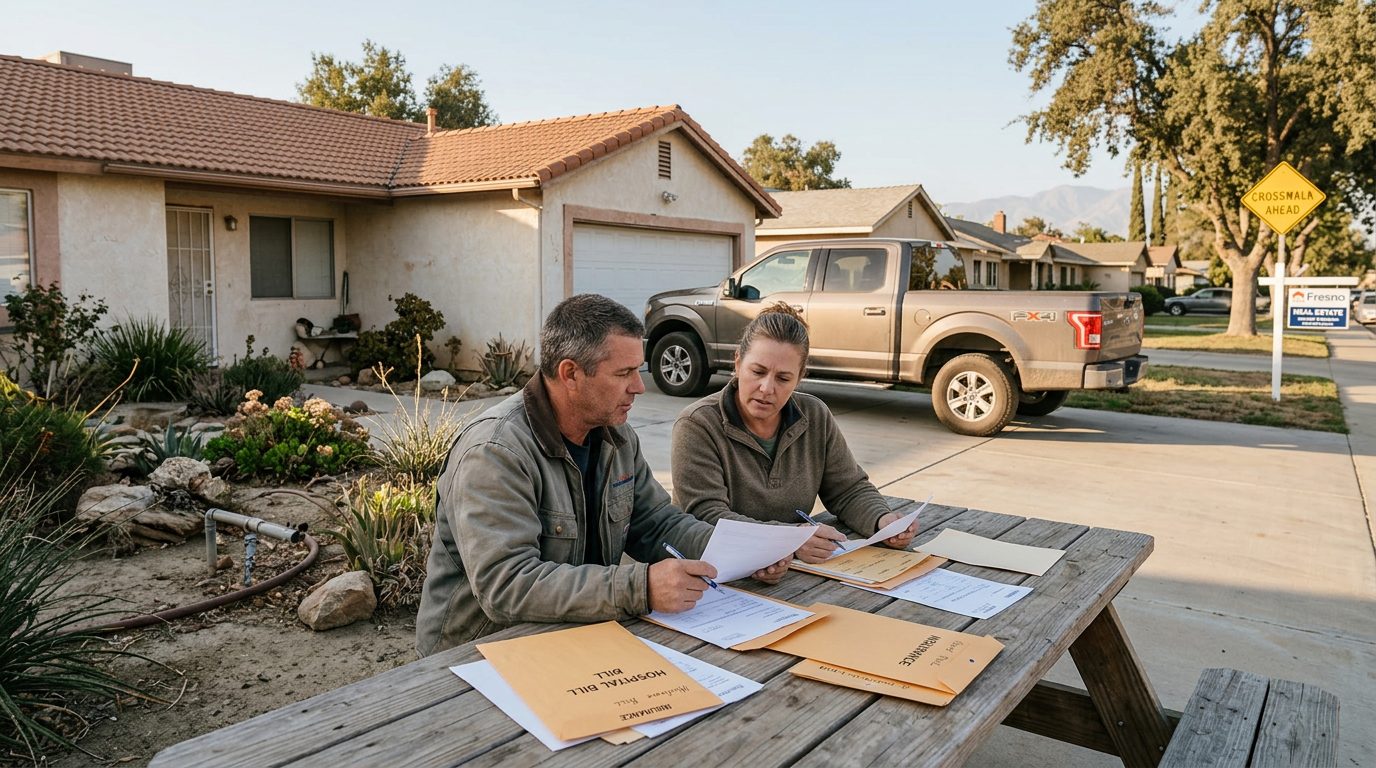
Out-of-pocket costs matter too. Copays, deductibles, and coinsurance the person paid directly should be listed with proof of payment, such as receipts or card statements. Families often find statements arrive in separate envelopes from the hospital, the doctors, and the ambulance company. Gather them all.
Itemized statements show each charge. Explanation of Benefits (EOB) forms from health insurers show what was billed, what the plan paid, and what the patient still owed. Keep the treatment timeline in order, with the crash date, each hospital visit, and each transfer.
No bill total predicts what a claim may be worth. A list of charges is a starting point for review, not a measure of value.
Who pays: the at-fault driver’s insurance, health coverage, and liens
The at-fault driver’s liability insurance is one source of payment. Other payers may have rights to be repaid from any recovery, so each one needs a look.
If the person had Medicare, CMS explains that liability insurance pays first for accident-related care, and Medicare pays second. Medicare may also make a conditional payment, which must be repaid when a settlement, judgment, or other payment is made, as CMS describes here. A Medicare beneficiary must notify Medicare when a claim is made, through CMS case reporting.
A hospital that gave emergency and ongoing care has a lien on the damages recovered. The lien covers reasonable and necessary charges, under Cal. Civ. Code § 3045.1. A payer that pays after receiving notice of that lien, without paying the lien amount or so much of it as can be satisfied out of 50 percent of the moneys due under any final judgment, compromise, or settlement agreement after paying any prior liens, can be liable to the hospital under Cal. Civ. Code § 3045.4.
Ask each payer for a written statement of what it claims, and keep every letter.
Are spouses responsible for medical debt?
Whether a surviving spouse owes a deceased spouse’s medical bills turns on the facts. Whether a spouse signed for the account is one factor in who may be responsible for a medical bill, but it may not be the only one, so it can help to have the specific bills reviewed before paying them. A spouse who co-signed or opened the account faces different questions than a spouse who had no role in billing.
A spouse who paid bills from a shared account may need a closer review of those records. Gather the account papers, signature pages, and bank records that show who signed and who paid. Those documents usually answer the first questions.
Read every collection letter closely and keep it. The letter alone does not settle what is owed, so the account records behind it matter most.
Bills in the estate follow a separate path. The next section explains how unpaid bills move through the estate.
What happens to unpaid medical bills after a death?
The California Courts probate guide explains this process.
A bill the person owed at death and a claim against the at-fault driver are two different tracks. The estate handles the bill. The crash claim seeks losses the person incurred before death.
Crash-related bills still owed at death can be part of the survival claim, because the person incurred them before death. Section 377.34 describes that kind of loss.
Who brings the claim depends on who has been appointed. Under Cal. Code Civ. Proc. § 377.30, a personal representative may bring the action. If there is none, the successor in interest may bring it.
Not sure what your next step is?
Talk it through with our team — the first consultation is free, confidential, and carries no obligation.
Deadlines and records to gather now
The general deadline for a death caused by another’s wrongful act or neglect is two years. Cal. Code Civ. Proc. § 335.1 sets that two-year period.
Under Cal. Gov. Code § 911.2, when a public entity may be responsible, a claim relating to a cause of action for death must be presented not later than six months after the accrual of the cause of action.
Start gathering these records now:
- Itemized bills from the hospital, ambulance company, and doctors
- Payment receipts and card statements showing what the person paid
- Explanation of Benefits forms from health insurers
- Prescription receipts
- Emergency and ambulance records
- The police report number
- Insurance information for each driver
- Letters from collection agencies, insurers, Medicare, or Medi-Cal
Keep a running list of who paid each bill, the date, and the amount. That list shows what was paid and what was still owed.
Talk with our team about your loved one’s bills
If you’re sorting through a loved one’s hospital statements, insurance letters, and estate papers, you don’t have to work through the claim alone. Grief and paperwork often arrive together, and the decisions can feel heavy.
Colvin Accident Lawyers is based in Bakersfield, California, and serves Kern County and nearby communities. Our team can talk through the bills, the crash, and the estate situation with you. Contact Colvin Accident Lawyers to start that conversation. We will not predict any result before we know the facts.
La consulta inicial es gratuita, confidencial y sin compromiso de continuar.
Donald Norman Colvin is the responsible lawyer for this page. Colvin Accident Lawyers, Bakersfield, California.
Frequently Asked Questions
Can I recover hospital bills my loved one paid before they died in a California crash?
Often, yes. California law generally lets the deceased person’s estate pursue losses they suffered before death, such as medical bills they paid, through a survival claim that can be filed alongside a wrongful death claim.
Who can bring a claim to recover those hospital bills in California?
A wrongful death claim is generally brought by heirs, such as a surviving spouse, registered domestic partner, or children, and in some cases by parents or other dependents. A survival claim is generally brought by the estate’s personal representative or a qualifying successor in interest.
How much time is there to file a claim after a fatal crash in California?
Wrongful death and survival lawsuits are generally subject to a two-year filing deadline from the date of death under California Code of Civil Procedure 335.1. If a government entity, such as a city, county, or transit agency, may be responsible, a written claim is generally required within six months of the crash under Government Code 911.2.
How Colvin Accident Lawyers Can Help
Free first consultation
The first consultation is free, confidential, and carries no obligation to continue.
Review of your records
We look at medical bills, payment receipts, and accident reports to understand what was paid and when.
Support for grieving families
Our team focuses on clear communication and patient answers while your family works through a difficult time.
Serving Kern County and nearby communities
We represent families in Bakersfield, Fresno, Visalia, Lancaster, Palmdale, Delano, and Tehachapi.
Keep every bill and receipt
Records of medical bills and payments made before a death can be important to a claim. Gather what you have, including receipts, insurance statements, and hospital paperwork, and bring it to your consultation.
Key Topics Covered Above
Survival claims
How losses the injured person suffered before death, including medical bills they paid, can be pursued in California.
Wrongful death claims
How surviving family members may pursue their own losses after a loved one dies in a crash.
Who may bring a claim
A general overview of the people who may be involved in these cases and why the details matter.
Next steps
Practical steps to take now, and how a confidential conversation with our team can clarify your situation.
Have questions about bills paid before a loss?
Talk with our team today. The first consultation is free and confidential.