Wrongful Death | Bakersfield, CA
When Someone Else's Carelessness Takes a Loved One, Your Family Deserves Answers
Learn which kinds of incidents commonly lead to a wrongful death claim, what evidence helps, and how Colvin Accident Lawyers can help you take the next step.
By Donald Norman Colvin · Published November 18, 2026
Losing a family member in a crash, an attack, or an unsafe place is hard enough. If you’re asking what the typical grounds are for a wrongful death claim, here’s the short answer. Certain surviving family members may sue when another person’s wrongful act or neglect caused the death. The core ground is negligence, which means someone failed to use reasonable care. Other common grounds include vehicle crashes, premises hazards, and dog bites.
What a wrongful death claim in California is
A wrongful death claim lets certain surviving family members sue when another person’s wrongful act or neglect causes a death. Under Code of Civil Procedure § 377.60, the claim may be brought by the surviving spouse, domestic partner, and children of the person who died, called the decedent.
Others can qualify too. Persons listed in subdivision (a), such as the decedent’s surviving spouse, domestic partner, children, and issue of deceased children, may bring the claim without showing dependency. Persons listed in subdivision (b) may bring it if they were dependent on the decedent: a putative spouse, children of the putative spouse, stepchildren, parents, or the legal guardians of the decedent if the parents are deceased. A minor who lived in the decedent’s household for the previous 180 days, and depended on the decedent for half or more of support, may also qualify.
The claim is about the death itself. California law treats it as separate from the decedent’s own claim for losses suffered while alive. The grounds are the same kind of wrongful conduct that supports injury claims: an act or neglect by another person that caused harm.
If a loss has left you with hard questions about what happened, you don't have to face them alone. Our team at Colvin Accident Lawyers is ready to talk. Talk it through with our team — the first consultation is free, confidential, and carries no obligation.
Negligence: the core ground
Negligence is the core ground: someone failed to use reasonable care, and that failure caused a death. Under Civil Code § 1714, a person is responsible for injury caused by a lack of ordinary care. Cal. Civ. Code § 1714 reads: “(a) Everyone is responsible, not only for the result of his or her willful acts, but also for an injury occasioned to another by his or her want of ordinary care or skill in the management of his or her property or person, except so far as the latter has, willfully or by want of ordinary care, brought the injury upon himself or herself.” Under the Judicial Council of California civil jury instructions, “Negligence is the failure to use reasonable care to prevent harm to oneself or to others.” A person can be negligent by acting or by failing to act. A person is negligent if that person does something that a reasonably careful person would not do in the same situation or fails to do something that a reasonably careful person would do in the same situation.” A person can be negligent by acting, or by failing to act.
The other person owed a duty of reasonable care. That person broke that duty. The break caused the death. The death caused losses to the family.
Everyday examples help. A driver texting who runs a red light is one. A driver going faster than conditions allow is another, a situation that Vehicle Code § 22350 addresses. A property owner who ignores a known hazard is a third.
Vehicle and road incidents behind these claims
Fatal crashes involving cars, trucks, motorcycles, bicycles, pedestrians, and buses can support a wrongful death claim. Each type raises different questions.
Pedestrians have specific protections. Under Vehicle Code § 21950, a driver must yield to a pedestrian in a marked crosswalk, or an unmarked one at an intersection. The same section says a pedestrian must still use due care.
Motorcycle riders and cyclists have less protection in a crash. A driver’s failure to see them or yield can become central to a claim.
Commercial trucks and buses can involve more than one responsible party, such as the driver and the company that operated the vehicle. The Insurance Institute for Highway Safety tracks large-truck crash deaths, including deaths of pedestrians and bicyclists.
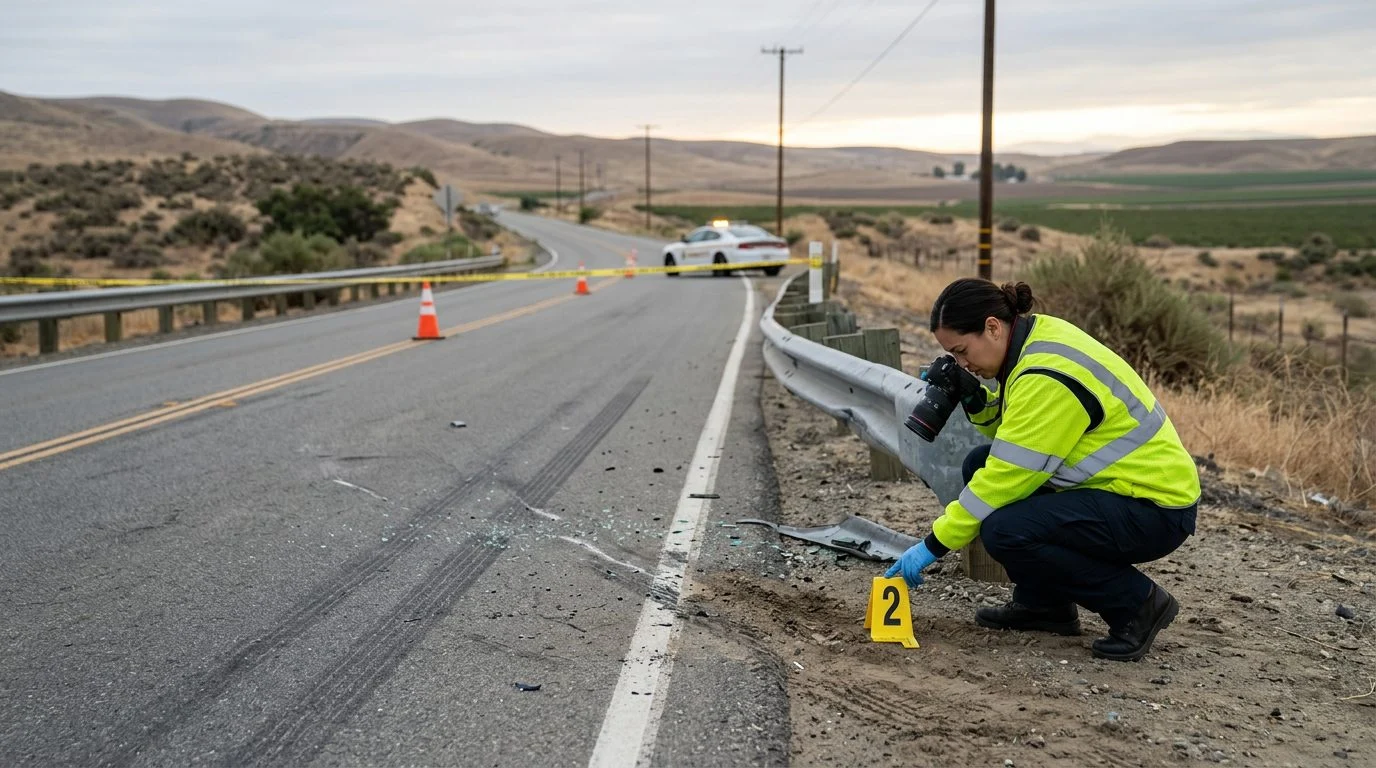
Crash details matter. The location, the time, and any reports made at the scene can help when a claim is reviewed. Whether a crash fits these grounds depends on the facts and the evidence.
Premises liability and dog bite grounds
Premises liability and dog bites can each support a wrongful death claim when a property or an animal causes a death. Premises liability is a property owner’s duty to keep people safe from hazards on the land.
A person who owns, leases, occupies, or controls property must use reasonable care to discover any unsafe conditions and to repair, replace, or give adequate warning of anything that could be reasonably expected to harm others. (Judicial Council of California civil jury instructions) A condition on the property created an unreasonable risk of harm; 2. A defendant knew or, through the exercise of reasonable care, should have known about the condition. [Name of defendant] failed to repair the condition, protect against harm from the condition, or give adequate warning of the condition.” Examples include a broken stair, a hazard left unmarked, or a walkway never repaired.
Dog bites follow their own statute. Under Civil Code § 3342, a dog’s owner is liable for damages to a person bitten in a public place or lawfully on private property. That liability applies regardless of the dog’s past viciousness or the owner’s knowledge of it. CACI No. 463 states: “1. That [name of defendant] owned a dog; 2. That the dog bit [name of plaintiff] while [he/she/nonbinary pronoun] was in a public place or lawfully on private property; 3. That [name of plaintiff] was harmed; and 4. That [name of defendant]’s dog was a substantial factor in causing [name of plaintiff]’s harm.” People who own dogs can be held responsible for the harm from a dog bite, no matter how carefully they guard or restrain their dogs.
Catastrophic injuries and the wrongful act or neglect standard
A death can follow a catastrophic injury, and the claim still turns on the wrongful act or neglect that caused it. Catastrophic injuries include severe head, spinal, and crush injuries. Some people die at the scene. Others die later from injuries sustained in the same event. The timeline of those injuries can matter when a claim is reviewed, because the link between the event and the death is part of the claim.
Filing deadlines matter too. Code of Civil Procedure § 335.1 sets a two-year limit for an action for the death of an individual caused by another’s wrongful act or neglect. Learning the deadline early gives a family more room to decide what to do next.
Who may bring the claim and what it can cover, and your next step
Under Code of Civil Procedure § 377.34, the decedent’s own damages cover losses sustained before death. They generally do not include pain, suffering, or disfigurement, apart from limited exceptions.
Under Code of Civil Procedure § 377.61, damages in the heirs’ action may be awarded as the court finds just under all the circumstances. Those damages may not include the damages recoverable under § 377.34.
The losses in any family’s claim are shaped by these rules and by the facts. For a full overview of this practice area, see our wrongful death lawyer page.
Who can file a wrongful death claim in California?
Certain surviving family members can, including a spouse, domestic partner, or children, under Code of Civil Procedure § 377.60. Dependent relatives may qualify as well.
How long do I have to file?
Under Code of Civil Procedure § 335.1, an action for injury to, or for the death of, an individual caused by the wrongful act or neglect of another must be brought within two years, but tolling, delayed discovery, and claims against public entities can change that deadline.
Does shared fault stop a claim?
Under the Judicial Council of California civil jury instructions, “If [name of defendant] proves the above, [name of plaintiff]’s damages are reduced by your determination of the percentage of [name of plaintiff]’s responsibility.” Under California’s comparative fault rule, shared fault generally reduces a recovery rather than barring it, and the amount of any reduction depends on the facts of each case.
Losing someone suddenly raises hard questions about what happened and who may be responsible. You don’t have to sort them out alone. Colvin Accident Lawyers, based in Bakersfield, California, represents accident victims and their families. The first consultation is free, confidential, and carries no obligation to continue. Reach out to Colvin Accident Lawyers to talk through what happened.
Situations Families Often Bring to Us
Fatal car and truck crashes
Collisions caused by driver negligence, such as speeding, distraction, impairment, or failure to yield, can lead to a claim when a loved one dies.
Motorcycle, bicycle, and pedestrian deaths
Riders, cyclists, and people on foot have little protection in a crash, and a driver's failure to watch the road can have fatal results.
Dangerous property conditions
Deaths linked to unsafe premises, such as unrepaired hazards, inadequate security, or neglected maintenance, may support a premises liability claim.
Protect the Evidence Early
Crash scenes change quickly, and records can be lost or overwritten. Keep photos, police and incident reports, medical records, and receipts. Be cautious about giving recorded statements to insurance companies before you have spoken with a lawyer.
What to Bring to Your First Consultation
Death certificate
A copy, if available, helps us confirm the date and cause of death.
Accident and police reports
Any reports, citations, or case numbers related to the incident.
Medical and hospital records
Records from emergency care, treatment, and any final hospital stay.
Photos, video, and witness details
Images of the scene, vehicles, or hazard, along with names and contact information for anyone who saw what happened.