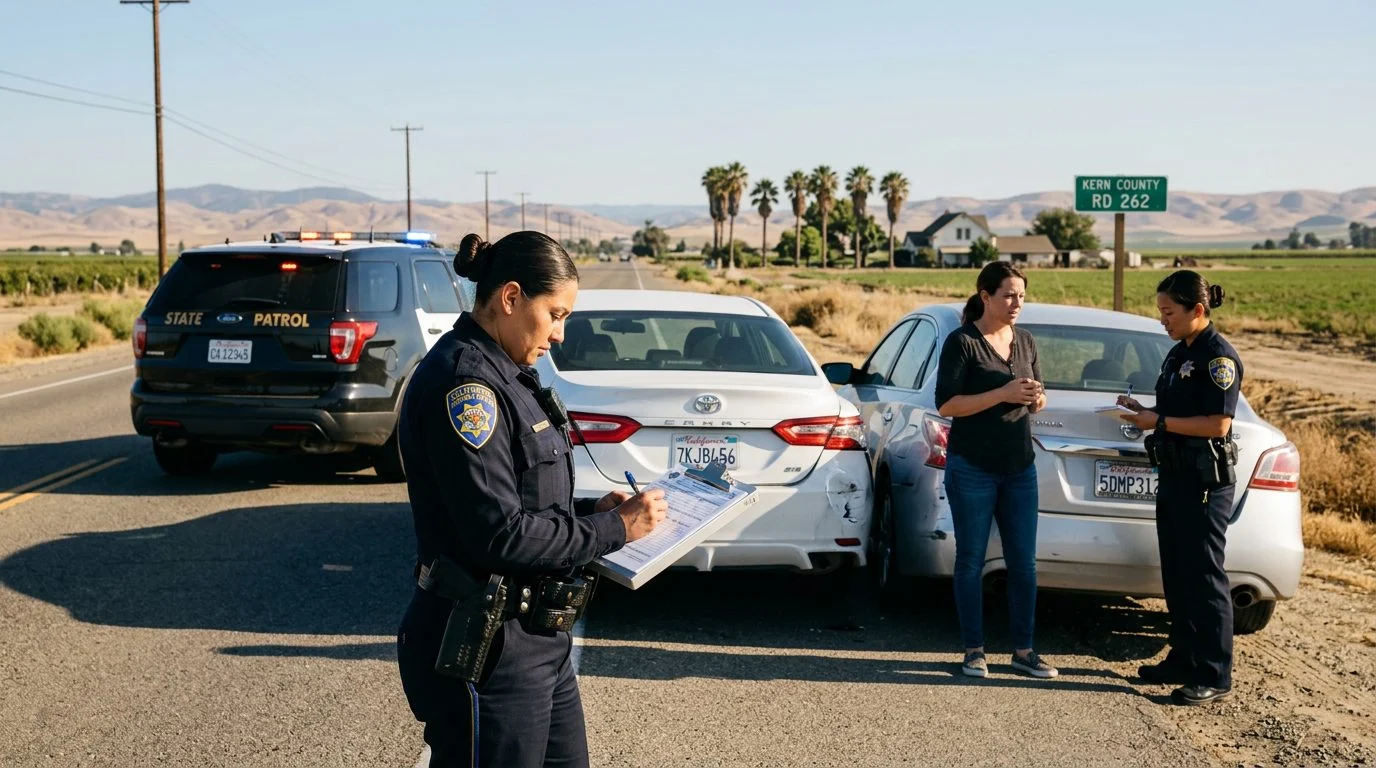
Bakersfield, California | Accident Reports
Police Report or Accident Report: Which One Do You Need?
Two records can describe the same crash. Here is what each one is, who creates it, and how to make sure yours is complete.
By Donald Norman Colvin · Published November 15, 2026
You have a crash report in your hands, and the words don’t quite make sense. Maybe a family member handed it to you, or an insurance letter mentions a different document. So, what is the difference between a police report and an accident report? A police report is the official record of a crash, written by the law enforcement agency that responded. The term “accident report” can refer to more than one kind of document.
The two names get swapped in everyday talk, which is why confusion is common after a crash. The first step is working out which document you have. Look at who issued it and what form it is. That tells you what it is for.
The short answer: two documents people often mix up
A police report is written by the law enforcement agency that responded to the crash. That may be the California Highway Patrol, a city police department, or a county sheriff’s office. “Accident report” is the broader, looser term. People use it to mean the police report, the driver’s filing with the state, or an insurer’s claim file.
Those three documents have different authors and different purposes. Mixing them up leads to wrong assumptions about what a document proves. So start by checking the header. Look for the agency’s name, a report number, and the form title. Those details show who created the paper and why.
If you’re not sure what you have, you’re not alone. The terms get swapped all the time in conversation, and that’s where the confusion starts.
If a crash report in your hands leaves you with more questions than answers, our team can help you talk through what it means for your next steps. Talk it through with our team — the first consultation is free, confidential, and carries no obligation.
Who creates each report, and when
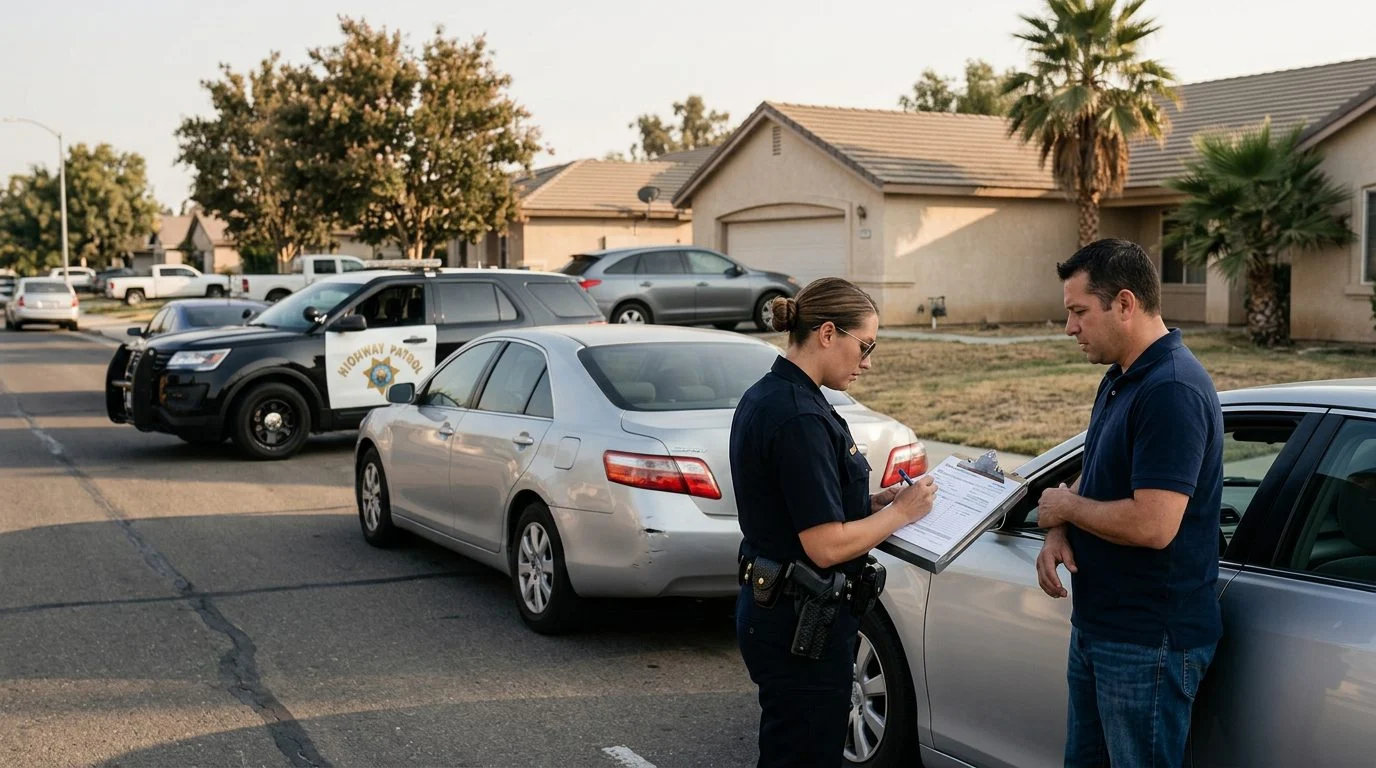
The responding officer writes the police report, usually at the scene or soon after. The officer records what he or she saw and what drivers, passengers, and witnesses said. Whether a report is written depends on the facts of the crash, including whether an officer responded.
California also places a reporting duty on drivers. Under Cal. Veh. Code § 16000, a driver in a crash that caused damage to the property of any one person in excess of $1,000, bodily injury, or death must report it within 10 days. Under Cal. Veh. Code § 16000, the driver makes that report on a form approved by the department, to the office of the department at Sacramento. The driver can file it personally or through an insurance agent, broker, or legal representative.
Insurance companies open their own files too. An insurer’s claim file is separate from the police report. Law enforcement does not create it.
What each document usually contains
A police report usually lists the date, time, and location of the crash. It names the drivers, passengers, and vehicles, and it records witnesses. Many include a scene diagram or description, road and weather conditions, and the officer’s narrative. The officer may also note citations and visible injuries.
The narrative may include the officer’s opinion about how the crash happened or who may have been at fault. Treat that opinion as one piece of evidence. It is not a final ruling on who is responsible.
The SR-1 is different. It centers on the driver’s own account of the crash, the vehicles, and the damage.
An insurance claim file holds the insurer’s own work. It can include adjuster notes, recorded statements, and repair estimates. Its purpose is the insurer’s internal process, so it reflects that job.
Why the difference matters after a crash
Each document was written for a different purpose. Each can be incomplete, or contain errors in names, times, vehicle details, or the order of events. Small errors still deserve attention, since the report is often one of the first documents anyone reads. Statements taken at the scene are written quickly. They may not capture symptoms that appear days later.
An officer’s fault opinion does not decide who pays.
Words matter too: a statement of fault is not protected the way an expression of sympathy is under California Evidence Code § 1160.
Timing is its own issue. Under Code Civ. Proc. § 335.1, an action for assault, battery, or injury to, or for the death of, an individual caused by the wrongful act or neglect of another must be brought within two years. Don’t assume one date covers everything.
Getting copies and reviewing what you have
Ask the agency that responded for a copy of the police report. Ask which agency investigated, since a California Highway Patrol report and a city police report may be requested differently.
Read the report line by line. Compare it with photos, medical records, repair estimates, and your own notes written while details are fresh. Write down any error, such as a wrong street name, a missing witness, or a vehicle description that doesn’t match. Keep the original unchanged.
After a fatal crash, the investigation can take longer. Family members may need copies for their own records. Keep the report, any SR-1, insurance letters, and bills together, so the full record stays in one place.
Talking through your report with Colvin Accident Lawyers
If you’re holding a report you can’t make sense of, you don’t have to work through it alone. You may still be recovering from injuries. A family member may be in the hospital, or may have died in the crash. Dense paperwork is hard to read in those moments.
Colvin Accident Lawyers, Bakersfield, California — responsible for this site — can talk through the report, the crash, and the decisions in front of you. You can share the report during that conversation, and we’ll go through it with you. Reach out through the contact page. The first consultation is free, confidential, and carries no obligation to continue.
Not sure what your next step is?
Talk it through with our team — the first consultation is free, confidential, and carries no obligation.
Frequently Asked Questions
What is a police report?
A police report is a record written by the officer who responds to a crash, describing the scene, the parties, witness statements, and the officer’s observations. It can also include a diagram and notes about possible traffic violations.
What is an accident report, and who files it?
It is generally required when someone is injured or killed, or when property damage is above the state’s reporting threshold.
Do I need both a police report and an accident report after a crash?
Not always, but it is a good idea to know whether each one exists, because they serve different purposes. The driver must identify on the report, by name and current residence address if available, any person involved in the accident who is complaining of bodily injury (Cal. Veh. Code § 16000).
Can I get a copy of a police report?
Colvin Accident Lawyers can explain how to review a report and what it does and does not show in your situation.
Why Talk With Colvin Accident Lawyers About Your Report
A free first consultation
The initial consultation is free, confidential and comes with no obligation to continue.
Help reading the paperwork
We can explain what a police report or accident report includes and how it may relate to your claim.
Serving Kern County and nearby communities
We represent accident victims and families in Kern County and surrounding areas, including Fresno, Visalia, Lancaster, Palmdale, Delano and Tehachapi.
Focused on injury cases
Our practice focuses on car, truck, motorcycle, bicycle, pedestrian, bus, dog bite, premises liability, catastrophic injury and wrongful death cases.
Keep a copy of every report
Ask for copies of any police or accident reports connected to your crash, and keep them with your medical records, photos and repair estimates. Reports can contain errors or omissions, so read them carefully and tell us about anything that looks incomplete or inaccurate.
Cases We Handle
Car and Truck Accidents
Collisions involving passenger vehicles, commercial trucks and buses, including the reports that document them.
Motorcycle and Bicycle Accidents
Crashes involving riders and cyclists, where the crash report often plays a central role in the investigation.
Pedestrian and Dog Bite Injuries
Injuries to people struck while walking and to people hurt by dogs, with the records that document what happened.
Premises, Catastrophic and Wrongful Death Cases
Injuries on someone else's property, serious long-term injuries, and claims brought by families after a fatal accident.