Bakersfield, CA · Accident Injury Claims
What Proof to Sue for Emotional Distress in California?
Anxiety, nightmares and loss of sleep after a crash can be real injuries, but they are often hard to explain on paper. Here is how to organize the evidence that helps show them.
By Donald Norman Colvin · Published November 17, 2026
Someone you love was hurt or killed in a crash, and now the fear, grief, or sleepless nights are part of everyday life. If you’re asking what proof you need to sue for emotional damage in California, the short answer is this: you must prove negligence, harm, and that the negligence substantially caused that harm. For emotional harm, the proof usually includes professional records, a clear timeline, and people who saw the change.
Where Emotional Distress Fits in a California Injury Claim
Emotional distress can be the main harm in a claim, or it can sit alongside physical injuries from the same event. Either way, the claim starts with the basic negligence test. The Judicial Council of California Civil Jury Instructions on negligence list three essential elements: that the defendant was negligent, that the plaintiff was harmed, and that the defendant’s negligence was a substantial factor in causing the plaintiff’s harm.
California’s general rule comes from Civil Code § 1714. Everyone is responsible, not only for the result of willful acts, but also for injuries caused by a want of ordinary care, unless the injured person brought the harm on themselves willfully or by want of ordinary care. Cal. Civ. Code § 1714 reads: “(a) Everyone is responsible, not only for the result of his or her willful acts, but also for an injury occasioned to another by his or her want of ordinary care or skill in the management of his or her property or person, except so far as the latter has, willfully or by want of ordinary care, brought the injury upon himself or herself.” Damages for a breach of a duty outside a contract cover all the detriment proximately caused, under Civil Code § 3333.
Some claims pair emotional harm with a physical injury from the same crash. Others, such as a bystander who watched a loved one get hurt, involve emotional harm with little or no physical injury to the claimant. The second kind has narrower rules, covered below.
If the person who died was your family member, the question also becomes who may bring the claim. Code of Civil Procedure § 377.60 lists surviving spouses, domestic partners, children, and certain dependent relatives, among others.
Many people search this question during a hard stretch, often for a parent, spouse, or child. That’s understandable.
If a crash has left you or someone you love struggling with lasting fear, grief, or sleepless nights, our team can talk through what happened with you. Talk it through with our team — the first consultation is free, confidential, and carries no obligation.
What Counts as Severe Emotional Distress?
Severe emotional distress means harm that goes well beyond ordinary sadness, worry, or anger after an accident. Grief is painful, and most people feel some of it after losing someone.
Courts look at the facts of each case to judge how serious the harm was. The most useful proof shows how the person’s life changed. Missed work, broken sleep, avoiding driving, or pulling away from friends can all show that change. Compare life before the event with life after it. That contrast tells a clearer story than a general statement that someone is upset.
A professional diagnosis also gives the claim a clear medical starting point. The next sections explain what those records should contain.
Bystander and Direct-Victim Claims: What Changes
Bystander and direct-victim claims are narrower paths, and the claimant’s location during the event matters. A person who watches the crash happen stands in a different position than someone who gets a phone call later. Someone who learns of an injury or death secondhand often faces a harder road than someone who was present.
Some claims also involve the claimant’s own physical danger, such as being in the path of a vehicle. Those claims still require proof of negligence and harm, and the danger becomes part of the account of what happened.
Property-based claims follow their own elements. The elements of premises liability are stated in the CACI jury instruction on premises liability: “1. That [name of defendant] [owned/leased/occupied/controlled] the property; 2. That [name of defendant] was negligent in the use or maintenance of the property; 3. That [name of plaintiff] was harmed; and 4. That [name of defendant]’s negligence was a substantial factor in causing [name of plaintiff]’s harm.”
The practical question is what the claimant saw, heard, or experienced, and when. Write those details down early, while they’re still clear. Notes made close to the event are easier to check against the timeline later.
The Medical Proof Courts Look For
The most persuasive proof of emotional harm is usually a record from a qualified medical or mental health professional. Those records should link the symptoms to the event, not just list them.
Useful records include intake notes, diagnoses, treatment plans, medication records, and therapist observations. Each one shows what the professional saw and when. A note that records nightmares about the crash is more useful than a note that only says “anxiety.”
Ongoing symptoms matter as much as a single visit. Persistent sleep problems, intrusive memories, panic, or withdrawal should appear in records over time. A long gap in treatment gives the other side a reason to question the claim.
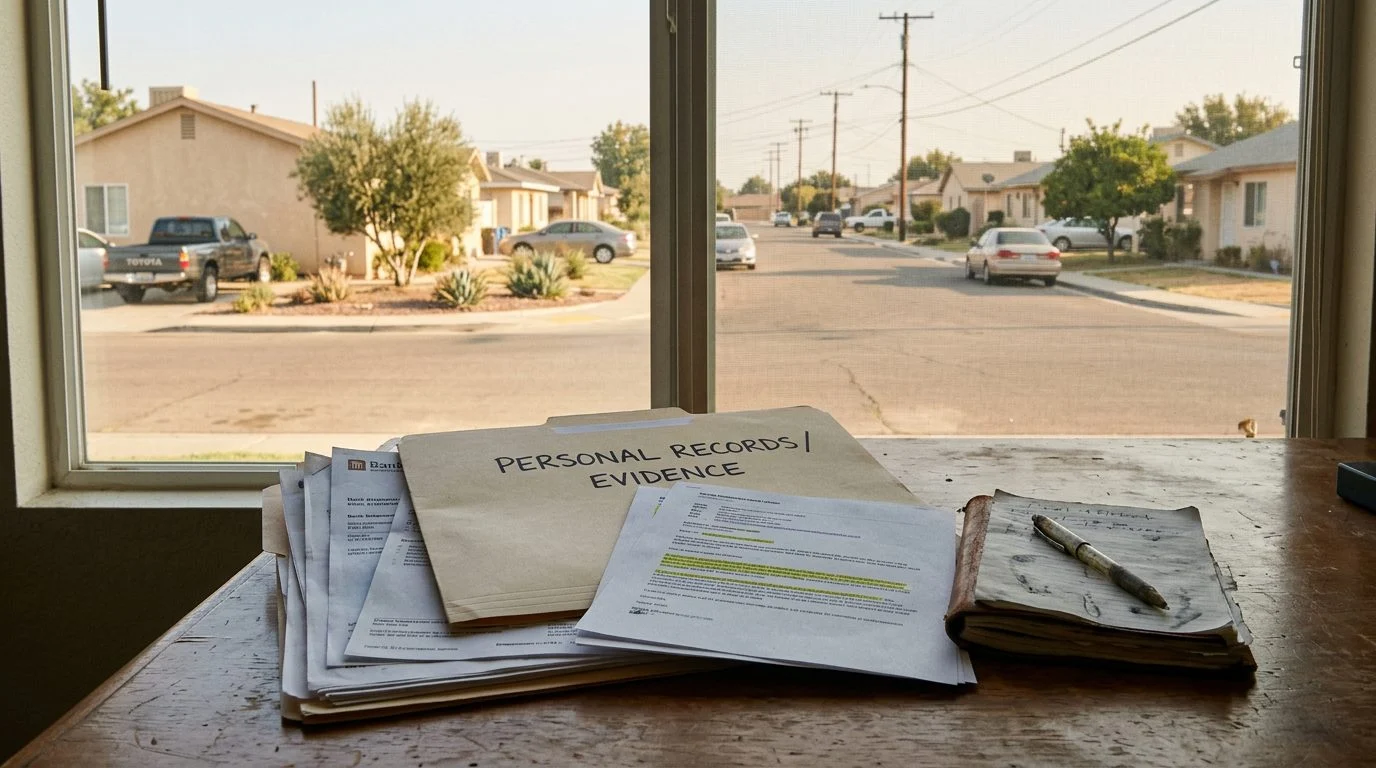
A personal journal can help build the timeline and show day-to-day feelings. On its own, though, a journal written by the claimant is weaker than professional records. Keep one anyway, and keep it accurate.
Witness, Timeline, and Relationship Evidence
Statements from people who saw the change, together with a clear timeline, help show what happened and when. The two kinds of proof support each other.
Family, friends, coworkers, or clergy can describe changes in sleep, work, mood, and relationships. Their statements should be specific: what they noticed, when, and how it compared with before. “She stopped sleeping and quit her weekend shifts” helps more than “she’s not herself.”
A timeline ties everything together. Note the time of the event, where the claimant was, when they learned of the injury or death, and when symptoms began. For bystander claims, that timeline often matters most.
Closeness to the injured person can be shown through family records, a shared household, or a role in that person’s daily life. Police accident reports can confirm the date, place, and circumstances of the event.
How Much Is Emotional Distress Worth in a Lawsuit?
No lawyer can predict the dollar value of an emotional distress claim before the facts are known. Value depends on many details, and the law sets the framework for weighing them.
California follows pure comparative negligence (Li v. Yellow Cab Co. (1975) 13 Cal.3d 804), so an injured person’s own share of fault never bars recovery; instead, their damages are reduced in proportion to their percentage of fault, even if they were more at fault than the defendant. The comparative fault rule is stated in the CACI jury instruction on comparative fault: “If [name of defendant] proves the above, [name of plaintiff]’s damages are reduced by your determination of the percentage of [name of plaintiff]’s responsibility.”
Value also reflects how long symptoms last, what treatment was needed, how close the claimant was to the event, and any other injuries involved. Harm certain to result in the future can also be part of the claim, under Civil Code § 3283.
Results depend on the facts of each case and will differ when the facts differ.
Not sure what your next step is?
Talk it through with our team — the first consultation is free, confidential, and carries no obligation.
Common Gaps That Weaken an Emotional Distress Claim
Three gaps tend to weaken these claims: delayed care, conflicting accounts, and missed deadlines.
Treatment that starts soon after the event is easier to connect to it. Waiting months to see anyone makes it harder to show what caused the symptoms. Tell the provider about the accident and the changes at the first visit.
Records and statements that don’t match can be used to challenge a claim. Tell the same facts to doctors, family, and insurers, and stick to what you saw, heard, and felt.
Deadlines apply too. California generally gives two years to file a personal injury lawsuit, and Code of Civil Procedure § 335.1 sets that period for injury and wrongful death claims. The California Courts Self Help Guide notes that exceptions and tolling can change the timing. Because of that, understanding the date for your own case early is worth the effort.
Talk Through Your Situation With Colvin Accident Lawyers
If a crash left someone you love with lasting fear, grief, or withdrawal, you may be asking whether those losses can support a claim. Colvin Accident Lawyers is a personal injury firm based in Bakersfield, California. The firm handles car, truck, motorcycle, bicycle, pedestrian, bus, dog bite, premises liability, catastrophic injury, and wrongful death cases.
The initial consultation is free, confidential, and carries no obligation to continue.
Frequently Asked Questions
What proof is most important for emotional distress?
Records from a qualified medical or mental health professional that link symptoms to the event are usually the most important proof.
Can a family member sue after a death?
Under Code of Civil Procedure § 377.60, certain family members and dependent relatives may bring a wrongful death claim.
How long do I have to file?
California generally allows two years to file a personal injury lawsuit, though exceptions and tolling can change that (Code Civ. Proc. § 335.1).
If a crash has left you or someone you love struggling with lasting fear, grief, or sleepless nights, contact our team and talk through what happened.
Evidence that often helps
Mental health records
Notes and treatment records from a therapist, psychologist, psychiatrist or physician that describe your symptoms and connect them to the accident.
A personal journal
A dated log of sleep problems, flashbacks, fears about driving or walking, and how the event has affected work and family life.
Statements from people close to you
Accounts from family, friends or coworkers who saw changes in your mood, behavior or daily routine after the accident.
Accident and incident records
Police reports, photos and other documents that show how the event happened and support the cause of your distress.
Get help early
Symptoms can build over weeks or months. Keep your appointments, follow the treatment your provider recommends, and save records of every visit so the timeline is clear.
How Colvin Accident Lawyers can help
Free, confidential consultation
The first consultation is free, confidential and carries no obligation to continue.
Organizing your records
We can help you gather medical, employment and accident documents and present them in a clear timeline.
Serving families across the region
We represent accident victims and families in Kern County, Fresno, Visalia, Lancaster, Palmdale, Delano and Tehachapi.
Cases involving serious harm
We handle car, truck, motorcycle, bicycle, pedestrian, bus, dog bite, premises liability, catastrophic injury and wrongful death claims.