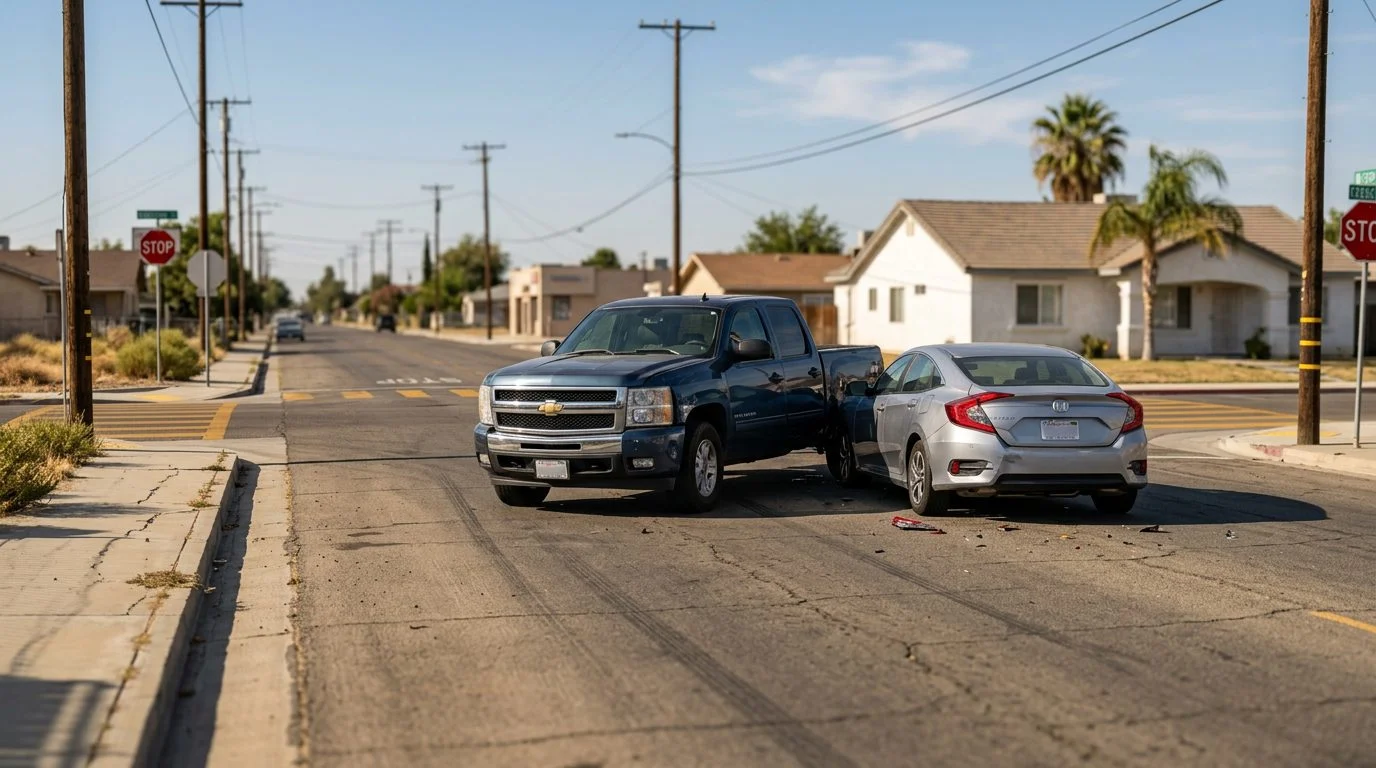
Crash Claims · Bakersfield, CA
The Biggest Mistake People Make With a Crash Claim
Small decisions in the first days after a collision can shape how your claim is handled later. Here is what to watch for.
By Donald Norman Colvin · Published November 22, 2026
Maybe you were hurt in a crash. Maybe you’re helping a family member through a claim you never planned to handle. Either way, the biggest mistake people make is giving the insurer a statement or accepting money before they know the full extent of their injuries and losses. Most other common errors, like waiting to see a doctor or missing a deadline, feed into that one.
The short answer: settling before the full picture is known
The biggest mistake is making statements or accepting payment before your injuries and losses are fully known. Insurers judge a claim by what is in the file at that point. If the file is incomplete, the insurer’s view of the claim is incomplete too.
Early decisions are hard to undo. Once you sign a release or cash a check, the claim often closes for good. A quick “I’m fine” or a guess about speed can also be quoted later and used against the claim.
Most claims move through four general stages: reporting, investigation, evaluation, and resolution. Timing matters most at the start. The first statements, the first medical records, and the first offer shape how the rest of the file reads.
The other common errors feed into this one. A gap in care makes an injury harder to link to the crash. Weak records make losses harder to prove. Missed deadlines take options away. Each of these problems is easier to fix early than late.
If you're weighing an insurance claim after a crash, you don't have to face the insurer alone. We can talk through your situation and what it may mean for you. Talk it through with our team — the first consultation is free, confidential, and carries no obligation.
Waiting to see a doctor after a crash
Getting checked soon after a crash is a health step first. It also protects your claim. Some injuries don’t show their full effect right away, so a prompt checkup matters.
Pain can build over days. People often wait to see whether it fades on its own. When they wait, an insurer may argue that the injury came from something else, or that it isn’t serious. A gap in treatment gives the insurer a reason to question the link between the crash and the harm.
Follow the care plan your provider recommends. Keep every appointment and fill every prescription. Tell your doctor about all your symptoms, even minor ones. Notes in your medical chart become part of the record the insurer will review.
If you have Medicare, the timing of bills matters too. Providers may bill Medicare when an insurer hasn’t paid. That affects how a settlement can be handled later, as covered in the settlement section below.
Giving a recorded statement or signing forms too early
Giving a recorded statement or signing forms too early can lock in details before you know how serious your injuries are. Adjusters often ask for a recorded statement soon after a crash. The adjuster works for the insurer, not for you.
Casual words get used later. “I’m okay,” “I didn’t see him,” or “I was going about 40” can each be quoted back. Guessing at speed, time, or pain can also conflict with the medical records.
Being partly at fault doesn’t end a California claim. Under pure comparative negligence, your damages are reduced by your share of responsibility. They are not barred. So a fault question is not a reason to say more than you need to.
Signing forms is another trap. A release or authorization can cover more than you meant it to. Read every document before you sign. Ask what it releases, and take your time doing it.
Accepting an early settlement offer before injuries are known
Accepting an early offer is a common mistake because it is often made before treatment and future costs are clear. Once you accept, the claim usually ends. Later costs may not be recoverable.
The first number is rarely the whole picture. Future care, time away from work, and ongoing symptoms may not be counted yet. An offer can look generous until the bills start arriving.
If an offer seems low, ask for the basis in writing. Ask which bills, records, or wage figures it uses. Don’t sign until your medical picture is stable enough to judge what it’s worth.
Respond in a calm, factual way. Use records and bills, not emotion. Keep a log of each call with the date, the person’s name, and what was said.
Medicare matters here. When an insurer won’t pay promptly, Medicare may make a conditional payment. CMS guidance on attorney services says that payment must be repaid when a settlement, judgment, or other payment is made. The same guidance says federal law takes precedence over state laws and private contracts. A claim against liability insurance generally must also be reported to Medicare.
Weak documentation and incomplete claim forms
Weak records are a mistake because an insurer can only credit what is written down and consistent. Good records let you show the facts without relying on memory alone.
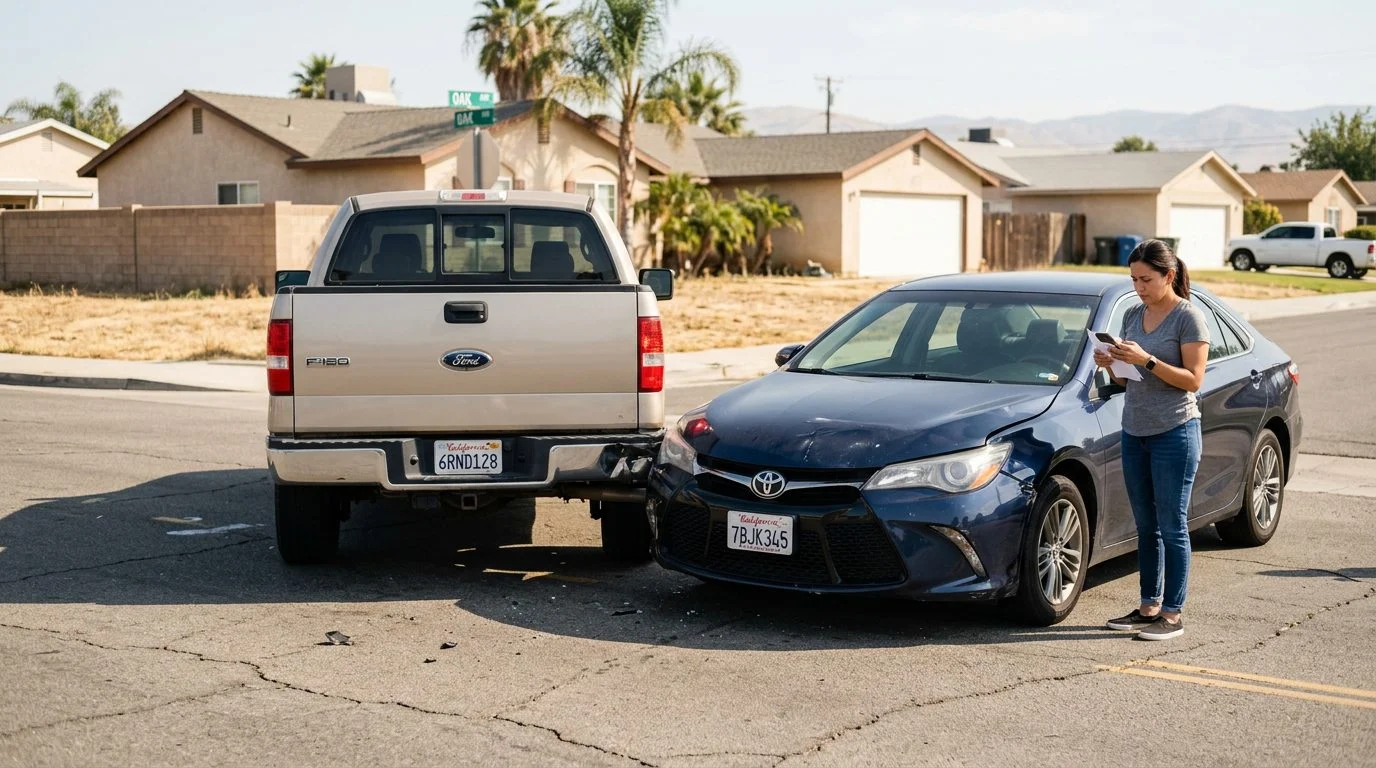
Keep these items: photos of the scene, vehicles, and injuries; police or incident report numbers; names and contact details of witnesses; medical records and bills; and a daily journal of pain, sleep, and activities you can’t do. The California Department of Insurance guide on what to do after an accident covers documenting injuries and related expenses for a claim.
Two common submission errors stand out. The first is incomplete forms. The second is an account of the accident that doesn’t match the records. Inconsistent details across forms, statements, and medical notes are often the first thing an insurer questions.
Read each form before you sign it. Check dates, places, and the way the crash happened. Fix mistakes in writing right away.
Keep property damage and lost wages in separate files from injury records. Each one needs its own bills, repair estimates, or pay stubs.
Missing filing deadlines and the statute of limitations
In California, the general deadline for a personal injury lawsuit is two years from the injury, but a claim for injury to a person against a public entity must be presented not later than six months after the accrual of the cause of action. Cal. Code Civ. Proc. § 335.1 sets that two-year rule for injury or death caused by another’s wrongful act or neglect.
Under Cal. Code Civ. Proc. § 377.60, certain family members may bring a wrongful death claim. These include a surviving spouse, a domestic partner, or children, or the decedent’s personal representative on their behalf.
Claims against a public agency can move faster. A city bus operator or other public entity may require a claim much sooner. Cal. Gov. Code § 911.2 sets six months for claims for death or for injury to person or to personal property or growing crops against a California public entity, and one year for other claims.
Cal. Ins. Code § 790.03 defines unfair methods of competition and unfair and deceptive acts or practices in the business of insurance; its claims-settlement practices include misrepresenting pertinent facts or insurance policy provisions to claimants, when done knowingly and with such frequency as to indicate a general business practice. Still, don’t rely on an adjuster’s timeline. Write your own dates down. The exact deadline depends on the facts, so check it early.
Not sure what your next step is?
Talk it through with our team — the first consultation is free, confidential, and carries no obligation.
Assuming the policy limit is the full value of the claim
A policy limit is not the same as the full value of your claim. Many people hear a number from an adjuster and assume it is the ceiling. It may not be.
For breaches of obligations not arising from contract, California measures damages as the amount that compensates for all the detriment proximately caused, except where the Civil Code expressly provides otherwise. Cal. Civ. Code § 3333 sets that measure for breaches of obligations that don’t come from a contract, except where the Code otherwise expressly provides. Economic losses, such as medical bills and lost earnings, are defined separately from non-economic losses like pain and emotional distress.
Cal. Civ. Code § 1431.2 makes non-economic damages several only in a personal injury, property damage, or wrongful death action based upon principles of comparative fault. Each defendant is liable only for the non-economic damages allocated to it in direct proportion to its percentage of fault, not for the whole share.
Several policies may come into play. Depending on the facts, the at-fault driver’s policy, an employer’s policy, or a household policy may be relevant. A single policy’s limit can be much lower than the total harm from a serious crash. Don’t treat the first number as the answer.
Trying to handle the claim alone when the stakes are high
Handling a claim alone is risky when injuries are serious, a death is involved, or the insurer disputes fault. These claims can involve legal questions that are hard to sort out without help.
Many readers are doing this for someone else. A parent, spouse, or adult child may be grieving or still recovering. Sorting out forms, medical bills, and deadlines at the same time is a lot to carry.
Colvin Accident Lawyers is based in Bakersfield, California. We handle car, truck, motorcycle, bicycle, pedestrian, bus, dog bite, premises liability, catastrophic injury, and wrongful death cases for accident victims and families, and our firm is based in Bakersfield, California.
Common questions
Does talking to an adjuster hurt my claim?
It can, if you give details before you know your injuries. Keep early calls short and factual.
How long do I have to file a personal injury case in California?
Generally two years from the injury, under the rule in Code of Civil Procedure section 335.1. Check your own dates early.
Does a policy limit decide what my claim is worth?
No. A limit caps what that policy pays, and the value of a claim depends on the facts of your case.
If you’re weighing a claim after a crash, reach out to Colvin Accident Lawyers to talk through your situation. La consulta inicial es gratuita, confidencial y sin compromiso de continuar.
Colvin Accident Lawyers, Bakersfield, California — responsible for this site.
Watch out for early recorded statements
An adjuster may ask you to give a recorded statement soon after a crash. Before your injuries are clear, a short, factual answer is safer than a detailed one. Speaking with a lawyer first can help you decide what to say and when.
Protect your claim from the start
Get medical care
See a doctor promptly, even if you feel you can walk it off. Follow the treatment plan you are given.
Keep your records
Save medical bills, prescriptions, photos, repair estimates, and any letters from insurers or other parties.
Think before you sign
Do not sign releases or settlement papers until you understand what they cover and what they give up.
Limit early statements
Keep early conversations brief and factual. Avoid guessing about speed, fault, or the extent of your injuries.
Questions to ask before you act
What do my injuries look like over time?
Some injuries take days or weeks to show up. Early medical records help document the full picture.
Who else may be involved?
Crashes involving trucks, buses, property owners, or vehicle defects can involve more than one party and more than one insurer.
What have I already said or signed?
Tell a lawyer about every statement, form, and conversation so the next steps are based on accurate facts.