Wrongful Death | Kern County & Central California
How to Get a Police Report After a Fatal Crash in California
Learn which agency investigated, what to include in your request, and how the Bakersfield firm Colvin Accident Lawyers can help families through the process.
By Donald Norman Colvin · Published November 4, 2026
If you’re asking how to get a police report after a fatal crash California, start with the agency that responded to the scene. For many crashes on state highways, that agency is the California Highway Patrol (CHP). City police and county sheriff’s departments handle others. This guide covers who can ask for the report, how to request it, what it contains, and what to do if it’s missing or wrong. Grief makes paperwork harder, so take it one step at a time.
Why the Police or CHP Collision Report Matters After a Fatal Crash
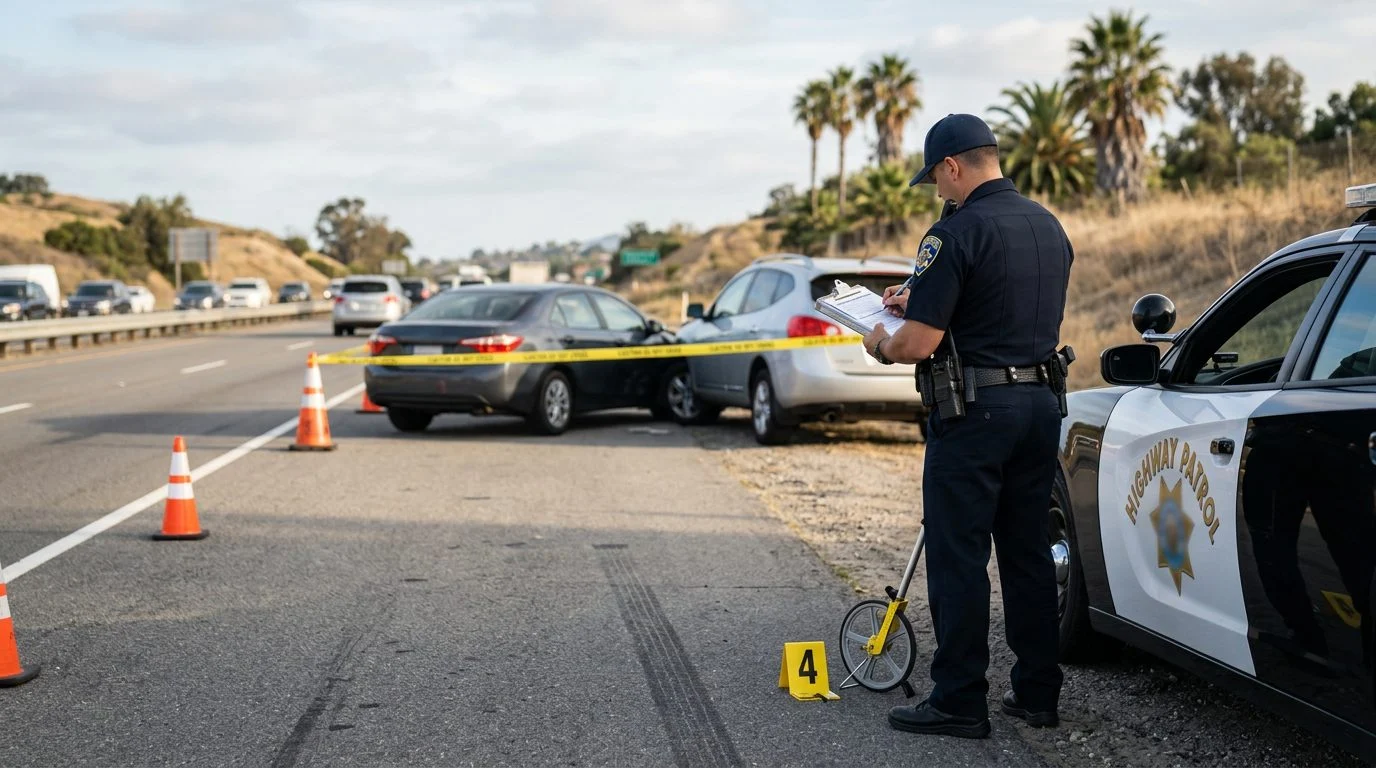
The collision report is the official record an investigating agency prepares after a crash. After a fatal crash, the agency that responded to the scene usually handles the investigation and the report.
Families often need that record for several reasons. Insurance companies often ask for it when they review a claim. Estate and funeral paperwork may also call for it. Many families simply want a clear, written account of what happened.
The report is one piece of evidence. It records what the investigation found, including the parties, the vehicles, and the investigator’s observations. It does not, by itself, decide who was at fault. Witness accounts, photos, and vehicle damage are types of evidence that can help document how a crash happened.
If you're holding a crash report and still have questions about what happened, reach out to us; you don't have to sort through them alone. Talk it through with our team — the first consultation is free, confidential, and carries no obligation.
Who Can Request a California Collision Report?
California’s reporting duty starts with drivers. The driver can report personally or through an insurance agent, broker, or legal representative. That duty is separate from who may obtain the police or CHP report.
For families, the key point is proof. The agency may ask for identification and proof of the requester’s connection to the crash. If you’re a family member of a person who died, you may need to show proof of your relationship or legal authority to act. Each agency decides what documents it accepts. Ask it what it needs before you send anything.
How Quickly a Crash Must Be Reported in California?
Under Vehicle Code § 16000, the driver must file a written report within 10 days after the crash. The report goes on a form approved by the DMV and goes to the DMV office in Sacramento.
No report is required if the vehicle was owned or leased by, or under the direction of, the United States, this state, another state, or a local agency. No report is required if the vehicle was owned or leased by, or under the direction of, the United States, this state, another state, or a local agency. The driver’s report is a separate filing from the police or CHP investigation. The DMV explains its SR-1 accident report on its DMV accident reporting page, and that filing is separate from reports made to police, CHP, or insurers.
The 10 days belong to the driver’s duty. They don’t set how long the investigating agency takes. The statute also says that if none of the parties reports the accident to the DMV within one year, the DMV is not required to file a report on it. Cal. Veh. Code § 16000 reads: “(c) If none of the parties involved in an accident has reported the accident to the department under this section within one year following the date of the accident, the department is not required to file a report on the accident and the driver’s license suspension requirements of Section 16004 or 16070 do not apply.” If you’re unsure whether a report was filed, ask the agency that responded to the scene.
How to Request a CHP or Local Police Collision Report
Knowing how to get a police report after a fatal crash California starts with the right agency. Identify the agency that responded, then ask that agency for the report.
The CHP handles many crashes on state highways. Local police and sheriff’s departments handle others. The responding agency’s name often appears on crash paperwork or in information given at the scene.
For CHP reports, the CHP crash report requests page explains who may request a report and how to ask, online, in person, or by mail. The CHP 190 collision report form covers the steps for a party of interest, including identification, payment, and mailing.
Have these details ready before you ask: the date and time, the location, the names of those involved, and any case or report number from the scene. Local agencies may use their own forms, so ask them for their process.
What a California Crash Report Contains and How Long It Takes
A typical report lists the people and vehicles involved, a diagram of the crash, and the officer’s written account. Fatal crash reports often take longer than routine reports.
Reports commonly include party and vehicle details, witness names when they were recorded, a collision diagram, the officer’s narrative, and codes or observations the officer noted at the scene. Those observations are the officer’s records, not a final ruling on fault.
Fatal crash investigations can stay open while the agency gathers evidence. Workload and records processing can slow a request too. Ask the agency for the status of your request when you submit it, and ask about the cost of a copy at the same time. Keep a copy of your request and any confirmation number. If the narrative or diagram doesn’t match what you know, note the exact page so you can raise it later.
If No Report Was Made or the Report Contains Errors
If no report exists, or the report has a factual mistake, raise it with the responding agency. A police or CHP report may not exist when no one reported the crash to police.
Point out errors in names, vehicle details, times, or witness information. Send the correct facts with supporting documents, such as registration papers or photos. Write down what was wrong, when you reported it, and what you sent.
A driver’s report to the DMV is a different filing, so it won’t replace a missing police report. Disagreement with the officer’s narrative or conclusions is also different from a factual error. The narrative records the agency’s observations. A disagreement alone does not change the record, so the other evidence in your file matters too.
Not sure what your next step is?
Talk it through with our team — the first consultation is free, confidential, and carries no obligation.
Organizing Crash Records After a Death and Talking With Colvin Accident Lawyers
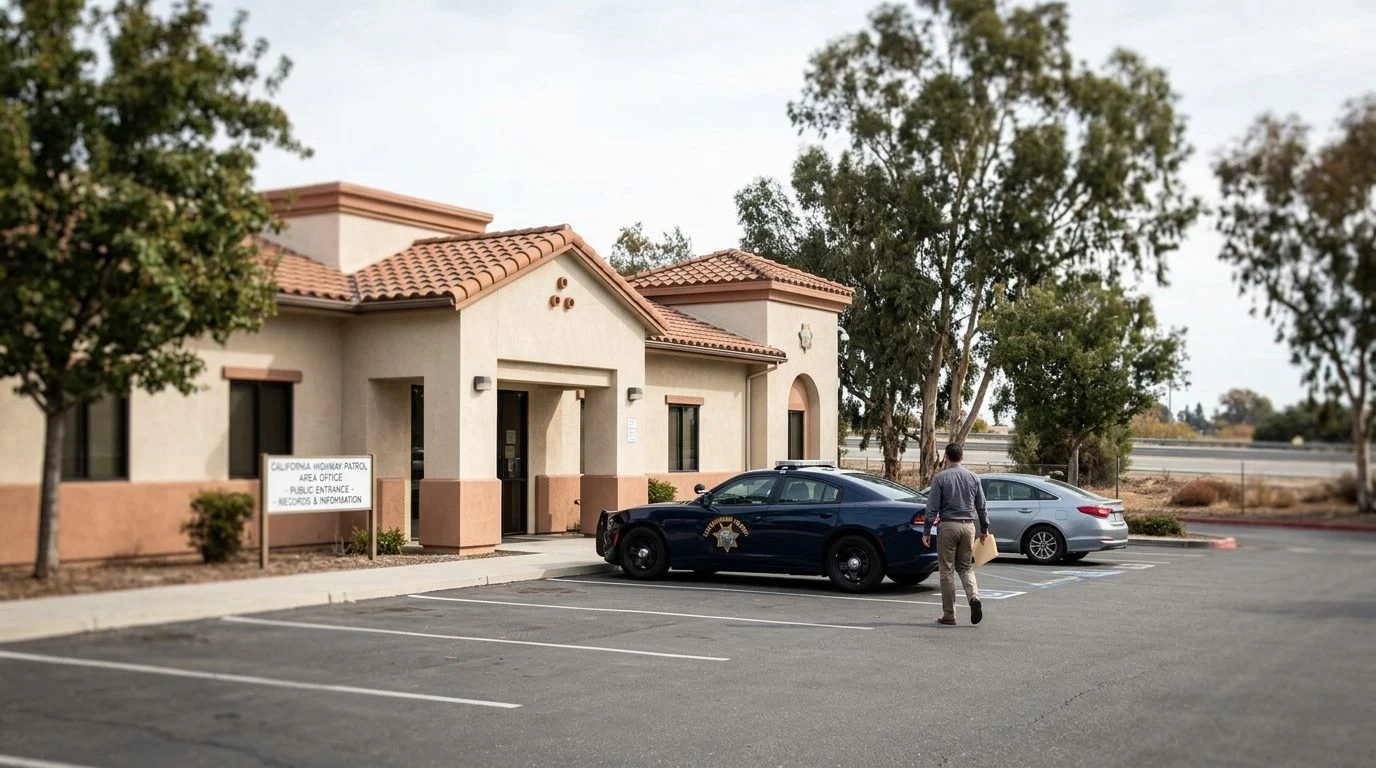
Keeping the crash records in one place makes later conversations easier. Gather the collision report, photos or video from the scene, medical and funeral records, insurance letters, and towing or repair records.
Save written messages too. Under Evidence Code § 1160, expressions of sympathy made to an accident victim or the victim’s family are inadmissible as evidence of an admission of liability. A statement of fault is not protected by that rule, so note who said what and when.
A wrongful death suit generally must be filed within two years, under Code of Civil Procedure § 335.1. Don’t let the paperwork delay a conversation about that deadline.
Common questions
How to get a police report after a fatal crash California?
Contact the agency that responded, usually CHP or local police. Submit a records request with the crash date, time, location, and names of those involved.
Does the police report decide who was at fault?
No. The report records the investigation.
If you’re holding a crash report and still have questions about how the crash happened, you can contact Colvin Accident Lawyers. Families in Kern County, Fresno, Visalia, Lancaster, Palmdale, Delano, and Tehachapi can ask for a free, confidential first consultation, with no obligation to continue.
Colvin Accident Lawyers, Bakersfield, California — Donald Norman Colvin, responsible for this site.
Steps to Request the Report
1. Identify the investigating agency
The agency that responded is often the California Highway Patrol, a city police department, or a county sheriff's office. The location of the crash usually determines which one handled it.
2. Gather the crash details
Have the date, time, exact location, and the names of those involved ready. Any report or case number you received at the scene will also help the records office locate the file.
3. Submit a records request
Send a written request to the agency's records unit, following its procedures. Many agencies ask for identification and may charge a copy fee.
4. Review the report and follow up
Read the report carefully for errors, witness names, and diagrams. Keep a record of every request, receipt, and reference number, since requests can take time to process.
How Colvin Accident Lawyers Can Help Your Family
Organizing the Records
We help families identify the right agency, prepare the request, and keep track of the paperwork while they focus on what matters most.
Focused on Wrongful Death Cases
Our firm represents families who have lost a loved one in car, truck, motorcycle, bicycle, pedestrian, and bus accidents, along with other fatal incidents.
Explaining the Next Steps
We explain what a crash report does and does not show, and how it fits into the broader investigation of a fatal collision.
Compassionate, Confidential Guidance
We understand how difficult this time is, and we treat every conversation with care and confidentiality.
Keep Every Record
Save copies of every request, receipt, and reference number. Do not give a recorded statement to an insurance company before speaking with an attorney about your family's situation.
Losing a loved one in a crash is overwhelming. Your first consultation with Colvin Accident Lawyers is free, confidential, and comes with no obligation to continue.
Related practice areas
- Wrongful Death Lawyer
- Wrongful Death Teen Driver Claims in California