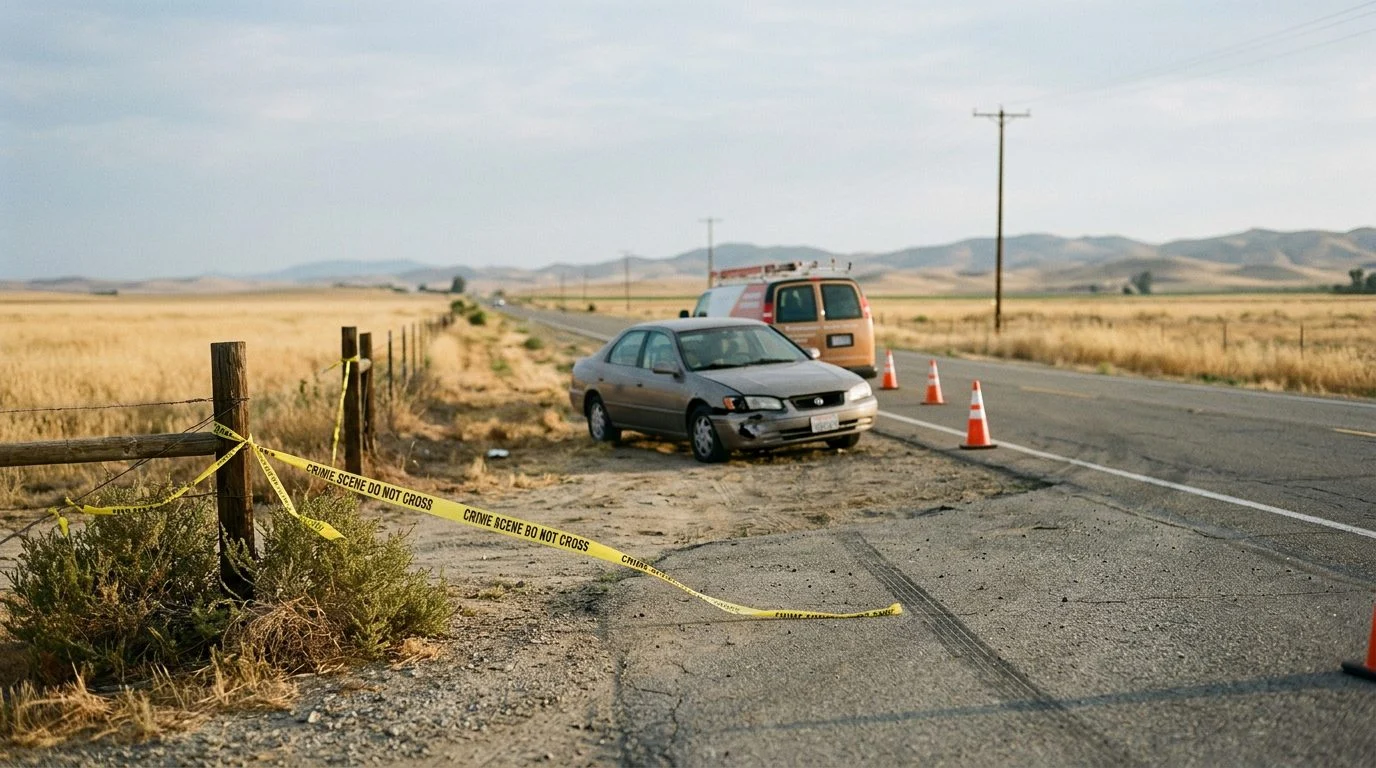
Wrongful Death | Kern County
Losing someone in a fatal crash? Understanding the Kern County coroner report can help you see what happened.
Colvin Accident Lawyers helps families in Kern County, Fresno, Visalia, Lancaster, Palmdale, Delano and Tehachapi understand the records that follow a fatal collision.
By Donald Norman Colvin · Published November 7, 2026
Can a family get the coroner or autopsy report after a fatal crash?
Those records may include the coroner’s findings and toxicology results when those tests were done.
These records matter because they document cause of death and manner of death. Those two questions sit at the center of many fatal crash cases. They help show how the death happened and whether alcohol or drugs were involved.
Who can receive copies, what the file holds, and when it is ready all depend on the facts of the case. They also depend on how far the coroner’s work has progressed. Records can be requested in stages, so you don’t have to wait for every piece before you ask.
Grieving families often feel pressure to act at once. A simpler start is to gather the case number, the date of death, and the name of the agency that responded. With those details, a request is easier to match to the right file.
If you are waiting on a coroner report after a loved one died in a crash, we can talk through which records matter to a claim and what to request first. Talk it through with our team — the first consultation is free, confidential, and carries no obligation.

What does the coroner’s office do after a fatal crash?
The coroner’s office works out who died, how, and why once a death is reported. That includes deaths caused by traffic collisions.
Once a death is reported, the office may take custody of the body and notify next of kin. It may also open an investigation that works alongside the agency that responded, such as the California Highway Patrol or the Kern County Sheriff’s Office.
The coroner’s investigation is separate from the collision report. A CHP or sheriff’s collision report focuses on how the crash unfolded, including vehicles, roads, and driver actions. The coroner’s file focuses on the person who died.
The two can still share overlapping facts, such as the time, the location, and who was involved. That overlap is why a family should keep both documents in view.
What do Kern County coroner records usually contain?
Usually they include a death certificate, an investigative file, and, when they were done, the autopsy report and toxicology results. Each piece answers a different question.
- Death certificate information: the person’s name, the date and place of death, and the cause and manner of death as certified.
- Investigative notes: scene details, medical history as reported, and identification notes.
- Autopsy findings: the written report, including injury descriptions and any natural disease findings.
- Toxicology results: alcohol and drug testing when it was done. Results can show as pending while lab work is finished.
Toxicology matters in crash cases for a clear legal reason. California makes it unlawful to drive with 0.08 percent or more, by weight, of alcohol in the blood (Cal. Veh. Code § 23152). In a prosecution, a chemical test within three hours after driving that shows 0.08 percent or more creates a rebuttable presumption that the driver was at that level while driving. That result is one piece of the picture, not the whole story.
How do news reports of a coroner identification differ from the official file?
A news report is a short public summary. The coroner’s file holds the detailed findings.
Local outlets often report that the Kern County Coroner’s Office identified someone killed in a crash. These items usually give the person’s age and where the collision happened. They are brief by design and do not replace the official file.
Write down the identification date and any case reference details you receive. A news item can give the date and crash location, and those details help you match a request to the right record later.
Reading a news item about a loved one can be painful. Set it aside, and focus on the next practical step. Treat the news summary as a starting point, not the final record of cause of death.
When can the records be requested, and why does timing vary?
Records can be requested once the parts you need are ready, and some parts take longer than others.
Cause-of-death decisions and toxicology results can take time. That is why a family may request records in stages rather than all at once. Some findings may stay pending or change while the investigation continues. The date on each record shows which version you have.
Timing also varies from county to county. Kern County runs its own process, so ask its office what is ready and what is still pending.
Keep every request, confirmation, and record you receive. Those papers can matter later if a claim is filed.
How can coroner and toxicology findings fit into a wrongful death claim?
Coroner findings can help show cause of death, and toxicology results can bear on fault. Each claim turns on its own details.
California law lists who may bring a wrongful death claim. These include the surviving spouse, domestic partner, and children, along with certain dependents. A personal representative may file on their behalf (Cal. Code Civ. Proc. § 377.60).
California’s general deadline is two years for an action for a death caused by another’s wrongful act or neglect (Cal. Code Civ. Proc. § 335.1). If a public agency may be involved, a claim against it for death must be presented not later than six months after the accrual of the cause of action (Cal. Gov. Code § 911.2).
It separately defines non-economic losses, such as loss of companionship (Cal. Civ. Code § 1431.2).
Who can bring a wrongful death claim in California?
Certain close family members can, and a personal representative can file for them (Cal. Code Civ. Proc. § 377.60).
How long do families have to file?
California’s general deadline is two years for a death caused by another’s wrongful act or neglect (Cal. Code Civ. Proc. § 335.1).
Does a coroner report decide fault?
No. A coroner report records cause and manner of death. Fault is a separate question for the claim.
Not sure what your next step is?
Talk it through with our team — the first consultation is free, confidential, and carries no obligation.
Talk with a Colvin Accident Lawyers attorney about your family’s records
If you are waiting on a coroner report or toxicology result, a short conversation can help you decide which record to request first.
After a fatal crash, a family may be left with questions about the investigation and the official records that are available. You may not know whether the autopsy or toxicology results matter to a claim. You may not know what to ask for first. Our team can talk through those questions with you.
Colvin Accident Lawyers offers a free, confidential first consultation with no obligation to continue. To reach us, visit our contact page.
Colvin Accident Lawyers, Bakersfield, California — responsible for this site. Responsible attorney: Donald Norman Colvin.
How Colvin Accident Lawyers can help your family
Reviewing the coroner's report
We walk through the cause and manner of death, autopsy findings and toxicology results so you know what each section means.
Protecting your rights
We focus on preserving evidence and communicating with insurance companies so the family is not left to handle these steps alone.
Supporting grieving families
We understand that a fatal crash affects the whole household, and we aim to explain each step in plain language.
Free, confidential first consultation
Your first consultation is free, confidential and comes with no obligation to continue.
Important: a coroner's report is not the whole story
A coroner's report records medical and investigative findings, but it does not by itself establish who was at fault. Other evidence, such as police reports, witness statements and vehicle data, may also matter. Please do not assume the report answers every question about your case.
What families often ask about after a fatal crash
What is in the report?
Coroner reports typically include identifying information, the cause and manner of death, and results of any autopsy or toxicology testing.
Why does the report matter?
The findings can help explain the injuries that caused the death, which is one part of understanding how the crash happened.
What if the report is unclear?
Medical and investigative terms can be difficult to read. We can help you go through the language and discuss what questions to raise.
Who can we speak with?
Our team can answer questions about the wrongful death process and what your family may want to consider as you decide next steps.