Motorcycle Accidents | Bakersfield and Kern County
Wrongful Death in a Motorcycle Crash: Can Your Family Sue When the Rider Wasn't Wearing a Helmet?
Losing a loved one on a motorcycle is devastating. Colvin Accident Lawyers helps families in Bakersfield and across Kern County understand how California law may apply to their case, including when a helmet is part of the picture.
By Donald Norman Colvin · Published November 4, 2026
Short Answer: Can a Family Still Sue If the Rider Had No Helmet?
The real questions are who caused the crash and what caused the death. Losing someone in a motorcycle crash is painful. You may be making decisions for a loved one while you’re still grieving. This page explains the helmet law, how the helmet question comes up, and what it can mean for your family. The answer depends on the facts of each crash, so two families can face different answers.
A helmet question often comes up early, sometimes in calls from insurers. It helps to understand the issue before you discuss the crash with anyone. Think of the helmet as one piece of a larger picture. That picture includes fault, medical evidence, and the deadlines that apply. The sections below walk through each piece in plain terms.
If a family member died in a motorcycle crash and the helmet question has come up, we'd be glad to talk through your situation in a free first consultation. Talk it through with our team — the first consultation is free, confidential, and carries no obligation.

What California’s Motorcycle Helmet Law Requires
California requires both riders and passengers to wear a helmet (California motorcycle helmet law). Under Cal. Veh. Code § 27803, a driver and any passenger must wear a safety helmet that meets the state’s requirements when riding a motorcycle on a highway. The statute also makes it unlawful to operate a motorcycle when the driver or a passenger is not wearing a required helmet. Under Cal. Veh. Code § 27803, each driver and passenger on a motorcycle, motor-driven cycle, or motorized bicycle operated on the highways must wear a safety helmet meeting requirements established pursuant to Section 27802. It is unlawful to operate such a vehicle, or to ride on one as a passenger, if the driver or any passenger is not wearing a helmet as subdivision (a) requires. The section does not apply to a person operating, or riding as a passenger in, a fully enclosed three-wheeled motor vehicle that satisfies the length, width, unladen-weight, and safety-standard conditions set out in subdivision (f).
The statute defines “wearing a safety helmet” in a specific way. The helmet must be fastened with its straps and fit the head securely, without excessive side-to-side or up-and-down movement.
A helmet violation is a traffic-law issue. A driver who turned in front of a motorcycle may still be at fault, even if the rider had no helmet. The rule also covers passengers. So it applies whether the person who died was driving or riding behind the driver.
How a Missing Helmet Can Come Up in a Wrongful Death Case
A helmet argument usually shows up when someone asks how the injuries happened. Insurers or defense lawyers may raise helmet use when they dispute the nature and extent of head and brain injuries. Keep two questions separate. First, did another party’s negligence cause the collision? Second, did the lack of a helmet add to the injuries or the death? The second question is a medical and factual one. A traffic ticket alone does not answer it.
Evidence law can also play a role. Under Cal. Evid. Code § 669, a failure to use due care is presumed when a person violated a statute, the violation caused the injury, the injury was the kind the statute was designed to prevent, and the injured person was in the group the statute protects. That presumption can be rebutted. Proof that the person did what a reasonably prudent person would do while trying to follow the law can counter it.
In short, helmet non-use is a defense theme that must be tested with evidence.
How California’s Comparative Negligence Rule Divides Fault
Here is a simple, hypothetical example. Suppose a jury found the rider 20 percent at fault and the other driver 80 percent at fault. The rider’s 20 percent would reduce the recovery. It would not wipe it out (Li v. Yellow Cab). Real cases involve many more questions, so this is only an illustration.
California’s Civil Code also splits non-economic damages among defendants. Under Cal. Civ. Code § 1431.2, in any action for personal injury, property damage, or wrongful death based on comparative fault, each defendant is liable for non-economic damages only in direct proportion to its own share of fault. Economic damages are objectively verifiable losses, such as medical expenses, loss of earnings, and burial costs. Non-economic damages include loss of society and companionship and emotional distress (CACI civil jury instructions). A family’s claim can involve both kinds of losses.
Who Can Bring a Wrongful Death Claim and Within What Time
Certain family members can bring a wrongful death claim in California. Under Cal. Code Civ. Proc. § 377.60, the decedent’s surviving spouse, domestic partner, and children may bring the claim, as may the issue of deceased children, or, if there is no surviving issue of the decedent, the persons who would be entitled to the property of the decedent by intestate succession. So may the decedent’s personal representative on their behalf. The statute also covers certain dependent persons. If they were dependent on the decedent, the decedent’s putative spouse, children of the putative spouse, stepchildren, parents, or legal guardians (if the parents are deceased) are included, along with a minor who lived in the decedent’s household for the previous 180 days and was dependent on the decedent for one-half or more of the minor’s support.
Under Cal. Code Civ. Proc. § 335.1, an action for the death of an individual caused by another’s wrongful act or neglect must be brought within two years. Other deadlines can apply, especially when a public entity is involved. Under Cal. Gov. Code § 911.2, a claim relating to a cause of action for death must be presented not later than six months after the cause of action accrues.
Don’t assume there is plenty of time. Waiting can leave fewer options, so timing deserves early attention.
Evidence That Shapes the Helmet Question After a Fatal Motorcycle Crash
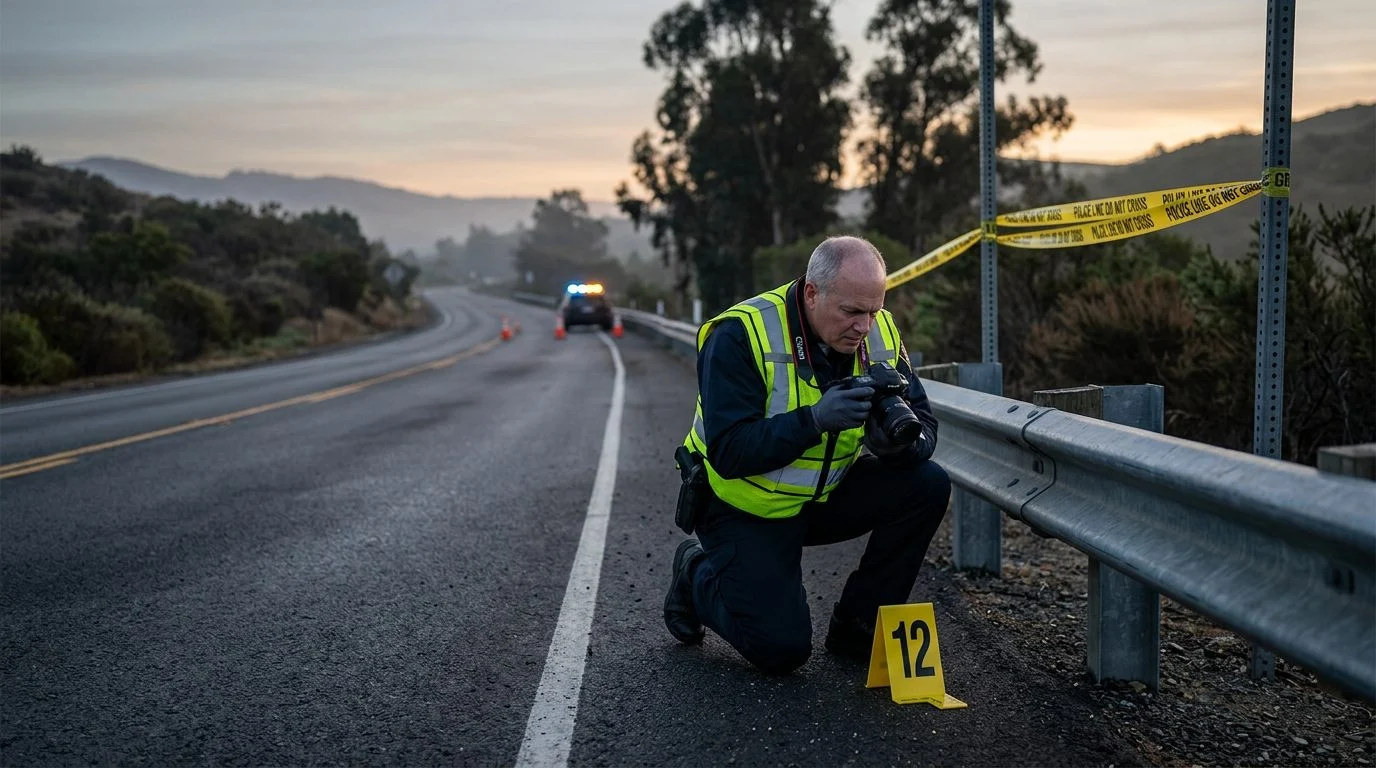
The evidence that matters most usually falls into three groups. The first is the crash record. Police reports, witness statements, scene photographs, and any video that exists help show how the collision happened. The second is the medical record. Hospital records and the coroner or medical examiner’s findings explain how the fatal injuries occurred. That record is central to the helmet question.
The third group is the physical evidence. The motorcycle and the helmet can both matter. Contact Colvin Accident Lawyers before anyone repairs, sells, or discards either item. Early questions about who has these items can prevent problems later.
If the crash may involve a defective part, see our guide on wrongful death vehicle defect questions. Vehicle defect issues raise their own questions, separate from the helmet issue.
Not sure what your next step is?
Talk it through with our team — the first consultation is free, confidential, and carries no obligation.
Insurance Offers, Liens, and Decisions to Hold Off On
Insurers may contact a family soon after a fatal crash. A first offer does not have to be accepted on the spot. Our guide on accepting an insurance offer after a fatal crash explains the considerations involved.
Liens can also affect a settlement. Medi-Cal and other liens may change how a settlement is divided among the parties. The guide on Medi-Cal liens in wrongful death settlements covers how these claims work.
Be careful with signed releases and recorded statements. A signed release can affect what a family can still claim. A recorded statement can be used later in the case. Raise questions about these documents before responding. Treat them as questions for a lawyer who can review the specific facts, not as a substitute for that review.
Talking Through Your Family’s Situation With Colvin Accident Lawyers
If your family member died in a motorcycle crash, you may be dealing with insurers, paperwork, and hard questions all at once. Colvin Accident Lawyers is a personal injury firm based in Bakersfield, California. It handles motorcycle and wrongful death matters. Donald Norman Colvin is the responsible lawyer named on this site.
No lawyer can say in advance how a case will turn out. Each case turns on its own facts, its evidence, and the law that applies. What a lawyer can do is listen, review the details, and explain the options in plain terms.
Common Questions
Does California require motorcycle passengers to wear helmets?
Yes.
How long does a family have to file?
The two-year deadline applies to an action for assault, battery, or injury to, or for the death of, an individual caused by the wrongful act or neglect of another, and other deadlines can apply, so don’t wait (Code Civ. Proc. § 335.1).
Our team offers a free first consultation. It is confidential and carries no obligation to continue. Contact Colvin Accident Lawyers to talk through your family’s situation.
Colvin Accident Lawyers, Bakersfield, California — responsible for this site.
How We Help Families After a Fatal Motorcycle Crash
Free first consultation
Your initial consultation is free, confidential, and carries no obligation to continue.
Careful review of the facts
We look at the crash, the injuries, the medical and police records, and the helmet question together, because the facts of each case control the outcome.
Support for families
Our team helps surviving spouses, children, parents, and others understand their options while they are grieving.
Based in Bakersfield
Our office is in Bakersfield, and we speak with families throughout Kern County and nearby communities.
Important: Do Not Assume a Helmet Question Ends Your Case
A missing helmet does not automatically decide a wrongful death claim. Whether it affected the outcome depends on the facts of the crash and the injuries involved. Other deadlines can also apply, so contact us promptly.
Questions Families Often Ask Us
Does California require helmets?
Yes. California law requires motorcycle riders and passengers to wear helmets that meet state standards. Whether that requirement affects a particular claim depends on the facts.
Who can bring a wrongful death claim?
California law generally allows certain family members or the decedent's estate to bring a wrongful death action. We can explain how this applies to your family's situation.
What evidence matters most?
Crash reports, medical records, photographs, witness statements, and the motorcycle and helmet themselves often play important roles. Preserving evidence early can help.
Are there deadlines?
Yes. Wrongful death claims are subject to filing deadlines, and other deadlines can apply. Do not wait to get advice about your options.