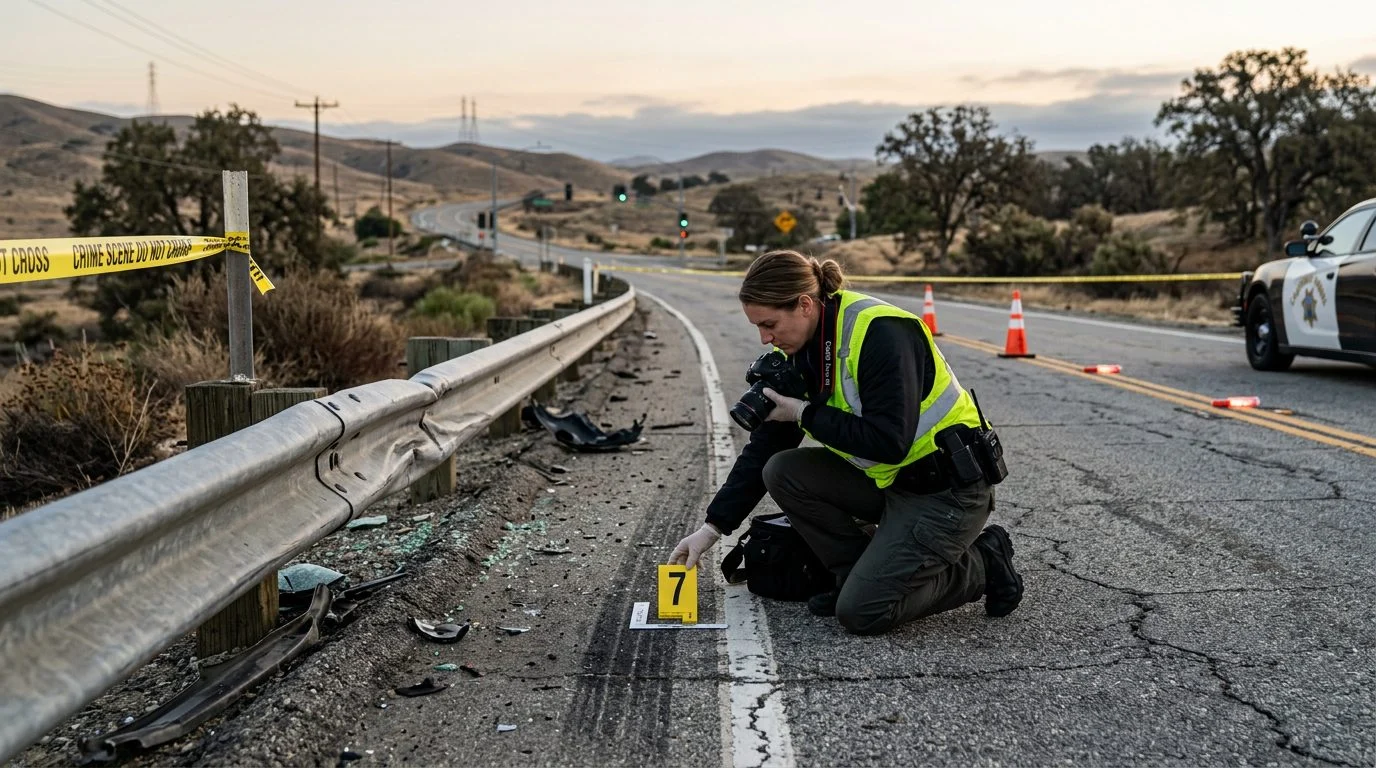
Wrongful Death · DUI Crashes · Kern County and Surrounding Communities
A DUI Crash Can Lead to Two Separate Cases. Here Is How They Differ.
Families often hear about the criminal charges first and wonder what happens to their own claim. Here is a clear way to think about both paths.
By Donald Norman Colvin · Published November 19, 2026
A fatal DUI crash in California can lead to two separate cases. The state may bring criminal charges against the driver. The family may bring a civil wrongful death claim for money damages. This guide explains the wrongful death vs criminal case DUI crash California question in plain terms, including who brings each case and why timing matters. It is general information about the law, not advice about any one case. Colvin Accident Lawyers is based in Bakersfield, California, and represents families in Kern County and nearby communities.
Two Separate Tracks After a Fatal DUI Crash
The criminal case and the wrongful death claim are separate, and one does not decide the other. The state, through a prosecutor, brings the criminal case against the driver. The family is not the party in that case, although family members may be victims and witnesses.
The wrongful death claim is a civil lawsuit. Eligible survivors, or the personal representative of the decedent’s estate, bring it. They seek money for losses tied to the death.
The two tracks also have different purposes. The criminal case asks whether the driver broke the law and what punishment follows. The civil claim asks the court to address the harm the death caused the family.
Families often learn about both tracks at the same time. That can feel overwhelming in the first weeks after a loss. Knowing which track is which helps a family ask the right questions early. Taking one track at a time makes the choices easier to see.
If a DUI charge is pending and your family is weighing a civil claim for a loss, our team can talk with you about your next steps. Talk it through with our team — the first consultation is free, confidential, and carries no obligation.
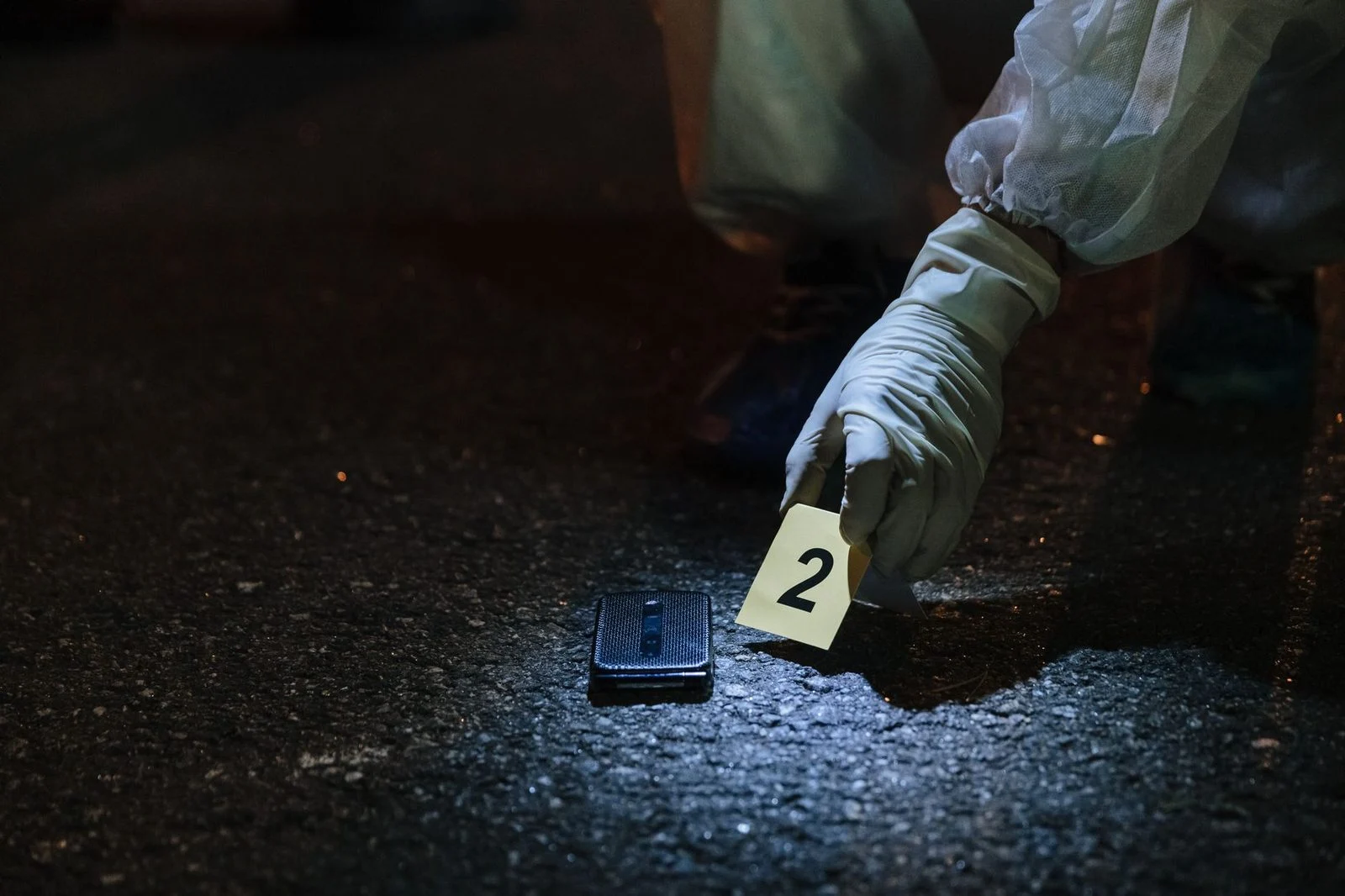
How a DUI Death Is Handled in the Criminal Case
In the criminal case, the state decides what to charge, whether to accept a plea, and whether to go to trial. The family shares what it knows and attends court, but the charging decisions belong to the state.
The driving rule itself is in Cal. Veh. Code § 23152. It makes it unlawful to drive under the influence of alcohol. It also makes it unlawful to drive with 0.08 percent or more, by weight, of alcohol in the blood.
The same section includes a rebuttable presumption. If a chemical test within three hours after driving shows 0.08 percent or more, the law presumes the driver was at that level while driving. A presumption like this can be challenged with other evidence. So the test is one piece of the case, not the whole case.
Families may also look to state help.
What a Wrongful Death Claim Is in California
A wrongful death claim is a civil lawsuit for money damages after a death caused by another person’s wrongful act or neglect. It is not a criminal case against the driver. It has its own rules and its own proof.
One death can give rise to two kinds of claims. A survival claim covers losses the decedent suffered or incurred before dying, including penalties or punitive damages the decedent could have recovered, but generally does not include damages for pain, suffering, or disfigurement, subject to limited exceptions under Cal. Code Civ. Proc. § 377.34. Under Cal. Code Civ. Proc. § 377.30, a cause of action that survives the death passes to the decedent’s successor in interest, subject to Chapter 1 (commencing with Section 7000) of Part 1 of Division 7 of the Probate Code. The personal representative may bring it.
In practice, that means showing how the defendant’s conduct caused the death and what losses followed. Good records make that work much easier.
Who Can File a Wrongful Death Claim in California
Under Cal. Code Civ. Proc. § 377.60, the decedent’s surviving spouse, domestic partner, children, and issue of deceased children may bring the claim or, if there is no surviving issue, the persons who would be entitled to the decedent’s property by intestate succession, including the surviving spouse or domestic partner, may bring it. So may the issue of a deceased child. Under Code of Civil Procedure section 377.60, a domestic partner is a person who, at the time of the decedent’s death, was the decedent’s domestic partner in a registered domestic partnership established under Family Code section 297, subdivision (b); for deaths occurring before January 1, 2002, a person may instead establish the factors listed in that subdivision as it read at that time.
Dependence also matters. The dependent-claimant list includes a putative spouse, children of the putative spouse, stepchildren, and parents, if they were dependent on the decedent. It also includes a minor who, at the time of the death, had lived in the decedent’s household for the previous 180 days and depended on the decedent for half or more of the minor’s support. If the parents have died, a legal guardian may bring it.
A minor may qualify under § 377.60(c). The minor must have lived in the decedent’s household for the previous 180 days. The minor must also have depended on the decedent for one-half or more of support.
Families often ask early whether an unmarried partner or another relative can sue. The answer depends on the statute’s list and the facts. A personal representative may bring the claim on behalf of the eligible family members.
Punitive Damages and the Clear and Convincing Evidence Standard
Each track must be judged on its own evidence.
Both tracks often rely on much of the same material. Police reports, test results, witness statements, and vehicle data can matter in both. A prosecutor may use that evidence to prove a crime. A family’s lawyer may use it to prove the civil claim.
A common mistake is waiting for the criminal case to finish before asking about a civil claim. Waiting can cost time against the filing deadline. Evidence such as vehicle data and witness memories can also change over time.
Families should ask early what evidence exists and who holds it. Keeping copies of every crash report, charging paper, and medical record helps. Those records can support both tracks.
Damages Available in a Wrongful Death Claim
Wrongful death damages and survival damages follow different rules. Under Cal. Code Civ. Proc. § 377.61, damages in a wrongful death action may be awarded that are just under all the circumstances. They may not include the damages covered by § 377.34. The court decides how the award is shared among the people entitled to it.
Survival damages have a narrow limit. Under Cal. Code Civ. Proc. § 377.34, survival damages cover loss the decedent sustained before death. They do not include pain, suffering, or disfigurement, unless subdivision (b) applies. Subdivision (b) ties its exceptions to a preference granted before January 1, 2022, or to a filing date on or after January 1, 2022, and before January 1, 2026, so the rule depends on those dates.
Punitive damages are a separate question. Under Cal. Civ. Code § 3294, in an action for the breach of an obligation not arising from contract, they may be awarded when the defendant is proven by clear and convincing evidence to be guilty of oppression, fraud, or malice. That proof must be clear and convincing. Malice means conduct intended to cause injury, or despicable conduct carried on with a willful and conscious disregard of others’ safety.
Whether a drunk driver’s conduct meets that test turns on the evidence. The value of any claim turns on the facts, the family’s losses, and the proof.
Not sure what your next step is?
Talk it through with our team — the first consultation is free, confidential, and carries no obligation.
Time Limits and How the Two Cases Interact
The general limit is two years. Under Cal. Code Civ. Proc. § 335.1, an action for the death of an individual caused by another’s wrongful act has a two-year period. Families should treat that date as urgent. Other rules can change timing in a given case, so an early review helps.
Under Cal. Code Civ. Proc. § 377.30, a cause of action that survives the death of the person entitled to commence an action passes to the decedent’s successor in interest, subject to Chapter 1 (commencing with Section 7000) of Part 1 of Division 7 of the Probate Code. Under Cal. Code Civ. Proc. § 377.30, a cause of action that survives the death of the person entitled to commence an action passes to the decedent’s successor in interest. Under Cal. Code Civ. Proc. § 377.62, an action under Section 377.30 may be joined with an action under Section 377.60 arising out of the same wrongful act or neglect.
The punitive damages rule also links the tracks. Under § 3294(d), punitive damages may be recovered in a death action based on a homicide for which the defendant was convicted of a felony. The joinder procedures prevent multiple recoveries of punitive damages for the same wrongful act.
The two tracks run on their own schedules. A criminal case can move slowly. The civil clock keeps running while it does. Planning around both timelines is part of the decision in front of a family.
Fatal DUI Crashes in Kern County and the Central Valley
Families across Kern County and nearby communities face the same two-track questions after a fatal DUI crash. Colvin Accident Lawyers is based in Bakersfield, California. The firm also works with families in Fresno, Visalia, Delano, Tehachapi, Lancaster, and Palmdale.
A crash can happen in one county while the family lives in another. Crash reports, charging papers, and court dates can sit in different places. That makes organization important from the start.
Families should write down names, dates, and phone numbers for every contact. They should keep copies of every letter from an insurer. A common mistake is signing papers or giving a recorded statement before understanding what the claim involves.
Medical records from before the death also matter. They can show the decedent’s condition and care before the crash. Keeping them together with the crash paperwork gives a lawyer a clearer starting point.
Talking With a Lawyer About Your Family’s Situation
A family facing a DUI death can talk with a lawyer before deciding whether to file a civil claim. Donald Norman Colvin is the responsible lawyer for this site. Our attorneys and our team can explain how the criminal case and a civil claim differ. They can also explain who may file and what time limits may apply.
Frequently Asked Questions
Is a wrongful death claim the same as the criminal case?
No. The state brings the criminal case. Eligible survivors or a personal representative bring the civil wrongful death claim.
How long does a family have to file?
Under Cal. Code Civ. Proc. § 335.1, the general period is two years. Other rules can change timing in some cases.
If a DUI charge is pending and your family is weighing a civil claim for a loss, our team can talk with you about your next steps. The first consultation is free, confidential, and carries no obligation to continue. You can contact Colvin Accident Lawyers to start that conversation.
Colvin Accident Lawyers, Bakersfield, California — responsible for this site.
What Families Can Expect When They Contact Colvin Accident Lawyers
A Confidential First Conversation
Tell us what happened in your own words. Your first consultation is free, confidential, and carries no obligation to continue.
Organized Records
Police reports, medical records, and details about the crash help show how the collision happened and how it affected your family.
Clear Explanations
We explain how the criminal case and a civil wrongful death claim differ, so you know what questions to ask and what to expect at each stage.
Serving Local Families
We represent families across Kern County and nearby communities, including Bakersfield, Fresno, Visalia, Lancaster, Palmdale, Delano, and Tehachapi.
Do Not Assume One Case Decides the Other
Questions Families Often Bring to Us
Who Brings Each Case?
The civil wrongful death claim is usually brought by family members or a personal representative of the estate.
What Evidence Matters?
Crash reports, toxicology findings, witness statements, and records of the victim's losses often play a role in both proceedings.
Can We Wait?
Timing matters in civil cases. Bring us your questions early so we can review your situation and explain the steps involved.
What Should We Bring?
Bring any police reports, medical bills, funeral receipts, and notes about your loved one's income and daily role in the family.