Motorcycle Accidents | Kern County, CA
Motorcycle Crash? Find Out When California Requires a DMV Report
Clear answers on state reporting duties, and the practical steps that help protect your position after a ride goes wrong.
By Donald Norman Colvin · Published November 20, 2026
If you were in a motorcycle crash in California, you may be asking whether you have to report it to the DMV. Yes, when the crash caused an injury, a death, or more than $1,000 in damage to one person’s property. The report is due within 10 days after the crash.
Whether a crash counts comes down to what it caused, not how the bike looks. This page covers the form, the deadline, and how the DMV report fits with the police report and your insurance claim.
What the SR-1 Report Is and Who Must File
The driver can file personally or through “an insurance agent, broker, or legal representative.” A hurt rider doesn’t have to handle the paperwork alone.
The SR-1 is separate from any report an officer writes. The California DMV accident reporting page says the filing is separate from reports made to police, the California Highway Patrol (CHP), or an insurer. An officer’s report goes to the agency that wrote it.
If your motorcycle crash left you dealing with injuries, a damaged bike, and a reporting deadline, you don't have to sort it out alone. We're glad to talk through your situation. Talk it through with our team — the first consultation is free, confidential, and carries no obligation.

When a Motorcycle Crash Triggers the Requirement
The reporting duty in Cal. Veh. Code § 16000 applies to a driver in an accident on a street or highway, or in a reportable off-highway accident, that resulted in bodily injury, in the death of any person, or in damage to the property of any one person in excess of one thousand dollars ($1,000).
Cal. Veh. Code § 16000(a) covers an accident that results in “bodily injury, or in the death of any person,” or damage to one person’s property “in excess of one thousand dollars ($1,000).” Subdivision (c) provides that the department is not required to file a report on an accident if none of the parties has reported it within one year following the date of the accident. The statute’s text sets the line at $1,000, so that’s the number to use.
An injury counts even when the bike looks only scratched. A rider may not know the full extent of injuries at the scene, so treat any injury as reportable.
Here’s a common case. A rider lays the bike down on a curve. No one is hurt, and the reporting threshold applies only when the damage to the property of any one person exceeds $1,000. The rider may not know the final repair cost on the roadside, so get written estimates and keep receipts.
The 10-Day Deadline, Consequences, and How to File
The count starts the day of the crash, so write that date down while it’s fresh.
Before you fill out the form, gather the date, the exact location, each vehicle involved, and the damage estimates. The statute also requires you to name anyone “complaining of bodily injury” and give that person’s current residence address, if available.
Missing the deadline has its own timeline. Under Cal. Veh. Code § 16000(c), if none of the parties reports the accident within one year, the DMV is not required to file a report, and the license suspension rules tied to that report do not apply. That rule describes the DMV’s duty. It is not a reason to wait.
Don’t confuse the DMV deadline with the deadline to sue. California’s Courts Self-Help Guide says injury lawsuits generally must be filed within two years of the injury, subject to exceptions and pauses (tolling). A missed DMV deadline is a reason to speak with a lawyer soon. It is not a reason to assume nothing can be done.
Police Report vs. SR-1: Why Both Matter
A police report does not replace your SR-1. The DMV states its filing is separate from reports made to police or the CHP.
The two documents serve different purposes. The police report is the officer’s record of the scene. The SR-1 is your own report to the DMV. Each has a different recipient, so one can’t stand in for the other.
A common mistake is assuming the officer’s report handles everything. A police report can still be useful later when an injury claim is evaluated. Write down the officer’s name, badge number, and report number if one is given. Keep copies of everything you file or receive, along with the date you filed and any DMV confirmation.
Insurance Reporting and Your DMV Obligation
Telling your insurance company about the crash is a separate step from filing the SR-1. A claim opened with your insurer does not, by itself, complete the DMV filing. Handle both.
The California Department of Insurance guide on what to do after an accident supports reporting an injury accident and documenting injuries and related expenses for a claim. Keep medical bills, pharmacy receipts, and records of time missed from work.
Speak carefully with any adjuster before you understand the full extent of your injuries. If you’re on Medicare, CMS on conditional payments explains that Medicare may make a conditional payment for services another payer may be responsible for. That payment must be repaid when a settlement, judgment, award, or other payment is made. Plan for it before you settle.
Steps to Take at the Scene and in the Days After
At the scene, the first job is to stop. Under Cal. Veh. Code § 20001(a), a driver in a crash that injures another person or causes a death must immediately stop at the scene and must also fulfill the requirements of Sections 20003 and 20004.
Leaving the scene carries penalties. Under § 20001(b)(1), a violation is punishable by imprisonment in the state prison, or in a county jail for not more than one year, or by a fine of $1,000 to $10,000, or by both that imprisonment and fine; when the accident causes death or permanent, serious injury, § 20001(b)(2) provides for imprisonment in the state prison for two, three, or four years, or in a county jail for not less than 90 days nor more than one year, or a fine of $1,000 to $10,000, or both, and the court, in the interests of justice and for reasons stated in the record, may reduce or eliminate the minimum imprisonment required by that paragraph; and under § 20001(b)(3), in imposing the minimum fine, the court must take into consideration the defendant’s ability to pay and, in the interests of justice and for reasons stated in the record, may reduce that minimum fine to less than the amount otherwise required.
- Call emergency services if anyone is hurt, and describe the injuries as accurately as you can.
- Move to a safe spot if you can do it without causing more harm.
- Exchange names, phone numbers, and insurance details with the other driver, and get witnesses’ contact information.
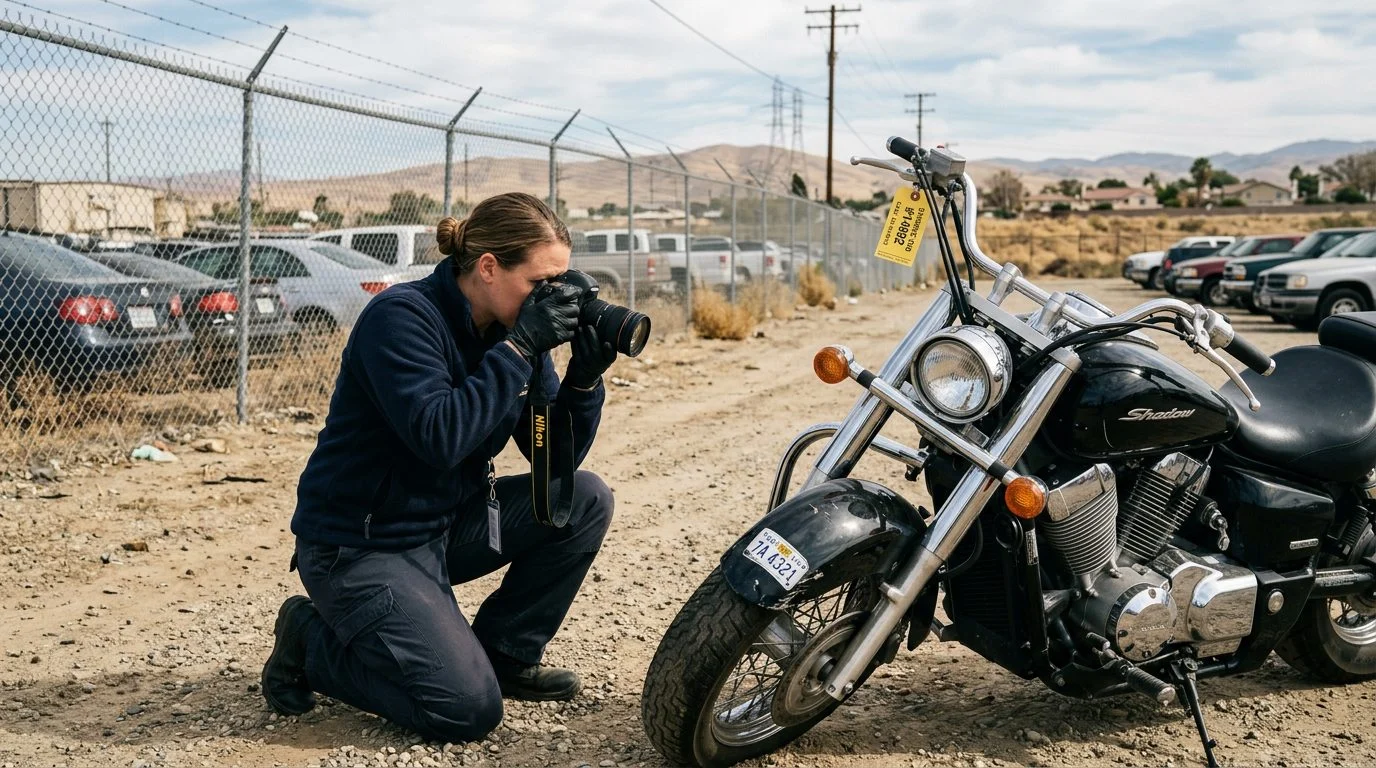
- Photograph your bike, the roadway, skid marks, traffic signs, and any visible injuries.
- See a medical provider even if injuries seem minor, and keep every record.
- Report the crash to your insurer, and write down the claim number.
In the days after, track missed work and out-of-pocket costs. Those records matter if you file a claim.
Not sure what your next step is?
Talk it through with our team — the first consultation is free, confidential, and carries no obligation.
Fault and Your Claim: Does Shared Blame Stop You?
No, shared fault does not automatically bar an injury claim in California. It can reduce the amount you recover.
California’s civil jury instruction on a plaintiff’s comparative fault tells jurors that if the defendant proves the injured person was partly at fault, that person’s damages are reduced by the percentage of responsibility the jury assigns to them, and the judge then calculates the actual reduction. I will calculate the actual reduction.” The damages are reduced, not barred. If a jury put 20% of the blame on the rider, the award would drop by that share.
Who is at fault is worked out from the facts of each crash, so the answer depends on the facts.
Quick Answers
Do I have to report a motorcycle accident if no one was hurt?
Only if one person’s property damage is more than $1,000. When no one was injured or killed, Cal. Veh. Code § 16000 requires the report only if the damage to the property of any one person is in excess of one thousand dollars ($1,000).
How long do I have to report the accident?
Under Vehicle Code § 16000(a), the report must be made within 10 days after the accident, either personally or through an insurance agent, broker, or legal representative, on a form approved by the department. Subdivision (c) sets a one-year limit: if none of the parties has reported within one year following the accident, the department is not required to file a report and the license suspension requirements of Sections 16004 or 16070 do not apply.
Is a police report the same as an SR-1?
No. The DMV treats its filing as separate from police and CHP reports.
Does a missed DMV deadline end my claim?
Not by itself. Lawsuits for injury caused by another’s wrongful act or neglect generally must be filed within two years of the injury (Code Civ. Proc. § 335.1).

Talk With Colvin Accident Lawyers About Your Crash
Your next step is a conversation about your own crash, and you don’t need every answer first. You may be handling a crash you did not choose. An injured rider, a bike that won’t run, and a deadline on the calendar can all arrive at once.
The decisions in front of you are concrete. Does this crash have to be reported? What goes on the form, and by when? How does an insurance claim fit alongside it?
Colvin Accident Lawyers is based in Bakersfield, and we talk with riders and families in Kern County and nearby communities about crashes like these. The initial consultation is free, confidential, and carries no obligation to continue.
If you want to walk through your crash with us, contact Colvin Accident Lawyers for a free case consultation.
Keep Your Information Safe
Reporting requirements and insurance paperwork can affect what happens next. Write down the details of the crash while they are fresh, and talk with a lawyer about your specific situation before you assume the matter is handled.
What to Record After a Motorcycle Crash
Scene Details
Note the date, time, location, weather, road conditions, and the direction each vehicle was traveling.
Photos and Damage
Photograph your motorcycle, your gear, the other vehicle, and any visible road hazards from several angles.
Witness Information
Collect names and phone numbers from anyone who saw the crash, since their accounts can matter later.
Medical Records
Keep every visit summary, prescription, and bill, even for injuries that seemed minor at first.
Why Start the Conversation With Colvin Accident Lawyers
Confidential Conversation
Share the details of your crash openly. Your first consultation is confidential.
Free First Consultation
La consulta inicial es gratuita, confidencial y sin compromiso de continuar. There is no obligation to move forward.
Speak With Our Team
Call to talk through your questions about reporting, paperwork, and the next steps after your accident.
Local Focus
We help riders and families in Kern County and nearby communities, including Bakersfield, Fresno, Visalia, Lancaster, Palmdale, Delano, and Tehachapi.