Motorcycle Accidents | Bakersfield and Kern County
Save These Motorcycle Crash Details Before They Are Lost
Photos, police report numbers, witness names, medical records and insurance letters can disappear or fade with time. Here is what to keep, and how Colvin Accident Lawyers can help you start a free, confidential consultation.
By Donald Norman Colvin · Published October 26, 2026
If you were hurt in a motorcycle crash, or you are helping a rider who was, the evidence to save after a motorcycle crash in California is clear. Keep scene photos, the police report, witness details, medical records, your motorcycle and gear, and every insurance letter. Each record shows how the crash happened, what it did to the rider, and what it cost. This guide explains where each record comes from and why it matters. Colvin Accident Lawyers is based in Bakersfield, California, and this checklist is written for riders and families in the days and weeks after a crash.
What Should You Do First After a Motorcycle Crash?
Get medical care first, then call the police so the crash is documented. A rider who is hurt should be checked, even when symptoms seem minor at the scene. Some injuries show up hours or days later, and an early medical record ties those symptoms back to the crash.
Under Cal. Veh. Code § 20001, a driver in a crash that causes injury to a person other than the driver, or a death, must immediately stop at the scene and must also meet the requirements of Sections 20003 and 20004. Ask the responding officer for a name, badge or unit number, and the agency. Ask for the incident or report number too.
Write down the time, the exact street, nearby landmarks, and each vehicle’s direction of travel. These details fade fast, so write them down the same day.
Be careful what you say at the scene. Under Cal. Evid. Code § 1160, expressions of sympathy made to the injured person or their family after an accident generally cannot be used as evidence of an admission of liability in a civil action. A statement of fault is treated differently. Stick to facts about what you saw and what you felt.
If you're gathering records after a motorcycle crash, you don't have to sort through them alone. Talk with our team about what you've collected so far. Talk it through with our team — the first consultation is free, confidential, and carries no obligation.
Which Photos and Videos Should You Take After a Crash?
Photograph the whole scene, every vehicle, your motorcycle, and your injuries, as soon as it is safe. Wide shots show the roadway, lane markings, traffic signals, and where vehicles stopped. Close-ups show skid marks, debris, and fluid spills.
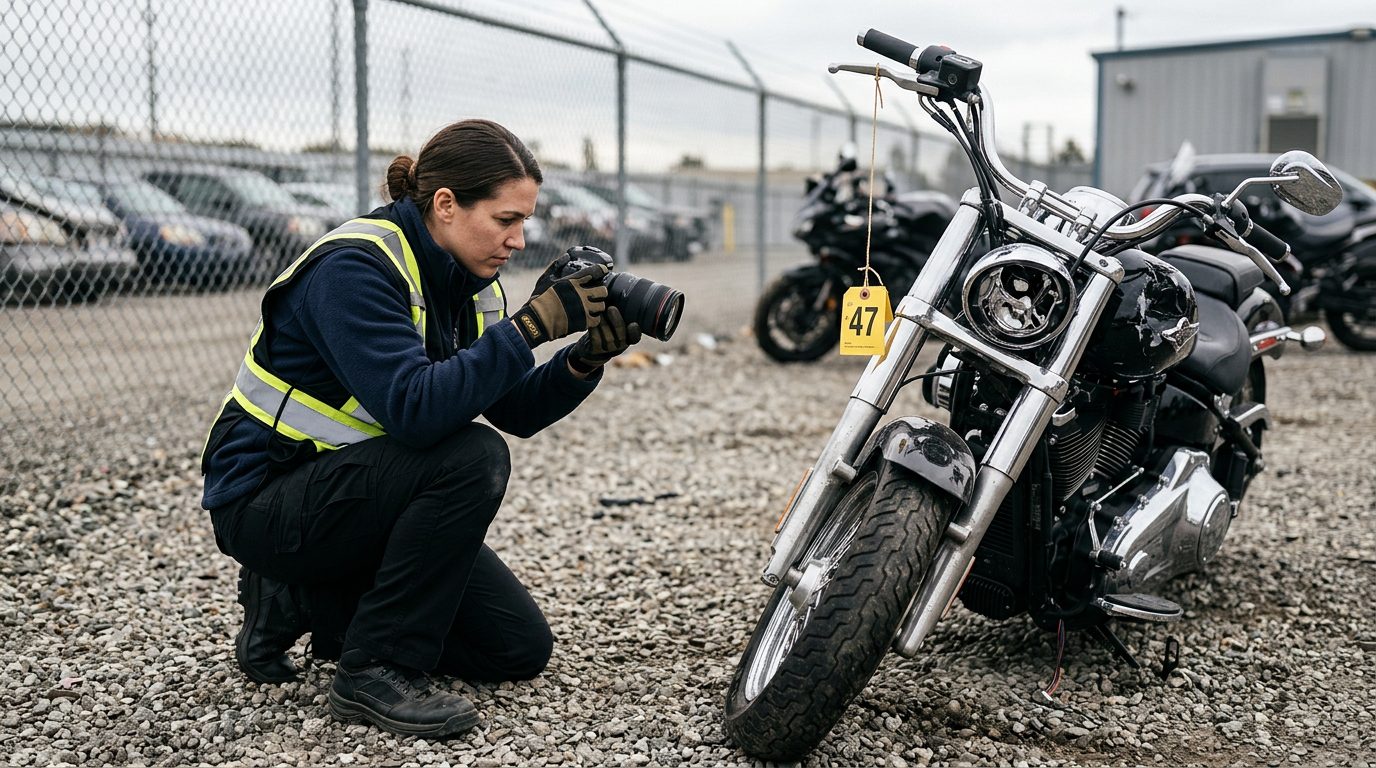
Photograph each vehicle’s license plate and damage. Then photograph your motorcycle from every side. Focus on the handlebars, mirrors, footpegs, lights, and forks. Damage to these parts can show the direction and force of impact.
Injuries change over time. Bruises and swelling often grow or shift over several days. Take dated photos of your injuries each day, and save the original files with their timestamps. Forwarded copies can lose the data that shows when a picture was taken.
If someone has a dashcam or helmet camera, ask them to keep that footage. Don’t delete it, and don’t edit it.
How Do You Collect Witness Names and Statements?
Collect names and phone numbers from anyone who saw the crash. That includes drivers and passengers in other vehicles and people working nearby. Witnesses are often the easiest evidence to lose. People move, change phone numbers, and forget details within weeks.
Ask each witness to write down what they saw while it is fresh. Include the signal color, their estimate of each vehicle’s speed, and where each vehicle was positioned. Ask whether they took photos or video, and ask them to keep those files.
Write your own account early, too. Include the order of events, the lane you were in, and the road conditions. Use plain detail. Later conversations with insurers and others can change how you remember the crash, so an early written account helps.
Witness accounts matter even when fault is disputed. California allocates non-economic damages by each defendant’s percentage of fault, so details that show who did what can matter. See Cal. Civ. Code § 1431.2.
Where Do You Get the Police Report and the DMV Accident Report?
Request the police report from the agency that responded, then check it for errors. The report can be filed personally or through an insurance agent, broker, or legal representative. It must be on a form the DMV approves.
Check the police report for names, vehicles, the witness list, and the officer’s notes on fault. If something is wrong, tell the agency in writing and keep a copy of your letter.
Note the report number and the date you requested the report. Save any citations or notices issued to you or another driver. Include the court or agency details listed on them.
Keep copies of everything you file with the DMV. Write down the date you mailed or filed it.
Which Medical Records and Bills Prove Your Injuries?
Keep every record from the ambulance ride through the last follow-up visit. Medical records tie your symptoms to the crash and show how treatment progressed. Include emergency room notes, imaging results, surgery reports, physical therapy notes, and work restriction forms.
Keep discharge instructions and prescription lists too. Track every bill and every explanation of benefits. Save receipts for out-of-pocket costs, and log your mileage to appointments. Under Cal. Civ. Code § 1431.2, for purposes of that section, “economic damages” means objectively verifiable monetary losses, such as medical expenses and loss of earnings.
Keep a simple daily log of pain, sleep, activities you could not do, and missed work. Write it at the time, not from memory later.
Some riders have symptoms that last after a head impact. Researchers study persistent postconcussion syndrome after mild traumatic brain injury, a condition that can affect thinking and memory. If you notice headaches, trouble concentrating, or memory changes, record them in your log and tell your providers.
Ask providers to send records directly when you can. Keep a list of every provider you’ve seen.
What Should You Keep From Your Motorcycle, Gear, and the Road?
Keep the motorcycle and every broken part instead of throwing them out. Damage patterns can show how the impact happened. Tell the shop or tow yard that the bike is part of an injury matter, and ask them to hold it.
Keep your helmet, even if it looks fine or is cracked. The Snell Memorial Foundation FAQ explains that motorcycle helmets reduce impact forces, and that DOT, ECE, and Snell are helmet testing and certification standards. The California Office of Traffic Safety motorcycle safety page covers state crash data and the state’s helmet requirement. Keep the helmet’s label and the gear you wore.
Save maintenance records, including tire, brake, and suspension work. Photograph road conditions such as potholes, debris, faded lane markings, missing signs, or construction zones. Note the exact location.
If a public road condition contributed, the deadline can be short. Under Cal. Gov. Code § 911.2, a claim for injury to a person must be presented not later than six months after the cause of action accrues. For more on these claims, read our page on motorcycle defect claims in California. For Kern County highway crashes, see our Kern County highway motorcycle crash page.
Not sure what your next step is?
Talk it through with our team — the first consultation is free, confidential, and carries no obligation.
How Should You Handle Insurance Letters and Keep One Evidence Log?
Keep every insurance letter, email, text, and call note in one labeled folder. Record each claim number, each adjuster’s name, and the date of every contact. Keep copies of any recorded statement, and write down the questions you were asked and how you answered.
Save repair or total-loss estimates, rental and towing receipts, and records of lost wages from your employer. Store these with the medical bills so the losses stay together.
California’s insurance code lists misleading a claimant about the applicable statute of limitations as an unfair claims settlement practice when an insurer does it knowingly and as a general business practice (Cal. Ins. Code § 790.03). Track your own dates rather than relying on what anyone tells you.
If a rider died, keep funeral, burial, and related receipts together. See our funeral and burial costs after a fatal motorcycle crash page for expenses to track.
Store everything in one labeled folder, paper or digital. Back up digital files so nothing is lost.
How Can Colvin Accident Lawyers Help You Review Your Evidence?
Many people reading this are still recovering, or they are helping a rider who can’t manage the paperwork right now. Our team at Colvin Accident Lawyers can review the records you’ve gathered and answer questions about what to save next. Our first consultation is free, confidential, and carries no obligation to continue. Contact us to share the basic facts of your crash.
For the full picture, read our California motorcycle accident legal guide.
Frequently Asked Questions
What evidence to save after motorcycle crash California?
Save scene photos, the police report number, witness names, medical records, bills, your motorcycle and gear, and all insurance correspondence. Keep the originals, with dates, in one labeled place.
How long do I have to report a motorcycle crash to the DMV?
California generally requires a report within 10 days when a crash causes injury, death, or property damage over $1,000 to any one person.
How long do I have to file an injury lawsuit in California?
Under Cal. Code Civ. Proc. § 335.1, the general limit is two years. Claims against public agencies can have shorter deadlines.
Donald Norman Colvin, Colvin Accident Lawyers, Bakersfield, California — responsible for this site.
How Colvin Accident Lawyers Works With Motorcycle Crash Victims
Free first consultation
Your first consultation is free, confidential and comes with no obligation to continue. We will listen to what happened and explain your options.
Organized evidence
Our team helps you gather and organize scene photos, reports, bills and records so the facts of your crash are documented in one place.
Protection while you heal
While you focus on recovery, we handle communication with insurance companies and other parties involved in your crash.
Serving Kern County and nearby communities
We represent riders and families across Bakersfield, Kern County, Fresno, Visalia, Lancaster, Palmdale, Delano and Tehachapi.
Evidence Checklist for Your Motorcycle Crash
Scene and vehicle photos
Photograph the roadway, lane markings, traffic signals, skid marks, debris, vehicle damage and your motorcycle from several angles. Keep the original files with their date data intact.
Police report and contacts
Write down the report number, the responding agency and the officer's name and badge number. Save the names and phone numbers of drivers, passengers and any witnesses.
Medical records and bills
Keep every ambulance bill, emergency room record, imaging report, prescription receipt and therapy note. Follow your providers' treatment plans and keep copies of all paperwork.
Gear, bike and insurance letters
Do not repair or discard your helmet, jacket, boots or motorcycle until you have talked with a lawyer. Save every letter, email and claim form from insurance companies, and note the date you received each one.
Be Careful What You Share Online
Posts, photos, comments and text messages about the crash or your injuries can be used by insurers and other parties. Pause before posting, and talk with us before you give any recorded statement.
Protect Your Evidence Now. Start With a Free, Confidential Consultation.
Related practice areas
- Motorcycle Accident Legal Guide for California Riders | Colvin Accident Attorneys
- Dooring Motorcycle Accident: Who Is at Fault in California?