Motorcycle Accidents | Kern County
Hurt in a Motorcycle Crash on Highway 58 or 99?
Colvin Accident Lawyers represents motorcyclists and their families after collisions on Kern County roads. Start with a free, confidential first consultation, with no obligation to continue.
By Donald Norman Colvin · Published October 27, 2026
The Short Answer: Motorcycle Crashes on Highway 58 and Highway 99
A motorcycle crash on Highway 58 or Highway 99 in Kern County follows the same California rules as a crash on any other road. Merging traffic, speed differences, and road conditions can all play a part. The highway number does not change your rights.
Both highways carry heavy mixed traffic through Kern County. Highway 99 runs through Bakersfield and past Delano. Highway 58 runs through Bakersfield and east toward the Tehachapi area. Riders on these routes share lanes with passenger cars, pickups, and commercial trucks.
This guide answers the questions people ask after a crash. It covers why merging and speed matter, how road conditions can contribute, which rider rules apply, how the CHP report and coroner process work, which deadlines matter, and what compensation categories exist.
If you were hurt on Highway 58 or 99, or lost someone in a crash there, we can talk through the report, the road conditions, and the deadlines with you. Talk it through with our team — the first consultation is free, confidential, and carries no obligation.
Why Merging Traffic and Speed Differences Matter for Riders
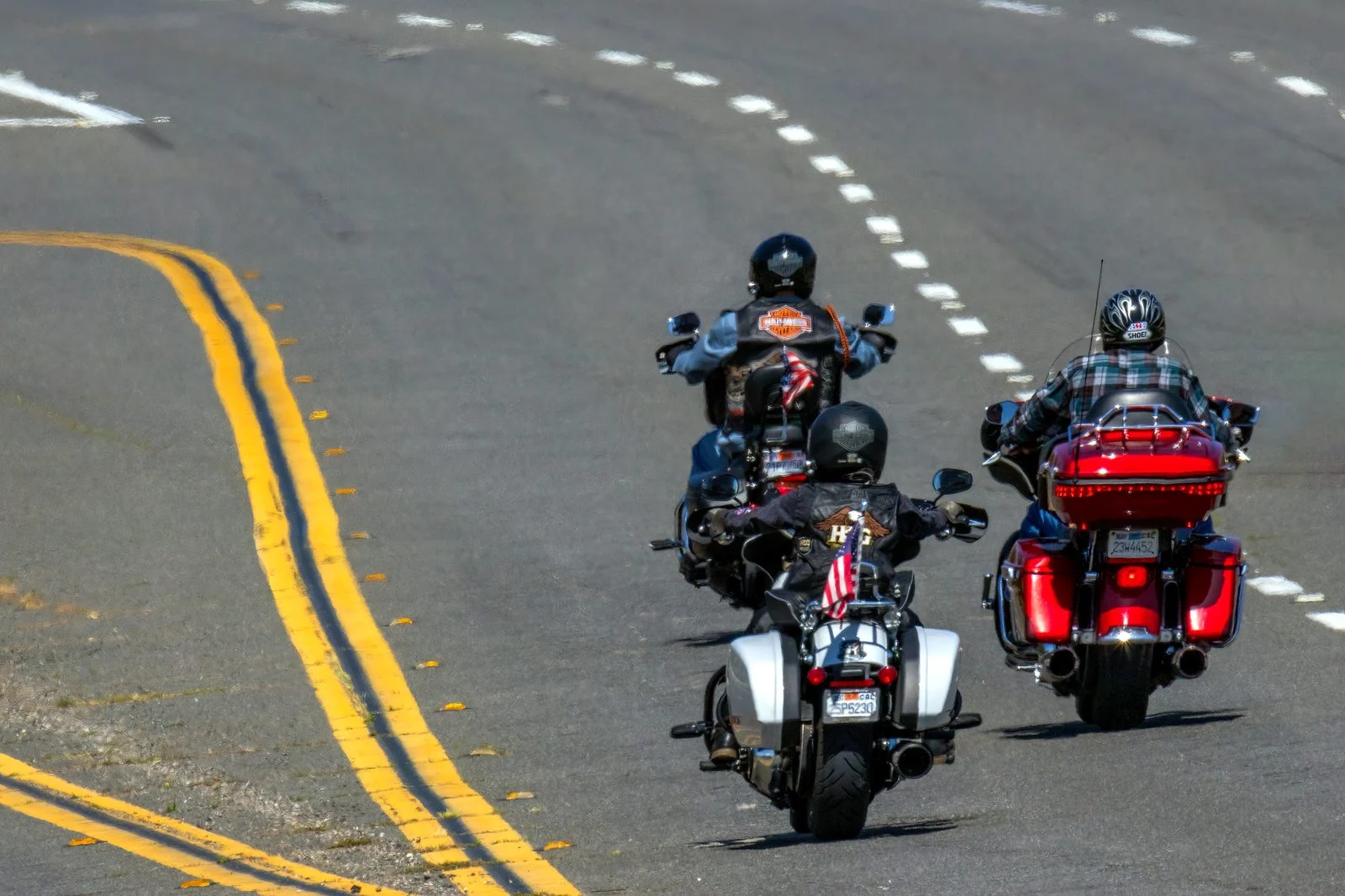
Merging traffic and speed gaps leave a motorcyclist less space and less time to react. This is most common where drivers change lanes near each other, such as on-ramps and interchanges.
A driver changing lanes may check a mirror and miss a motorcycle beside the car. Motorcycles are narrow, so they can sit in a blind spot. When a faster vehicle closes on a slower one, a rider may have only seconds to respond.
California law sets speed and following limits for drivers. Under [Vehicle Code § 22350], no one may drive faster than is reasonable or prudent for weather, visibility, traffic, and the road. Vehicle Code § 21703 also requires a following distance that is reasonable and prudent.
Road context comes from state data. Caltrans annual collision data covers California state highways, including fatal and injury crashes and the primary crash factor. Those records show patterns on the same routes riders use.
A motorcycle is also harder for some drivers to judge. A narrow profile can make a fast-closing bike look farther away than it is. That is a factor to examine, not a finding of fault against any driver.
A common assumption is that the other driver has seen you. Riders can’t control other drivers, so each crash needs a close look at the lanes, the speeds, and the timing.
Roadway Conditions That Can Contribute to a Crash
Uneven pavement, debris, and lane edge drop-offs can affect a motorcycle more than a car. A bike has two narrow tires and less weight to absorb a bump or a slide.
Common hazards include potholes, cracked pavement, gravel or sand in the lane, and debris that trucks leave behind. Other problems are shoulder drop-offs, lane shifts in construction zones, and water that pools after rain. Riders feel these hazards more than drivers in cars do.
A road condition matters only when the facts show it played a role. The cause of each crash is decided case by case, using the scene, photos, and the official report.
When a public agency owns the road, a separate rule applies. Under [Government Code § 835], a public entity can be liable for injury from a dangerous condition of its property. The condition must have been dangerous, must have caused the injury, and must have created a foreseeable risk of that kind of injury. The entity must also have created the condition through a negligent or wrongful act or omission of an employee within the scope of his employment, or have had actual or constructive notice of it a sufficient time before the injury to have taken measures to protect against it.
A crash near an interchange may involve a city or county road, not only the state highway. Note the exact location early.
If a part on the motorcycle failed, that can be a separate question. Riders who suspect a road condition or a bike part played a role should say so early. Early documentation helps preserve the scene and the motorcycle.
What Rules Apply When You Ride in California
California requires a helmet for the driver and every passenger on a motorcycle operated on the highway. Under [Vehicle Code § 27803], the helmet must meet the statute’s requirements. Cal. Veh. Code § 27803 reads: “(f) This section does not apply to a person operating, or riding as a passenger in, a fully enclosed three-wheeled motor vehicle that is not less than seven feet in length and not less than four feet in width, and has an unladen weight of 900 pounds or more, if the vehicle meets or exceeds all of the requirements of this code, the Federal Motor Vehicle Safety Standards, and the rules and regulations adopted by the United States Department of Transportation and the National Highway Traffic Safety Administration.” Under Cal. Veh. Code § 27803, a driver and any passenger must wear a safety helmet when riding a motorcycle, motor-driven cycle, or motorized bicycle, and the helmet must be fastened with its straps and fit the head securely without excessive lateral or vertical movement.
It is unlawful to operate a motorcycle when the driver or a passenger is not wearing a required helmet. The IIHS helmet law table reports that under Vehicle Code § 27803, California requires motorcycle drivers and passengers on highways to wear helmets, but the section does not apply to a person operating or riding in a fully enclosed three-wheeled motor vehicle that meets its listed size, weight and safety standards.
Other drivers have duties too. Drivers must share the road with motorcyclists under the same traffic laws that cover every vehicle. The speed and following rules apply to a car behind a motorcycle just as they apply to any other vehicle.
California law also creates a presumption in some cases. Under Evidence Code § 669, a person may be presumed to have failed to use due care if that person violated a statute, ordinance, or regulation of a public entity, the violation caused injury, the injury was the kind the statute was meant to prevent, and the injured person was one of the class of persons the statute was meant to protect. The person can try to rebut that presumption by showing they acted as a careful person would.
Helmet use and traffic rules are facts that can be reviewed after a crash. Keep records that show how you were riding and what gear you wore.
How the CHP Investigation and Collision Report Work
When the California Highway Patrol investigates a crash on a state highway, its collision report is a key record. The report is one part of the evidence, not the whole story.
A collision report commonly lists the parties, vehicles, witness information, vehicle damage, and the officer’s observations. It can also note road conditions at the scene.
Other evidence matters too. Photos taken soon after the crash help show the lanes, the road surface, and vehicle positions. Dashcam video, witness names, and 911 records can also be useful. Medical records show the injuries and the care that followed.
What you say at the scene matters. Under [Evidence Code § 1160], expressions of sympathy made to an injured person or to that person’s family (limited by statute to a spouse, parent, grandparent, stepparent, child, grandchild, sibling, half sibling, adopted child of a parent, or spouse’s parent) are not admissible as evidence of an admission of liability in a civil action. A statement of fault is different, and the statute does not protect it.
In plain terms, words of sympathy are treated differently from a statement that you caused the crash. Keep your own account factual and brief. Bring a copy of the report to a consultation, so the facts can be reviewed together.
If a Motorcyclist Dies: Coroner, Next of Kin, and Family Steps
After a fatal crash, the county coroner’s office identifies the person who died and works on next of kin notification. Families may need to deal with that office before they can make funeral plans.
Families often handle notification, the timing of release, and funeral or burial arrangements in the same stretch of days. Many families are grieving while sorting paperwork. A folder with the crash report, medical records, and funeral receipts can keep the claim organized. The [funeral and burial costs guide] covers the cost side in more detail.
California law decides who may bring a death claim. Under [Code of Civil Procedure § 377.60], the decedent’s surviving spouse or registered domestic partner, children, and issue of deceased children may bring the claim; if there is no surviving issue, the persons who would inherit the decedent’s property by intestate succession may bring it. Dependent persons, such as parents, stepchildren, or a putative spouse, may also bring it. A personal representative may also file on their behalf.
Survival damages follow a different rule. Under [Code of Civil Procedure § 377.34], damages in an action brought by the decedent’s personal representative are limited to losses the decedent sustained before death, including any penalties or punitive or exemplary damages the decedent would have been entitled to recover had they lived. Those damages generally do not include pain and suffering. The statute names narrow exceptions.
Because the rules are technical, it helps to write down names, relationships, and dates early. Those details show who may bring a claim and what losses belong to each category.
Not sure what your next step is?
Talk it through with our team — the first consultation is free, confidential, and carries no obligation.
Deadlines to Know After a Highway Crash
For many injury and death claims against a private party, California law gives two years to file suit (Code Civ. Proc. § 335.1). [Code of Civil Procedure § 335.1] provides a two-year period for an action for injury to, or death of, an individual caused by another’s wrongful act or neglect.
Public agencies have shorter clocks. Under [Government Code § 911.2], a claim relating to death or injury to person must be presented not later than six months after the cause of action accrues. Other claims have a one-year period.
Section 945.6 sets suit deadlines after a written claim. If written notice is given under Section 913, the suit must be commenced within six months after that notice is personally delivered or mailed. Under Cal. Gov. Code § 946.6, if the court makes an order relieving the petitioner from Section 945.4, suit on the cause of action to which the claim relates shall be filed with the court within 30 days thereafter.
Many people assume the two-year period covers every claim. A crash on the highway may still involve a local road or an agency-owned shoulder.
The exact deadline depends on the facts and the parties involved. Don’t wait to have the crash reviewed, because the clock keeps running.
Who May Be Responsible and What Compensation Can Cover
Responsibility can rest with a negligent driver, a commercial vehicle operator, a vehicle or parts maker, or a property owner. The facts of the crash decide which party or parties may be responsible.
Damages are reduced by that person’s percentage of fault. Every case depends on its own facts, so a rider who is partly at fault may wish to discuss the situation with Colvin Accident Lawyers.
Compensation categories generally include medical bills, lost income, and damage to the motorcycle and gear. An injured person may also seek pain and suffering damages. In a fatal case, family members may pursue losses that the law allows them to recover.
Each claim turns on its own losses and its own evidence. Medical records, pay records, repair estimates, and the crash report all shape what a claim contains.
Keep the focus on documentation. Clear records make each category easier to explain.
Protecting Your Claim in the First Days After a Crash
Get a medical evaluation soon after a crash, even when injuries feel minor. Some injuries become clearer over the next days. Follow the care plan and keep the appointments, because gaps in treatment can complicate a claim.
Keep a running record. Save photos of the scene, the road, the motorcycle, and your gear. Keep medical bills and receipts. Note missed work and pay lost, and save pay stubs.
Write a timeline of the crash while your memory is fresh. Include the time, the lane, the weather, and what you saw and heard. Collect names and phone numbers of any witnesses.
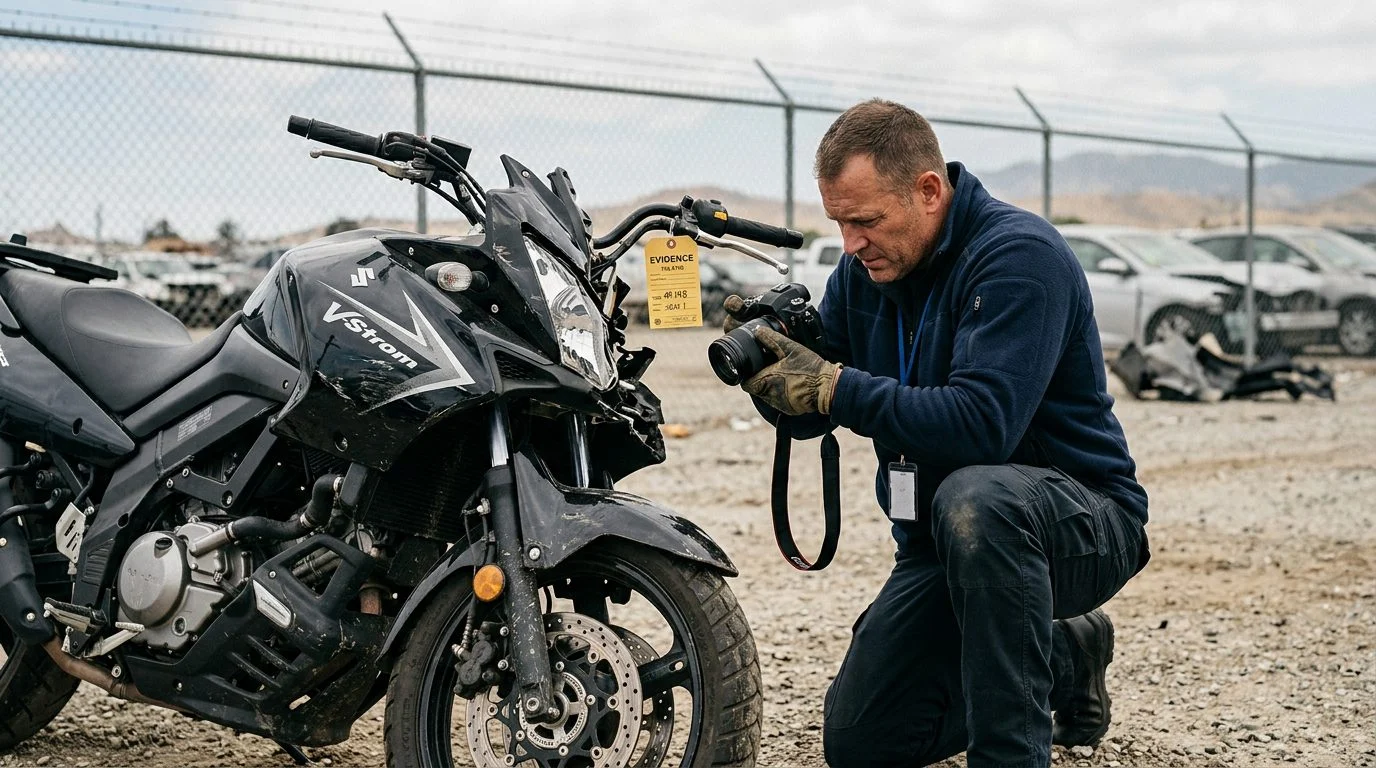
Preserve the motorcycle and helmet. Don’t repair or sell the bike before the crash has been documented. The helmet and gear can show how the crash happened.
An insurance adjuster may ask for a recorded statement. Recorded statements can be used later in a claim. Answer questions carefully, stick to facts you know, and avoid guessing about speed or distance.

Talk With Colvin Accident Lawyers About Your Highway Crash
If you were hurt in a motorcycle crash on Highway 58 or Highway 99, or lost someone in one, you can talk through the facts with Colvin Accident Lawyers.
Common questions
How long do I have to file a motorcycle crash claim in California?
For many injury and death claims against a private party, California law gives two years. Claims against public agencies can have much shorter deadlines.
Can I still recover if I was partly at fault?
Yes. California reduces damages by your share of fault rather than barring recovery.
Is a helmet required for passengers?
Yes. California law requires the driver and every passenger to wear a helmet on a motorcycle on the highway.
Who can bring a wrongful death claim after a motorcycle crash?
California statute names certain family members and dependents who may bring the claim.
Crashes on these highways can leave riders and families with hard questions about the report, the road, and the deadlines. Colvin Accident Lawyers offers a free first consultation that is confidential and carries no obligation to continue. You can reach the firm through the contact page to go over your crash, your records, and the next steps.
Colvin Accident Lawyers, Bakersfield, California — responsible for this site. Responsible lawyer: Donald Norman Colvin.
How We Can Help After a Motorcycle Crash
Focused on Injury Claims
We represent people hurt in motorcycle crashes and the families of those who have died, including cases involving serious and catastrophic injuries.
Investigating the Facts
Crash reports, scene details, medical records and insurance communications all shape a claim. We help gather and organize them so your case is clearly presented.
Serving Kern County and Nearby Communities
Our office is in Bakersfield, and we represent accident victims from Kern County and surrounding areas, including Fresno, Visalia, Lancaster, Palmdale, Delano and Tehachapi.
A Free, Confidential First Consultation
Talk with us about what happened and your options. The first consultation is free, confidential and carries no obligation to continue.
Be Careful With Insurance Calls
An insurance adjuster may contact you soon after a crash and ask for a recorded statement. Before you give one or sign any release, consider talking with a lawyer about how your words may be used.
Steps to Take After a Motorcycle Crash
Get Medical Care
Even injuries that seem minor can worsen over time. A prompt medical evaluation protects your health and creates a record of your injuries.
Document the Scene
If you are able, photograph the roadway, vehicles, helmets and gear, and any visible injuries. Note the location, the time and names of any witnesses.
Keep Your Records
Save medical bills, repair estimates, lost-work documentation and all correspondence with insurance companies in one place.
Talk With Us
Contact Colvin Accident Lawyers for a free, confidential first consultation. We can review what happened and explain the next steps.