Motorcycle Accident Lawyers | Bakersfield and Kern County
Damaged Gear and Motorcycle Claims After a Crash
Colvin Accident Lawyers helps California riders and families understand what a motorcycle crash can cost, from the bike and helmet to riding gear and other property.
By Donald Norman Colvin · Published October 29, 2026
A motorcycle damage and gear claim after a crash in California is a claim for property damage. Yes, a rider can seek money for the bike and riding gear damaged in the same crash. That can mean the cost to repair the motorcycle, or its fair market value if it is totaled, plus items like a helmet or jacket.
This guide explains how that claim works, how it differs from an injury claim, and what to document. Colvin Accident Lawyers is based in Bakersfield, California.
Yes, Motorcycle and Gear Damage Can Be Part of a Claim
Under Cal. Civ. Code § 3281, a person harmed by another’s unlawful act may recover money, called damages.
Gear counts when the same crash damaged it. That includes a helmet, jacket, gloves, and boots. The amount depends on the facts of your crash, so each claim is judged case by case.
If a crash left your motorcycle or riding gear damaged, you don't have to sort out the insurance claims alone, and our team can talk through your options with you. Talk it through with our team — the first consultation is free, confidential, and carries no obligation.
Property Damage vs. Injury Claims: Why They Are Separate
Property damage and injury claims are separate, and each needs its own proof. The bike and gear claim covers what was broken or lost. The injury claim covers your physical harm, medical bills, lost pay, and pain.
Under Cal. Civ. Code § 3333, for the breach of an obligation not arising from contract, damages compensate for all the detriment proximately caused by the breach, unless the Code expressly provides otherwise. That detriment includes the loss of your bike and gear, not only your medical bills.
Timing matters. Cal. Code Civ. Proc. § 335.1 gives two years for an injury claim.
The property claim can resolve while injury treatment continues, and the injury claim can stay open. A wrongful death or catastrophic injury case has its own damages framework and may include the same bike and gear items. For the injury side, see our motorcycle accident lawyer page.
Repair or Total Loss: How the Motorcycle Is Valued
A bike is often treated as a total loss when repair costs approach or exceed its value before the crash. When the repair estimate is reasonable compared to the bike’s value, repair is the usual path.
Fair market value means what the bike was worth immediately before the crash. Valuation usually considers condition, year, make, model, mileage, and recent sales of similar bikes.
Custom parts and aftermarket upgrades can add value, but only if you can prove them. Keep receipts, photos, and maintenance records that show what was installed and when. Recent service history also shows the bike’s condition before the crash.
In some cases, a rider may keep the wrecked motorcycle. The payment is then adjusted to reflect the salvage value.
Your Own Insurer vs. the At-Fault Driver’s Insurer
Your own policy and the at-fault driver’s liability coverage can both pay for motorcycle damage, but they work differently. Collision coverage on your policy can pay for damage to your bike regardless of who caused the crash, subject to your deductible and policy terms. Comprehensive coverage can apply to non-collision losses, such as theft or vandalism. Coverage for gear and aftermarket parts varies by policy.
When another driver is at fault, that driver’s liability coverage may pay for property damage. You may present that claim directly to the at-fault party’s insurer. Your own insurer and the other insurer may handle the two claims separately, so the claims need to be coordinated to avoid gaps.
A rider found 70% at fault would still recover 30% of damages.
Documentation That Supports a Motorcycle and Gear Claim
Strong claims rest on evidence gathered early, especially photos, receipts, and repair records. Start with these items:
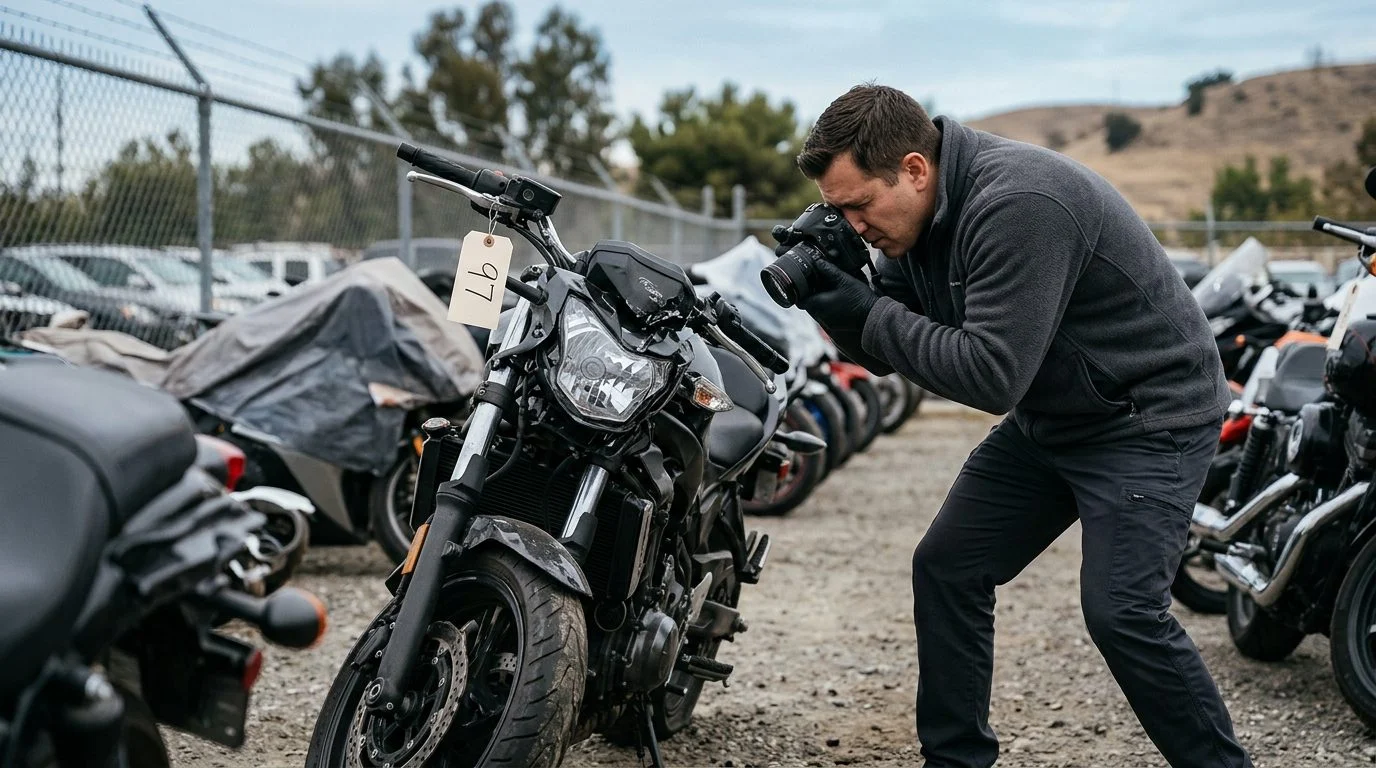
- Photos and video at the scene, from several angles, including close-ups of the damage.
- Receipts, invoices, and purchase records for the bike, aftermarket parts, and gear, including brand and model.
- Repair estimates from a licensed shop, or an appraisal for a total loss.
- Towing and storage bills, plus records showing the bike could not be ridden.
- Title, registration, maintenance records, and any earlier damage reports.
- The damaged helmet and gear. Keep them, along with the labels and the crash date.
Reporting matters too. Under Cal. Veh. Code § 16000, a driver involved in an accident on a street or highway, or in a reportable off-highway accident as defined in Section 16000.1, that causes damage to the property of any one person in excess of $1,000, or bodily injury or death, must report it to the Department of Motor Vehicles in Sacramento, on a form the department approves, within 10 days, unless the motor vehicle was owned or leased by, or under the direction of, the United States, this state, another state, or a local agency. The report can be made personally or through an insurance agent, broker, or legal representative. California Highway Patrol guidance covers notifying law enforcement and requesting crash reports.
Common Gaps That Reduce What a Rider Recovers
Missing records, early settlement offers, and repairs completed before an inspection can each affect a claim. Some gaps can affect a claim.
Missing receipts make gear harder to value. Photos, model details, and listings for matching items can help, but proof is weaker without a receipt.
Accepting an early offer before the bike’s total loss value is documented can leave money on the table. California lists, among unfair claims practices, knowingly committing or performing with such frequency as to indicate a general business practice, failing to promptly provide a reasonable explanation of the basis for a claim denial or compromise offer, under Cal. Ins. Code § 790.03.
Repairing the bike or throwing away parts before photos and estimates are collected removes evidence. Coverage for gear and aftermarket parts is not automatic, so it’s worth knowing what your policy says.
Waiting too long can cost you the claim. Cal. Code Civ. Proc. § 335.1 provides that, within two years, an action must be commenced for assault, battery, or injury to, or for the death of, an individual caused by the wrongful act or neglect of another.
Not sure what your next step is?
Talk it through with our team — the first consultation is free, confidential, and carries no obligation.
Frequently Asked Questions About Motorcycle and Gear Damage Claims
The answers below cover common questions about bike and gear claims.
Can I claim a helmet damaged in a crash I did not cause?
Yes, a rider may seek the cost of damaged gear as property damage. The claim is judged on the facts of the crash.
Do I have to use my own insurer first?
Not necessarily. You may use your own collision or comprehensive coverage, and a claim against the at-fault driver’s insurer may proceed alongside it.
Is the property damage claim the same as my injury claim?
No. They are separate categories of damages, with different proof and different deadlines.
What if my bike is totaled?
Fair market value before the crash is the usual measure, supported by valuation evidence.
What if I have no receipts?
Photos, model details, comparable listings, and records from the seller or retailer may still support the claim.
Yes, You Can Talk With Colvin Accident Lawyers About Your Claim
If a crash totaled your motorcycle or ruined your gear, you may be deciding which insurer to contact first. Should the claim go through your own policy, the other driver’s insurer, or both? Colvin Accident Lawyers, based in Bakersfield, California, offers a free, confidential initial consultation with no obligation to continue. To talk through your bike and gear claim, contact Colvin Accident Lawyers.
Colvin Accident Lawyers, Bakersfield, California — responsible for this site. Responsible lawyer: Donald Norman Colvin.
How We Can Help
Free first consultation
Your initial consultation is free, confidential and comes with no obligation to continue.
Organized evidence
We help you gather and preserve photos, repair estimates, receipts and other records that document gear damage.
Direct contact with our office
Call Colvin Accident Lawyers to talk through what happened and what questions to ask.
Keep the Gear Involved in the Crash
Do not repair, clean or throw away a damaged helmet, jacket, boots or motorcycle before you speak with a lawyer. These items can be important evidence of how the crash happened and what it damaged.
Items That Are Often Part of a Motorcycle Damage Claim
Motorcycle repair or replacement
Damage to the frame, fairings, wheels, forks, engine and other parts, documented with repair estimates or appraisals.
Helmets
Helmets that absorbed an impact should be preserved and documented, since their condition can help show what the crash involved.
Riding gear
Jackets, gloves, pants, boots and other protective clothing that were torn, cut or damaged in the crash.
Other personal property
Phones, saddlebags, electronics and other items that were in use or carried on the motorcycle when the crash occurred.