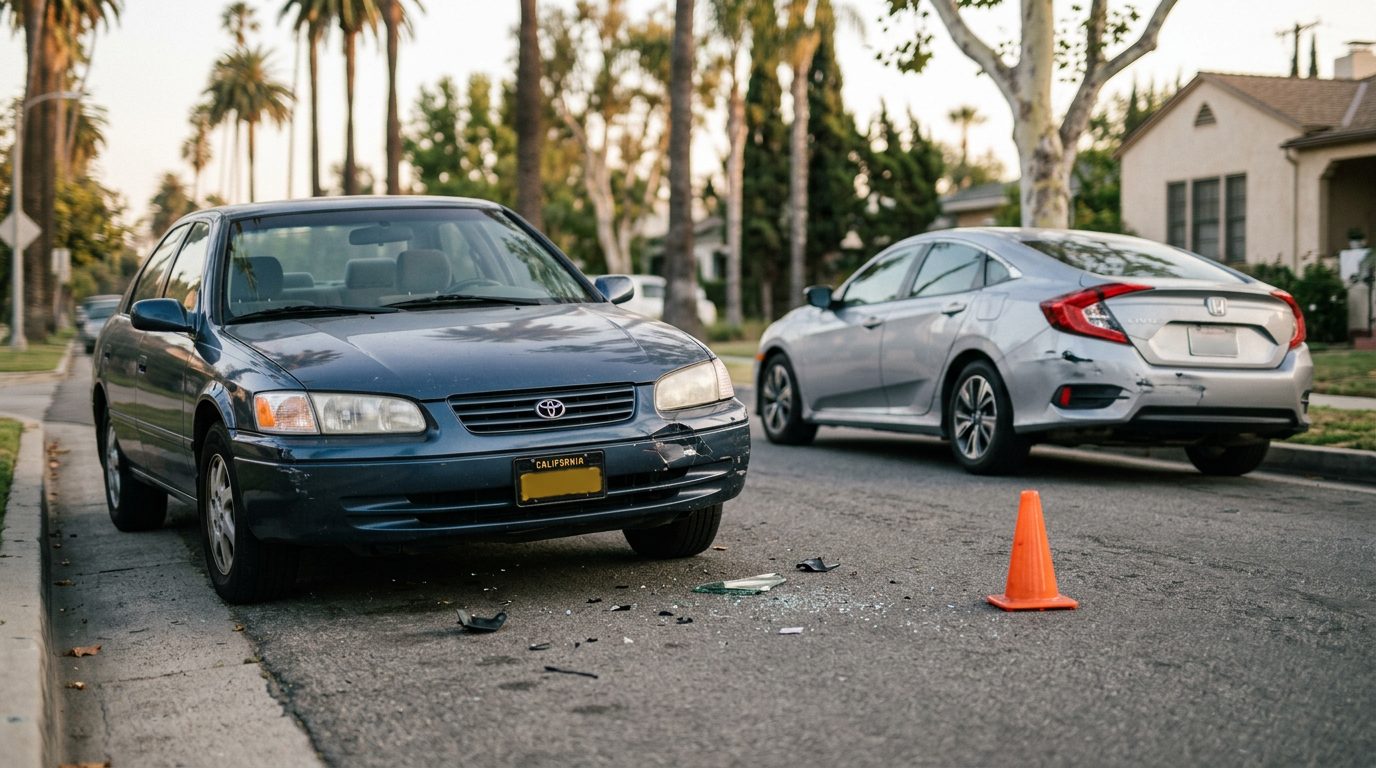
Uninsured Driver Crashes | Bakersfield, California
Hit by an Uninsured Driver in California? Know Your Next Steps
Your own insurance, the other driver's assets, and the facts of your crash all shape what comes next. Colvin Accident Lawyers can explain your options in a free, confidential first consultation.
By Donald Norman Colvin · Published October 18, 2026
What happens if I get hit by an uninsured driver in California? The short answer is that you still have options, but they turn on your own insurance and the facts of the crash. Your own uninsured motorist (UM) coverage may be one path, if your policy includes it. You may also have a claim against the driver personally.
This guide walks through the steps in order. You’ll see what to do at the scene, how UM coverage works, what changes in a hit-and-run, when a driver can be sued, and which deadlines matter. No article can tell you how your case will turn out, because every case turns on its own facts.
What Happens First After an Uninsured Driver Hits You in California
Your first steps are to get medical care, call police, and document the scene. Get checked by a medical provider even if you feel fine. Some injuries show up hours or days later.
Next, call the police and ask for a report number. Do this even if the other driver leaves or says they have no insurance. That number is your link to the official record of the crash.
Then document everything you can. Photograph both vehicles, the road, the scene, and any injuries. Write down the other driver’s license plate and a description of the driver and the car. Ask witnesses for their names and phone numbers.
Finally, tell your own auto insurer about the crash promptly. Keep copies of every medical bill, receipt, and treatment record. Keep a simple log of time off work, rides to appointments, and out-of-pocket costs. Reporting early also keeps the timeline clear.
What Uninsured Motorist Coverage Is and How It Works in California
UM coverage is a part of your own auto policy that can pay when the at-fault driver has no insurance. Whether you have it depends on the policy you bought.
UM coverage can come in two forms. UM bodily injury covers injuries to you and others your policy protects. UM property damage covers damage to your vehicle, and a deductible may apply. Your policy decides which forms you have.
A UM claim goes to your own insurer under your own policy. It is not a demand on the other driver’s personal money. Your declarations page lists the coverages and limits you chose.
Don’t mix UM up with underinsured motorist (UIM) coverage. UIM applies when the at-fault driver has some insurance, but not enough to cover your losses. A policy may include UM, UIM, both, or neither.
Minimum insurance is low. The California Department of Insurance lists California’s minimum bodily injury limits as $30,000 per person and $60,000 per accident, plus $15,000 for property damage. Serious injuries can cost far more than those amounts. The California driver handbook from the California DMV covers the minimum liability insurance requirements and the consequences of driving uninsured after a collision.
Does Bodily Injury Coverage Cover My Passengers?
Passengers may be covered, but it turns on the policy language and on who the passenger is. There is no single rule that covers every rider.
If a passenger was in a vehicle insured under your policy, the policy’s UM bodily injury terms may apply to that passenger. Some policies treat family members and named insureds differently from other passengers. Read the definitions in your policy to see who it protects.
A passenger who is not a family member may have a different path. If no UM coverage applies in the vehicle, that passenger may need to look at other sources. Which sources fit depends on the facts of the crash.
When you review a claim involving passengers, gather the full policy. Keep a written list of everyone in the vehicle, with each person’s name and contact details. Passengers often feel unsure of their rights. The same scene steps still help: call police, get a report number, and keep records.
Hit-and-Run Accidents When the Driver Cannot Be Identified
In a hit-and-run, the driver’s identity matters, and your policy wording decides whether UM coverage applies. Some policies treat an unidentified hit-and-run driver under the UM terms, but not all do.
Evidence becomes more important when the other driver is gone. Keep the police report number, witness names, photos of the scene, and any paint or debris the other vehicle left behind. Store these together in one folder, on paper or digitally.
Keep following up on the report. Ask the investigating agency where the case stands, and write down the date and name of each contact. Police investigations can take a varying amount of time, so ongoing follow-up matters.
Report the crash to police promptly. Prompt reporting creates the official record early. Injuries from a hit-and-run can be serious and may not appear right away. Get medical care and keep every record, even if the driver is never found.
When the At-Fault Driver Is Found but Has No Insurance
If the at-fault driver is found but has no insurance, your own UM coverage may be the next step, depending on your policy. The driver’s lack of insurance changes where money may come from, not who must be shown at fault.
Under California’s negligence rules, a person who fails to use ordinary care is responsible for an injury occasioned to another by that failure, except so far as the injured person’s own willful or careless conduct brought the injury upon themselves. Civil Code § 1714 states that rule. Fault is shown through evidence, such as police reports, witness statements, and photos of the scene.
Be careful with recorded statements and signed releases. Insurers may ask for a statement early. Ask what the statement will be used for before you give one. Read any release fully before you sign it.
Can You Sue the Uninsured Driver Directly?
Yes, you can generally sue the uninsured driver personally. Civil Code § 3281 says a person who suffers detriment from another’s unlawful act may recover compensation in money from the person in fault.
For a breach of an obligation not arising from contract, damages cover all the detriment the wrong proximately caused, as Civil Code § 3333 describes. Detriment means loss or harm in person or property, as Civil Code § 3282 defines it. Collecting a judgment can be harder if the driver has few assets.
A UM claim and a lawsuit against the driver are different paths. They may be considered together, and how they interact turns on your policy and the facts.
One rule matters for owners. If you owned the car in the crash and it was not insured as California requires, Civil Code § 3333.4 bars recovery of non-economic losses like pain and suffering. Economic losses, such as medical bills, are not barred by that rule. For an owner of an uninsured vehicle, Civil Code § 3333.4 does not bar recovery of non-economic losses when the driver who hit you was convicted of an offense under Vehicle Code § 23152 or § 23153; the exception applies only to a person described in paragraph (2) of subdivision (a).
If the at-fault driver was using someone else’s car, the owner may be liable under Vehicle Code § 17150 for injury resulting from that driver’s negligent operation, but only when the driver used the car with the owner’s express or implied permission. Vehicle Code § 17150 makes an owner liable for death or injury to person or property resulting from a negligent or wrongful act or omission in the operation of the motor vehicle by anyone driving with the owner’s express or implied permission. When more than one person shares fault, Civil Code § 1431.2 generally limits each defendant’s liability for non-economic damages to its own share of fault.
Deadlines That Matter After an Uninsured Driver Crash
A personal injury lawsuit generally must be filed within two years in California. Code of Civil Procedure § 335.1 sets that time limit. Two years is the general rule, and it is the number to watch.
Missing the deadline can end a lawsuit, even when the crash facts are strong.
Your policy may also set its own notice rules. Some policies ask you to report a crash or a UM claim within a set time. Those terms are in the policy, so review them early.
Keep a calendar with the crash date, the date you reported to police, and the date you notified your insurer. Write down every deadline you learn about. Deadlines can overlap, and they are easy to miss during recovery. The dates that apply depend on the facts, so confirm them as early as you can.
Special Considerations for Motorcycle and Bicycle Crashes
Motorcycle and bicycle crashes can raise coverage questions that differ from a car crash. A rider may ask whether a household auto policy applies, and the answer turns on the policy wording and the facts.
Protective gear and medical records can matter when injuries are reviewed. Photograph helmets, clothing, and the motorcycle or bicycle after the crash. Keep records of every visit, test, and prescription. These records show how your injuries developed over time.
Bicyclists and pedestrians should follow the same core steps. Get medical care, report to police, document the scene, notify your insurer, and track your deadlines.
Our motorcycle accident lawyer page covers rider claims in more detail. Our truck accident lawyer page covers company vehicle liability when a commercial vehicle is involved.
Talk Through Your Situation With Colvin Accident Lawyers
Quick Answers to Common Questions
What happens if I get hit by an uninsured driver in California? Your own UM coverage may apply if your policy includes it. You may also have a claim against the driver personally.
Can you sue an uninsured driver in California? Generally, yes, if the driver was at fault. Collecting a judgment can be difficult.
How long do I have to file? A personal injury lawsuit generally must be filed within two years in California (Code Civ. Proc. § 335.1).
Does my own insurance pay if the other driver is uninsured? It may, if your policy includes UM coverage. Your declarations page shows the coverages you chose.
Being hurt, dealing with a damaged vehicle, and trying to understand insurance can all happen at once. If that’s your situation, or you’re helping an injured family member, our team is glad to talk it through with you. Donald Norman Colvin is the lawyer behind Colvin Accident Lawyers in Bakersfield, and we help injured people across Kern County and nearby communities, including Fresno, Visalia, Lancaster, Palmdale, Delano, and Tehachapi. Our first consultation is free, confidential, and carries no obligation to continue. Start with our contact page.
Colvin Accident Lawyers, Bakersfield, California — responsible for this site.
Possible Paths After an Uninsured Driver Crash
Your uninsured motorist coverage
If your own policy includes uninsured motorist (UM) coverage, it may help pay for injuries when the at-fault driver has no insurance. Whether it applies depends on your policy and the facts of your crash.
A claim against the driver
The at-fault driver may be personally responsible for the harm they caused. Collecting from an individual with no insurance can be complicated, so the details matter.
Hit-and-run crashes
When the other driver leaves the scene, how the crash happened and what evidence exists can shape which coverage may apply to your claim.
Wrongful death claims
If a loved one was killed in a crash with an uninsured driver, the family may have legal options. We can explain them and what they involve.
Protect Your Claim From the Start
Document the scene
Photos, the other driver's details, witness names, and the police report number give your claim a record to build on.
Get a medical evaluation
Some injuries appear hours or days later. A prompt medical evaluation creates a record of what your body went through.
Report to your own insurer
Tell your insurance carrier about the crash and review what your policy says about uninsured motorist coverage.
Be careful with statements
Speak with a lawyer before giving a recorded statement or signing anything from an insurance company.
Warning: Don't Accept an Offer Without Advice
An insurance company may make an early offer before the full extent of your injuries is known. Talk with us before you accept an offer or sign any release.
Start With a Free, Confidential Consultation. No Obligation to Continue.
Related practice areas
- How a Motorcycle Crash Claim Works in California: Steps, Deadlines, and Who Pays