Motorcycle Accidents | Bakersfield and Kern County
Hit by a Company Vehicle on Your Motorcycle?
Colvin Accident Lawyers represents injured riders and families in Kern County, Fresno, Visalia, Lancaster, Palmdale, Delano and Tehachapi. We help you understand who may be liable when a company vehicle is involved.
By Donald Norman Colvin · Published October 24, 2026
Motorcycle Hit by Company Vehicle: Who Is Liable in California?
If a company vehicle hits a motorcycle in California, more than one party may be responsible. The driver, the employer, and the vehicle owner can each face liability, based on how the crash happened. Colvin Accident Lawyers is based in Bakersfield and represents motorcycle riders, passengers, and families in Kern County and nearby communities. This guide explains how California decides who pays, and what to protect now.
If a company vehicle hit you or someone you love on a motorcycle, you may have a claim, and you don't have to sort out who is responsible alone. Contact Colvin Accident Lawyers to talk through what happened. Talk it through with our team — the first consultation is free, confidential, and carries no obligation.

Who Can Be Held Responsible When a Company Vehicle Hits a Motorcycle
Several parties can be responsible, not only the person behind the wheel. Most claims turn on three questions. Was the driver careless? Was the driver working for the company? Did anyone else contribute to the crash?
The driver can be liable for careless driving. Speed is part of that question. California law says no one may drive faster than is reasonable or prudent for the weather, visibility, traffic, and road, as Vehicle Code § 22350 states.
The vehicle owner can also be liable. Under Vehicle Code § 17150, an owner is responsible for death or injury to person or property resulting from a negligent or wrongful act or omission by a person using the vehicle with the owner’s permission, express or implied. The statute covers driving “in the business of the owner or otherwise.” Vehicle Code § 17151 sets dollar limits on that owner liability. Those limits apply only to liability that does not arise through the relationship of principal and agent or master and servant.
Some crashes also involve a contractor or a maintenance provider. Each may have contributed. The company’s name matters less than the facts. Who drove? Who owned the vehicle? Why was it on the road?
When the Employer Is Liable for an Employee’s Driving
An employer can be liable for an employee’s negligent driving when the employee was acting within the scope of the job.
Courts look closely at the trip. Was the driver doing assigned work? Was the driver on a route the company set? Was the driver running an errand for the business? The facts of the trip control the answer.
This is the “going and coming” rule.
Employers can also face claims for their own conduct. Under Cal. Civ. Code § 3294, an employer is not liable for punitive damages (damages pursuant to subdivision (a)) based on an employee’s acts unless the employer had advance knowledge of the employee’s unfitness and employed the employee with a conscious disregard of others’ rights or safety, authorized or ratified the wrongful conduct, or was personally guilty of oppression, fraud, or malice. For a corporate employer, that knowledge, authorization, ratification, or conduct must be on the part of an officer, director, or managing agent.
Motorcycle Passengers and Family Members: Who Has the Claim
An injured passenger usually has a claim against the at-fault parties. The rider’s conduct may come up only if the facts raise it.
Under Code of Civil Procedure § 377.60, the decedent’s surviving spouse, domestic partner, children, and issue of deceased children can sue, or, if there is no surviving issue, the persons entitled to the decedent’s property by intestate succession, including a surviving spouse or domestic partner. Other dependents may also qualify. These include parents, and certain minors who lived in the decedent’s household for the previous 180 days and were dependent on the decedent for one-half or more of their support. Under Cal. Code Civ. Proc. § 377.60, if a decedent’s parents would be entitled to bring a wrongful death action and are deceased, the decedent’s legal guardians, if any, may bring the action as if they were the parents.
Some injuries take time to show their full effect. Brain injuries and spinal injuries are examples. Early medical care and clear records help document these injuries from the start.
How Fault Is Decided and What Insurers Commonly Argue
California allows an injured person to recover even if that person was partly at fault. The payment is reduced by the injured person’s share of fault. It is not barred entirely.
Insurers often argue about lane position, speed, visibility, or whether the vehicle was turning or changing lanes. Expect these points early. Your account, the police report, and any video should match on the key facts.
An insurer’s early offer is a starting point, not a final answer. Insurance Code § 790.03 lists, as an unfair claims practice, knowingly committing or performing with such frequency as to indicate a general business practice the failure to attempt in good faith prompt, fair, and equitable settlement when liability is reasonably clear. Insurance Code § 790.03 also lists misleading a claimant as to the applicable statute of limitations among its unfair claims practices. Check any offer against the facts and the medical records before you accept it.
Evidence to Preserve and the Deadlines That Apply
For injury and death claims against private drivers and companies, California’s general limit is two years. Code of Civil Procedure § 335.1 applies that two-year period to an action for injury or death caused by another’s wrongful act or neglect.
Government Code § 911.2 requires a claim against a public entity relating to a cause of action for death or for injury to person or to personal property or growing crops to be presented within six months after the cause of action accrues (Gov. Code § 911.2(a)); this six-month period applies to claims against public entities, not to private parties.
If the rider or passenger was working, workers’ compensation may apply. Labor Code § 3852 says a workers’ compensation claim does not affect the employee’s right to sue a person other than the employer.
Evidence that often matters most includes:
- The police report and its report number
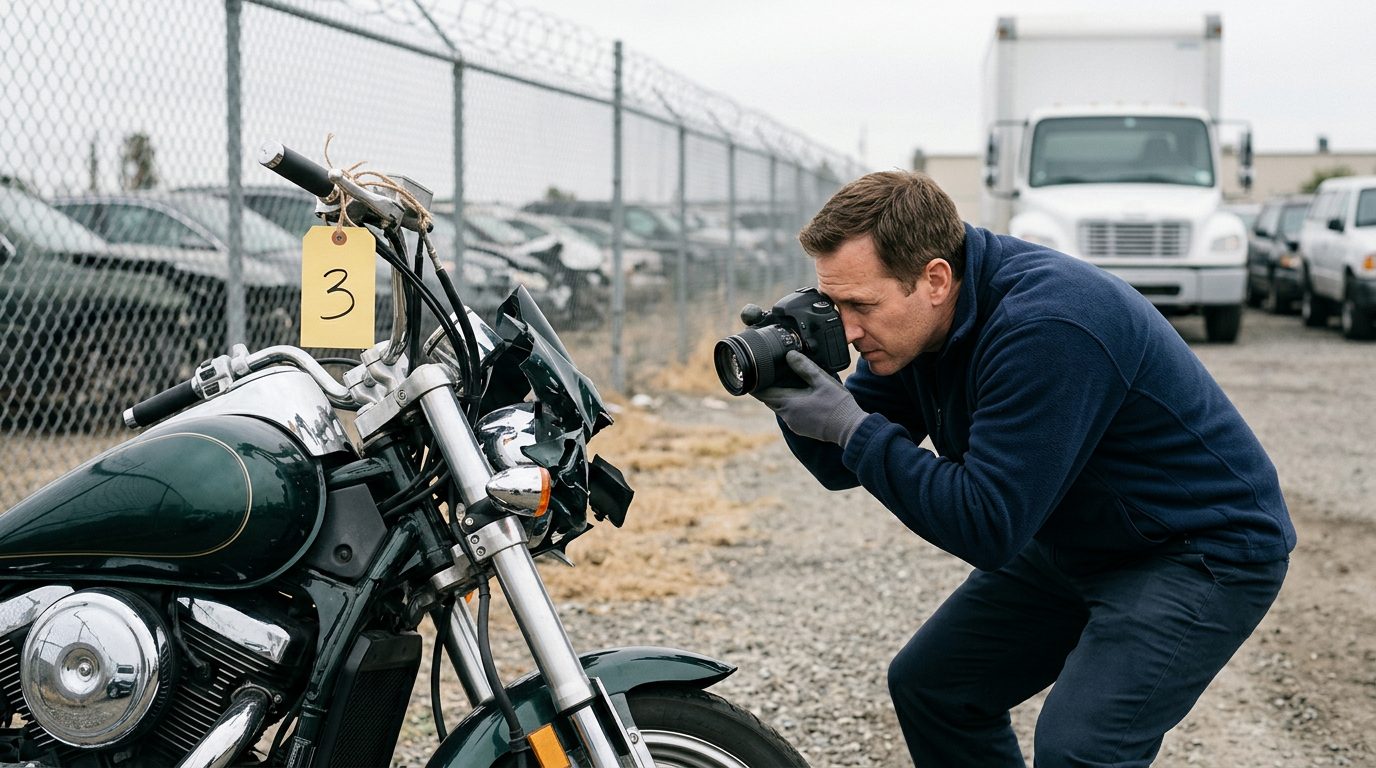
- Photos of the scene, both vehicles, your motorcycle, and your gear
- Dashcam or nearby business video, which can be overwritten quickly
- Names and phone numbers of witnesses
- Medical records and bills
- For company vehicles, dispatch logs, driver records, and vehicle data, which are often central to proving fault
Not sure what your next step is?
Talk it through with our team — the first consultation is free, confidential, and carries no obligation.
Injuries and Losses That May Be Claimable
Claims can cover economic losses and non-economic losses. Under Civil Code § 1431.2, economic damages are objectively verifiable monetary losses. These include medical expenses, loss of earnings, and costs to repair or replace property.
Non-economic damages are subjective losses. The same statute lists pain, suffering, emotional distress, and loss of companionship. Keep a written record of how the injury affects daily life, along with bills and pay records.
Catastrophic injuries, such as traumatic brain injury, spinal cord injury, or limb loss, often need long-term medical planning. These cases may involve future care costs and medical testimony.
When more than one party is at fault, each defendant’s liability for non-economic damages is generally limited to its own share of fault (Civil Code § 1431.2(a)). That is why identifying every potentially responsible party matters.
The value of any claim depends on the crash facts, the injuries, and the evidence. No general figure applies to every case.
What Happens After You Contact Colvin Accident Lawyers
Your first step is a free, confidential first consultation with no obligation to continue. Our team reviews the crash facts, your injuries, and the records you already have.
After that, the work follows a clear path:
- Investigation: We gather the police report, request company and vehicle records, and identify each potentially responsible party and insurer.
- Documentation: We collect medical records, bills, and wage information so the damages are clear.
- Negotiation: We present the claim to the insurers and respond to their offers.
- Filing: If needed, we file suit within the deadlines described above.
Some claims resolve through negotiation. Others go to court. No lawyer can say how a specific claim will end.

Frequently Asked Questions
Can I still make a claim if the company driver says the crash was my fault?
Yes, a claim may still be possible.
Who do I file against if the driver is an independent contractor?
The driver’s status and how much control the company had over the work both matter. Our team reviews those points during the first consultation.
What if the company vehicle was rented or leased?
Owner liability rules can still apply to the vehicle’s owner. Records about who controlled the vehicle can also matter.
Should I talk to the company’s insurer first?
Recorded statements and early releases can affect a claim. Talk with our team before you sign a release or give a recorded statement.
Can a family member bring a claim after a fatal crash?
Yes, certain family members may. Under Code of Civil Procedure § 377.60, surviving spouses, domestic partners, children, and some dependents can file.
If a company vehicle hit a motorcycle you were riding, or one a loved one was riding, you may have a claim. You don’t have to work out who is responsible on your own. Contact Colvin Accident Lawyers to talk through what happened.
How we approach a company vehicle crash
Review the crash facts
We look at the police report, the vehicle involved, and how the collision happened, because each fact can affect who may be responsible.
Identify the parties
A company vehicle crash can involve the driver, the employer, and other parties. We look at each relationship and the work being done at the time.
Examine the insurance
Commercial vehicles are often covered by business policies. We review the coverage that may apply to your claim.
Focus on your recovery
Motorcycle injuries can be serious and long-lasting. We work to account for your medical care, lost income, and day-to-day needs.
Be careful with the company's insurance adjuster
An insurance adjuster may contact you soon after the crash. Before you give a recorded statement or sign any paperwork, talk with a lawyer about your options.
Parties who may be involved in a company vehicle crash
The driver
The driver's actions before and during the crash are often central to the claim, including their route, schedule, and attention on the road.
The company or employer
The business that owns or operates the vehicle may be part of the claim, depending on how the driver was working at the time.
Contractors and subcontractors
When a driver works under a contract, the relationship between the driver and the business can affect who is named in a claim.
Vehicle maintenance and equipment
Brake problems, tire failure, or other equipment issues may point to additional parties who maintained or serviced the vehicle.