Motorcycle Accidents | Bakersfield, California
Protect the Evidence After a Motorcycle Crash
Your photos, your bike, your gear and your records can help show what happened. Our first consultation is free, confidential, and carries no obligation to continue.
By Donald Norman Colvin · Published November 15, 2026
Damaged motorcycle evidence after a crash in California can help show how the collision happened. Keep your bike, helmet, and riding gear until you have photographed and recorded them. Then decide what to repair, store, or replace.
This guide explains what to keep, what to document, and how to protect the record while you deal with insurance and repairs.
Why Your Damaged Motorcycle and Gear Can Matter as Evidence
Your motorcycle, helmet, jacket, boots, and gloves can show how the crash happened. Damage records where the impact landed and how hard it was. A scrape on a fairing, a cracked helmet shell, or torn sleeves each tell part of the story.
Damage is rarely read alone. When fault is reviewed, damage is often compared with the police report, scene photos, and witness accounts. When those sources line up with the damage, the record is easier to follow. When they don’t, questions follow.
So your evidence affects how fault is divided, not only whether a claim exists.
If your motorcycle, helmet, or gear was damaged in your crash, you may have a claim worth reviewing before anything is repaired or discarded, and our team can help you review it. Talk it through with our team — the first consultation is free, confidential, and carries no obligation.
Before You Repair, Sell, or Scrap Anything, Document It
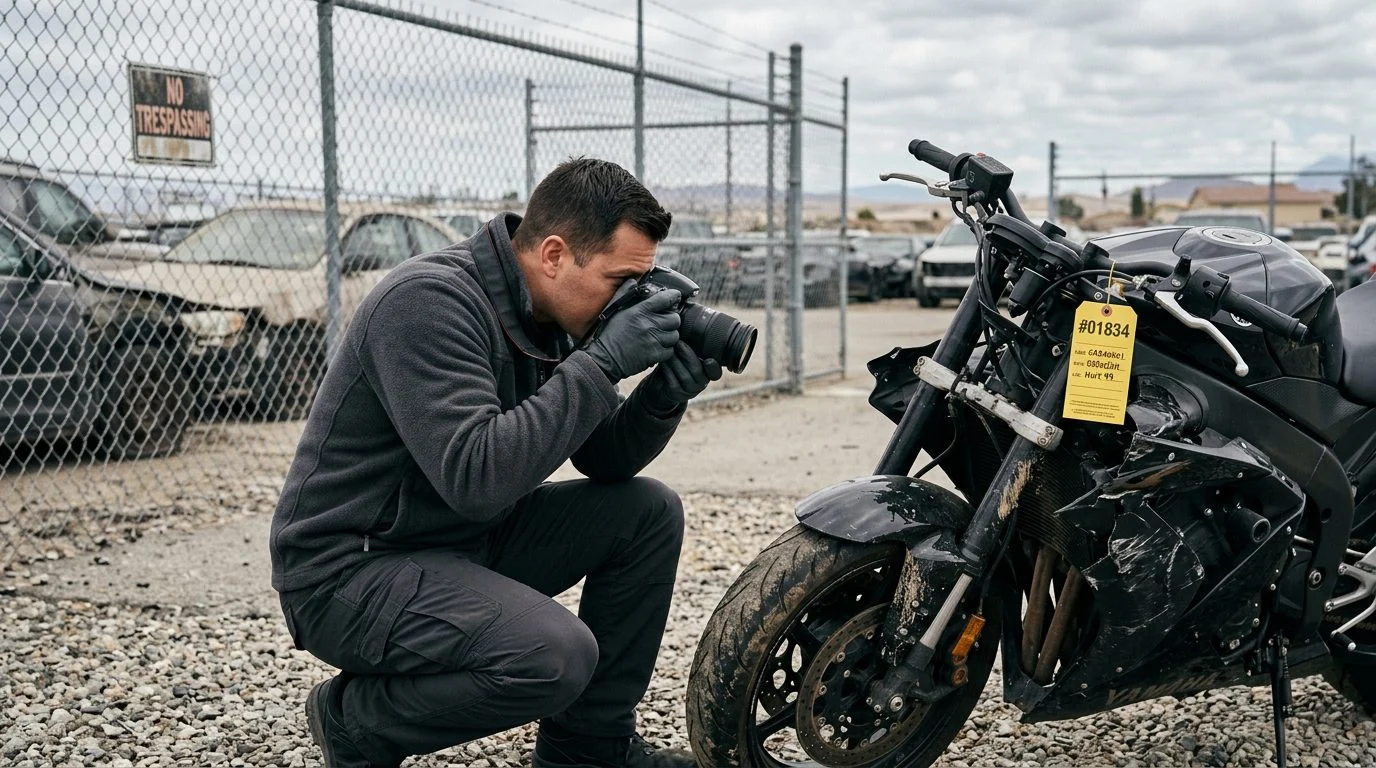
Document everything before anyone repairs, sells, or tows the bike away. Later repairs can erase the marks that show how the impact happened.
Take date-stamped photos and video of every side of the motorcycle and every piece of gear. Use close-ups for scrapes, cracks, dents, and paint transfer. Also take wide shots, so each mark has context.
Write down the odometer reading, the VIN, the license plate number, and any aftermarket parts or upgrades. Keep receipts when you have them. Aftermarket parts can change what a repair costs.
Keep a simple written log. List each item, its condition, and where it is stored. Save every towing and storage receipt.
Know the reporting duty too. Under Vehicle Code § 16000, a driver in a crash that causes more than $1,000 in damage to any one person’s property, bodily injury, or death must report it within 10 days. The report goes on a form approved by the Department of Motor Vehicles. The driver can report personally or through an insurance agent, broker, or legal representative.
What to Keep: The Motorcycle, Helmet, and Riding Gear
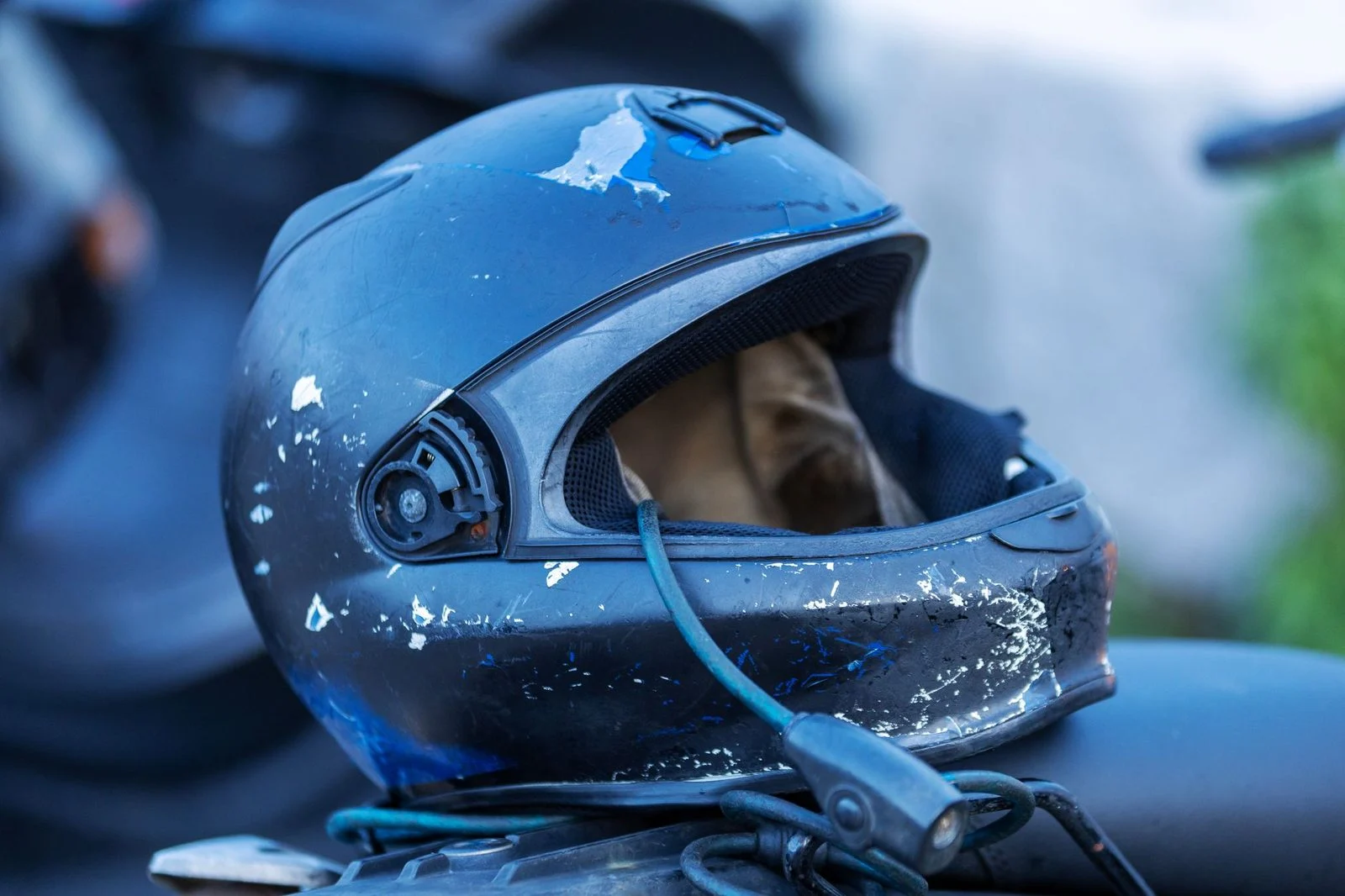
Keep your helmet, even if it looks undamaged. Impact damage inside the shell or liner may not show from the outside.
Keep the jacket, pants, gloves, and boots as they are. Scuffs, abrasions, and tears record where you hit the pavement or a guardrail. Don’t wash, patch, or repair them until you have photographed them.
Many riders replace a helmet after a hard impact. If you plan to do that, photograph the old helmet first and store it. Make the replacement decision after the record is complete.
Keep any parts that came off in the crash, such as mirrors, levers, or a broken windscreen. Store them with the bike.
Scene Evidence and Witness Statements That Support the Damage Record
Call the police to the scene and get the report number before you leave. The report and the physical damage should match. The California Highway Patrol traffic page describes collision procedures, including notifying law enforcement.
Collect names and phone numbers from witnesses. Ask each person what they saw, including the direction of travel, the other vehicle’s path, and each vehicle’s lane position. Write down those notes the same day, while details are fresh.
Photograph skid marks, debris, and any vehicle positions still visible at the scene. Ask nearby businesses whether they have security cameras. Footage may be kept for only a limited time, so ask early.
How Damage Patterns Relate to Fault, Including Lane Splitting
Fault depends on how the collision happened, not on the damage alone. Damage patterns help show that sequence, but they must be read with the rest of the evidence.
Several driving rules often come into play. Under Vehicle Code § 21703, a driver may not follow another vehicle more closely than is reasonable and prudent. Under Vehicle Code § 22350, no one may drive faster than is reasonable for conditions. Speed must never endanger people or property.
Damage location and direction can be compared with these facts. A rear impact to the bike can suggest following distance was an issue. A side impact can suggest a turn or lane change. These are clues, not conclusions.
Lane splitting is a separate question. Vehicle Code § 21658.1 defines lane splitting as riding a motorcycle with two wheels on the ground between rows of vehicles in the same lane. It also lets the California Highway Patrol develop educational guidelines. Whether a rider was lane splitting and who caused the collision must both be reviewed on the facts.
Insurance, Property Damage Claims, and Total Loss Decisions
Ask for the insurer’s valuation and reasons in writing. Don’t sign a repair release or accept a property payment until you have reviewed the damage.
Insurance Code § 790.03 lists knowingly failing to promptly explain the basis for a claim denial or a compromise offer, when committed with such frequency as to indicate a general business practice, as an unfair claims practice. If an insurer denies an item or offers less than you expect, request its reasons in writing.
An insurer may decide a motorcycle is a total loss when repair costs are high compared with its value. Ask how the valuation was built, and keep the report.
Helmets, jackets, and boots are often handled within the property damage claim. Use the same photos, receipts, and log for both.
Track your deadlines. Under Code of Civil Procedure § 338, an action for injuring goods or chattels must be brought within three years. Under Code of Civil Procedure § 335.1, an action for injury to a person caused by the wrongful act or neglect of another must be brought within two years.
Not sure what your next step is?
Talk it through with our team — the first consultation is free, confidential, and carries no obligation.
Storage, Records, and Talking With a Lawyer About Your Crash
Store the bike and gear in a dry, secure place. Don’t sell, scrap, or modify them until the claim decision is made and the records are complete. Keep medical bills, repair estimates, and letters together in one folder.
Does damaged motorcycle evidence after a crash in California still matter if I was partly at fault?
Yes, it can.
Should I keep my motorcycle after a crash?
Yes, keep it until your photos and log are complete and any claim decision is made. Don’t sell or scrap it first.
Do I need to keep my helmet even if it looks fine?
Yes. Photograph and store it before you replace it, because internal damage may not be visible.
How long do I have to file a lawsuit?
Injury claims caused by the wrongful act or neglect of another generally have a two-year deadline under § 335.1 (Code Civ. Proc. § 335.1). A personal-injury lawsuit in California caused by the wrongful act or neglect of another generally must be filed within two years (Code Civ. Proc. § 335.1).
If your motorcycle, helmet, or gear was damaged in a Kern County or Central Valley crash, you may have a claim worth reviewing. Our team can look at the bike and gear with you before anything is repaired, sold, or discarded. Your first consultation is free, confidential, and carries no obligation to continue. Contact Colvin Accident Lawyers to talk through your next steps.
Steps to protect your evidence
Photograph everything
Take pictures of the scene, the road, traffic signs, and both vehicles from several angles. Include close-ups of any damage to your motorcycle and gear.
Keep your motorcycle and gear
Store your bike, helmet, jacket, boots, and gloves as they are. Ask us before any repair, sale, or scrapping, so the damage can be documented first.
Save your records
Keep police report numbers, repair estimates, medical bills, receipts, and all correspondence with insurance companies in one place.
Write down what you remember
Note the time, weather, lane positions, and what you saw and heard while the details are fresh. Share them with us rather than posting them online.
Why this evidence matters
It records what happened
Photos, damage, and paperwork capture details that memories can lose over time.
It supports your side of the story
Clear documentation helps explain how the crash happened and how the damage occurred.
It connects injuries to the crash
Medical records and treatment notes help link your injuries to the collision.
It helps us evaluate your case
The more complete your file, the better we can review the facts and discuss your options with you.
Do not sell or scrap your motorcycle yet
Keep your bike, helmet, and gear in their post-crash condition until your photos and records are complete and any claim decision has been made. Call us before you repair, sell, or dispose of anything.
Talk with Colvin Accident Lawyers about your motorcycle crash
Related practice areas
- Motorcycle Crash Claims in Kern County and the Central Valley
- Motorcycle Accident Injury Claim California: Rider’s Guide