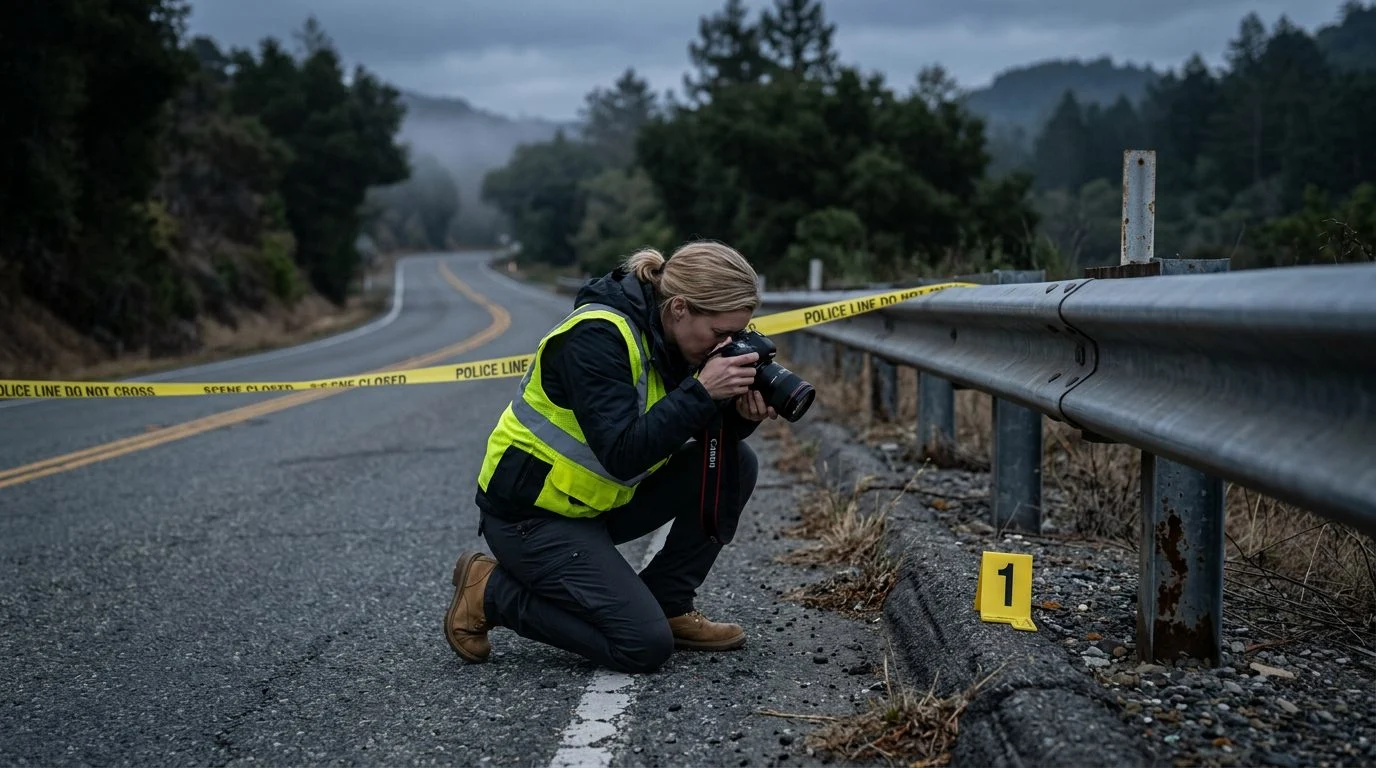
Does a Wrongful Death Claim in California Require a Criminal Conviction?
Families often ask whether a criminal case must end in a conviction before they can bring a civil wrongful death claim. Colvin Accident Lawyers in Bakersfield explains how the two cases differ. Your first consultation is free, confidential, and carries no obligation to continue.
By Donald Norman Colvin · Published October 26, 2026
Families often ask: does a criminal conviction prove a wrongful death case California courts will hear? The short answer is no. The criminal case and the civil case are separate, and each follows its own path.
Short Answer: A Conviction Is Not Required for a Wrongful Death Claim
The main statute says a death caused by another person’s wrongful act or neglect may be sued over by listed family members, or by a personal representative acting for them (Code of Civil Procedure § 377.60).
A wrongful death claim is a civil case. The family brings it to seek compensation for their loss. A criminal case, when one exists, is brought by the government. Its goal is punishment, such as jail or prison time.
It rests on the family’s own proof that another person’s negligence caused the death. That proof may use some of the same crash records and witness accounts a criminal case would use.
If charges were filed or a conviction was entered after a fatal crash, the civil deadline may still be running, and our team can talk it through with you. Talk it through with our team — the first consultation is free, confidential, and carries no obligation.
How a Criminal Case and a Wrongful Death Claim Differ
A criminal case asks whether the defendant committed a crime. A wrongful death claim asks whether the defendant’s negligence caused a death, and what money the family is owed. Those are different questions with different rules.
The standard of proof is the biggest difference.
Who brings the case also differs. A prosecutor brings the criminal case for the government. The family, or a successor in interest acting for the estate, brings the civil claim. The outcomes differ too. A criminal case can end in penalties. A civil case can end in a money judgment or a settlement.
These differences explain why outcomes can differ on the same events. A jury may find that guilt was not proven and still see the civil question differently. The two cases use different evidence, different parties, and different goals.
How a Criminal Conviction Can Be Used as Evidence in the Civil Case
Whether it helps depends on the offense, the court record, and the evidence rules that apply.
Other records from the criminal case may matter too. Police reports, witness statements, photos, and recordings can all become evidence in a civil claim.
Traffic laws can play a role in impaired-driving crashes. California’s evidence code presumes a failure of due care in certain cases. The presumption applies when a person violated a statute, ordinance, or regulation of a public entity, the violation proximately caused death or injury to person or property, the death or injury resulted from an occurrence of the nature the rule was designed to prevent, and the victim was one of the class of persons the rule protects (Evidence Code § 669). That presumption can be rebutted. The driver may prove they did what a prudent person would do while trying to follow the law.
Whether any of this applies depends on the facts of each case.
What Happens If the Criminal Case Is Dismissed, Ends in Acquittal, or Is Never Filed
A family may learn this after a prosecutor decides not to file a case. The family’s questions do not disappear because the criminal file is closed.
The deadline still matters. The general two-year limit for a death caused by another’s wrongful act is in Code of Civil Procedure § 335.1. Check the dates early, while records and witnesses are still easy to find.
Who Can Bring a Wrongful Death Claim and When It Must Be Filed
Listed family members can bring the claim, and the general filing limit is two years. Under Code of Civil Procedure § 377.60, eligible people include a surviving spouse or domestic partner, children and the issue of deceased children, and heirs by intestate succession if there is no surviving issue. Dependent putative spouses, stepchildren, parents, and guardians may also qualify. A minor who lived in the decedent’s household for the prior 180 days, and received at least half of their support from the decedent, may bring the claim too.
A successor in interest is the beneficiary of the estate, or another person who takes over the cause of action (Code of Civil Procedure § 377.11). This role matters when a personal representative files on the estate’s behalf.
The cause of action survives the death, subject to the applicable time limit (Code of Civil Procedure § 377.20). For a death caused by wrongful act or neglect, the limit is two years under § 335.1. Rules that change or pause a deadline can apply to particular facts.
Proving Liability: Duty, Breach, Causation, and Damages
California makes a person responsible for injury caused by want of ordinary care or skill (Civil Code § 1714). Cal. Civ. Code § 1714 reads: “(a) Everyone is responsible, not only for the result of his or her willful acts, but also for an injury occasioned to another by his or her want of ordinary care or skill in the management of his or her property or person, except so far as the latter has, willfully or by want of ordinary care, brought the injury upon himself or herself.” Careless conduct can create liability without any intent to cause harm. That matters in crashes where the driver never planned to hurt anyone.
Evidence does most of the work. Crash and police reports, medical records, witness statements, photographs, and vehicle or surveillance data can show what happened. Death findings also matter. In Los Angeles County, the medical examiner investigates sudden or violent deaths and determines cause and manner of death (Los Angeles County Medical Examiner). Medical records and autopsy findings help connect the conduct to the death.
Not sure what your next step is?
Talk it through with our team — the first consultation is free, confidential, and carries no obligation.
Damages a Family May Pursue in a California Wrongful Death Case
Damages depend on who brings the claim and what the statute allows.
Survival damages are narrower. In a case brought by a personal representative or successor in interest on the decedent’s own claim, damages are limited to loss the decedent suffered before death, including any penalties or punitive damages the decedent could have recovered (Code of Civil Procedure § 377.34). Pain, suffering, and disfigurement are generally excluded. Code of Civil Procedure § 377.34
In a personal injury, property damage, or wrongful death action based on comparative fault, each defendant’s liability for non-economic damages is several only, not joint, and limited to that defendant’s percentage of fault (Civil Code § 1431.2).
Tax treatment can also matter.
Avoiding Missteps That Can Harm a Claim
Several missteps can weaken a claim. Most involve lost evidence or early statements made without guidance. Acting early helps protect the family’s position.
Keep photos, text messages, voicemails, medical bills, and any documents from the criminal case. Records from a crash can disappear quickly. Save them as soon as you can.
Think before giving a recorded statement to an insurance adjuster. Early statements can be used later in the claim. Avoid posting about the crash, the defendant, or the case on social media, since posts can be used as evidence. Keep track of court dates and any orders from the criminal case, so nothing is missed.
Key Takeaways for Families Facing a Criminal Case and a Wrongful Death Claim
Put simply, does a criminal conviction prove a wrongful death case California? Keep these points in mind:
- Do not treat the criminal case as a reason to wait on the two-year deadline (Code Civ. Proc. § 335.1).
Quick answers
How long do families have to file?
The general limit is two years for a death caused by another’s wrongful act, under § 335.1.
Who can bring the claim?
Eligible family members and heirs listed in § 377.60 may bring it, and a personal representative may file for them.

Talking Through Your Family’s Situation With Colvin Accident Lawyers
Losing someone in a crash is hard. A criminal case can add confusion on top of the grief. If you are helping a relative through a pending charge, a conviction, or a dismissal, you may be learning court steps and deadlines all at once.
A civil timeline may still be running while the criminal case moves forward. If charges are pending or a conviction was entered in a fatal crash, the civil deadline may still matter. Colvin Accident Lawyers, based in Bakersfield, can talk through your family’s facts with you.
Your first consultation is free, confidential, and carries no obligation to continue (consulta inicial gratuita, confidencial y sin compromiso). To start that conversation, contact Colvin Accident Lawyers.
Donald Norman Colvin, Colvin Accident Lawyers, Bakersfield, California — responsible for this site.
How a Criminal Case and a Civil Wrongful Death Case Differ
Who brings the case
A civil wrongful death case is brought by eligible family members or heirs, often through a personal representative, to seek compensation for the loss.
The standard of proof
Criminal cases require proof beyond a reasonable doubt. Civil wrongful death cases are decided under the lower preponderance of the evidence standard, which asks whether it is more likely than not that the defendant's conduct caused the death.
The goal of each case
A civil case focuses on compensating surviving family members for losses such as financial support and loss of companionship.
Don't assume there is no claim
A lack of criminal charges or a conviction does not automatically mean a family has no civil wrongful death claim. Whether a claim exists depends on the facts of the death, the evidence, and the applicable law. Speaking with a lawyer early can help you understand your options.
Talk with Colvin Accident Lawyers about your family's situation
Related practice areas
- Wrongful Death Attorney in Bakersfield: How a Fatal Accident Claim Is Handled in Kern County