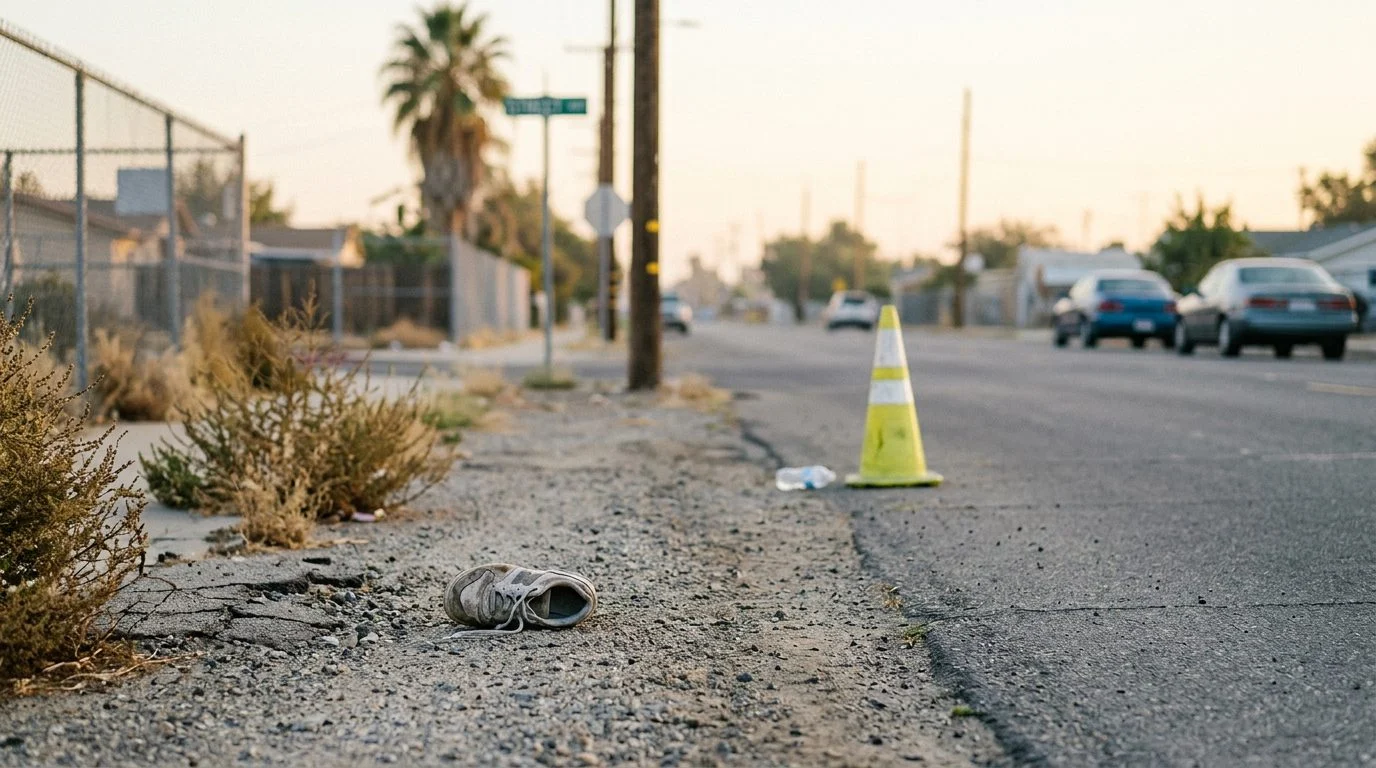
Bakersfield | Wrongful Death | Hit-and-Run
After a Hit-and-Run Death in Bakersfield, Know the Steps Your Family Can Take Next
Colvin Accident Lawyers helps families across Kern County and nearby communities understand their options after a fatal hit-and-run crash. Your first consultation is free, confidential, and carries no obligation to continue.
By Donald Norman Colvin · Published October 26, 2026
A Family May Still Have a Claim When the Driver Is Not Found
If a hit and run killed family member in Bakersfield, your family may still have options, even when the driver has not been found. Uninsured motorist coverage may pay damages for bodily injury or wrongful death from the owner or operator of an uninsured motor vehicle, as provided in Cal. Ins. Code § 11580.2.
Losing someone this way is a double blow. You are grieving, and the person who caused the crash may have driven away. An open police case can make it feel like nothing can move forward. For the wider picture, read our wrongful death overview for Bakersfield.
If a hit and run took your loved one and the driver is still unknown, your family may still have options, and our team is glad to talk them through with you. Talk it through with our team — the first consultation is free, confidential, and carries no obligation.
What California Law Requires of a Driver After a Fatal Collision
A driver in a crash that injures or kills someone must stop at the scene right away. That duty comes from Vehicle Code § 20001. The same section requires the driver to meet the requirements of Sections 20003 and 20004.
Leaving the scene is treated as its own offense. The law punishes a driver more harshly when the crash causes death or permanent, serious injury. That difference matters to a family, because it shows the law views a driver who drives away as more than a bystander to the crash.
A separate reporting rule also applies. Under Vehicle Code § 16000, a driver in a crash that causes bodily injury or death must report it within 10 days. The report goes to the state on an approved form, either personally or through an insurance agent, broker, or legal representative. If no one involved reports the crash within one year, the state is not required to file a report on it. Cal. Veh. Code § 16000 reads: “(c) If none of the parties involved in an accident has reported the accident to the department under this section within one year following the date of the accident, the department is not required to file a report on the accident and the driver’s license suspension requirements of Section 16004 or 16070 do not apply.”
Is Hit and Run a Felony in California?
You can read the penalty language in Vehicle Code § 20001.
The statute defines “permanent, serious injury” as the loss or permanent impairment of function of a bodily member or organ.
Criminal and civil cases run on separate tracks. Prosecutors handle a criminal case. A family’s civil claim is its own matter.
Do Police Actually Investigate a Hit and Run?
Yes. Police do investigate fatal hit-and-run crashes, and they often ask the public for help. Those examples show how investigations work. They do not predict how any other case will end.
Investigators often look for a damaged vehicle, debris left at the scene, and nearby video. Tips from witnesses can also move a case forward. Timelines vary, so the family should ask the assigned investigator for the case number and for regular updates.
Getting the Police Report and Building the Family’s Record
The police report is the official record of the crash. Families should request a copy as soon as it is available. Learn how in our guide to getting a fatal crash report in Bakersfield. The report matters because the state’s crash data tracks details such as hit-and-run status, as the California Crash Reporting System dataset shows.
Keep your own file alongside the report:
- The date, time, and exact location of the crash
- The police case number
- Names and phone numbers of any witnesses
- Photos and videos, including any the family took
- Hospital, coroner, and funeral paperwork
- Receipts for medical bills and funeral costs
- A dated log of every call with police, insurers, and medical providers
Keep originals safe and store copies separately. Be careful about posting case details publicly.
Investigation Steps the Family Can Ask About
Families can ask the assigned investigator specific questions about evidence. Ask early, because the sooner a request is made, the easier it is to check what still exists. Ask these questions:
- Was surveillance or dash-camera video collected from nearby businesses, traffic cameras, or passing vehicles?
- Was debris or paint transfer collected at the scene, and was it sent for analysis?
- Were witnesses interviewed, and were their statements recorded?
- Has a damaged vehicle been reported to a body shop or tow yard?
- How will the family receive updates, and who should it contact with new information?
Each answer can narrow the search for a vehicle. Video can show a make, color, or direction of travel. Debris and paint can help match a damaged car to the crash. Write down each answer, the date, and the name of the person who gave it.
Not sure what your next step is?
Talk it through with our team — the first consultation is free, confidential, and carries no obligation.
Insurance Questions to Ask Before Speaking With an Adjuster
The first insurance question is whether the family’s own auto policy includes uninsured motorist coverage. California law requires auto liability policies to include uninsured motorist coverage unless the insurer and the named insured agree in writing to delete it or to lower it, but not less than the financial responsibility requirements. Under Insurance Code § 11580.2, this coverage applies to sums the insured can legally recover for bodily injury or wrongful death from the owner or operator of an uninsured motor vehicle not owned or operated by the insured or a resident of the same household.
Standard liability coverage pays other people. The California Department of Insurance auto guide explains that liability coverage does not cover injuries to the insured or household members, and that medical payments coverage can be purchased for them. Ask the insurer how each coverage on the policy applies here.
Before giving any recorded statement, read the policy’s claim conditions. Learn what to expect in our guide on what to expect when an adjuster calls. California law also lists, as an unfair claims settlement practice for insurers, misleading a claimant as to the applicable statute of limitations, where the insurer knowingly commits or performs that practice with such frequency as to indicate a general business practice, under Insurance Code § 790.03.
Where a Bakersfield Family Can Turn Next
Start with four steps: request the police report, keep your records, ask the investigator about evidence, and review your own auto policy. Then look at time limits. Under Code of Civil Procedure § 335.1, an action for injury to, or for the death of, an individual caused by the wrongful act or neglect of another is subject to a two-year limitations period, and exceptions or tolling rules may apply to a particular case.
For families in Kern County and nearby communities, see our Kern County wrongful death page.
Can a family still have options after a hit and run?
Yes. A family can still have options, including its own uninsured motorist coverage, while the driver is unknown, and the conditions that apply depend on the policy and the facts of each case.
How long do you have to file a wrongful death claim in California?
Generally two years, under Code of Civil Procedure § 335.1, though exceptions can apply.
Talk With Colvin Accident Lawyers About Your Family’s Hit-and-Run Case
If a hit and run killed family member in Bakersfield and the driver is still unknown, Colvin Accident Lawyers can help you talk through your options. Our team can walk you through the police report, the insurance questions, and the next steps. The first consultation is free, confidential, and carries no obligation to continue. Reach out through our contact page.
Colvin Accident Lawyers, Bakersfield, California — responsible for this site. Responsible attorney: Donald Norman Colvin.
Why Families Contact Colvin Accident Lawyers
Free first consultation
Your initial consultation is free, confidential, and has no obligation to continue.
Focused on wrongful death and hit-and-run cases
We represent families and accident victims in wrongful death, catastrophic injury, and other serious accident matters.
Support for your family
Our team works to keep you informed and to explain each step in plain language.
Serving Kern County and nearby communities
We work with families in Bakersfield, Fresno, Visalia, Lancaster, Palmdale, Delano, and Tehachapi.
Steps Families Often Take After a Hit-and-Run Death
Record what you know
Write down the date, time, and location of the crash, along with any details about the vehicle, such as color, make, partial plate, or direction of travel.
Keep the reports and records
Save the police report number, the coroner or medical examiner contact information, and any photos or video related to the crash.
Review your own auto policy
Your own insurance may include uninsured motorist coverage. Whether it applies depends on the policy terms and the facts of the crash.
Speak with a lawyer early
A consultation can help you understand the possible claims, the evidence that matters, and the questions to ask before you make decisions.
Important: Be Careful With Early Statements
Insurance companies may contact your family soon after a death. Before giving a recorded statement or signing any paperwork, consider speaking with a lawyer who can explain what you are being asked to do.