Wrongful Death · Bakersfield, California
Wrongful Death Case Process in California: What Families Can Expect, Step by Step
Colvin Accident Lawyers focuses on wrongful death and other accident cases for families in Kern County and nearby communities. Learn how a case typically moves from the first call to trial, then request a free, confidential first consultation with no obligation to continue.
By Donald Norman Colvin · Published October 27, 2026
A death in the family brings urgent questions, often while you’re still grieving. If the death followed a crash, a fall, or an animal attack, you may be wondering how a wrongful death case works in California. This guide walks through the wrongful death case process step by step. A case usually starts with a consultation and an investigation. It then moves to a claim and possibly a lawsuit. It may end in negotiation, mediation, or trial.
What to do when a family member dies?
The most useful early step is gathering records that show what happened and what the death has cost your family. Start with paperwork you can get quickly, then build a simple timeline.
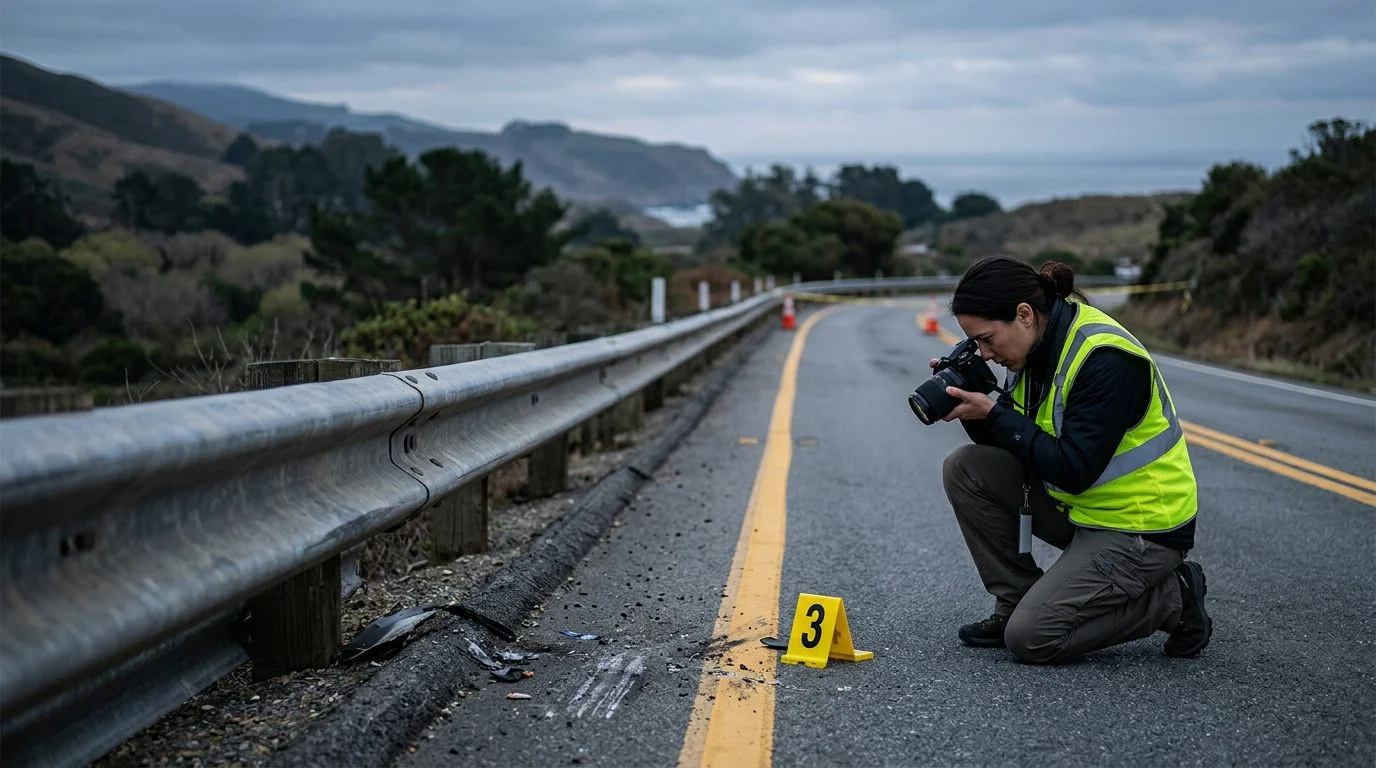
Ask for the police or incident report if one was made. Collect medical records and hospital paperwork. In a sudden or violent death, a medical examiner or coroner may investigate the cause and manner of death, so request that documentation too. Keep receipts for funeral and burial costs.
Write a short timeline while memories are fresh. Note the date, time, and place. List who was present and what each person saw. Save photos, texts, emails, and any letters from insurance companies. Read any insurer statement carefully before you sign it.
Deadlines can start running after a death. Early questions about dates protect your options. Families who organize these records early give their lawyer a clearer starting point.
Who can bring a wrongful death claim in California?
Under Code of Civil Procedure § 377.60, certain close family members may bring a wrongful death claim. The list starts with the decedent’s surviving spouse, domestic partner, and children. It can also include stepchildren, parents, and certain dependents, depending on the facts.
The law also covers a minor who lived in the decedent’s household for the previous 180 days and depended on the decedent for one-half or more of support.
A survival action is a separate claim. It covers a cause of action the decedent already held before death, which survives the death and passes to the decedent’s personal representative or successor in interest. Under Code of Civil Procedure § 377.30, that claim passes to the decedent’s successor in interest, subject to Chapter 1 (commencing with Section 7000) of Part 1 of Division 7 of the Probate Code. A personal representative may file it on the decedent’s behalf.
Who files depends on whether a personal representative has been appointed: the decedent’s personal representative may bring the action or, if there is none, the decedent’s successor in interest. It can also depend on whether a personal representative has been appointed. Writing out the family tree before your first conversation helps identify the right people early.
What steps does a wrongful death case follow, from the first consultation through investigation, negotiation, and possible trial?
A California wrongful death case usually moves in order. It starts with a first consultation, then an investigation, then a claim, then negotiation or mediation. If the case does not resolve, a lawsuit and trial follow. The steps can overlap, and the timing depends on the facts and the court’s calendar.
The first consultation is a chance to review what happened, who may be responsible, and which deadlines apply. The investigation gathers evidence such as reports, photos, witness statements, and medical records. If a public agency may be responsible, its claim deadline comes early.
If negotiation does not resolve the matter, a lawsuit can be filed.
After filing, both sides exchange information in a process called discovery. Then the case moves toward negotiation or mediation. Trial comes only if the case does not resolve. Each stage has its own timing, and the court sets many of the dates.
What are the four proofs of negligence in a wrongful death case?
Each one must be supported by evidence.
Duty is the starting point. Under Civil Code § 1714, everyone is responsible for injury caused by a want of ordinary care. Cal. Civ. Code § 1714 reads: “(a) Everyone is responsible, not only for the result of his or her willful acts, but also for an injury occasioned to another by his or her want of ordinary care or skill in the management of his or her property or person, except so far as the latter has, willfully or by want of ordinary care, brought the injury upon himself or herself.” A driver must follow traffic rules.
Breach means the person failed that duty. Causation means the breach caused the death. Damages are the losses that follow from the death, such as funeral costs and lost financial support.
Police reports, witness statements, photos, medical examiner findings, and accident reconstruction analysis can help show each point. Evidence supports the claim, but it does not decide the case alone.
A death may involve more than one responsible party. That can include another driver, a vehicle owner, a company, a property owner, or a public agency. Identifying every possible party early is part of a thorough investigation.
How do deadlines like the statute of limitations affect a wrongful death case?
Under Code of Civil Procedure § 335.1, a lawsuit for death caused by another’s wrongful act or neglect generally must be brought within two years. This is the general deadline most families hear about.
Public agencies follow different rules. If a city, county, or transit agency may be responsible, Government Code § 911.2 says a claim for death must be presented not later than six months after the cause of action accrues.
Until that claim is acted on or deemed rejected, Government Code § 945.4 generally bars a suit against the public entity. Missing the claim step can seriously affect the case.
Other rules and exceptions can change how these dates apply. That’s why the dates should be reviewed early, while records and witnesses are still easy to reach.
What money can a wrongful death case seek?
Wrongful death damages and survival damages are handled differently under California law. The two claims should not be mixed together.
Under Code of Civil Procedure § 377.61, damages may be awarded that are just under all the circumstances. They may not include damages recoverable under § 377.34.
Under Code of Civil Procedure § 377.34(a), survival damages are limited to the loss the decedent sustained before death. They do not include damages for pain, suffering, or disfigurement. The exceptions in subdivision (b) apply only to narrow filing windows, and those windows do not cover a claim filed in 2026 or later.
Under Civil Code § 3294(a), in an action for the breach of an obligation not arising from contract, punitive damages require proof by clear and convincing evidence of oppression, fraud, or malice. Cal. Civ. Code § 3294 reads: “(b) An employer shall not be liable for damages pursuant to subdivision (a), based upon acts of an employee of the employer, unless the employer had advance knowledge of the unfitness of the employee and employed him or her with a conscious disregard of the rights or safety of others or authorized or ratified the wrongful conduct for which the damages are awarded or was personally guilty of oppression, fraud, or malice.”
Families often gather bills and receipts for funeral costs and medical care before death. No dollar figure is promised or implied here. The value of any family’s claim depends on the facts.
How do negotiation and mediation work before a case goes to trial?
Negotiation usually starts with a written demand. It lays out the facts, the losses, and the proof behind them. The other side responds, and the two sides may exchange offers. Timing depends on the evidence and the parties involved.
A written settlement offer can carry consequences. Under Code of Civil Procedure § 998, if an offer made by a defendant is not accepted and the plaintiff fails to obtain a more favorable judgment or award, the plaintiff cannot recover postoffer costs and must pay the defendant’s costs from the time of the offer.
Mediation is a structured session with a neutral mediator. The mediator helps both sides explore a resolution, but does not decide the case. A court may require mediation before trial.
Settlement money has tax consequences.
What happens at trial if a wrongful death case does not settle?
Trial is the stage where a judge and jury hear the evidence and decide the case. The steps usually include jury selection, opening statements, witness testimony, exhibits, closing arguments, and a verdict.
The family’s testimony, records, and evidence about the death and the decedent’s life may be part of the proof. Under Code of Civil Procedure § 377.61, the court determines the respective rights of the persons entitled to any award.
Not every case reaches a verdict. The decision to go to trial is made case by case, with the family.
After a verdict, post-trial motions and appeals can follow. Each has its own deadlines, so the timeline can extend well past the trial itself.
Are wrongful death cases hard to win?
Wrongful death cases can be complex. No lawyer can say in advance how a particular case will turn out. Outcomes depend on the evidence, the law, and the defenses raised.
The other side may dispute fault, causation, or the size of the losses. It may point to other causes of the death. A case built on documentation is easier to evaluate fairly.
Several steps help. Keep the vehicle, property, and records intact. Preserve photos and messages. Track deadlines from the start.
Quick answers to common questions
Who can sue for a wrongful death in California?
Close family members, such as a surviving spouse, domestic partner, or children, may bring the claim under Code of Civil Procedure § 377.60.
Can heirs get punitive damages?
Punitive damages require clear and convincing proof of oppression, fraud, or malice under Civil Code § 3294.
Do I need to file a government claim?
If a public agency is involved, a claim for death, injury to person or personal property, or growing crops generally must be presented within six months under Government Code § 911.2; other claims generally must be presented within one year.
Talking through your family’s situation
If you lost someone in a collision, a truck or bus crash, a pedestrian or motorcycle accident, a dog attack, or a fall on unsafe property, you may be trying to think clearly while still grieving. Many families face these decisions at the same time they’re planning a funeral.
Colvin Accident Lawyers is based in Bakersfield, California. The firm offers a free first consultation that is confidential and carries no obligation to continue. You can contact Colvin Accident Lawyers to talk through your family’s facts.
Donald Norman Colvin is the responsible lawyer for this site. Colvin Accident Lawyers, Bakersfield, California — responsible for this site.
How a Wrongful Death Case Typically Moves Forward
Intake and investigation
The process usually starts with a confidential conversation about what happened and who was affected. Investigation may include gathering police and medical records, reviewing the scene, and identifying the parties involved.
Filing and discovery
If a lawsuit is needed, it is filed with the court. Both sides then exchange documents and information, and may take depositions of witnesses and parties. Each case is different, so timing varies.
Negotiation and mediation
Many cases are resolved before trial through settlement talks or mediation, where a neutral third party helps the sides discuss a resolution. Any proposal is reviewed with the family before a decision is made.
Trial
If the case does not resolve, it proceeds to trial, where a judge or jury hears the evidence. Preparation for trial is ongoing throughout the case. No outcome can be promised in advance.
Every case is different
The steps above describe the general process only. They are not a prediction of how your case will proceed or what it may involve. Your specific facts and circumstances will shape each stage.
Why families contact Colvin Accident Lawyers
Focus on wrongful death
Our practice focuses on wrongful death and other accident cases, including car, truck, motorcycle, bicycle, pedestrian, bus, dog bite, premises liability, and catastrophic injury matters.
Support for families
We understand that a loss affects the whole family. Our team works to keep families informed and to answer questions in plain language.
Free, confidential first consultation
Your first consultation is free, confidential, and comes with no obligation to continue.
Serving Central and Southern California
We represent families in Kern County, Fresno, Visalia, Lancaster, Palmdale, Delano, Tehachapi, and surrounding communities.