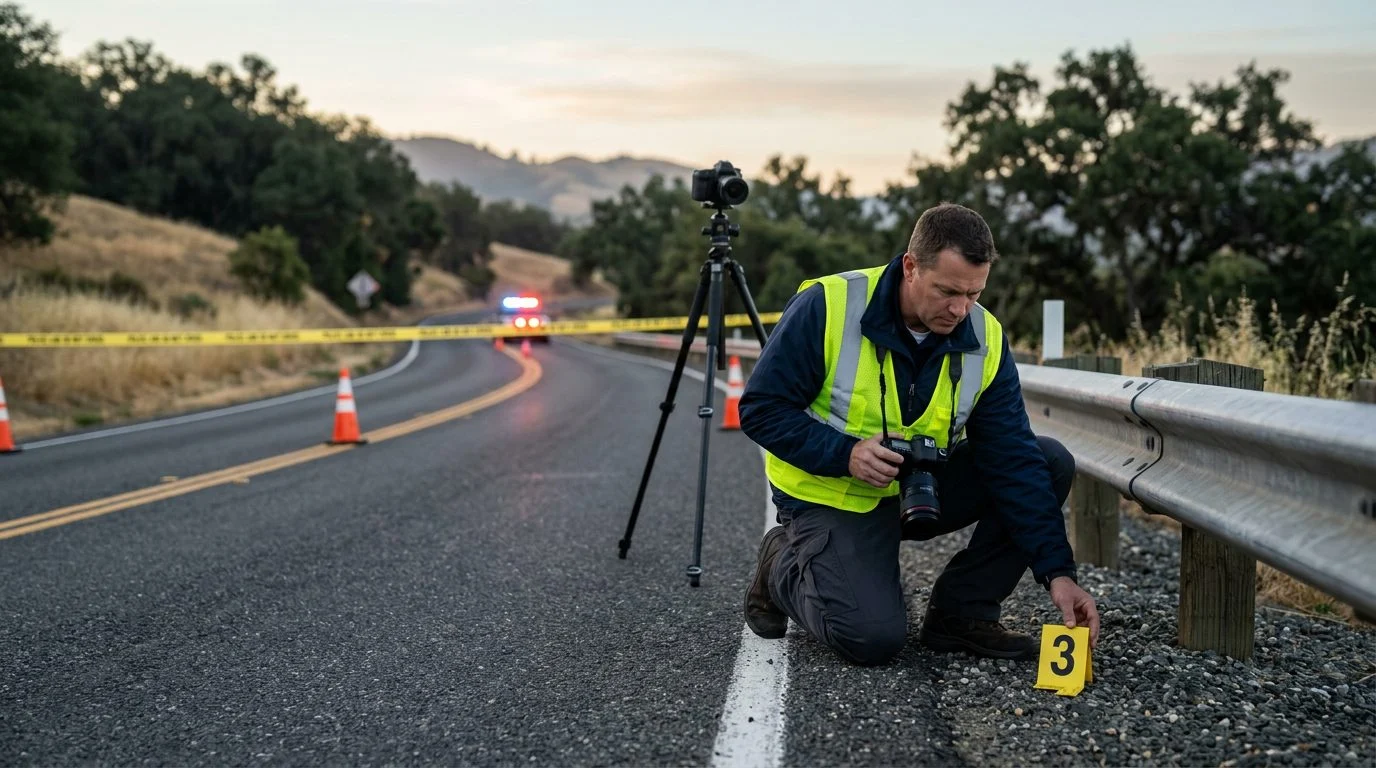
Wrongful Death · Bakersfield, California
Wrongful Death Settlements and Probate in California
Learn how a wrongful death settlement is paid, when probate court may be involved, and how Colvin Accident Lawyers helps families in Kern County and across the Central Valley and Antelope Valley.
By Donald Norman Colvin · Published October 27, 2026
Does a Wrongful Death Settlement Go Through Probate in California?
A wrongful death settlement does not automatically go through probate in California. The wrongful death claim belongs to specific family members named in state law, not to the decedent’s estate. Probate can enter the picture when a separate survival claim runs through the estate. Families in Bakersfield and Kern County often ask this question right after a loss, when they have the least time to sort it out. This guide explains who files, how heirs are identified, and when probate may matter. Colvin Accident Lawyers is a Bakersfield-based personal injury firm that handles wrongful death cases.
If your family lost someone in a crash, you may have a claim, and our team is ready to talk through your family's situation with you. Talk it through with our team — the first consultation is free, confidential, and carries no obligation.
A Wrongful Death Settlement Is Not Automatically a Probate Matter
A wrongful death settlement is not automatically a probate matter, because the claim is brought for the heirs. California law lists who may assert a wrongful death claim, and those people act for themselves.
Probate becomes relevant when the case includes a survival claim. A survival claim is the decedent’s own claim that existed before death. Under Cal. Code Civ. Proc. § 377.30, that claim passes to the decedent’s successor in interest. The action may be started by a personal representative or, if there is none, by the successor in interest.
The California Courts self-help guide on property after someone dies explains when a decedent’s property may require probate. It also covers how a personal representative collects property, pays debts, and distributes what remains.
Who Is Entitled to File a Wrongful Death Claim in California?
The people who can file are the decedent’s surviving spouse or domestic partner, the children, and certain other heirs and dependents. Cal. Code Civ. Proc. § 377.60 sets out this list. The statute also lets the decedent’s personal representative file on those persons’ behalf.
The statute defines “domestic partner” as a person in a registered domestic partnership at the time of death. For deaths before January 1, 2002, the statute allows a person to show the listed factors instead. An unmarried partner who lived with the decedent but was not registered may not fit the main category. Those facts need a close look early.
Eligibility is only the first question. Families also need to know what the claim covers, how it is filed, and what deadlines apply. Our wrongful death lawyer page for California gives a broader overview of those steps.
How Are Heirs and Shares Determined Under CCP 377.60?
Heirs are identified by the statute’s categories, and for many families the test is who would inherit under intestate succession. Cal. Code Civ. Proc. § 377.60 applies that test only if there are no surviving children or their issue.
Dependency matters too. Under the same section, a dependent putative spouse, children of a putative spouse, stepchildren, parents, or legal guardians may sue if they depended on the decedent. A putative spouse is the surviving spouse of a void or voidable marriage who is found by the court to have believed in good faith that the marriage to the decedent was valid. Dependency can bring in people who are not closest by blood or marriage.
Once the heirs are known, the court decides how the recovery is divided. Cal. Code Civ. Proc. § 377.61 states that the court determines the respective rights of the persons entitled to assert the claim. The split can look different from one family to the next. The right split depends on the facts of each case, including who relied on the decedent’s income and who lived in the home.
When Does a Minor Heir Require Court Approval?
A minor can be part of a wrongful death claim under California’s heir rules. A minor may sue if, at the time of death, the minor lived in the decedent’s household for the previous 180 days. The minor must also have depended on the decedent for one-half or more of their support. That rule appears in Cal. Code Civ. Proc. § 377.60.
Families should write down where the child lived and who paid for food, housing, school, and medical care. Records such as rent statements, school forms, and pay stubs often show these facts clearly.
When a minor’s share is part of the recovery, the court’s role under Cal. Code Civ. Proc. § 377.61 still applies. The court determines the respective rights of each person entitled to assert the claim. A minor’s claim is one part of that same analysis, not a separate track.
How Does a Survival Action Affect Probate?
A survival action can run through the decedent’s estate, which is where probate may enter. The claim passes to a successor in interest under Cal. Code Civ. Proc. § 377.30.
A successor in interest must also execute and file an affidavit or declaration under penalty of perjury under Cal. Code Civ. Proc. § 377.32 to commence or continue the action as the decedent’s successor in interest. Under Cal. Code Civ. Proc. § 377.32, the statement must say that no proceeding is pending in California to administer the decedent’s estate. A certified copy of the death certificate must be attached.
Survival damages are narrower than many families expect. Under Cal. Code Civ. Proc. § 377.34(a), survival damages do not include pain, suffering, or disfigurement, unless under § 377.34(b) the action was granted a preference under Section 36 before January 1, 2022, or was filed on or after January 1, 2022, and before January 1, 2026. A claim filed now does not fall within that window.
Not sure what your next step is?
Talk it through with our team — the first consultation is free, confidential, and carries no obligation.
What Damages Are Recoverable in a California Wrongful Death Case?
Under Cal. Code Civ. Proc. § 377.61, the court determines the respective rights in an award of the persons entitled to assert the cause of action. Under Cal. Code Civ. Proc. § 377.61, the court may award damages that are just in light of all the circumstances of the case, but those damages may not include damages recoverable under Section 377.34.
A wrongful death case and a survival action can be filed together. Cal. Code Civ. Proc. § 377.62 allows a survival action to be joined with a wrongful death action from the same wrongful act. Under Cal. Code Civ. Proc. § 377.62(b), an action under § 377.60 and an action under § 377.31 arising out of the same wrongful act or neglect may be consolidated for trial as provided in Section 1048. Each still carries its own rules on who recovers and what can be claimed.
Practical records help in every case. Keep the death certificate, the crash report, medical bills, and documents showing the decedent’s income and household role. These records help show who the heirs are and what losses the family can document.
How Long Do Families Have to File a Wrongful Death Claim?
For most wrongful death claims, the general deadline is two years under California law. Cal. Code Civ. Proc. § 335.1 sets a two-year period for an action for the death of an individual caused by another’s wrongful act or neglect.
Claims against a public entity move faster. A government entity, such as a city or county, may be responsible for a fatal crash, for example from a dangerous road condition. Under Cal. Gov. Code § 911.2, a claim for death must be presented not later than six months after the cause of action accrues.
Families should not wait to check the dates. A missed deadline can end a claim before the facts are reviewed. Calendar the date of death and any date tied to a government claim as soon as possible.
Frequently Asked Questions About Wrongful Death Settlements and Probate
Does a wrongful death settlement go through probate California?
Not automatically.
Who pays out wrongful death settlements?
Usually the at-fault party’s liability insurer pays, through a settlement or a court judgment. The paying party depends on who was responsible for the crash or incident.
Who can bring a claim on behalf of a deceased person?
The decedent’s personal representative may file for the heirs. Heirs listed in Cal. Code Civ. Proc. § 377.60 may also file themselves.
Can a wrongful death claim be brought years after the death?
The general deadline is two years under Cal. Code Civ. Proc. § 335.1. Claims against a public entity can require notice within six months.
Talk With Colvin Accident Lawyers About Your Family’s Situation
If your family has lost a loved one in a crash, you may be facing questions about heirs, probate, and deadlines all at once. You may have a claim, and you don’t have to sort out the legal steps alone. Our team can review who may be entitled to file and what deadlines apply to your family.
Your first consultation is free, confidential, and carries no obligation to continue. To reach Colvin Accident Lawyers, visit our contact page or call the firm.
Colvin Accident Lawyers, Bakersfield, California — responsible for this site.
How Colvin Accident Lawyers Supports Families
Focused on Grieving Families
Losing a loved one is painful enough. Our team handles the legal details so your family can focus on what matters most.
Clear Explanations
We explain how a settlement may be structured, whether probate court is involved, and what court approval may require, in plain language.
Serving Kern County and Beyond
Based in Bakersfield, we represent families in Fresno, Visalia, Lancaster, Palmdale, Delano, and Tehachapi.
Confidential Free Consultation
Our first consultation is free, confidential, and carries no obligation to continue.
Talk to Us Before You Sign Anything
Insurance companies may offer a quick payment in exchange for a release of your claim. Before you accept any offer or sign a release, speak with a lawyer about how the settlement may affect your family's rights and any court approval it may require.
Common Questions About Wrongful Death Settlements
Does a settlement go through probate?
Not automatically. Ask us to review your situation.
Who usually pays?
Payment often comes from the liability insurer of the party responsible for the death, through a settlement or a court judgment. Who pays depends on how the incident happened.
When does a court need to approve?
Some settlements, including those involving a minor or certain court-supervised estates, may need court review before funds are released.