Bakersfield | Fatal Crashes and Wrongful Death
After a Fatal Crash, Coroner Reports Raise Hard Questions
Families often receive several official documents at once and struggle to know which one answers which question. Here is how to read them and where to start.
By Donald Norman Colvin · Published November 18, 2026
Losing someone in a crash is hard enough. Then come the forms, the phone calls, and the records you never expected to handle. This page answers a question many families ask after a fatal crash in Bakersfield: what does the coroner report say, and how is it different from the crash report?
In short, the coroner’s office investigates the death and records the medical cause and manner of death. The crash report, written by the investigating agency, covers how the collision happened. You’ll often need both to understand what happened.
What the Kern County Coroner Does After a Fatal Crash
The coroner’s office looks into the death itself. Its main job is medical: who died, what caused the death, and how the death happened.
One California example shows the scope. Orange County’s sheriff-coroner describes its work on accidental deaths as determining the deceased’s identity, medical cause, manner, and date and time of death (Orange County coroner investigations). Those core questions sit at the center of the coroner’s work after a crash.
The office may also take custody of the body and review the person’s medical history. Its findings describe the death. They do not decide who was at fault. Fault is a separate question, answered by the crash facts and, if a claim is filed, by the legal process.
Families sometimes expect the coroner’s findings to explain the whole crash. The coroner’s work is narrower. It focuses on the person who died.
If you're waiting on a coroner report and trying to make sense of a loss in Bakersfield, our team is glad to talk through what the records say and what questions come next. Talk it through with our team — the first consultation is free, confidential, and carries no obligation.
Coroner Report vs. Collision Report: What Each Document Covers
The coroner report explains the medical cause of death. The collision report explains how the crash happened.
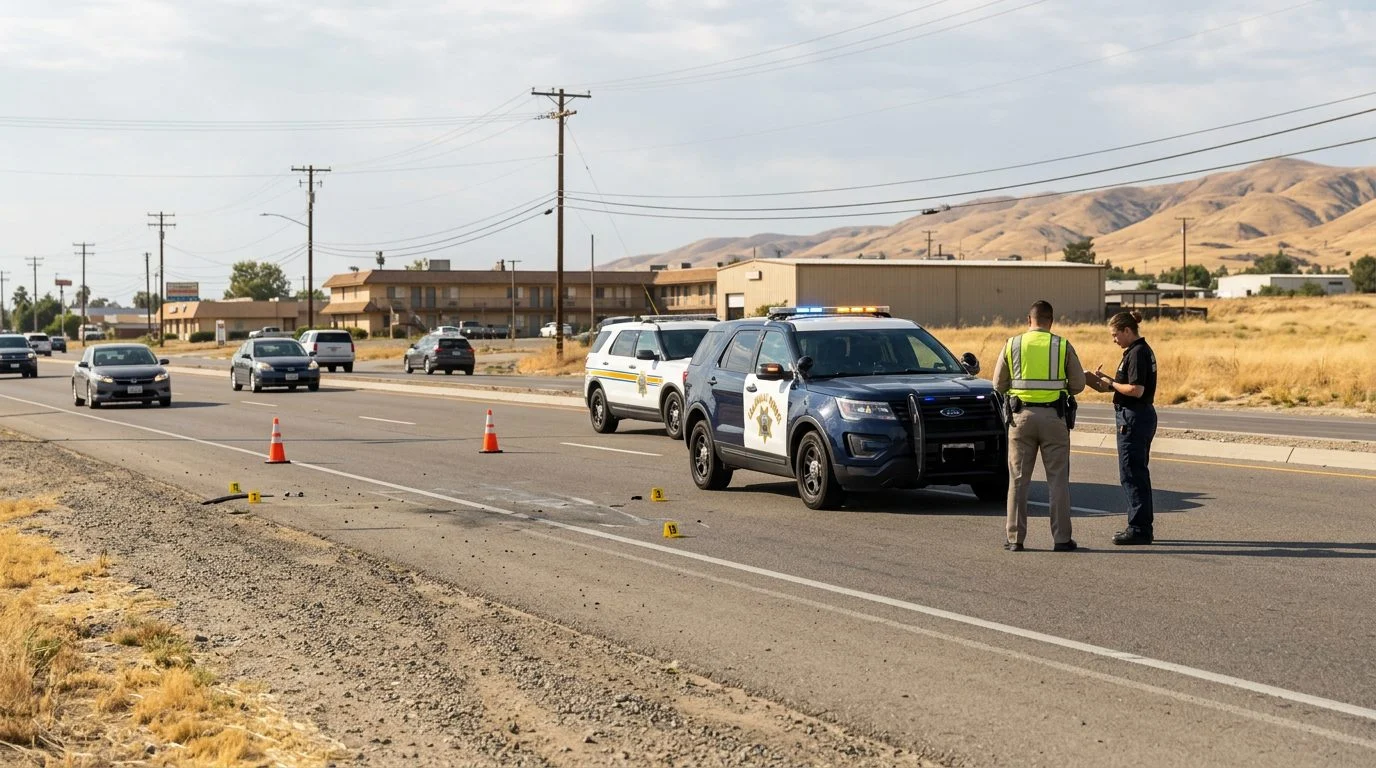
The California Highway Patrol’s policy manual says officers document crash details, including fatal crashes, in narrative or supplemental police reports (CHP fatal crash reporting). That narrative describes the crash itself. The coroner report describes the body and the death. Each answers different questions, so it helps to read them side by side.
One may arrive before the other. That timing alone doesn’t tell you much about either record.
There is also a third filing. California generally requires a driver in a crash that causes damage to one person’s property over $1,000, bodily injury, or death to report it within 10 days, either personally or through an insurance agent, broker, or legal representative, though no report is required if the vehicle was owned or leased by, or under the direction of, the United States, this state, another state, or a local agency (Veh. Code § 16000). That driver report goes to the state. It is not the police report.
The Autopsy: Why It Happens and What It Examines
An autopsy is a medical examination of the body. A coroner may order one when the cause of death isn’t clear from the scene and the person’s history.
In a crash death, the examiner looks at external injuries, injuries inside the body, and organ findings. The pattern of injuries can help show what kind of impact caused them. That makes the autopsy a key piece of the medical picture.
Autopsy findings are medical opinions. They rest on the body and on the records available at the time of the exam. Families should read them as medical findings, not as a full account of the crash.
If you have questions about what the exam found, ask the coroner’s office to explain the findings in plain terms.
Cause and Manner of Death: What the Terms Mean
Cause of death names the injury or condition that led to the death. Blunt force trauma, or multiple injuries, are examples. Manner of death is the category the coroner assigns, such as accident, homicide, suicide, natural causes, or undetermined.
A manner of accident describes how the death occurred. It does not, on its own, decide who is legally responsible.
California uses comparative fault. If the defendant shows that the injured person shared some of the blame, the amount of compensation may be reduced by that person’s percentage of fault. The actual reduction depends on the facts of each case. Under the comparative fault instruction, if [name of defendant] proves the above, [name of plaintiff]’s damages are reduced by your determination of the percentage of [name of plaintiff]’s responsibility. I will calculate the actual reduction. The reduction applies to damages. It does not bar recovery.
If a case goes to trial, the jury decides how much responsibility each person has by assigning a percentage of responsibility to each person listed on the verdict form. The percentages must total 100 percent. (CACI No. 406, apportionment)
Toxicology and Other Results: Why Timing Varies
Toxicology tests check the body for alcohol and drugs. Samples go to a laboratory, and lab work takes time. That is why results can arrive after the first findings.
Alcohol matters legally. California’s drunk driving statute makes it unlawful to drive under the influence of any alcoholic beverage, or with a blood alcohol level of 0.08 percent or more; it also makes it unlawful to drive a commercial motor vehicle with 0.04 percent or more, or, starting July 1, 2018, to drive with 0.04 percent or more while a passenger for hire is in the vehicle. In a prosecution, a chemical test within three hours after driving can support a rebuttable presumption about the level at the time of driving (Veh. Code § 23152).
Other items can also hold up a final report, including specialized tests and any follow-up the investigation requires. San Bernardino County’s coroner page says a pending death investigation can take about six months to one year to finish, once cause and manner are final (San Bernardino County coroner). That is one county’s stated range, not a Kern County timeline.
Ask the coroner’s office for the current status of any pending results. That way you’ll know what is still open.
How Family Members Can Get Copies of the Reports
Start by contacting the Kern County Coroner’s Office in writing. Ask how a family member can request the records and what the office needs from you.
Have the case or incident number ready if you have it. Be ready to show your relationship to the person who died. Keep a copy of everything you send.
Some county systems show a case only after next of kin are notified. Sacramento County’s decedent search, for example, says that next of kin must be notified before a case appears in the search (Sacramento County decedent search). Ask the office about any copy fees at the time you make the request.
Not sure what your next step is?
Talk it through with our team — the first consultation is free, confidential, and carries no obligation.
Why the Coroner’s Findings Matter in a Wrongful Death Claim
Coroner findings are one of several records a lawyer may review in a wrongful death claim. They do not decide that claim alone.
California law sets out who may bring a wrongful death claim. Code of Civil Procedure § 377.60 names a surviving spouse, domestic partner, children, and issue of deceased children; if there are no surviving issue, those who would inherit by intestate succession; and in some cases others who depended on the person, or the personal representative on their behalf (Code Civ. Proc. § 377.60).
Timing matters too. Code of Civil Procedure § 335.1 sets a two-year period for an action for the death of an individual caused by another’s wrongful act or neglect (Code Civ. Proc. § 335.1). If a public agency may be involved, Government Code § 911.2 requires a death claim to be presented not later than six months after the accrual of the cause of action (Gov. Code § 911.2). These clocks can run while records are still pending.
The weight any single record carries depends on the facts of the crash. A lawyer reviews the records together, not one at a time.
Next Steps for a Family Waiting on These Records
If you’re waiting on a coroner report, you don’t have to sort through the crash paperwork alone. Grief and forms can pile up at the same time.
Colvin Accident Lawyers is based in Bakersfield. Our team can talk with you about the coroner findings, the crash reports, and the questions in front of you. The first consultation is free, confidential, and without obligation to continue. Contact us for a free consultation.
Is a coroner report the same as a police crash report?
No. The coroner report covers the medical cause and manner of death. The crash report covers how the crash happened.
Does an accident manner of death mean someone was at fault?
Not by itself. Manner of death describes how the death occurred, and fault is decided by the facts and the legal process.
How long do families have to file a wrongful death claim in California?
California’s two-year period applies to an action for the death of an individual caused by the wrongful act or neglect of another, under Code Civ. Proc. § 335.1.
Colvin Accident Lawyers, Bakersfield, California — responsible for this site. Donald Norman Colvin is the responsible lawyer.
Documents that often matter after a fatal crash
Coroner's report
Describes the medical cause of death and the manner of death, such as accident, homicide, or natural causes. It does not, on its own, assign fault for a crash.
Traffic collision report
Records how the crash happened, including the roadway, vehicles involved, and witness statements. It is a separate record from the coroner's findings.
Autopsy and toxicology results
Detail the injuries found on the body and whether alcohol or drugs were present. These results are often reviewed alongside the coroner's conclusions.
Death certificate
Summarizes the cause and date of death for official records. Families often need certified copies for estate and insurance matters.
Do not assume a report answers every question
A coroner's manner-of-death finding describes how a death occurred. Who was responsible is a separate question decided by the facts and the legal process. Keep every report you receive and bring them to a confidential conversation so the details can be reviewed together.
How our firm can help your family
A free, confidential first consultation
The initial consultation is free, confidential, and carries no obligation to continue.
Review of the records
We help families organize coroner, collision, and medical records and explain what each one shows and what it does not show.
Serving Bakersfield and Kern County
Colvin Accident Lawyers is based in Bakersfield and represents families in Kern County and nearby communities.
Wrongful death and catastrophic injury cases
We handle wrongful death claims and cases involving catastrophic injury, including crashes involving cars, trucks, motorcycles, bicycles, pedestrians, and buses.