Getting a Collision Report After a Fatal Crash in California
By Donald Norman Colvin · Published November 23, 2026
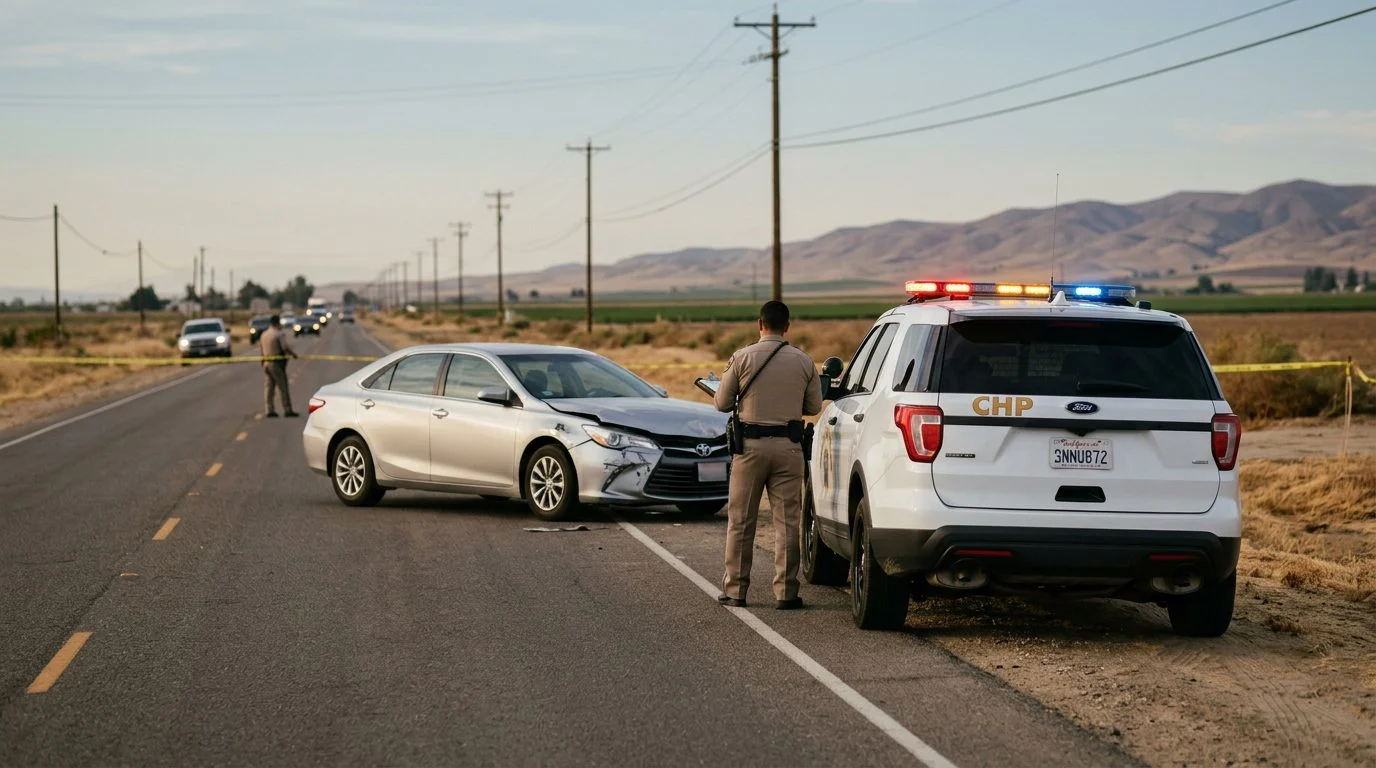
If someone you love died in a crash, you may need the official collision report before you can make your next decisions. You get it from the agency that investigated the crash, usually the California Highway Patrol (CHP) or the local police or sheriff’s department that responded.
This guide covers what a fatal crash collision report contains, which agency holds it, how to ask for it, and how long it can take. It also explains how the report differs from the driver’s own DMV filing, and why the report is a record rather than the final word on fault.
What a Fatal Crash Collision Report Contains
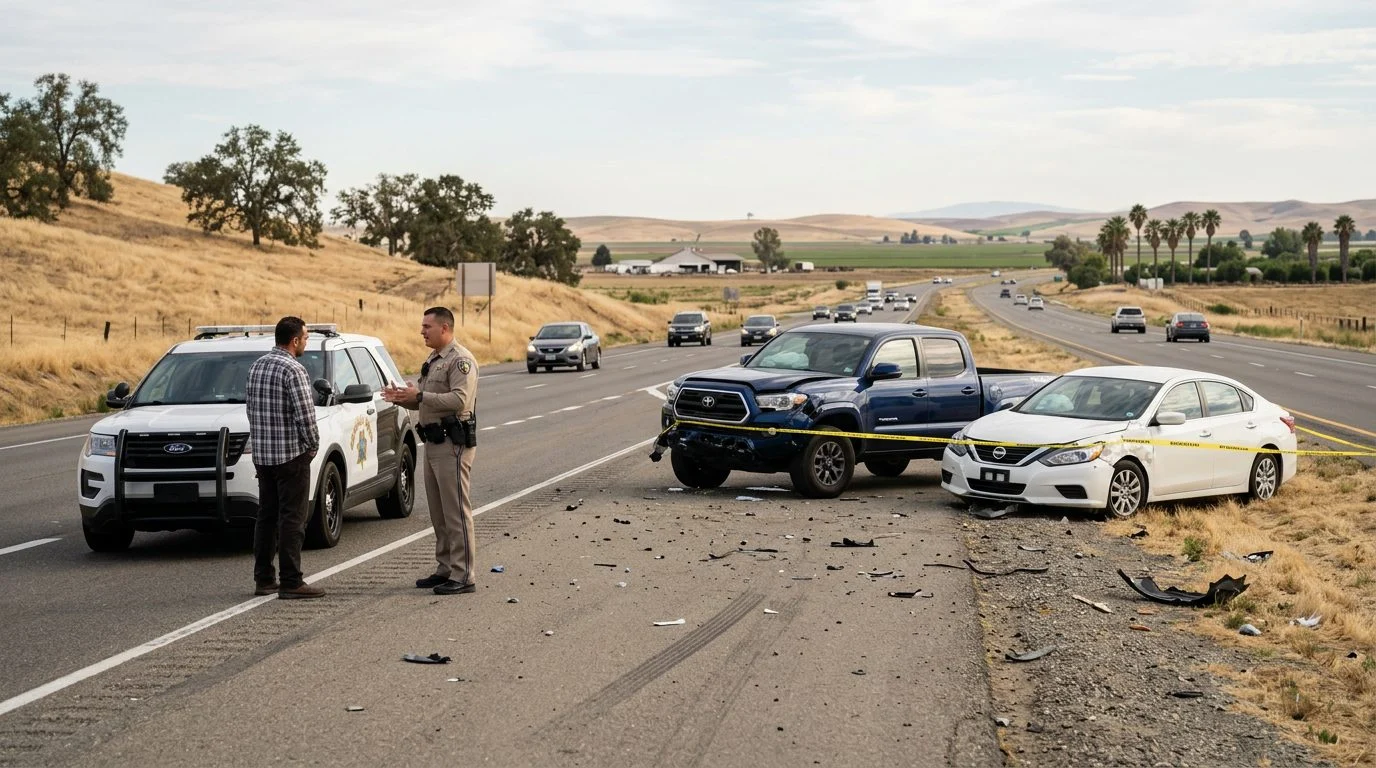
A fatal crash collision report is the investigating agency’s official record of what happened at the scene. It usually lists the date, time, and location of the crash. It names the vehicles and the people involved, including drivers and passengers, and it may list witnesses.
Most reports also include a diagram, a written narrative, and the officer’s notes on road and weather conditions. Any traffic violations the officer saw usually appear too.
A report on a death often adds details about the person who died. It may also point to other records, such as a coroner or medical examiner’s report on the cause of death. Those records sit with other offices, so they need separate requests.
Keep one thing in mind: the report records what the officer found at the time. It is not a final ruling on fault, and supplemental reports can be added later. Families use it to check the basic facts before they talk with insurers or any lawyer.
If you are waiting on a fatal crash report while planning a funeral, we are glad to talk through what comes next and whether a claim may be possible. Talk it through with our team — the first consultation is free, confidential, and carries no obligation.
Who Investigates and Who Holds the Report
The California Highway Patrol or the local police or sheriff’s department that responded to the crash usually prepares and keeps the collision report.
Which agency it is depends on where the crash happened. The CHP often handles crashes on state highways, and city police often handle crashes inside city limits. A county sheriff may respond on county roads. Check the paperwork you received at the scene or from the hospital for the agency’s name and any incident or case number.
Don’t assume the DMV holds the police report. The DMV keeps the driver’s separate SR-1 filing.
The coroner or medical examiner handles the death certificate and any autopsy findings. That is a separate request to a separate office, so put it on your list.
How to Request the Report in California
You request the report from the investigating agency, using the methods that agency accepts.
Ask which options it offers before you send anything. Some agencies accept written requests, some handle requests in person at a records office, and some offer an online process.
Have these details ready:
- The date, time, and location of the crash.
- The names of the people involved.
- The incident or case number, if you have one.
- Your government-issued photo ID.
Agencies often ask who is requesting the report and why. If you are a surviving family member, bring proof of your relationship to the person who died, such as a marriage or birth record.
Keep a copy of your request and any receipt. Ask about any copy fee before you pay it, so you know what to expect. Write down the date you sent the request, and follow up if you hear nothing.
How Long the Report Takes and Why Fatal Crashes Can Take Longer
The time depends on the agency and on when the investigation is finished and approved for release.
Investigators may take measurements, reconstruct the crash, and work with other agencies. Each step can push back the date the report is final.
Don’t rely on a general number you read online. Ask the investigating agency for its current processing estimate when you submit the request, and write down the date it gives you.
Also ask whether a supplemental report or update exists. A newer version can come after the first copy is released, so an older copy may not be the final one.
Waiting on the report should not hold up the rest of your planning. Some deadlines keep running while you wait, which is covered in the final section. Keep your own timeline of dates, calls, and letters while you wait. It makes follow-up easier for anyone who reviews the file later.
The Driver’s Reporting Duty and the SR-1 Form
The SR-1 is the driver’s own filing. It is separate from the police collision report, and it does not replace the investigating agency’s report.
Don’t confuse it with the earlier duty under Cal. Veh. Code § 20008. That law requires the driver of a vehicle, other than a common carrier vehicle, to make a written report within 24 hours of an accident that results in injuries or death, and the link to Cal. Veh. Code § 20008 is included. The report goes to the CHP, or to city police if the crash happened within a city.
That 24-hour rule covers drivers of vehicles other than common carriers.
Two duties, two deadlines. Keep them apart when you read insurance letters or talk with anyone about the file. Keep any copy with the crash file, and check whether the driver filed it.
Reading the Report and What It Cannot Tell You
The report helps you understand the crash, but its fault notes are one officer’s view at that time, not a final decision.
Start with the parties, the vehicle information, the diagram, and the narrative. Then read any listed citations. The narrative often shows how the officer understood the order of events.
A citation is not the same as a finding of liability in a civil case. An officer can cite a driver, and a court or jury reaches its own conclusion on a fuller record.
Shared fault does not end a claim automatically. The jury instruction on a plaintiff’s comparative fault explains that when the defendant establishes comparative fault, jurors determine the percentage of responsibility that belongs to the plaintiff, and the judge calculates the actual reduction in damages.
In Li v. Yellow Cab Co., quoted in the Judicial Council’s civil jury instructions, the California Supreme Court adopted pure comparative negligence: an injured person’s own fault reduces their damages in proportion to their percentage of fault and never bars recovery entirely, so there is no 50% or 51% bar. The jury instruction on apportioning responsibility tells jurors to decide how much responsibility each person listed on the verdict form has by assigning each a percentage, and that the percentages must total 100 percent.
Keep the full report, any amendments, and your own notes together for review by a lawyer.
Not sure what your next step is?
Talk it through with our team — the first consultation is free, confidential, and carries no obligation.
Talk With Colvin Accident Lawyers About Your Family’s Next Steps
Your family can protect its options now, even before the report arrives.
Wrongful death claims have their own filing deadlines, and a claim against a public agency has a shorter one. Under Cal. Gov. Code § 911.2, a claim against a public entity relating to a cause of action for death or for injury to person or to personal property or growing crops must be presented not later than six months after the accrual of the cause of action, and a claim relating to any other cause of action must be presented not later than one year after its accrual.
Under Cal. Code Civ. Proc. § 377.60, certain family members may bring a wrongful death claim. Under Code of Civil Procedure § 377.60, these include the decedent’s surviving spouse, domestic partner, children, and issue of deceased children, or, if there is no surviving issue, the persons entitled to the decedent’s property by intestate succession. Whether or not they qualify under subdivision (a), a putative spouse, children of a putative spouse, stepchildren, parents, or the decedent’s legal guardians (if the parents are deceased) may also bring the claim if they were dependent on the decedent. A minor who, at the time of the decedent’s death, resided in the decedent’s household for the previous 180 days and was dependent on the decedent for one-half or more of the minor’s support may also bring the claim, whether or not the minor qualifies under subdivision (a) or (b).
If you are waiting on the collision report while planning a funeral and wondering whether a claim may be possible, we are glad to talk it through with you. Our team is based in Bakersfield and can review the crash facts with you and answer your questions. Learn more about wrongful death claims in California.
La consulta inicial es gratuita, confidencial y sin compromiso de continuar. (Your first consultation is free, confidential, and carries no obligation to continue.) You can reach our team here.
Common Questions
How long does a fatal crash collision report take?
It depends on the agency and on when the investigation is final. Ask the agency for its current estimate when you submit your request.
Does the police report decide who is at fault?
No. It is the investigating officer’s view at the time, not a final ruling on fault.
Is the SR-1 the same as the police report?
No. The SR-1 is the driver’s separate DMV filing, and it does not replace the agency’s report.
Colvin Accident Lawyers, Bakersfield, California — responsible for this site. Responsible attorney: Donald Norman Colvin.
How Colvin Accident Lawyers Can Help
Free, Confidential First Consultation
The first consultation is free and confidential, with no obligation to continue.
Help With Records
We can help you organize the crash details, reports, and records you already have while you decide what to do next.
Built Around Families
We understand that a fatal crash affects the whole family. We take time to explain each step in plain language.
Serving Kern County and Nearby Communities
Our Bakersfield office serves families in Kern County, Fresno, Visalia, Lancaster, Palmdale, Delano, and Tehachapi.
Keep Everything Together
A collision report is one record of a crash. It is not a final ruling on what happened or who was responsible. Keep every document you receive, including letters, reports, and insurance correspondence, in one place and do not sign anything you do not understand.

Steps to Request a Collision Report
1. Gather the Basics
Have the date, time, and location of the crash ready, along with any case or report number you have received.
2. Submit Your Request
Contact the investigating agency that responded to the crash and ask how to request the report and what it costs.
3. Ask About Timing
Processing times vary by agency and by the status of the investigation. Ask for the agency’s current estimate when you submit your request.
4. Review It With Us
Bring the report to a free consultation so we can explain what it contains and what questions may still be open.